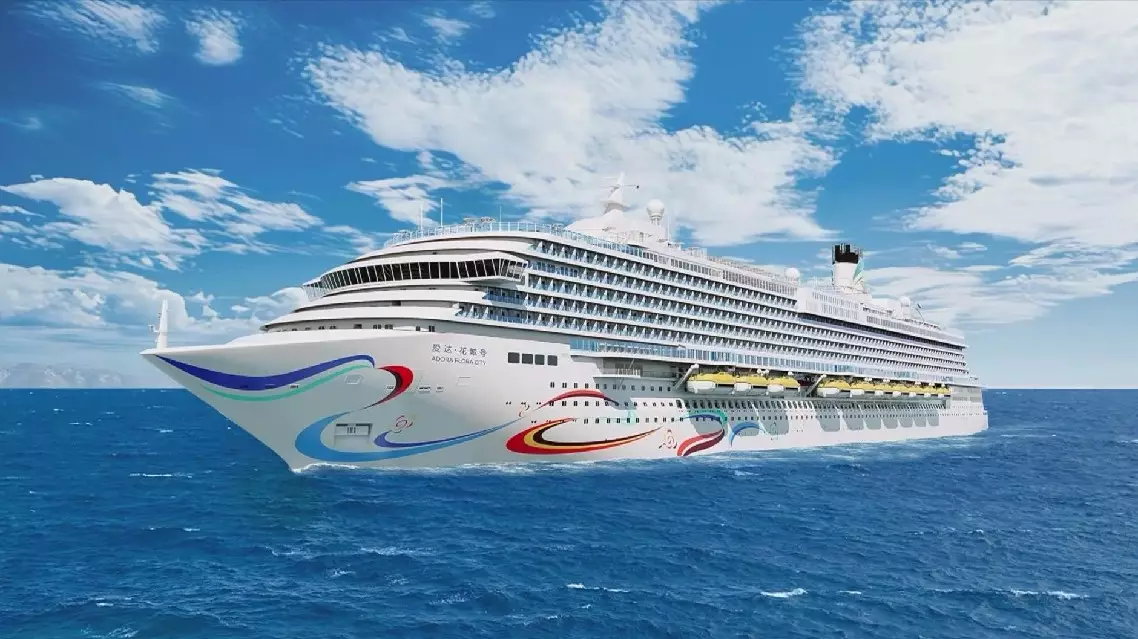
China's shipbuilders are working at full steam to construct the country's second homegrown large cruise ship, Adora Flora City, to ensure its on-time delivery and entry into operation by the end of 2026.
Compared with its predecessor, Adora Magic City, the gross tonnage of the new cruise ship will increase by 6,400 tons, reaching 141,900 tons in total, while its length will increase by 17.4 meters, measuring 341 meters.
The cruise ship will boast 2,144 guest rooms, 19 more than that on Adora Magic City, and be able to accommodate 5,232 guests.
It will also feature a 16-story living and entertainment facility, including performing, dining, drinking, shopping and recreation areas.
Although it represents a significant upscaling over its predecessor, the construction period for Adora Flora City is planned to be reduced by eight months compared to Adora Magic City.
The builders leveraged extensive data gathered during the building of the first cruise ship to create a 3D model, which has significantly improved their work efficiency throughout the project.
"Our construction team has withstood the pressure and addressed challenging technical issues one by one. More than 4,000 people are working on the ship simultaneously, dedicating day and night to turning the impossible into possible," said Wei Shengsheng, deputy director of the Cruise Ship Project Department of Shanghai Waigaoqiao Shipbuilding Co., Ltd.
The supply chain also poses a challenge for the ship's construction. Building a large cruise ship requires a general assembly plant, about 100 subcontractors and about 1,500 supporting companies providing various raw materials, equipment and technical support.
"In the past, only a few shipyards in Europe can build an entire cruise ship, which means the supply chain was basically based in Europe. If all components were imported, the production cycle and cost would be uncontrollable. Therefore, we must establish our own independent and controllable supply chain," said Wang Zhangjian, president of Shanghai Waigaoqiao Marine Design and Research Institute.
As of January 1, 2025, Adora Magic City has been in commercial operation for a full year, carrying over 600,000 domestic and international guests, and completing 84 round-trip voyages from Shanghai to Japan and South Korea.
Adora Flora City is expected to set sail at the Nansha Port in Guangzhou City of south China’s Guangdong Province by the end of 2026.
Construction of China's 2nd homegrown large cruise ship at full steam
China's newly approved Inner Mongolia Pilot Free Trade Zone (FTZ) is expected to help turn the northern border areas into a new frontier of opening-up.
China on Thursday released a plan for the establishment of the China (Inner Mongolia) Pilot Free Trade Zone, bringing the total number of pilot free trade zones nationwide to 23. Leveraging its unique location linking Russia, Mongolia and wider Eurasia, the zone is designed to advance the country's high-level opening-up through policy support, industrial upgrading and improved connectivity.
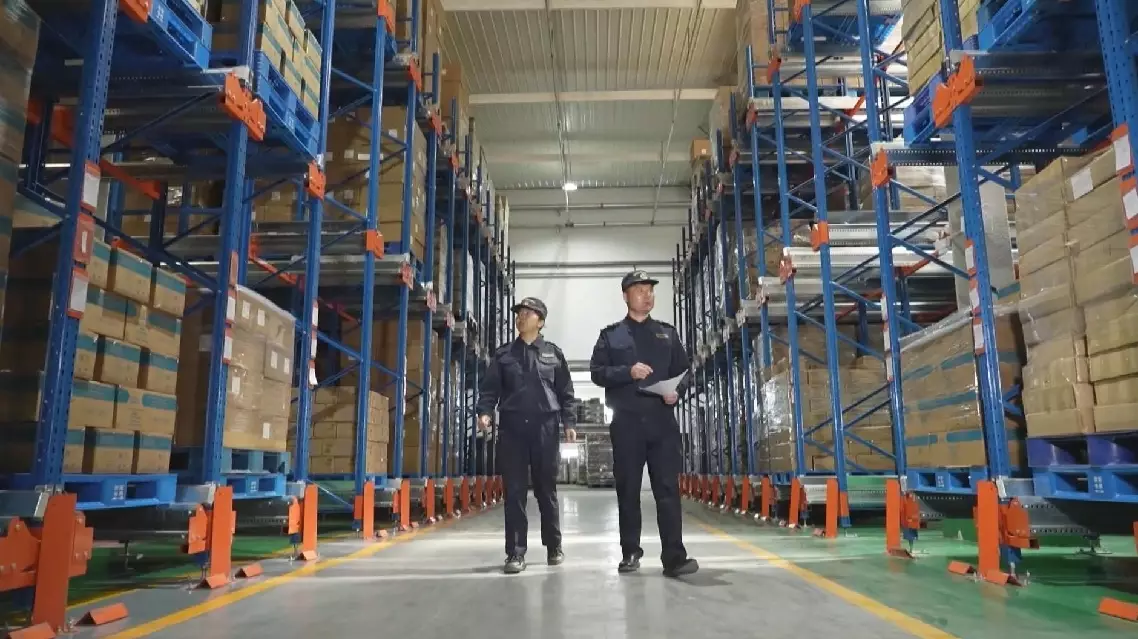
The pilot FTZ covers 119.74 square kilometers and comprises three subzones in Hohhot, capital of the autonomous region, Manzhouli, a northern border city, and Erenhot, a land port on the China-Mongolia border, each tasked with differentiated functions and the development of industries tailored to local conditions.
Specifically, the Hohhot subzone will serve as a central hub, focusing on developing specialty industries and innovation clusters. The Manzhouli subzone will build on China-Russia-Mongolia cooperation to become an important gateway to Northeast Asia and Europe. The Erenhot subzone will tap into the China-Mongolia-Russia Economic Corridor and serve as a model for cooperation with neighboring countries.
At the Hohhot Comprehensive Bonded Zone, a gold and silver refining project due to start operations will have an annual processing capacity of 100 tonnes of gold and 1,000 tonnes of silver.
The Manzhouli subzone will prioritize industries including the processing of imported resources, cross-border tourism, cross-border financial services and port services.
"Following the approval of the free trade zone, companies like ours are more confident in expanding our cross-border business further and broadening its scope. Specifically, we aim to achieve full coverage across the entire industrial chain," said Cui Rongzheng, head of Manzhouli Xincheng Supply Chain Limited Company.
Notably, in the first quarter of this year, the Erenhot Railway Port, a key hub on the "middle corridor" of the China-Europe Railway Express, handled a record-high 1,145 freight train trips, a 22.3 percent increase from last year, underscoring its role in stabilizing global supply chains and supporting foreign trade growth.
"The establishment of the Inner Mongolia Pilot Free Trade Zone will strengthen links between border provinces and China's inland regions, and enhance cooperation between land ports, coastal ports and inland ports. It is expected to play a key role in improving the wellbeing of ethnic minority populations in the border areas and turning China's northern border areas into a new frontier of opening-up," said Wang Xuekun, head of the Chinese Academy of International Trade and Economic Cooperation under the Ministry of Commerce.
Inner Mongolia FTZ subzones to drive coordinated opening-up