Skip to Content Facebook Feature Image

China-Laos Railway stages shows to welcome upcoming Spring Festival

China

China

China

China-Laos Railway stages shows to welcome upcoming Spring Festival

2025-01-15 17:04 Last Updated At:18:57

A unique cross-border Spring Festival show unfolded on the China-Laos Railway on Tuesday, the first day of this year's Spring Festival travel rush.

With carriages turned into stages, people from cities along the route presented unique performances to welcome the upcoming Spring Festival, the most important festival on the calendar, which falls on Jan 29 this year.

This special Spring Festival show lasted for more than four hours, with over 50 programs such as songs and dances from China and Laos, close-up magic, and musical instrument performances.

"I take the China-Laos Railway today to get home. Watching this Spring Festival show filled me with surprise and joy," said a Lao tourist.

"I recorded many videos along the way. I will edit them together into a wonderful footage and share it in Thailand," said a Thai tourist.

Starting operation in late 2021, the cross-border railway connects Kunming, provincial capital of southwest China's Yunnan Province, with Vientiane, the capital of Laos.

So far, the China-Laos Railway has operated more than 1,500 international passenger train trips, providing cross-border travel services for about 400,000 passenger trips involving more than 100 countries and regions.

Pongdong Paxaphacdy, consul general of Lao People's Democratic Republic in Kunming, said the train will further enhance connection between the two countries.

"The train can promote people-to-people exchanges among neighboring countries, especially between China and Laos. Second, it can boost our bilateral trade. Third, it can showcase China's strength, displaying China's railway technology to the whole world," he said.

The rail link has also greeted even more international passengers, as China introduces a range of visa-free policies.

"Germany was one of the first countries to actually get the visa-free access to China, and I was very happy about it. Now, to be able to just leave the airport and stay in China for a week is perfect for us. It's so quick, it's so convenient," said Jonas Gorlo, a traveler from Germany.

Passengers say the special celebration marks the beginning of a new year filled with hope, as the railway continues to foster ties between people and cultures across borders.

China-Laos Railway stages shows to welcome upcoming Spring Festival

China-Laos Railway stages shows to welcome upcoming Spring Festival

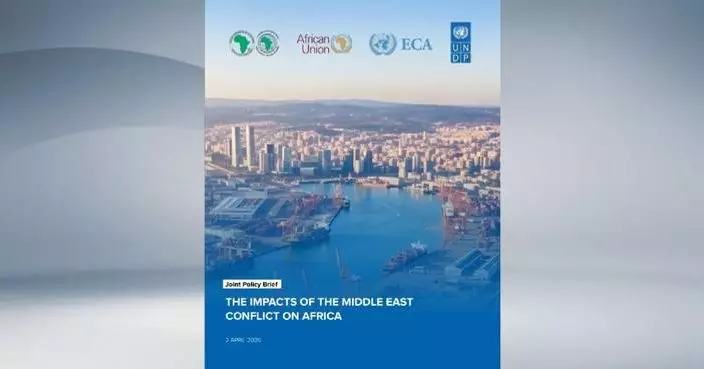
The conflict in the Middle East has disrupted traffic through the Strait of Hormuz, leading to a systemic economic shock that has reverberated through energy markets, industrial supply chains and critical maritime routes.

As part of its response to U.S. and Israeli attacks, Iran has restricted navigation through the Strait of Hormuz, targeting ships associated with the United States and Israel. The blockade of this vital global energy route has driven up oil and gas prices worldwide.

As a key energy shipping lane, the strait saw 20 million barrels crude and oil product flowing through per day, around 25 percent of the world's seaborne oil trade in 2025, according to a report released by the International Energy Agency (IEA) this March.

In addition, about 20 percent of global liquefied natural gas (LNG) trade transited Hormuz in 2024, primarily from Qatar, with a smaller volume from the United Arab Emirates (UAE).

Over 70 percent of the oil flowing through the strait is transported to the Asian market. Japan and Republic of Korea (ROK) import 90 percent and 95 percent of their respective oil consuption.

The IEA estimates that as of the end of March, Hormuz disruptions have led to an oil supply gap of roughly 10 million to 16 million barrels per day.

Though the IEA made 400 million barrels of emergency oil stocks available in March -- the largest-ever release coordinated by the agency, it still failed to curb the rapid rise in international oil prices.

Based on Fitch Ratings' March outlook, should the Middle East conflict persist until the end of June, it could see global real GDP growth shrink by approximately 0.8 percentage points.

"Shipping costs are rising because of insurance premiums, because of higher fuel costs, and because of longer trips as you have to avoid certain parts. Then that starts feeding through to higher prices of other goods as well. That could be food, commodities, etc. And then the other thing to think about is inventory and supply chain disruptions. And then when you combine all of these factors together, it feeds into producer price indices and consumer price indices," said Cedric Chehab, chief economist at BMI, a Fitch Solutions company.

Middle East tensions hit global economy

Middle East tensions hit global economy

Recommended Articles