China's courier sector is in full swing to ensure smooth delivery services after the Spring Festival travel rush kicked off on Jan 14, bringing a surge in delivery demand.
According to China's State Post Bureau, the country's courier sector handled over 670 million parcels per day during the first three days of the rush, marking a year-on-year increase of over 29 percent.
"The delivery volume at our courier station is twice the usual amount," said Wang Maoning, a courier firm employee in Beijing.
"We can deliver 300 million parcels each day, which is about 30 percent higher than that of the past two weeks," said Li Yihui, manager of Beijing-Tianjin-Hebei region public affairs department under a courier company in Beijing
Intelligent equipment has been introduced to ensure efficient delivery services during the rush season, when human labor is in short supply.
A logistics park in Zhengzhou, central China's Henan Province, has set up an intelligent sorting line capable of handling up to 1 million parcels per day.
"This scanning device can capture six images at once and upload real-time data, replacing human workers in identifying orders and uploading relevant information into the system," said Zhang Ye, a courier company employee, as he showcased the intelligent equipment at the park.
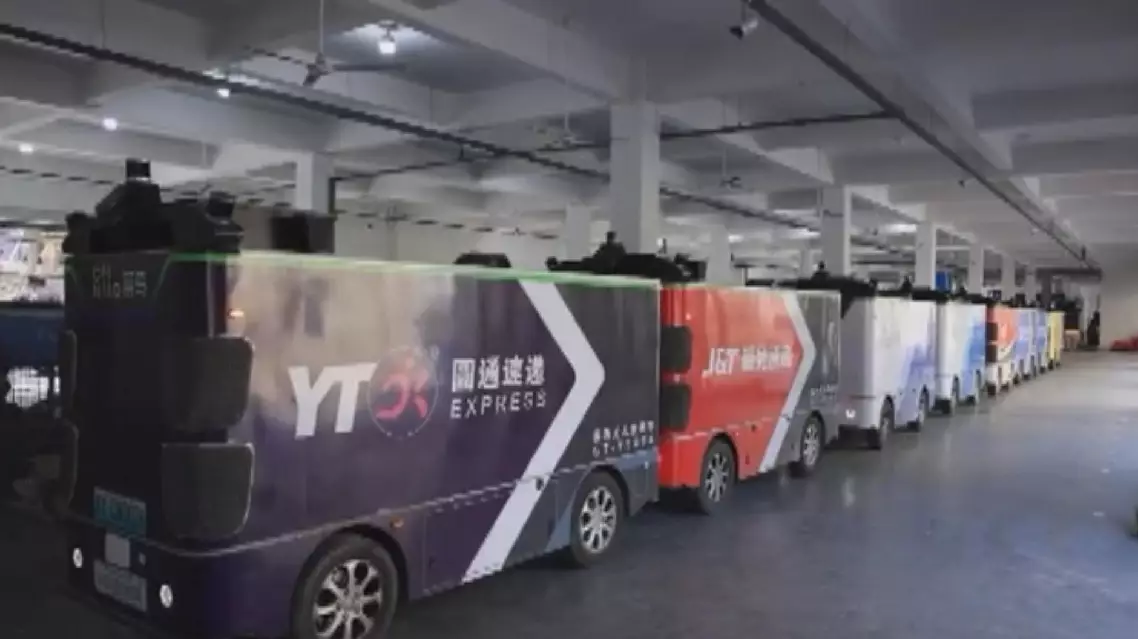
In addition to intelligent sorting equipment, driverless delivery vehicles are also being deployed to enhance efficiency.
At a delivery center in Hangzhou, Zhejiang Province, 34 driverless delivery vehicles are stationed. They distribute 55 percent of the over 150,000 parcels handled by the center each day.
"If we used 4.2-meter trucks to deliver those parcels like we did before, we would still need more than 20 vehicles and over 20 drivers. However, with the driverless delivery vehicles, we only need three to four people to manage them, which has significantly saved on labor costs," said Kong Aihua, employee for a courier company in Hangzhou.
Delivery service in China meets hectic demand amid Spring Festival rush
U.S. stocks ended sharply lower on Friday, as a stronger-than-expected May jobs report heightened bets on a potential Federal Reserve rate hike later this year.
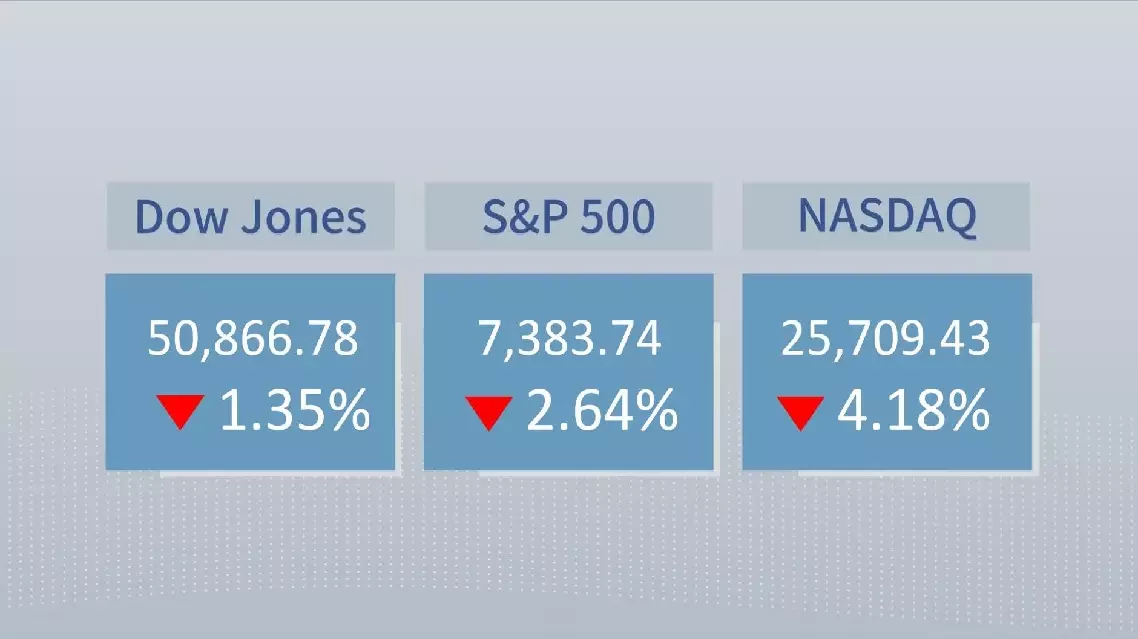
The Dow Jones Industrial Average fell 695.15 points, or 1.35 percent, to 50,866.78. The Standard and Poor's 500 sank 200.57 points, or 2.64 percent, to 7,383.74. The Nasdaq Composite Index shed 1,121.53 points, or 4.18 percent, to 25,709.43.
Six of the 11 primary Standard and Poor's 500 sectors closed in negative territory, with technology and consumer discretionary leading the declines at 5.78 percent and 2.43 percent, respectively. Consumer staples and utilities were the top performers, rising 1.64 percent and 0.8 percent, respectively.
The U.S. Bureau of Labor Statistics reported that employers added 172,000 jobs in May, exceeding economists' expectations of around 88,000. The unemployment rate held steady at 4.3 percent.
While the strong labor market data underscored economic resilience, it also raised concerns about persistent inflation and reduced the likelihood of near-term monetary easing.
Traders now price in a Federal Reserve rate hike by the end of this year. According to the CME FedWatch Tool, the probability of interest rates rising by year-end jumped to 72.7 percent on Friday, up from 50.5 percent the previous day. This shift came even as U.S. President Donald Trump continued to press for interest rate cuts while his nominee, Kevin Warsh, assumed leadership of the Federal Reserve.
Market volatility intensified this week as investors took profits after recent rallies and adjusted expectations for Fed policy. The CBOE Volatility Index, Wall Street's fear gauge, surged over 30 percent to its highest level in two months.
In the technology sector, concerns over the artificial intelligence investment boom persisted. Broadcom continued to plummet following its disappointing earnings forecast earlier in the week, while Micron Technology, Advanced Micro Devices, and Intel also posted notable losses.
U.S. stocks tank as strong jobs report fuels rate-hike expectations