China has been a key force in promoting the regional and global energy transitions and facilitates cooperation within the Shanghai Cooperation Organization (SCO) framework, said a Kazakhstan business leader.
During an interview with China Global Television Network (CGTN) at the World Economic Forum Annual Meeting 2025 held in Davos, Switzerland, Shukhrat Ibragimov, CEO of Eurasian Resources Group (ERG), underscored that industries around the world must take into account the changing global energy landscape.
"The challenges would mostly revolve around the supply chain security and energy security. But that also gives a big opportunity for individual players and countries to diversify and open by stimulating them to move over to other sources of energy," said Ibragimov.
He emphasized China's role in this green transition, especially within the SCO framework as the country helps bring opportunities to regional countries.
"In general, the world's green transition is another big opportunity. And the most interesting fact about this is, China is the leading driver in terms of the transition to clean energy. It was interesting to understand that, in 2023, China just invested close to 900 billion dollars into the alternative energy space, and if you compare that to anybody else, it is probably the largest investor. So, there's no transition for us (to cooperate) with China. And (as) China is the biggest consumer of minerals of us, being the supplier, we aim to supply to meet that demand," said Ibragimov.
In addition to green energy, China has been a vital regional member from a broader perspective, promoting regional collective development with China-led platforms like the SCO, he said.
"The SCO is a very important platform for Kazakhstan and of course for ERG, that is my company, because it's very important to remember that about 40 percent of the world's population live in SCO member states, and the total contribution to the world's GDP of the SCO member states is about 21 trillion. So, for us, as a company, we see big strategic positioning ourselves in Kazakhstan because of the whole regional development and interconnectedness in terms of infrastructure projects," said Ibragimov.
"Putting into the context that China is a big part of the SCO, the strategic relationship in terms of infrastructure project development, energy security, cross-border energy infrastructure that was also discussed then, also agreed upon. For us, as a mining company who are present and our key operations are in Kazakhstan, for us, we see this as a big opportunity," he said.
China and Kazakhstan have undertaken an abundance of fruitful cooperation initiatives over the years, including in the fields of trade, energy, agriculture, and minerals. Looking forward, Ibragimov said he expects the partnership to deepen.
"China is a big strategic partner not only for ERG but also for Kazakhstan. So of course, for us, it's not only a strategic view but it's also a logical view that the growth in China will have a big positive implication on the rest of the region and also the world. So, we see it as very valuable and quite optimistic," said the business leader.
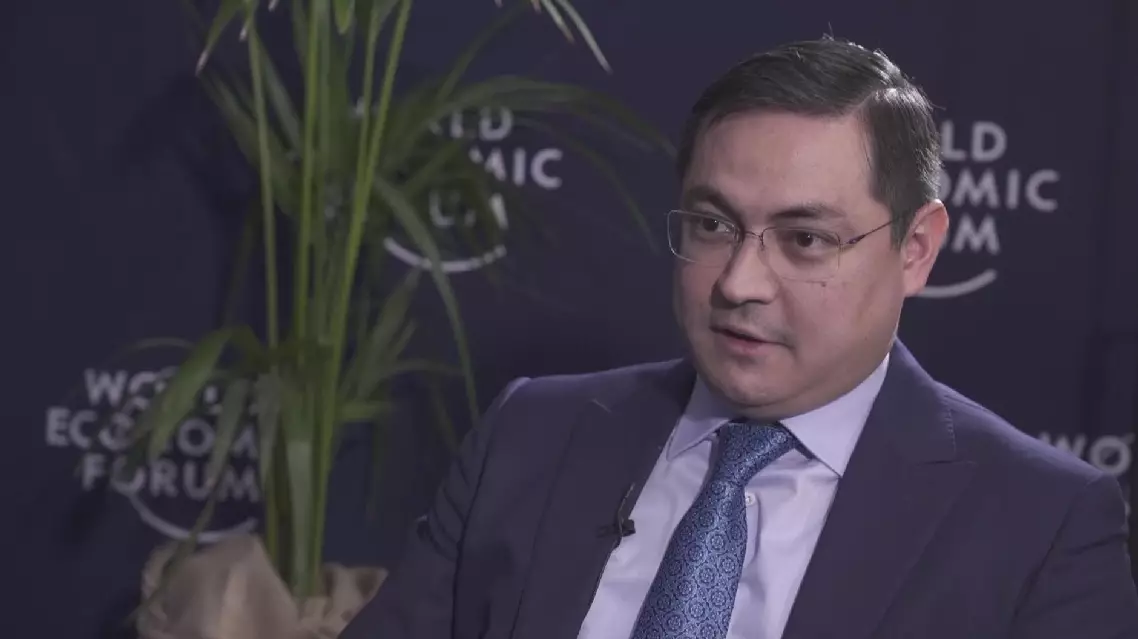
China leads regional green transition, facilitates regional cooperation: Kazakhstan entrepreneur