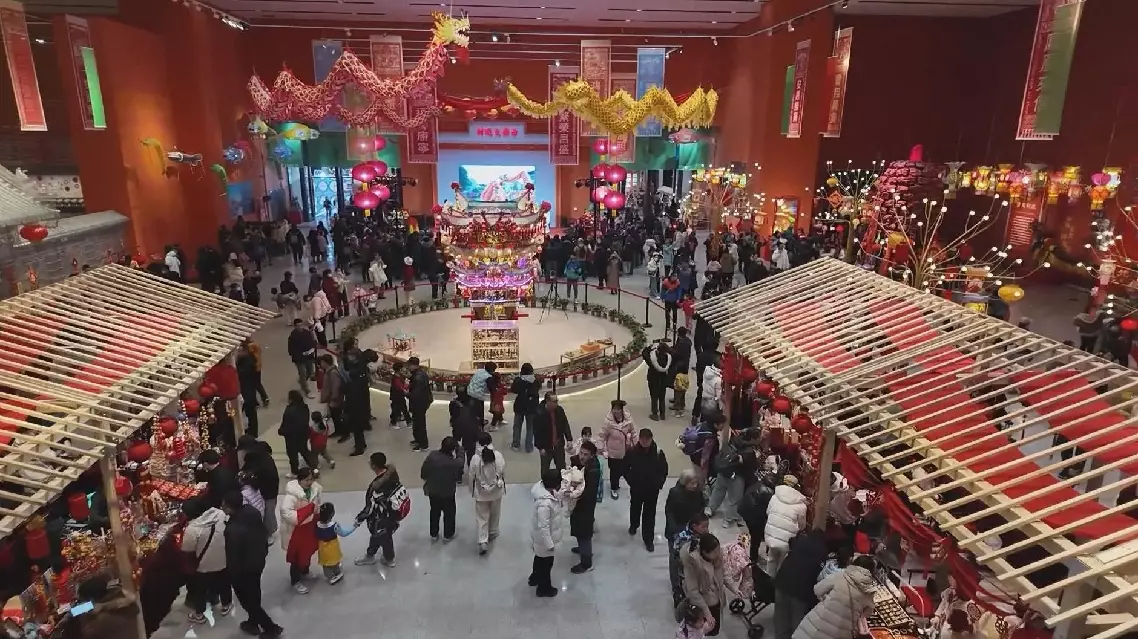
China's consumer market is buzzing with activity as the first Chinese New Year, or the Spring Festival, following its official recognition by the United Nations Scientific, Educational and Cultural Organization (UNESCO) as an intangible cultural heritage, draws near.
The Spring Festival is the most important traditional holiday for Chinese people, symbolizing reunion, joy, and new beginnings. The 2025 Chinese New Year will fall on Wednesday, marking the beginning of the Year of the Snake.
According to the Ministry of Commerce, it has collaborated with the Ministry of Culture and Tourism, the Ministry of Sports, and some other departments in launching a wealth of consumer events to create a vibrant holiday atmosphere.
In Shanghai, major efforts are underway to celebrate the Spring Festival with over 100 special holiday events.
The city is staging a shopping spree with 10 key commercial districts, including Nanjing Road, Huaihai Road and Yuyuan, offering consumers discounts and promotions.
There are also foreign visitors celebrating the Spring Festival in Shanghai.
"I am from Germany. The architecture is really cool. There's a lot of food downstairs, a lot of dumplings. It's really delicious," said a German visitor.
"We have traveled to China first time. It's very beautiful, wonderful," said a Russian visitor.
As the Chinese New Year draws nearer, a haul of New Year goods markets are available across the country for holiday shopping.
In Nanping City, east China's Fujian Province, local markets have attracted large crowds, with residents tasting delicacies and making purchases.
In Tongzi County, southwest China's Guizhou Province, local residents also have been enjoying holiday shopping.
"The tradition of eating sugarcane during the New Year has a great meaning - sweetness, happiness and good fortune. That's why we always buy some special goods including sugarcane for the Chinese New Year," said Cai Yi, a local resident.
China's consumer market heats up ahead of Chinese New Year
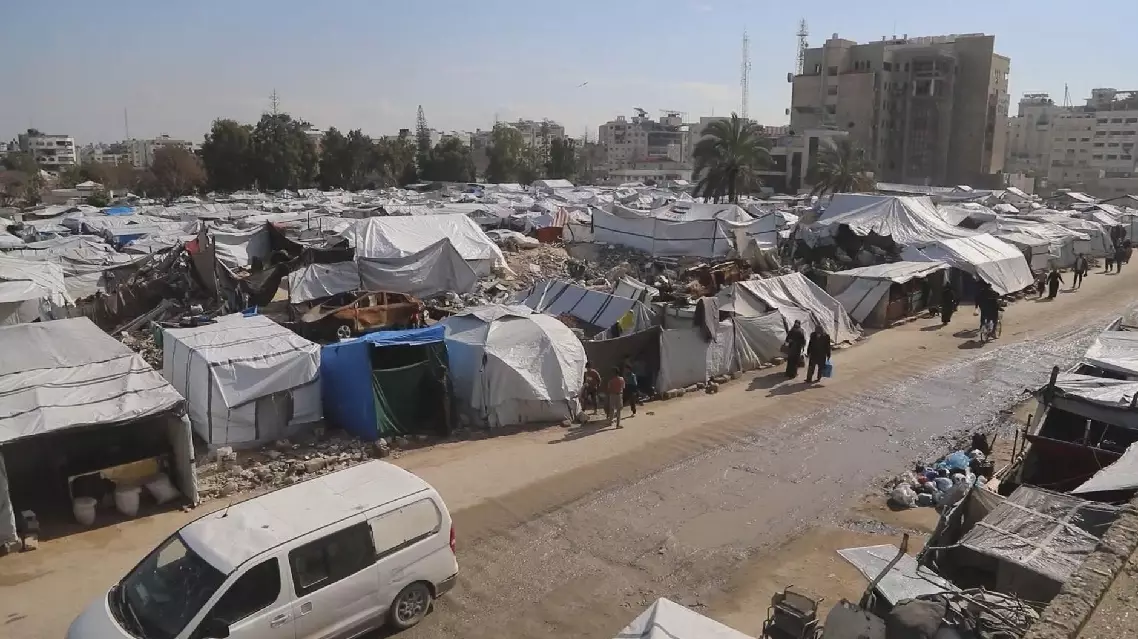
Palestinians are pinning their hopes on the newly-formed National Committee for the Administration of Gaza (NGAC), believing the body can play a key role in alleviating the suffering and improving the living conditions of people across the Gaza Strip amid an unprecedented humanitarian crisis.
The Palestinian technocratic committee was formed on Jan. 16 to temporarily administer the post-war Gaza Strip, with a Palestinian source saying on Sunday that members of the committee are now preparing to enter the enclave to begin their work.
Hamas has previously reaffirmed its readiness to hand over the administration of the Gaza Strip to the committee and to facilitate its mission, while the Palestinian presidency also announced its support for the body, emphasizing the importance of linking institutions in the West Bank and Gaza and rejecting the establishment of parallel administrative, legal, or security systems that could deepen division.
Residents in the Gaza Strip expect the committee will have the capacity to help rebuild the devastated enclave, despite the enormous challenges brought by the brutal war between Israel and Hamas which has left more than two million Palestinians in a desperately precarious situation.
"It is not the best of options, but it is the only option left for the Palestinian people. There are two aspects: the humanitarian aspect and the political aspect. The technocratic committee has nothing to do with the issue of self-determination or political rights, which is, in fact, a very serious issue, as Palestinians may wake up in the future to find themselves reduced to a mere humanitarian and reconstruction issue. However, under the current reality, and given the social and living conditions of some two million people in the Gaza Strip, neither the right to self-determination nor the international community nor the new world order cares about their daily reality. What matters to people is finding treatment and medicine, and spending the night in a tent that is not flooded and where their children do not freeze from the cold," said Thabet Al-Amour, a political analyst specializing in Palestinian affairs.
Despite these challenges, many Gazans say the committee offers a glimmer of hope which can map out a more stable future.
"We support Palestinian consensus wherever it may be, and we seek to establish this committee as a fundamental body because it is the only body that represents us as the Palestinian people and feels the pain of residents who have been crushed by war. We need it, at least as a first step, to prove to the world that Palestinians are capable of managing their own affairs, paving the way for reconstruction, a complete end to the war, and the withdrawal of the [Israeli] occupation," said Mohammed Al-Ahmad, a resident in Gaza.
Many outlined what they see as the key priorities for the committee, and believe it must act immediately to help ease the day-to-day suffering in the Gaza Strip.
"The greatest thing it can offer is to the exhausted and destitute people. We need electricity, water, solar energy, and we need real homes instead of tents that have no electricity or any of the essentials of life," said Fayez Abu Jazar, another Palestinian resident.
"We look to it with hope; hope for the lifting of injustice and alleviation of our suffering. We Palestinians need relief, travel, reconstruction, and the restoration of our rights; in short, we need everything," said Tamer Qishta, a Palestinian journalist in the region.
While the formation of the committee paves the way for the start of the second phase of the ceasefire agreement between Hamas and Israel, Palestinian sources reported that three Palestinians were killed on Sunday by Israeli army fire in the Gaza Strip, while four others were wounded in a drone attack.
Gaza-based health authorities said the death toll since the ceasefire came into effect last October has now risen to 484, with over 1,300 wounded. This brings the total number of fatalities since the conflict erupted in October 2023 to 71,657.
Gaza residents pin hopes on newly-formed committee to improve dire conditions