The Army helicopter and regional American Airlines jet that collided over Washington are both workhorse aircraft that operate around the world on a daily basis.
There were 60 passengers and four crew members on the jet, a Bombardier CRJ-700, officials said. Three service members were on a training flight on the UH-60 Black Hawk helicopter. None are believed to have survived the Wednesday night collision, which caused both aircraft to plunge into the frigid Potomac River.
What to know about the aircraft:
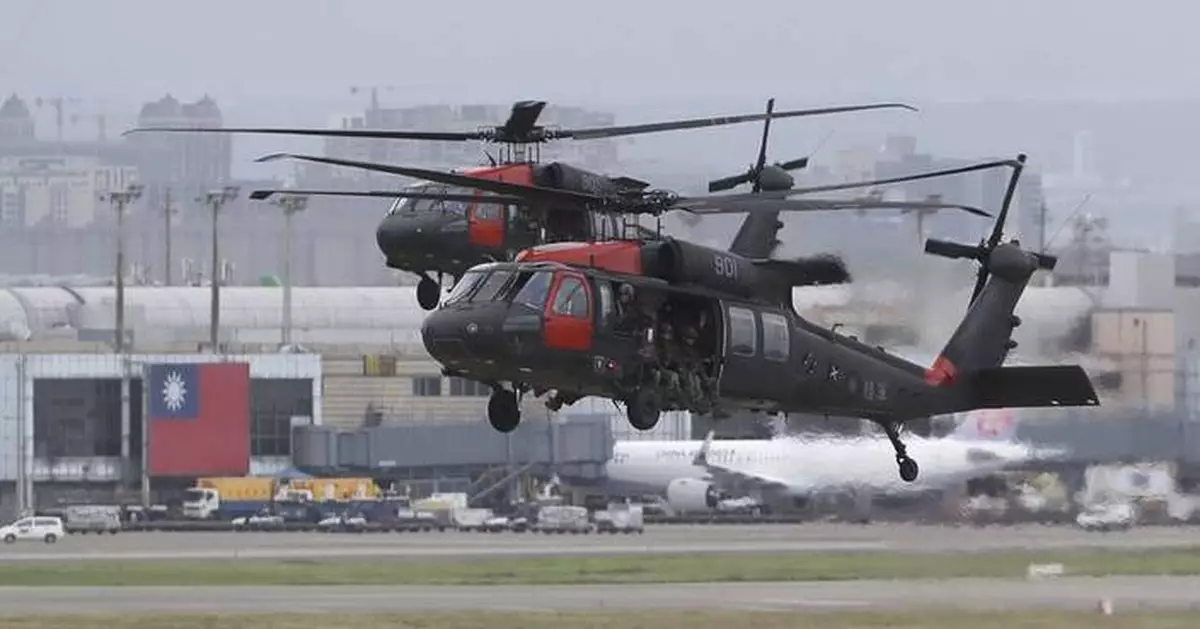
There are about 5,000 Black Hawks in use around the world, according to the aviation site FlightGlobal.com. The twin-engine, four-blade helicopter is manufactured by Sikorsky, a subsidiary of defense contractor Lockheed Martin.
The aircraft involved in Wednesday's collision was an Army version. There are other variants made for the Navy, Air Force and Coast Guard, and for specialized duty such as intelligence gathering.
The Black Hawk made its debut in 1979. The helicopters have been involved in numerous U.S. military operations, including the raid that killed al-Qaida leader Osama bin Laden in May 2011, the wars in Afghanistan and Iraq and the invasions of Panama and Grenada.
It is perhaps best known as the namesake aircraft in the 2001 war film “Black Hawk Down,” about a U.S. helicopter shot down in Mogadishu, Somalia, during the civil war there. Others have crashed over the years on training missions.
The passenger jet was manufactured by Quebec, Canada-based conglomerate Bombardier Inc. The CRJ program was sold in June 2020 to the Japanese company Mitsubishi Heavy Industries, which no longer makes them but continues to produce parts.
The twin-engine aircraft comes in several versions capable of seating between 68 and 78 passengers. It is a commonly used regional aircraft used for medium and shorter flights, with more than 900 produced since it was introduced in May 1999.
Bombardier said in 2015 that the CRJ-700 series accounted for 20% of all departure flights in North America, with about 200,000 flights per month.
The plane in Wednesday's crash was registered as N530EA and manufactured in 2010, according to the Federal Aviation Administration. The jet was operated by an American Airlines subsidiary, PSA Airlines.
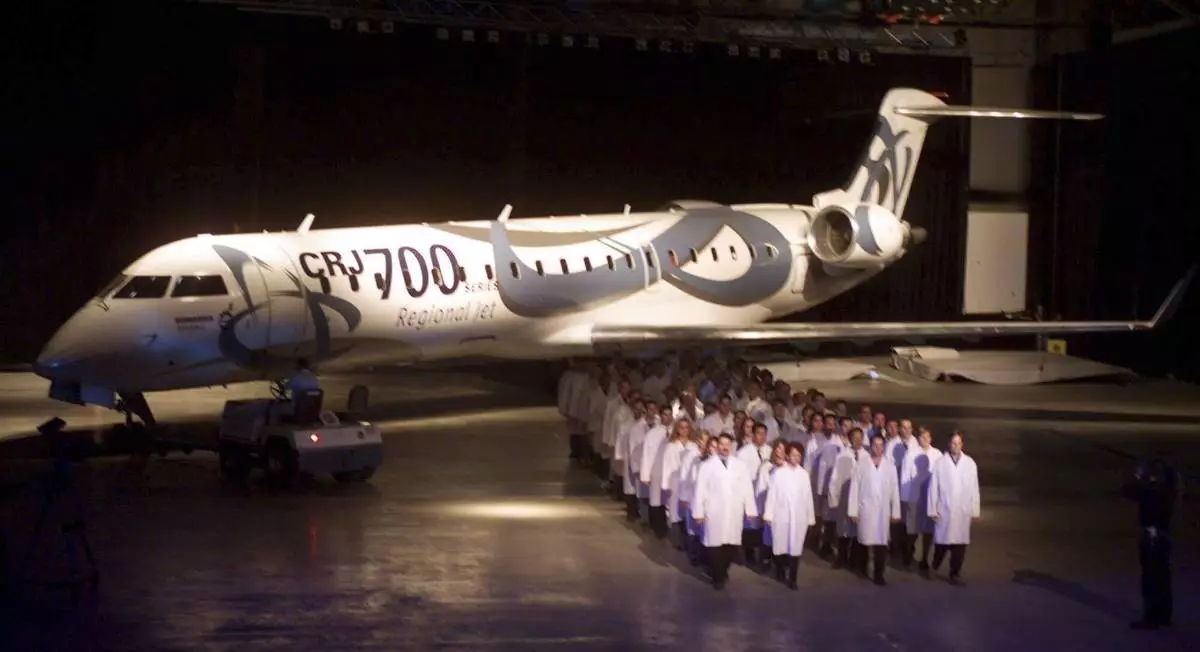
FILE - Employees and officials gather around the new Bombardier CRJ700 during roll out ceremonies Friday, May 28, 1999 in Montreal. (Paul Chiasson/The Canadian Press via AP)

FILE - Two Sikorsky UH-60 "Black Hawk" helicopters approach during the annual Han Kuang military exercises that simulates an attack on an airfield at Taoyuan International Airport in Taoyuan, northern Taiwan, Wednesday, July 26, 2023. (AP Photo/ Chiang Ying-ying)
TEL AVIV, Israel (AP) — Hezbollah has launched a new weapon against northern Israel in the latest round of fighting: small drones controlled with fiber-optic cables the width of dental floss that avoid electronic detection.
These drones — used widely in the war in Ukraine — are small, hard to track and lethal. Drones injured at least a dozen soldiers in northern Israel on Thursday, two seriously, and the Israeli military said it had attempted to intercept multiple drones. In the past week, Hezbollah drones killed an Israeli soldier and defense contractor operating in southern Lebanon.
Many drones are susceptible to electronic jamming by air defenses. Jamming can cause a drone to crash or return to its point of origin.
Fiber-optic drones are not piloted via, for example, GPS signals or radio control. They have a thin cable that connects an operator directly to the drone, making it impossible to electronically jam.
The drones are not infallible because the wind — or other drones — can cause the cables to tangle.
But, “if you know what you’re doing, it’s absolutely deadly,” said Robert Tollast, a drone expert and researcher at the Royal United Services Institute in London, explaining how the drone can fly low and creep up on a target.
Experts say militaries must either intercept the drones, which is difficult due to their small size and short flight path, or find a way to snip the nearly invisible cable.
Hezbollah — the Iran-backed militant group in Lebanon — has mostly been using the fiber optic drones on Israeli soldiers operating in southern Lebanon or towns on the border.
Here’s a closer look at these weapons.
An Israeli military official told AP the fiber optic drones are a relatively new threat during the latest round of fighting with Hezbollah. Hezbollah seems to have turned to them because Israeli air defenses have been successful against larger and more powerful rockets, missiles and other drones, said the official, who spoke on the condition of anonymity in line with military guidelines.
Israel believes the drones are made locally and are easy to produce – requiring little more than an off-the-shelf drone, a small amount of explosives, and transparent wire that is readily available on the consumer market, he said.
He called the drones the biggest threat to troops inside Lebanon but said the Israeli military is working on technological solutions. In the meantime, Israel is taking measures on the ground to defend troops, such as adding nets and cages to military vehicles.
The fiber-optic drones are the latest part of a cat-and-mouse race as Israel’s high-tech defenses race to intercept new threats, especially ones that are less sophisticated.
Ran Kochav, a former head of the Israeli military’s air defense command, said Israel is failing in its attempts to defend against the fiber-optic drones.
“They fly very low and very fast, and they are very small, it’s very difficult to detect them, and even after they’re detected, they are really hard to track,” he said.
Kochav said Israel spent years focusing on strengthening its air defense systems to improve protection against rockets and missiles. But drones were not seen as a top priority.
He said Israel should have been following the advances in fiber-optic drones in the war in Ukraine and assumed that like Russia, other Iranian allies would eventually use them.
Throughout the war in Ukraine, Moscow and Kyiv have been engaged in a race to develop new technology.
Russia pummels Ukraine almost nightly with Shahed long-range attack drones — originally from Iran. Although Moscow has made many improvements to the drones, some can still be taken down by electronic jamming.
Fiber-optic drones were developed to get around that problem — although they do not have the same range as a drone that uses a radio link or artificial intelligence to navigate.
In some cases, fiber-optic drones have been recorded with cables extending as far as 31 miles (50 kilometers) said Tollast, the expert in London.
Russia and Ukraine are using many different types of drones “at a phenomenal scale,” he said.
The fiber-optic drones are in such wide use that footage shows front-line Ukrainian towns coated with shiny, fishing line-like strings, resembling massive spiderwebs shimmering in the sunlight.
Israel has sufficient firepower to intercept drones, but the key is early detection, Kochav said.
He explained that Israel already has suitable technology that tracks changes in light, identifies signals and communications, and can recognize the sound of drone propellers.
But he said these monitoring systems haven’t been widely deployed along the northern border.
Over the past weeks, Hezbollah has aired videos through social media platforms and its Al-Manar TV station of attacks with these new drones, especially against Israeli troops in southern Lebanon.
These attacks have captured public attention. One attack killed one Israeli soldier and wounded six others, some of them seriously, last weekend. Another attack, on Tuesday, killed an Israeli civilian contractor in southern Lebanon.
In the attack that killed the soldier, Hezbollah issued a video taken by the drone until it exploded in the middle of troops gathering near a vehicle. Another drone was fired at the same location as a military helicopter landed to evacuate the wounded but narrowly missed.
Ali Jezzini, a journalist specializing in security and military affairs who closely follows Hezbollah’s capabilities, estimated that the drones used by the group cost between $300 and $400 each. He added that they appear to be manufactured locally using 3D printing technology, in addition to readily available electronic components typically used for civilian purposes but capable of dual-use applications.
Hezbollah announced that it began using fiber-optic guided drones for the first time during the round of fighting that began March 2, after using other types of drones for years.
Israel also has a fleet of drones that carry out surveillance and attacks, though not necessarily with the fiber-optic cables, to target Hezbollah militants.
Zevik Glidai, a 78-year-old math teacher and volunteer ambulance driver, discovered coils of the translucent fiber-optic cables surrounding a drone that crashed into his backyard in the northern Israeli city of Kiryat Shmona on April 13.
His house is 2 kilometers (1.5 miles) from the Lebanon border. He was sitting at home when he heard a high-pitched shriek and a small crash. His neighbor yelled that the yard was on fire.
The two of them put out the fire with a garden hose but noticed something new: The destroyed drone was surrounded by loops and curls of a white thread.
“We are very worried about these drones because there's no way to shoot it down, because we can’t detect it,” Glidai said.
He said there was no warning siren before the drone crashed, and the bomb squad that responded called it a miracle that nearly 2 kilograms (4.4 pounds) of explosives failed to detonate.
“They told me, ‘You have a lot of luck,’” said Glidai, who noted that he's lived through several iterations of Hezbollah weapons in his 48 years in Kiryat Shmona. “They picked up all of the pieces that they could pick up, and they left me a few optical fibers as a keepsake.”
Mroue reported from Beirut; Burrows from London.
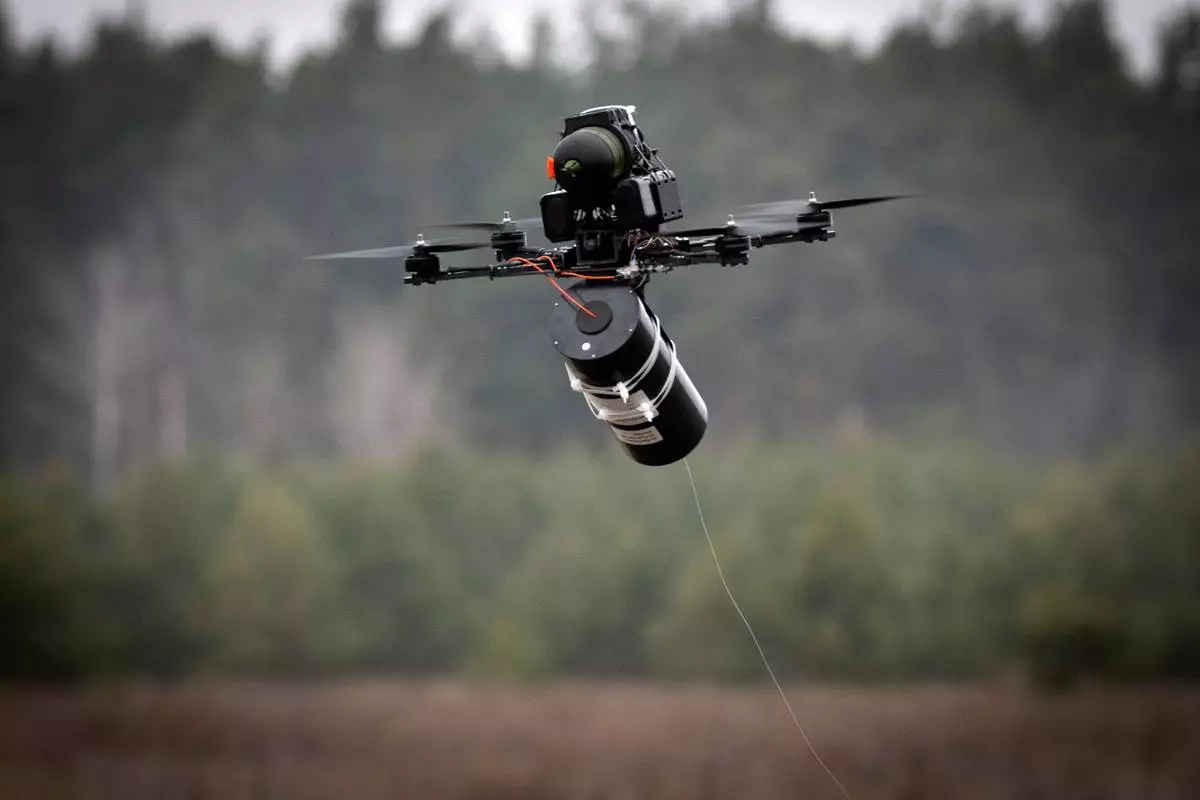
FILE - A Ukrainian made FPV fibre optic drone flies at a military market place at an undisclosed location in the Kyiv region, Ukraine, Jan. 29, 2025. (AP Photo/Efrem Lukatsky, File)