A Chinese naval fleet consisting of guided-missile destroyer Baotou and comprehensive supply ship Gaoyouhu arrived at Pakistan's Karachi Port on Thursday to participate in a multinational joint exercise code-named "Peace-2025," initiated by the Pakistani navy.
Greeting the fleet at the port were representatives from the Pakistani Navy and the Chinese Consulate General in Karachi as well as the relevant Chinese personnel. After the welcome ceremony, staff from the Chinese Consulate General in Karachi and representatives of the Chinese community in Pakistan boarded the vessels for a visit and exchange activities.
"Standing on the vessel, I feel an immense sense of pride as China grows increasingly stronger and the Chinese navy continues to make steady progress, with its military hardware and equipment being updated at an accelerated pace," said Li Jionglong, acting president of the Overseas Chinese Association in Karachi.
"When I walked up the stairs to board the vessel, I felt like I had returned to the motherland. It gave me a deep sense of security. As part of the Chinese diplomatic staff here, I truly feel that our great motherland always stands firmly behind us, giving us the confidence and courage to work and live abroad," said Xie Shuye, deputy consul general of the Chinese Consulate General in Karachi.
During the exercise, the participating vessels will conduct drills focused on maritime resupply, joint anti-piracy operations, search and rescue, and air defense, which are aimed at enhancing the capability of jointly safeguarding maritime security.
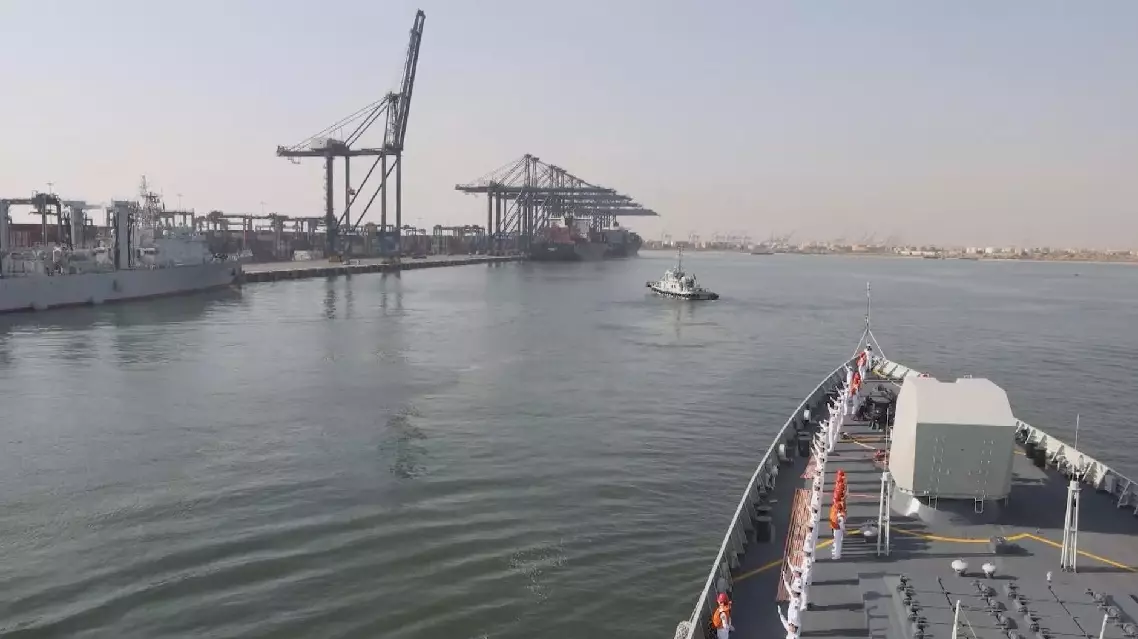
Chinese naval fleet arrives at Pakistani port for multinational joint exercise
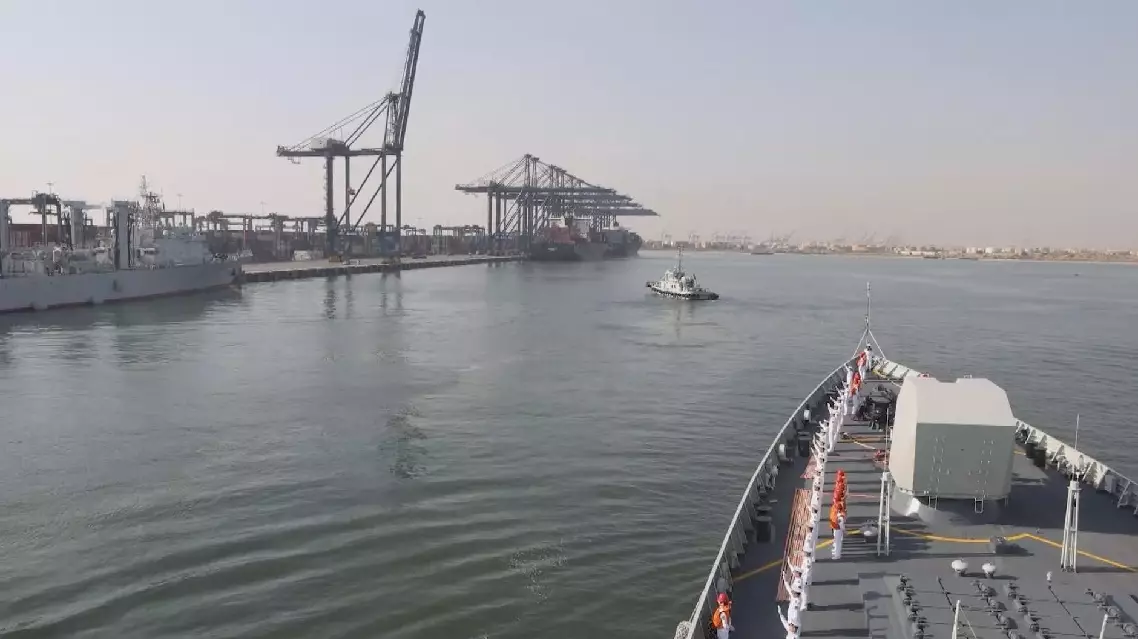
Chinese naval fleet arrives at Pakistani port for multinational joint exercise
An international academic symposium was held on Saturday at the Xizang Museum in Lhasa, capital of southwest China's Xizang Autonomous Region, to mark the 75th anniversary of the peaceful liberation of the region.
Perched on the Roof of the World, the Xizang Museum is the first modern museum on the plateau.
On the 75th anniversary of Xizang's peaceful liberation, it welcomed a group of international scholars to reflect on the region's transformation and future.
Greening efforts on the highest region on Earth have seen major strides.
Forest coverage has risen from less than 1 percent in 1951 to 12.5 percent today.
"Even here you see around the mountains of Lhasa here, the massive large-scale plantation. There is a big lesson to learn now to other parts of the world and other countries also to come. This is the conservation. We should move this way," said Krishna Prasad Oli, former Nepali ambassador to China. Nestled in the Himalayas is not just Xizang's natural beauty, but its unique culture.
Over the past few decades, the central government has invested billions of yuan in the region's heritage protection.
"In general there are so many rumors that are just not true. For example, there are rumors in our media that China suppresses the Tibetan language. A very simple thing is on the street that you see signs and two languages everywhere (in Mandarin and in Tibetan). Even in Austria and the minority areas, there are big discussions if we should write something in minority languages. But in China it is not a problem. So China's handling this is far better than Austria," said Georg, Vavra, an Austrian historian.
The most ambitious and costly undertaking on the plateau since its liberation has been building modern infrastructure.
Today, Xizang boasts a network of roads and railways that continues to expand.
"It just so happens that yesterday I traveled by train from Nyingchi to Lhasa. The UK is a country of 60 million people and has been struggling and failing for 17 years to build 150 kilometers of high speed rail. Now if you consider Xizang with a population of 4 or 5 million, they could never undertake a project of that scale, and that is what China is trying to do. China is the only country in the world that has a genuine interest in the prosperity and the development of Xizang," said David Ferguson, a Scottish commentator.
Beyond traditional industries, emerging sectors are also taking root in China's western frontier.
"In the 75 years since its peaceful liberation, Xizang has built its scientific and technological capabilities from the ground up. It has become a driving force behind the region's economic and social progress," said Nyima Tashi, a professor with the School of Information Science and Technology under Xizang University.
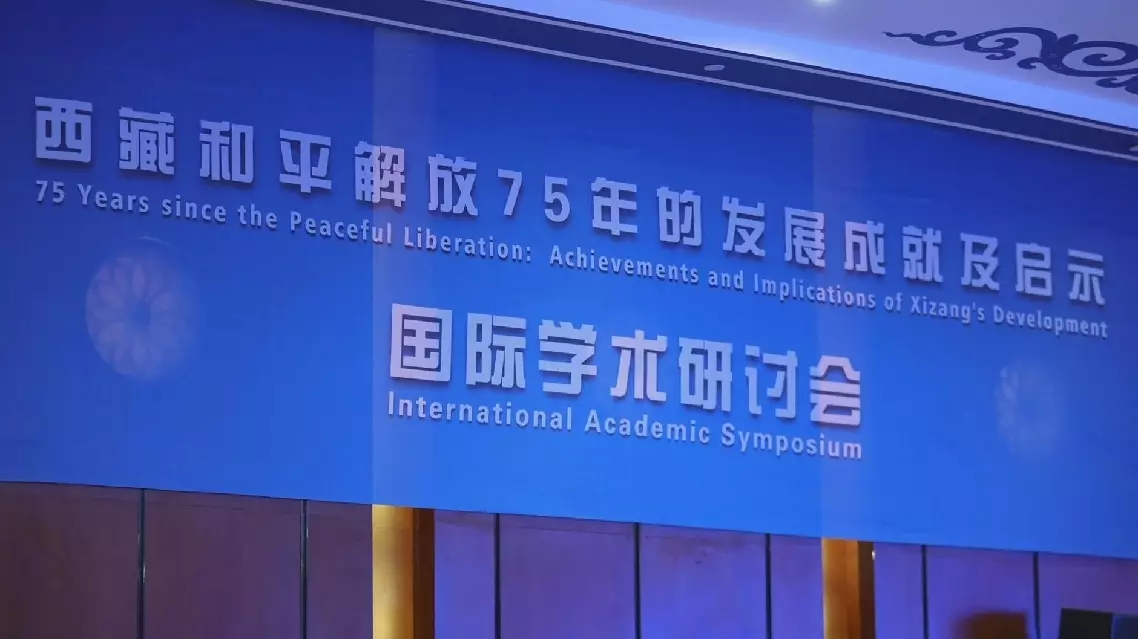
Int'l scholars gather in Xizang to review regional development over past 75 years