The 'AMAN 2025' multinational military exercise in Pakistan concluded on Tuesday, followed by a formal fleet separation ceremony on Thursday, marking the successful completion of a week-long series of exercises aimed at promoting regional stability and cooperation.
More than 10 countries including China, Indonesia, Japan, Italy, Malaysia and the United States participated in the event, with China contributing a naval fleet that included guided-missile destroyer Baotou and supply ship Gaoyouhu.
The exercise was conducted in two phases, beginning with a harbor phase from February 7 to 9, where participants engaged in drill consultations, roundtable discussions, and vessel visits. The exercise then transitioned to a sea phase from February 10 to 11, which involved a range of maritime operations, including maritime resupply, anti-piracy drills, search and rescue exercises, and air defense maneuvers.
In a bid to further strengthen global maritime cooperation, the Pakistan Navy has launched the 'AMAN Dialogue', a high-level forum that underscores Pakistan's growing role as a trusted partner in promoting stability and security at sea.
"The purpose of this exercise is to ensure a joint combat readiness in the Indian Ocean. So, we are very honored that China has participated in this exercise," said a Pakistani naval officer.
The exercise, which first began in 2007, officially commenced in the presence of senior naval representatives from across the world.
As regional security concerns grow in the Indian Ocean, AMAN 2025 serves as a crucial platform for nations to enhance their ability to safeguard international waters.

Multinational military exercise AMAN 2025 closes on high note
Nigeria's fuel market is undergoing a rare shake-up as competition pushes prices lower, bringing relief to local consumers while raising concerns over business durability.
In the capital city of Abuja, the state oil firm Nigerian National Petroleum Company (NNPC) has been selling petrol at about 815 naira per liter (about 0.57 U.S. dollars per liter), down from about 0.66 U.S. dollars per liter earlier in 2026. Other stations supplied by private giant Dangote are offering even lower prices, selling at around 750 naira (about 0.53 U.S. dollars) per liter.
For millions of Nigerians, the drop has been easing pressure on transport, food and daily living costs.
"I spend relatively lower on fuel and, by implication, transportation now than what it used to be," said Salifu Usman, a local resident in Abuja.
"We are happy with what we are seeing, because, of course, for a very long time, we are witnessing the crash down of price, even during festive period," said Jonathan Madaki, another resident.
The price cut has also allowed for higher profit margins for local small business operators, who have long relied on petrol-powered generators to cope with chronic power shortages.
Behind the price cuts is a growing battle for market share. The Nigeria-based Dangote Refinery, the largest in Africa, has boosted domestic supply and slashed its wholesale price to around 700 naira (about 0.49 U.S. dollars) per liter.
The move has forced importers and the state oil company to lower their own prices to stay competitive. But as margins shrink, analysts warn, what now appears to be a price war may not last.
"My own interpretation is that we are going to that stage where, especially those that, if it keeps coming down, I think those that bring in products may find it not so attractive again. So I don't actually see how sustainable this price war, if I may use that term, will be," said energy expert Paul Ogwu.
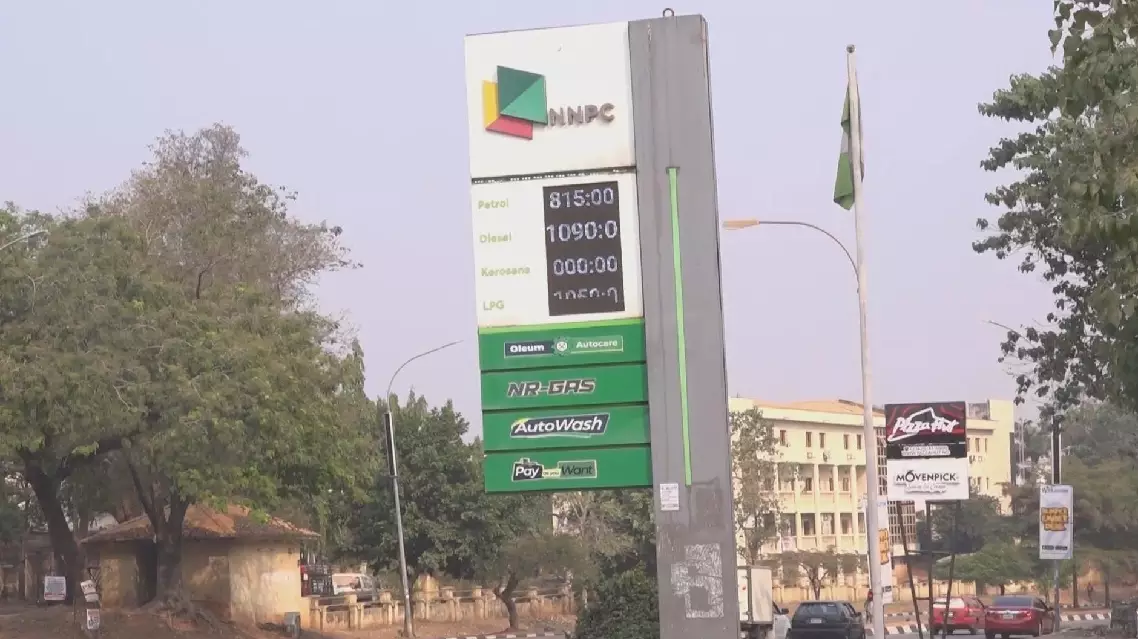
Nigeria petrol price cuts ease living costs, raise durability concerns