Mushrooming smart factories, representing the pinnacle of global smart and digital manufacturing, are shedding lights on China's digital transformation in its manufacturing sector.
Every 76 seconds, a new Xiaomi car rolls off the production line at its assembly plant in the Yizhuang of Beijing, where highly automatic machinery is seen roaring at full steam.
In the assembly workshop, more than 700 robots are operating around the clock, guided by artificial intelligence (AI) technology.
"We have the industry's first AI-powered X-ray system that can inspect every large die-casting part and it's dozens of times more efficient than our manual inspection," explained Kang Yanzhao, director of battery workshop at Xiaomi Auto plant.
Not only automotive factories, but traditional energy enterprises are also actively driving the digital transformation of their operations. By using digital twin technology, China Petroleum and Chemical Corporation, or Sinopec, has developed an industrial internet platform, boosting labor productivity by over 30 percent and cutting energy consumption per 10,000 yuan (about 1,380 U.S. dollars) of output value by 8 percent.
"By combining the latest information technology with traditional petrochemical industrial technologies and systems engineering, we've been able to really improve resource efficiency across the whole supply chain and make production processes much smarter. This has pushed China's petrochemical industry to a new level of intelligence," said Wang Zizong, deputy chief engineer of Sinopec.
Experts say that innovative practices in smart factories will drive the digital transformation of manufacturing and inject new momentum. Moving forward, China will expand excellence-level smart factory promotion and prepare to launch pioneer-level cultivation, aiming to further promote the expansion, deeper integration, and elevated evolution of intelligent manufacturing.
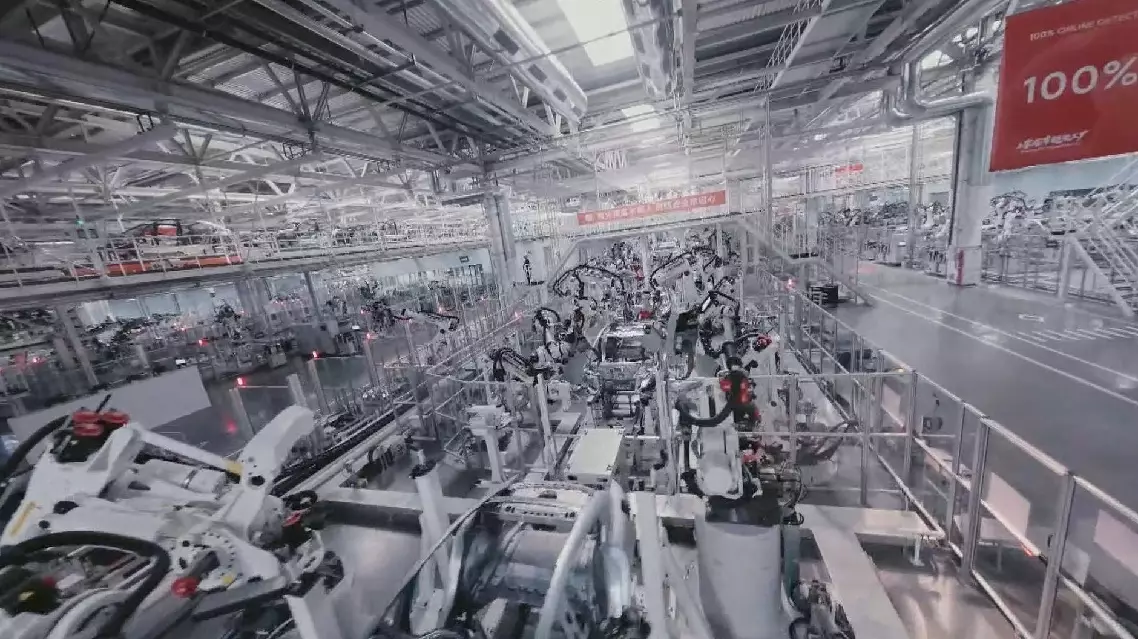
Smart manufacturing advances production lines in China

A joint maritime exercise codenamed "Will for Peace 2026," which drew participation of BRICS member states including China, Russia, and South Africa, closed on Friday in the airspace and waters near South Africa.
The exercise, which ran from Jan 9 to 16 in the waters and airspace off Simon's Town, consisted of two main phases.
The port and shore operations phase from Jan 9 to 12 included the opening ceremony, ship tours, cultural and sports events, and professional exchanges.
This was followed by the sea phase from Jan 13 to 15, during which the participating vessels conducted drills on communication, formation maneuver, maritime strike, hijacked vessel rescue, helicopter-borne patient transfer and treatment, and other subjects.
The exercise concluded with a closing ceremony on Friday.
"The waters around Simon's Town is a maritime transportation hub connecting the Atlantic and Indian Oceans, and maritime transport of goods is indispensable in many countries' economic activities. So for the BRICS member states, the better use of military forces to maintain shipping safety in this vital sea area and keep it in a state of peace will not only better guarantee their economic development and social stability, but also make more and greater contributions to the whole world," said Wei Dongxu, a military observer.
The joint maritime exercise went through under the theme of "Joint Actions to Ensure the Safety of Key Shipping Lanes and Maritime Economic Activities."
Selected from the 48th Chinese naval escort taskforce, the Chinese participating force included guided-missile destroyer Tangshan (Hull 122) and comprehensive supply ship Taihu (Hull 889), as well as a ship-borne helicopter and several dozens of special operations troops.
The exercise aimed to further deepen military exchanges and cooperation among participating nations, enhance their collective capacity to address maritime threats, and contribute to jointly safeguarding regional peace and stability and building a community with a shared future for humanity and a maritime community with a shared future.
Joint BRICS maritime exercise closes