A regular helicopter passenger flight route connecting the city of Nantong in eastern China's Jiangsu Province with Shanghai was officially launched on Thursday, slashing travel time between the two cities and providing an efficient daily commuting service.
Operating twice per day at peak times, the new flight route covers a distance of 123 kilometers, cutting the original two-hour travel time on the ground down to just 40 minutes by air.
In addition to its speed, the flight also allows passengers to enjoy the unique urban landscapes on both sides of the Yangtze River from the air.
The new route marks the latest development in China's fast-growing low-altitude economy, which refers to economic activities and industries centered around manned and unmanned aerial vehicles operating in the airspace usually within 1,000 meters above the ground.
The growth potential of this relatively new sector has been highlighted by the Civil Aviation Administration of China, who estimated that the total scale of the country's low-altitude market would triple in value from two years ago to hit 1.5 trillion yuan (over 200 billion U.S. dollars) this year and say it could be worth as much as 3.5 trillion yuan by 2035.

Regular helicopter passenger flight route launched connecting Nantong, Shanghai
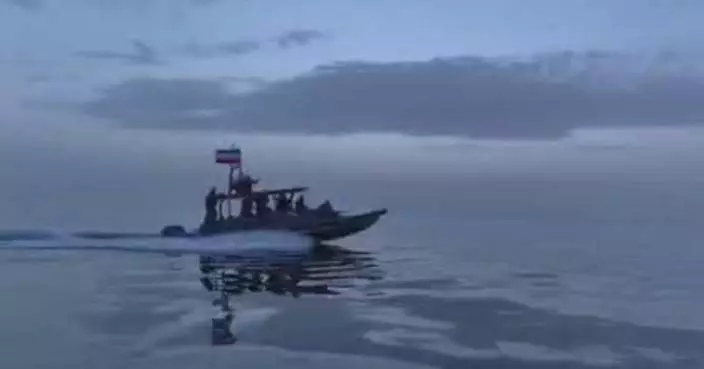
U.S. President Donald Trump said on Thursday that the United States had "total control" over the Strait of Hormuz and that it was "sealed up tight" until such time as Iran was able to make a deal, while Iran had drawn up a target list for retaliation against the United States and its allies.
Trump made the remarks in a social media post, adding that "no ship can enter or leave without the approval of the United States Navy."
He also said on Thursday that he has ordered the U.S. Navy "to shoot and kill" any boat putting mines in the waters of the Strait of Hormuz.
There is to be "no hesitation" for U.S. forces to attack Iran's "small boats" putting mines, and the U.S. minesweepers are clearing the Strait of Hormuz right now, Trump said on his Truth Social.
Meanwhile, against the backdrop of diplomatic setbacks and a lack of trust in negotiations, Iran has drawn up a target list, based on the principles of reciprocal response and offensive deterrence, to address potential military actions by the United States and its allies.
Iran has prepared different responses for different scenarios: striking enemy power plants if its own are hit; targeting U.S. allies' energy facilities if its oil and gas sector is attacked, with the aim of cutting global oil output by 25 million barrels a day for one year; hitting AI and IT centers if its officials are assassinated; and launching massive missile and drone strikes against enemy aircraft carriers and helicopters if its territory is violated.
Iran also threatened to block the Bab el-Mandeb Strait and completely seal the Strait of Hormuz through large-scale mining if a U.S. naval blockade continues or escalates.
Should the U.S. launch a ground invasion using regional bases, Iran said it would coordinate with resistance front forces and local armed groups to capture U.S. soldiers. Surprise attacks on U.S. interests outside the region are also possible.
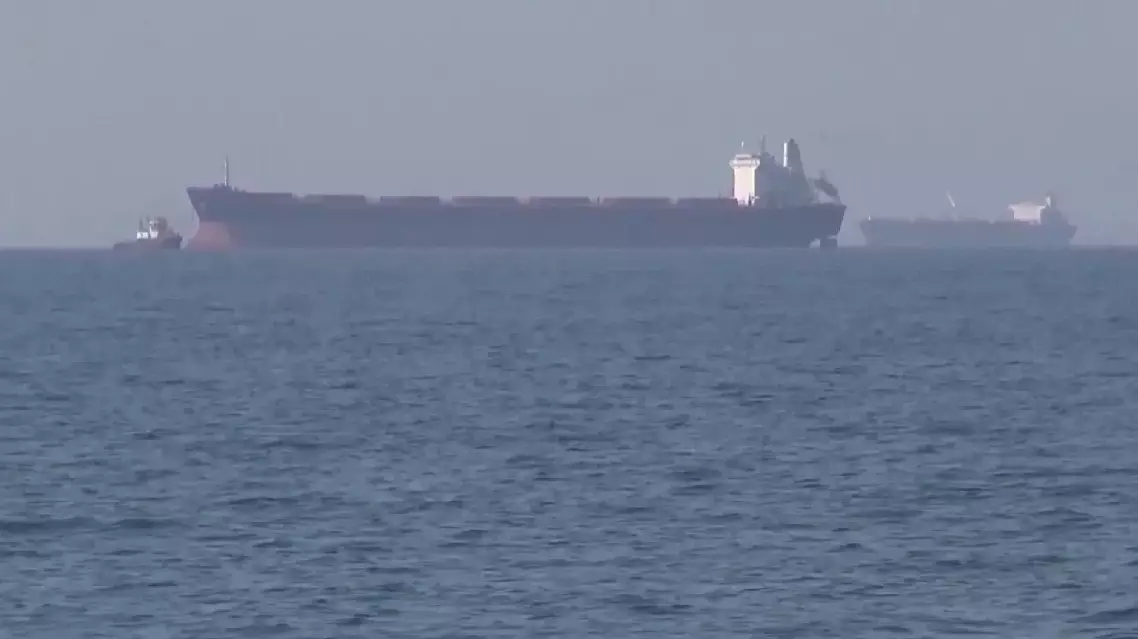
Trump claims full control of Strait of Hormuz as Iran draws up retaliation target list