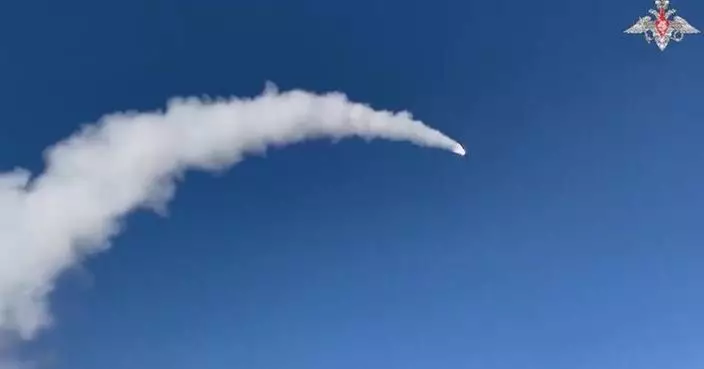
China's commercial aerospace industry is projected to hit a market size of 2.8 trillion yuan (about 380 billion U.S. dollars) by 2025, representing an annual growth rate of about 23 percent.
Across the commercial aerospace supply chain in China, from satellite manufacturing to services like satellite internet, double-digit growth in market size is anticipated. For example, the satellite operations and applications sector is projected to generate 98 billion yuan in revenue by 2025.
Li Yuan, Founder of China's commercial aerospace company SpaceIoT, said in an interview with the China Global Television Network (CGTN) on Thursday that advances in artificial intelligence (AI) are powering the development of commercial aerospace.
"When we're talking about two industries like AI and commercial aerospace industry integration, we have to see what is the structure of different industries. Commercial aerospace, actually is divided into two different parts. One is infrastructure, including the rocket manufacture and launching, satellite manufacture, launching and operation, and other gateway station infrastructure, etc. And the second part will be the satellite utilization or applications after the satellite was launched, including navigation, remote sensing and communication. And for AI, we can simply divide into big AI and small AI or lightweight AI. So, in the infrastructure part, what we can see for AI can empower these industries like autonomous control and safety and reliability enhancing," said Li.
Li noted that the Greater Bay Area (GBA) holds strategic advantages for the deployment of commercial aerospace initiatives.
"I think China's commercial aerospace industry is thriving right now. And for the Greater Bay Area, I think it has a lot of environment that other areas don't have. First of all is the full industry chain ecosystem. Actually, the GBA already has the rocket satellite ground station application. Another thing we have to say is actually for commercial aerospace. One thing we can't ignore is the innovation resources or innovation power. And the last but not least, is the market or the commercialization. For this location, actually, is very convenient to go to abroad, because it used to be our window for the world and it is still now is our window for the world as well," he said.
He also highlighted that private enterprises play a role in driving China's commercial aerospace market growth.
"I think the main strategy in China is we do state private dual engine model. Because different companies have different strengths. For a commercial company, the first priority will be efficiency improvement and cost reduction. And the second thing is that the commercial companies are very easy to build a full ecosystem by commercial genes, like SpaceIoT. We're doing solid IoT industry, we just cooperate with the censors, cooperate with the platform companies to provide the total solutions for the end user. So, the whole ecosystem will be built very quickly," said Li.
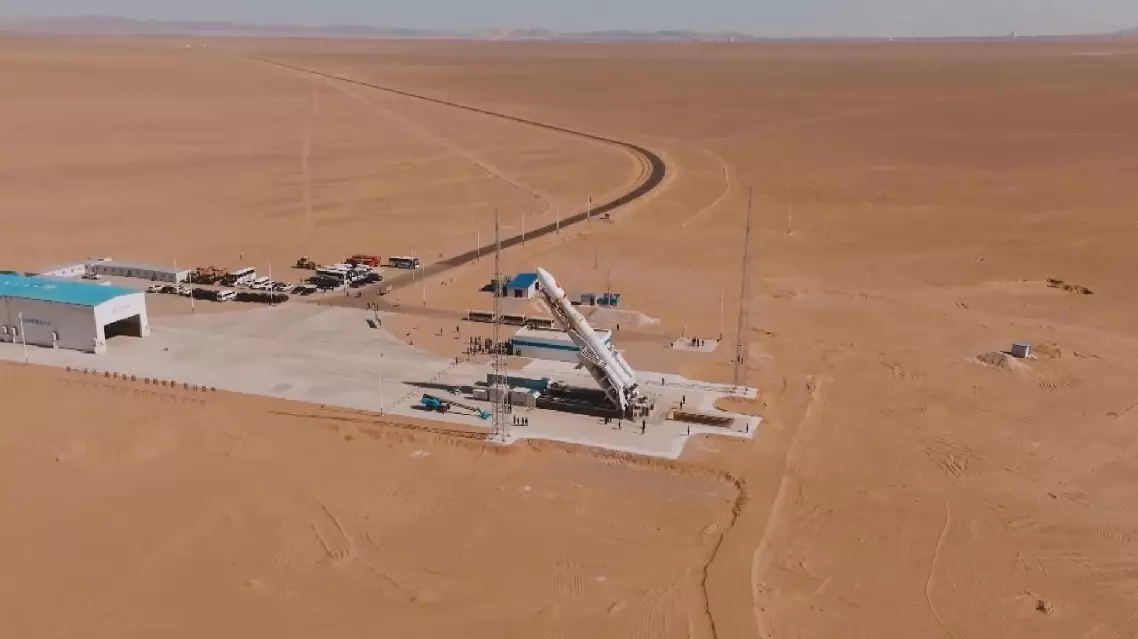
China's commercial aerospace industry to reach 2.8 trl dollars in 2025