The success of Chinese mainland's animated blockbuster "Ne Zha 2", the highest-grossing animated movie of all time globally, has further strengthened the cultural links between the mainland and the Taiwan region, said a scholar from the Chinese island.
Since its release in the Chinese mainland during the Chinese New Year, "Ne Zha 2" has proved a smashing success at the box office, with total earnings worldwide, including pre-sales, surpassing 12.3 billion Chinese yuan (1.72 billion U.S. dollars) as of Tuesday evening.
While the film was not yet scheduled to release in Taiwan, the belief in Ne Zha has long been rooted in Taiwan, having been passed down through generations.
"The culture in Taiwan is deeply intertwined with our shared Chinese heritage. Nezha is a name known to all the people here in Taiwan, with over 10,000 temples dedicated to him. Our cultural roots trace back to the Minnan (southern Fujian) culture, and Nezha was brought over by our ancestors from Guangdong and Fujian. Therefore, we are eagerly looking forward to the release of 'Ne Zha 2'," said Lo, Shih-hsin, head of Yangmingshan cultural association of Taiwan.
Since the release of the film, media in Taiwan have closely monitored the growth of its box office. As the film continues to break box office records, it has prompted reflection within Taiwan's cultural circles.
Local newspaper China Times from Taiwan has commented that some policies taken by the current authorities on the island have led to a chilling effect on Chinese culture in Taiwan.
In this context, practitioners in Taiwan's cultural industry find it challenging to understand, apply, or even innovate upon the essence of Chinese culture.
"During this Spring Festival, the top-ranking film online in Taiwan was 'Creation of Gods: Kingdom of Storm'. As its second part 'Creation of the Gods II: Demon Force' is set to release on March 14 in Taiwan, it represents the Chinese culture is deeply rooted among the Chinese people across from the both sides of the Taiwan Strait. We hope for cultural exchanges between the two sides of the Taiwan Strait and for everyone to come closer together," said Lo.
Also released during the Chinese New Year holiday which fell on late January, the mythological epic "Creation of the Gods II: Demon Force" have also garnered remarkable box office success.
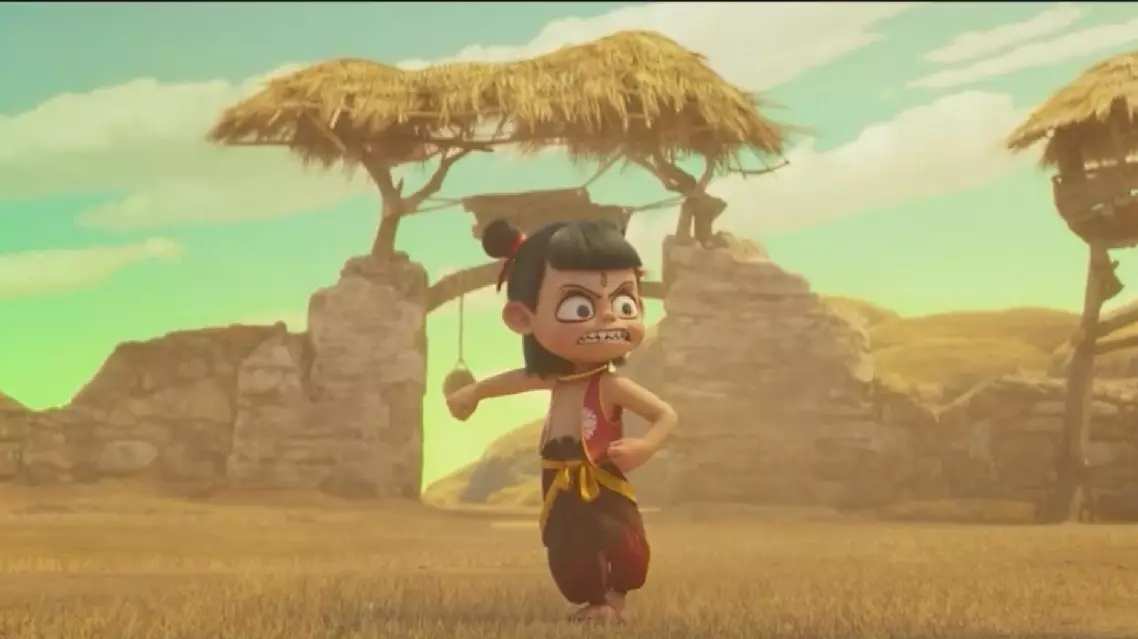
Animated blockbuster "Ne Zha 2" further boosts cultural links between mainland, Taiwan
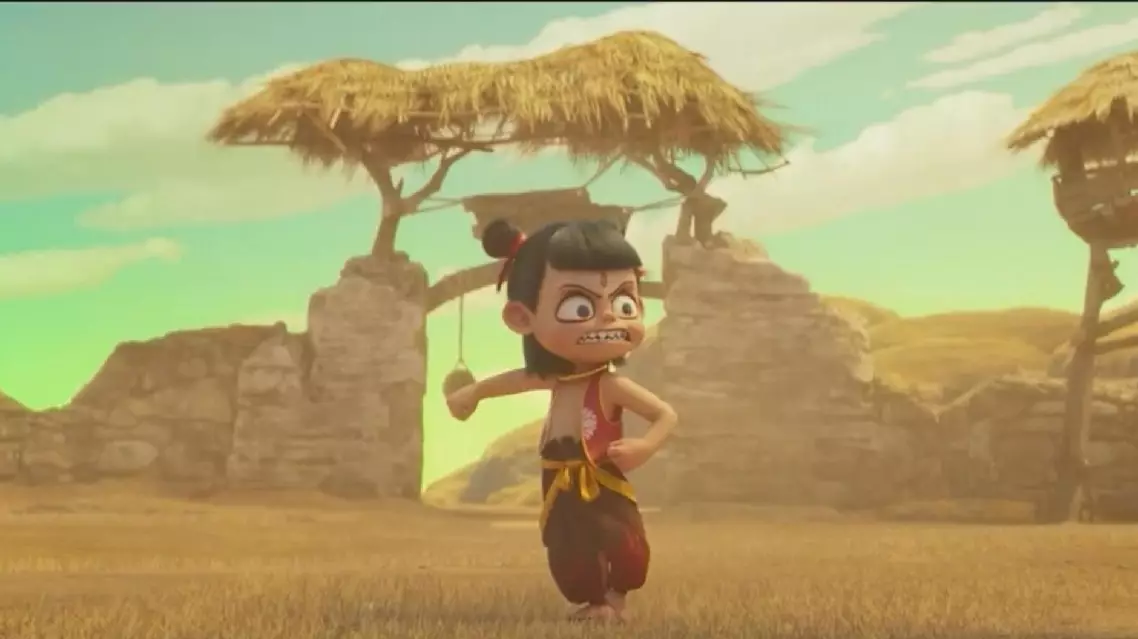
Animated blockbuster "Ne Zha 2" further boosts cultural links between mainland, Taiwan
From cutting-edge technology exhibitions to retail stores thousands of kilometers away from Europe and Southeast Asia, China-made robot vacuum cleaners are increasingly becoming a popular choice among consumers worldwide.
At electronics retailers in Berlin, Germany, Chinese brands such as Roborock and Dreame occupy prominent positions in dedicated robot vacuum sections, offering a wide range of products priced between 200 and 2,000 euros.
Many local consumers said that when purchasing smart home appliances including robot vacuum cleaners, they tend to give priority to Chinese-made products.
"It's a good price and good quality. It's also the innovation. I have a feeling that the European brands are not innovating enough," said one customer.
"I think they're always on top of the other technologies. They are getting them out faster. A lot of us are switching to the Chinese technology," another consumer said.
Germany is one of the most important overseas markets for China's floor-cleaning robots.
According to data from market research firm GfK, from January to November 2025, more than six out of 10 robot vacuum cleaners sold in Western Europe were Chinese brands.
Industry data also point to a strong global momentum.
According to the International Data Corporation (IDC), global shipments of smart robot vacuum cleaners reached 17.424 million units in the first three quarters of 2025, representing a year-on-year increase of 18.7 percent.
Chinese brands including Roborock, Ecovacs, Dreame, Xiaomi and Narwal ranked among the world's top five in terms of shipment volume, with a combined share of nearly 70 percent of the global market.
At a robot vacuum cleaner manufacturing plant in Huizhou, south China's Guangdong Province, workers were seen stepping up production of newly launched models that recently debuted at the Consumer Electronics Show in the United States, which concluded Friday in Las Vegas, Nevada.
The factory adjusted its production lines as early as December 2025 and stocked inventory in advance for overseas markets to ensure that new products could be delivered to global consumers at the earliest possible time.
"In 2025, Roborock's global shipments exceeded 7.2 million units. Since 2024, overseas revenue has accounted for more than 50 percent of our total revenue. Our products have now been sold to more than 170 countries and regions, serving more than 20 million households worldwide," said Quan Gang, president of Roborock.
At another robot vacuum cleaner manufacturing facility in Dongguan, Guangdong, rising overseas orders have prompted the company to upgrade its production lines with intelligent technologies to further boost capacity. The factory is currently operating at full load to meet a growing demand.
"For 2026, we have already obtained overseas orders worth at least 300 million to 400 million yuan (around 43 million to 57.3 million U.S. dollars). In addition, we've engaged in strategic cooperation with European home appliance group Cebos Group, and our total confirmed orders have exceeded 600 million yuan (around 86 million U.S. dollars)," said Zhang Junbin, founder and CEO of Narwal Robotics.
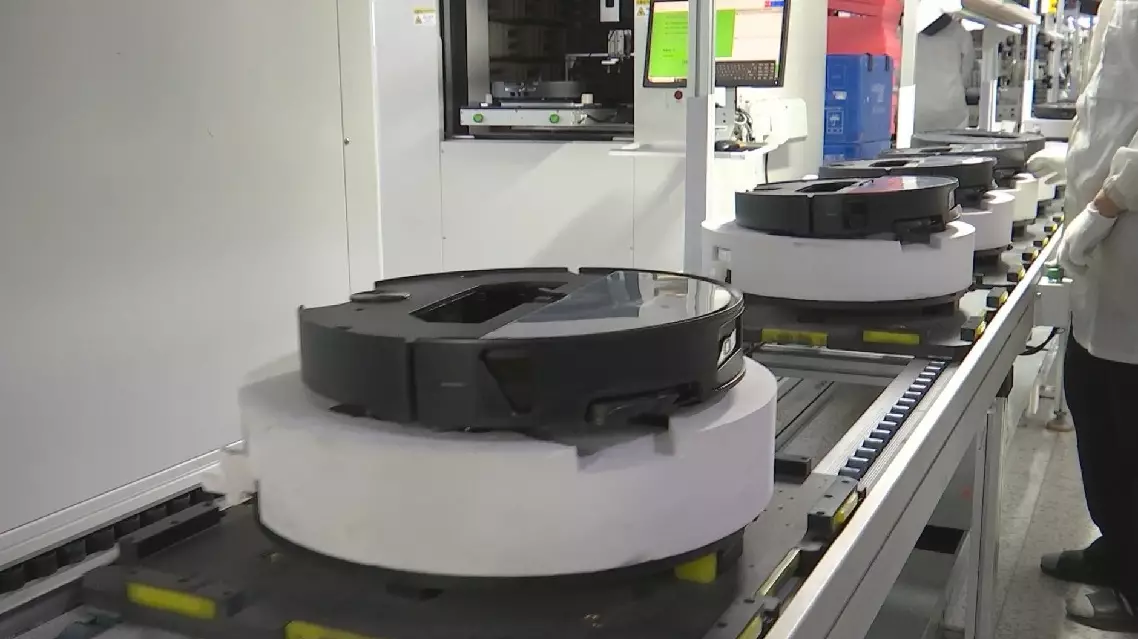
Chinese robot vacuum brands gain strong global traction