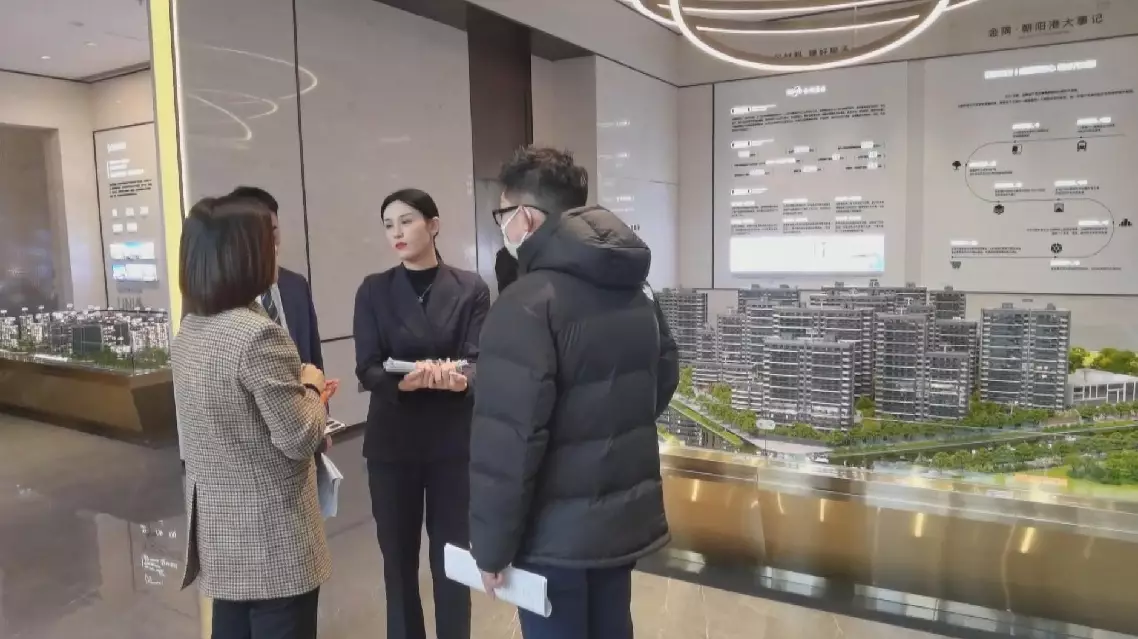
The authority in Beijing has recently rolled out a guideline to improve the housing quality and meet the increasingly diverse residential living needs of the people.
The listed measures are set to satisfy the diverse needs of home buyers in suburbs of Beijing, covering balconies decoration, double-height space setting up, ground floor utilization, public facilities and building heights.
These new rules provided developers with more possibilities in terms of space development and design and more cost-effective choices for home buyers.
The innovative use of the ground floor space in residential buildings stands out among all these measures. The ground floor space could be designed as a public area dedicated to fitness and parent-child activities, aimed at improving the convenience for residents in the community, especially for children and the elders.
"By utilizing the ground floor space, shared neighborhood public areas can be established, including rain shelters, areas for children and seniors to engage in activities, as well as facilities for fitness, reading, relaxation, socializing, parcel delivery, and retail, in order to create a more diverse living environment," said Yang Jun, deputy director of the Beijing Municipal Commission of Planning and Natural Resources.
The guideline suggests the area of balconies and decorative finishes not be included in the floor area ratio, thereby moderately increasing the "usable floor area ratio", a reference factor indicating the actual usable area of a housing unit.
The document also introduces flexible control of building height in a residential community.
The guideline will be piloted in areas such as Shunyi, Daxing, Yizhuang, Changping, and Fangshan. It will serve as a reference for Tongzhou District (the sub-center of Beijing) in implementation.
Beijing launches guideline to increase supply of quality homes
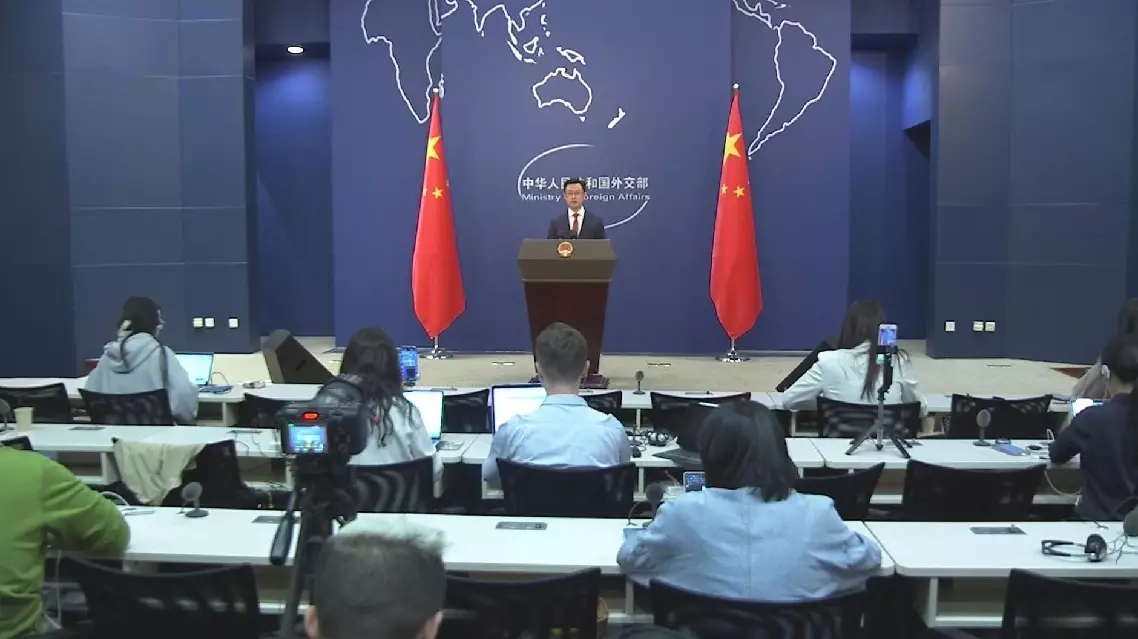
A Japanese lawmaker has raised concerns over Japan's push to expand its military and its nuclear policy.
Responding to some politicians' dangerous tendency towards possessing nuclear weapons, Takara Sachika, a member of Japan's House of Councilors, said that Japan's push to strengthen its military, combined with what she called a misguided nuclear policy, not only heightens regional tensions but also directly threatens regional security.
"I think this is completely unacceptable. Japan is a country that has suffered atomic bombings and is one of the nations most aware of the threat posed by nuclear weapons. Yet such a country is openly discussing the issue of possessing nuclear weapons and even attempting to revise the principle of not allowing the introduction of nuclear weapons, one of the Three Non-Nuclear Principles. This is an extremely serious problem," Takara said.
Takara said the Japanese government's tendency to expand its military capabilities is completely contrary to the Constitution.
"From the perspective of Japan's Constitution, Japan should never have adopted a policy of ensuring security by strengthening military capabilities. Yet today, enormous effort is being poured into military expansion, and that in itself is a serious problem," said the lawmaker.
At a Diet meeting in early November 2025, Japanese Prime Minister Sanae Takaichi said that what she described as the Chinese central authorities' "use of force on Taiwan" could constitute a "survival-threatening situation" for Japan, and suggested the possibility of armed intervention in the Taiwan Strait, drawing strong criticism worldwide.
Takara urged Takaichi to retract her erroneous remarks as soon as possible.
"I think there is a very big problem with making such remarks that provoke other countries. It is necessary to thoroughly examine the facts as soon as possible and withdraw the relevant remarks," she said.
Japanese lawmaker criticizes nuclear weapons remarks as threat to regional security