Skip to Content Facebook Feature Image

Chinese political advisor stresses exchanges among different civilizations in CPPCC interview

China

China

China

Chinese political advisor stresses exchanges among different civilizations in CPPCC interview

2026-03-07 20:08 Last Updated At:20:57

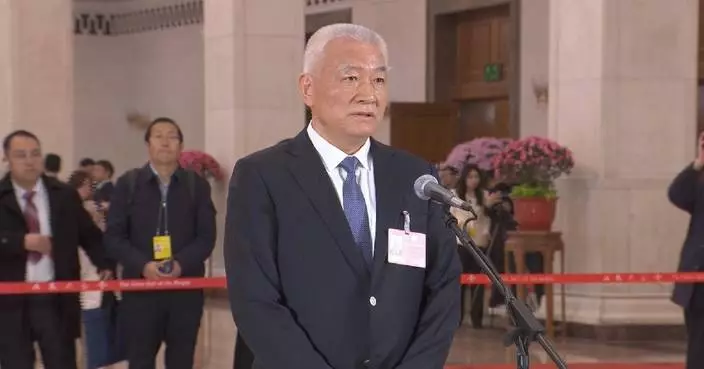
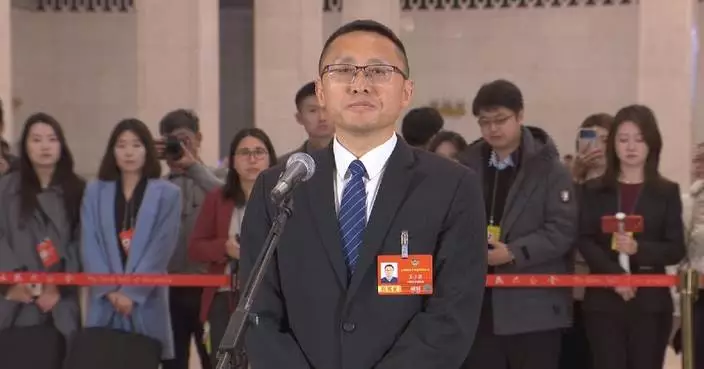
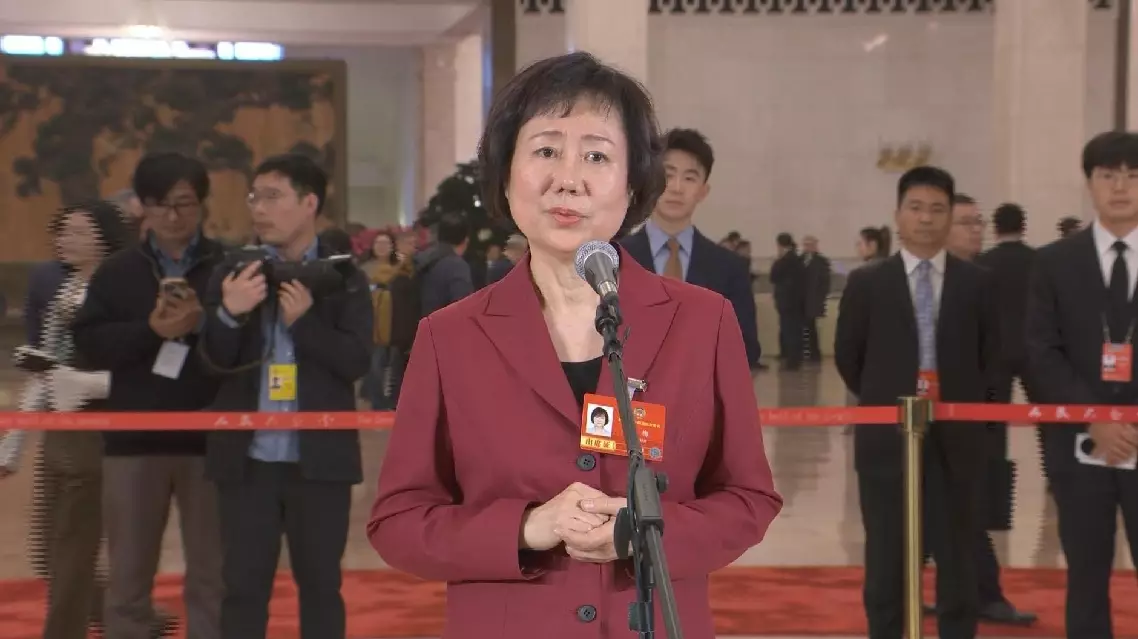
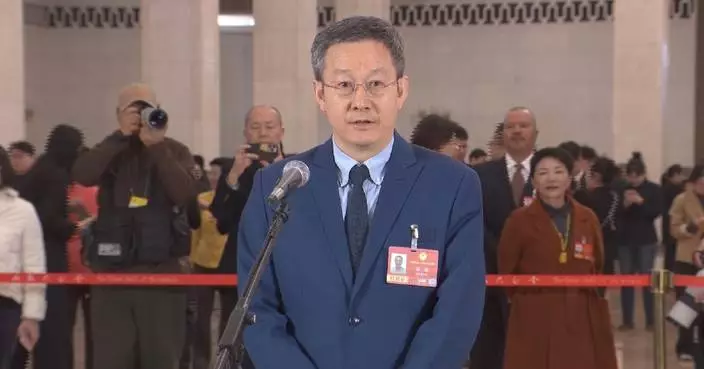
A Chinese national political advisor on Saturday remarked that China will always embrace the world with an open attitude, and engage in exchanges with different civilizations, in a group interview on the occasion of the annual political "two sessions" underway in Beijing.

Zhao Mei, a member of the National Committee of the Chinese People's Political Consultative Conference (CPPCC) and a senior research fellow with the Institute of American Studies at the Chinese Academy of Social Sciences, made her point by sharing two stories.

The first story Zhao shared was about Richard Sears, a U.S.-based researcher of Chinese characters, affectionately nicknamed "Uncle Hanzi" by Chinese netizens. He dedicated himself entirely to Chinese characters and founded the "Chinese Etymology" website, which digitizes ancient Chinese texts, enabling more people to appreciate the charm of Chinese culture. The website has now included nearly 100,000 ancient Chinese character forms, with users from over 170 countries and regions worldwide, many of whom have come to love Chinese characters and culture through this platform.

Zhao recounted another story from her own experience.

"A good friend of mine is a renowned expert on China in the U.S. A few years ago, he visited Xizang and shared three things that surprised him. First, Xizang's streets and alleys were very peaceful, and the people were living and working happily. Second, the Beijing-Xizang Railway was fast and smooth, with stunning scenery along the way, beautiful beyond words. Third, when he called his family in Boston from Lhasa (the capital of Xizang), he was amazed at how clear the call was. He excitedly repeated 'It's amazing!' several times during a call with me. He sincerely remarked that to study China, one must travel extensively within the country and see things for oneself - that is seeing is believing," she said.

Zhao stressed the profound impact of cultural exchanges on global understanding and cooperation.

"Through communication, civilizations can gain opportunities for mutual enlightenment; and through mutual learning, they achieve the vitality for continual development. The bonds between nations lie in the friendship among their people. China will always embrace the world with an open attitude, coexist and engage in exchanges with different civilizations, and promote mutual affection and understanding among people," she said.
Chinese political advisor stresses exchanges among different civilizations in CPPCC interview

Chinese political advisor stresses exchanges among different civilizations in CPPCC interview
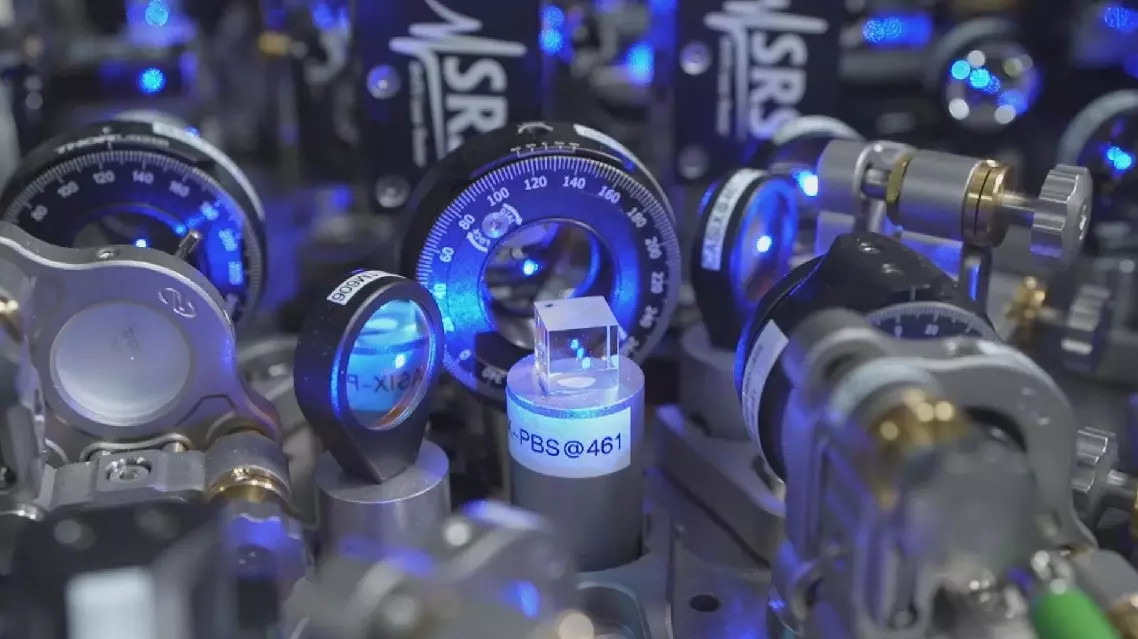
Researchers from the University of Science and Technology of China have achieved a major breakthrough in optical clock technology, developing a strontium optical lattice clock with stability and uncertainty both surpassing the 10⁻¹⁹ level, currently the most precise in the world.

The clock would lose or gain less than one second over roughly 30 billion years, according to the research team.

The findings were published in the international metrology journal Metrologia on Thursday.

Optical clocks are considered the most precise timekeeping devices currently available. They measure time by using the frequency of light emitted when electrons transition between energy levels in atoms. They can directly support the redefinition of the second in the International System of Units.

"This breakthrough enables China to rank among the top in the world in the development of optical clocks. It also provides a feasible technical path for the development of transportable optical clocks and satellite-borne optical clocks, and lays a solid and reliable foundation for using optical clock technology in areas such as testing fundamental laws of physics, supporting next-generation satellite navigation systems, and establishing a globally unified ultra-high-precision time reference," said Dai Hanning, professor of the university.

Beyond time-keeping, optical clocks can provide highly accurate time references for modern technologies such as satellite navigation, telecommunications and precision measurements. They also offer new experimental platforms for testing fundamental physics, including general relativity, as well as for the detection of gravitational waves and dark matter.

Achieving both stability and uncertainty at the 10⁻¹⁹ level opens the door to a range of frontier applications. These include millimeter-level measurements of gravitational potential and altitude, which could help monitor crustal deformation, groundwater changes and volcanic activity, as well as improve geoid mapping for disaster prevention and resource exploration.

Chinese researchers develop world's most precise optical clock

Chinese researchers develop world's most precise optical clock

Recommended Articles