Iranian President Masoud Pezeshkian said on Saturday that Iran will stop attacking neighbors unless attacks come from them but will never surrender unconditionally.
In his address televised by state-run IRIB TV, Pezeshkian called for national unity to defend Iran and defied the U.S. demand of Iran's "unconditional surrender," calling it "a dream that they should take to their grave."
Pezeshkian said that Iran has decided not to attack or fire missiles at targets in neighboring countries from now on unless it is targeted from those countries.
He stressed that the decision was made on Saturday by Iran's interim leadership council, and the Iranian armed forces have been notified of it.
"I have to apologize here to the neighboring countries that were attacked by Iran. During the process we have gone through, our leaders and loved ones lost their lives in the brutal aggression. Our armed forces and the heroes have risked their lives to defend the territorial integrity of our country. We will not attack neighboring countries. As we have stated many times, they are our brothers. We must join hands with these dear ones in unity to defend regional peace and stability. During yesterday's meeting of our Interim Leadership Council, we have made the decision, which has been notified to the armed forces, that from now on, neighboring countries should not be targeted for attack unless they attack us," he said.

Iran to halt strikes on neighbors unless attacked: President
Researchers from the University of Science and Technology of China have achieved a major breakthrough in optical clock technology, developing a strontium optical lattice clock with stability and uncertainty both surpassing the 10⁻¹⁹ level, currently the most precise in the world.
The clock would lose or gain less than one second over roughly 30 billion years, according to the research team.
The findings were published in the international metrology journal Metrologia on Thursday.
Optical clocks are considered the most precise timekeeping devices currently available. They measure time by using the frequency of light emitted when electrons transition between energy levels in atoms. They can directly support the redefinition of the second in the International System of Units.
"This breakthrough enables China to rank among the top in the world in the development of optical clocks. It also provides a feasible technical path for the development of transportable optical clocks and satellite-borne optical clocks, and lays a solid and reliable foundation for using optical clock technology in areas such as testing fundamental laws of physics, supporting next-generation satellite navigation systems, and establishing a globally unified ultra-high-precision time reference," said Dai Hanning, professor of the university.
Beyond time-keeping, optical clocks can provide highly accurate time references for modern technologies such as satellite navigation, telecommunications and precision measurements. They also offer new experimental platforms for testing fundamental physics, including general relativity, as well as for the detection of gravitational waves and dark matter.
Achieving both stability and uncertainty at the 10⁻¹⁹ level opens the door to a range of frontier applications. These include millimeter-level measurements of gravitational potential and altitude, which could help monitor crustal deformation, groundwater changes and volcanic activity, as well as improve geoid mapping for disaster prevention and resource exploration.
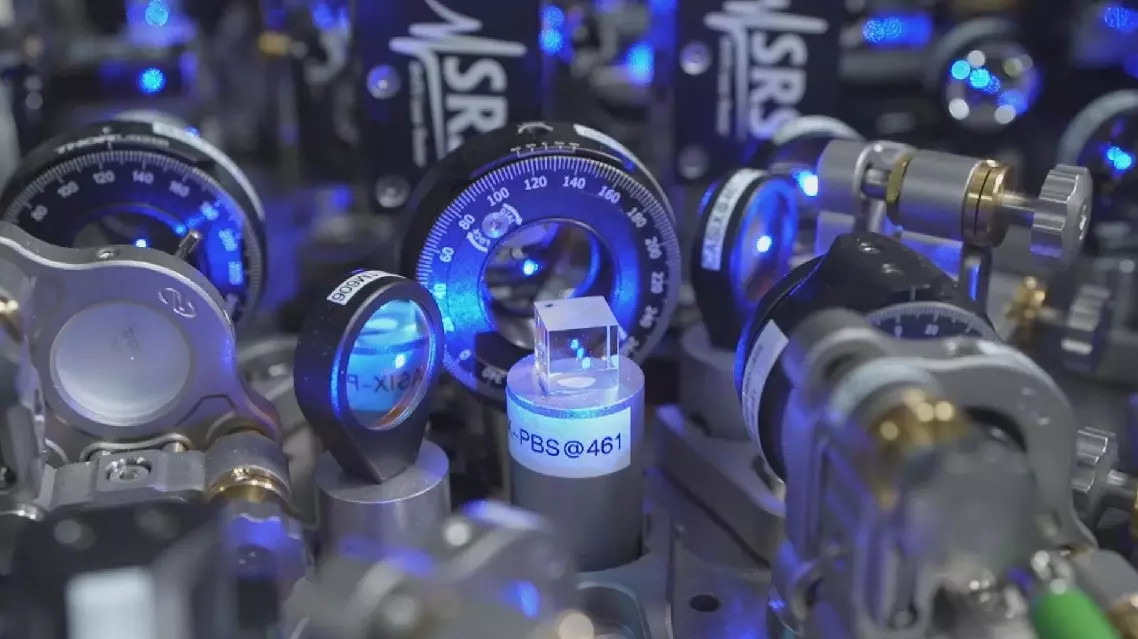
Chinese researchers develop world's most precise optical clock