Toys are riding on the momentum of AI, and are enjoying hot sales in China.
In Shenzhen City of south China's Guangdong Province, some technology companies have started to sell AI toys via live stream.
One of the firms that have been selling their AI toys online has seen a rapid growth in sales.
"Our turnover [of AI toys] during live stream can reach 520,000 yuan (about 71,714 U.S. dollars) for a day. Actually, our sales volume in January doubled compared with December last year," said Gao Feng, head of a local innovative technology company.
According to data from JD.com, a Chinese e-commerce platform, AI toys are extremely popular in early education for three- to six-year-old kids. In the first month of 2025 alone, the sales volume of toys equipped with AI technologies increased six folds from that of the previous month.
Statistics of another Chinese e-commerce platform Taobao.com show that, on the supply side, over 100 producers have been actively preparing relevant products. It is expected that a large number of AI toys will be put on sale in May or June.
"The key moment [for AI toys] could be this year, and it may continue expanding in the next one or two years. Especially, as relevant techniques, algorithms and models are getting more and more mature, along with the emergence of DeepSeek, they will help the entire toy industry to flourish," said Chen Liang, vice president of Chenghai Toys Association.
According to relevant data, the market size of AI toys in 2024 reached 18.1 billion U.S. dollars. By 2033, the number is expected to surge to 60 billion U.S. dollars, with the Asian market as the lead.
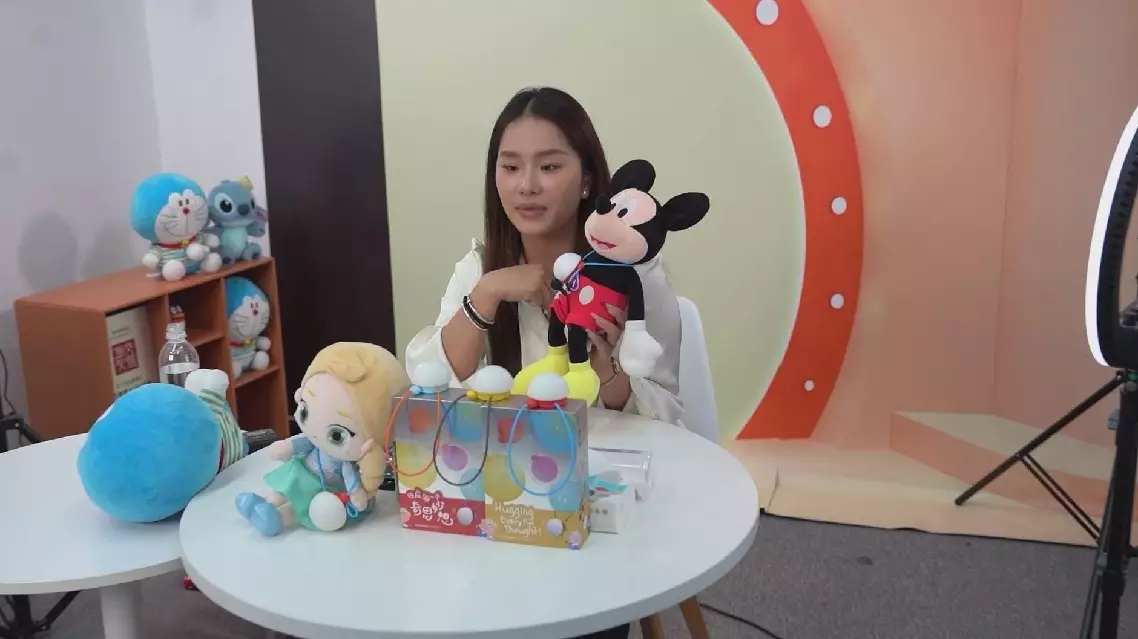
Sales of AI toys see explosive growth in China
China's ambitious "fitness for all" nationwide public health campaign and its determined drive to become a leading sporting nation are unlocking vast opportunities for sportswear businesses in the country's massive consumer market, said Adidas CEO Bjorn Gulden.
Speaking in an interview with China Global Television Network (CGTN) in Shanghai, Gulden said the German sportswear giant's localized approach to the Chinese market is a direct response to competition from stronger-than-ever local brands.
Under its "In China, For China" strategy, the company has delegated full product and creative control to its China team, which now designs and develops roughly half of Adidas products locally to match regional fashion trends and consumer preferences, with a shorter supply chain made possible by producing on the ground.
"Competition forces you to be better. And I'm sure that the reason why we have chosen to do 'In China, For China' model is because of competition. The old days when Adidas and all the brands were just exporting, I would say, concepts into China that were the same as in Europe and in America is over. That's why we have designers and creatives that work in China on a supply chain that is shorter because you can produce here. And that is of course to compete also against the local brands by making sure that we are better," he said.
Noting the evolution of sportswear from functional attire to everyday fashion, Gulden welcomed China's policies encouraging people to get active, saying they are bringing more consumers into the sportswear industry.
"Most sports products today are not being used for sports. They're being used as a comfort shoe or as a lifestyle item, and it's part of our life. It's very, very good that China is pushing sports more. The more people that do sports, the more importance sports get both from selling products, but also to widen the audience for sports culture products," Gulden said.
China's "fitness for all" strategy aims to get around 40 percent of the population exercising regularly by the end of the decade, backed by thousands of new and upgraded community sports facilities, expanded venue space and "15-minute fitness circles" designed to put public exercise areas within a short walk of every urban and rural resident.

China's push to become leading sports nation benefits sportswear businesses: Adidas CEO