The ongoing tariff dispute with the United States has exerted pressure on Canada's supply chains, although some in the country's aluminum packaging industry see the trade conflict as a potential catalyst for boosting domestic investment and reducing reliance on imports.
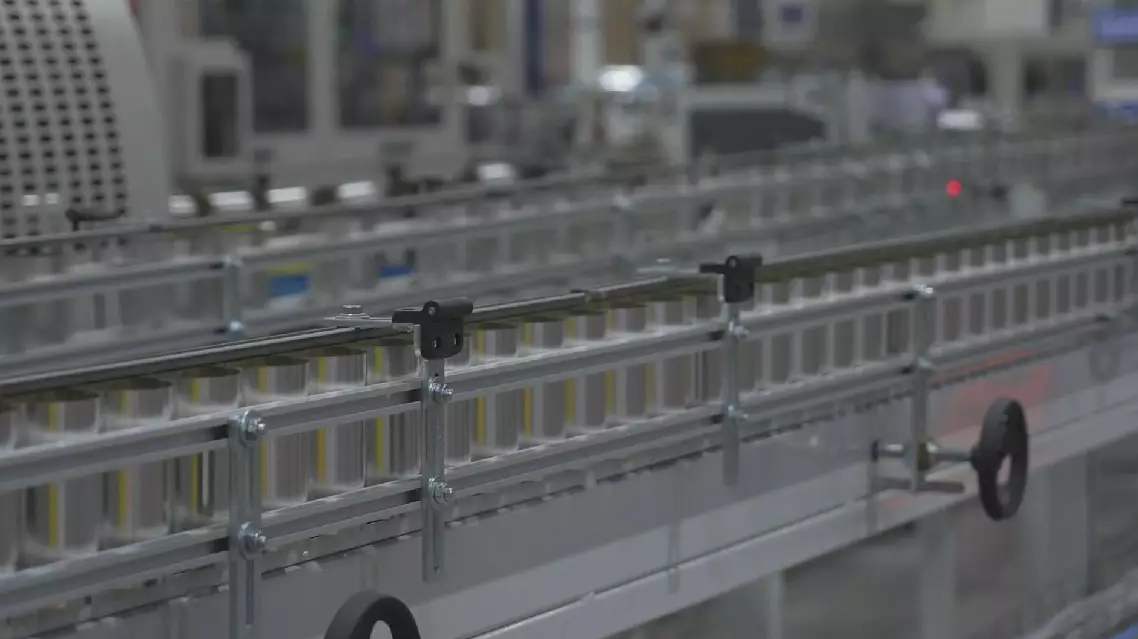
Erick Vachon, the president of Ideal Can, a food can manufacturer based in Quebec, started his first company in 2002, importing cans from overseas. But in 2019, just before the COVID-19 pandemic, he took the step of setting up his own production line. He said he was struck by how food processors had to throw food away following delays in deliveries of aluminum cans.
"When COVID arrived, we have the line ready to process. I remember, the border is very difficult for traveling. You don't receive the can from the USA or another country, you don't have any choice but to put (food) in the garbage," Vachon told China Global Television Network (CGTN).
The trade tensions between the U.S. and Canada have left a question mark over imports of steel and aluminum, including cans. While steel production remains a significant business in Canada, aluminum is particularly prone to U.S. tariffs. Canada is a major global exporter of raw aluminum, but lacks rolling mills capable of producing the sheets used for aluminum cans.
The tariffs have led industries throughout Canada to reevaluate the security of their supply chains. Some experts suggest that more investment in vital infrastructure is required in Canada in order to ensure that businesses are better able to withstand the repercussions of trade disputes.
Ideal Can is now investing in four new production lines to increase its capacity from 400,000 cans a year to one billion.
"The pressure has increased because everybody is afraid about the tariff or instability, or the border is closed. We were supposed to invest on the long process. We buy now. So, for example, now we have three lines, and we buy four more lines. For us, it's the opportunity to grow faster," Vachon said.
The 25-percent tariff on goods imported from Mexico and Canada, with a 10-percent tariff increase specifically for Canadian energy products, which were signed by U.S. President Donald Trump on February 1, officially took effect on Tuesday.
Canadian can maker sees tariff dispute as chance for supply chain independence