Skip to Content Facebook Feature Image

Shenzhou-19 crew conducts science experiments in space
China

China

China

Shenzhou-19 crew conducts science experiments in space

2025-03-09 14:36 Last Updated At:18:47

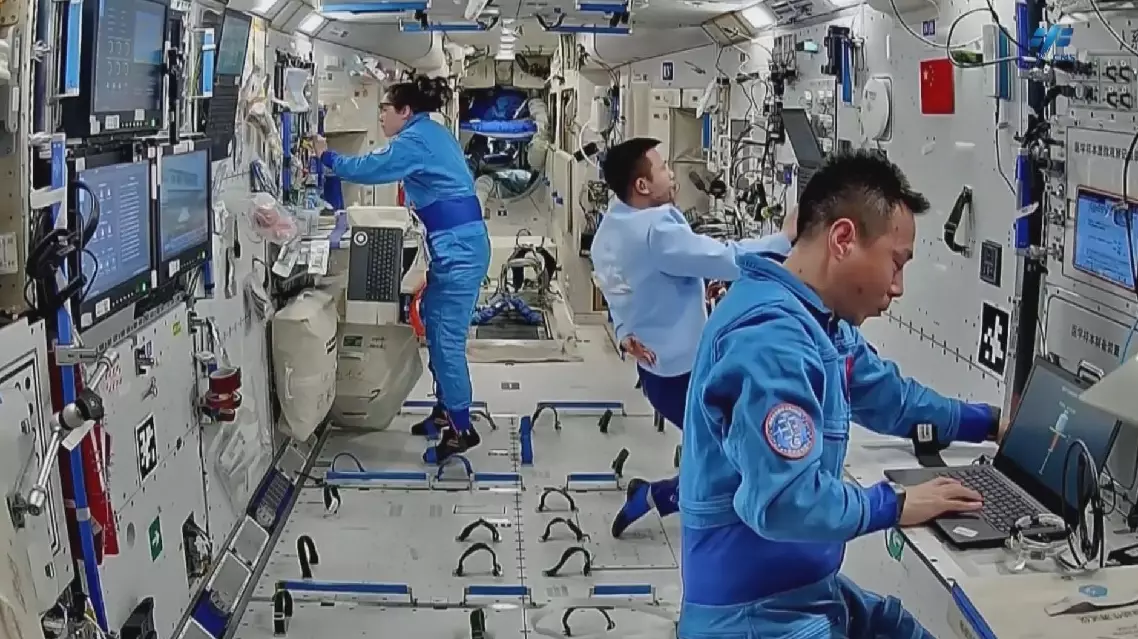
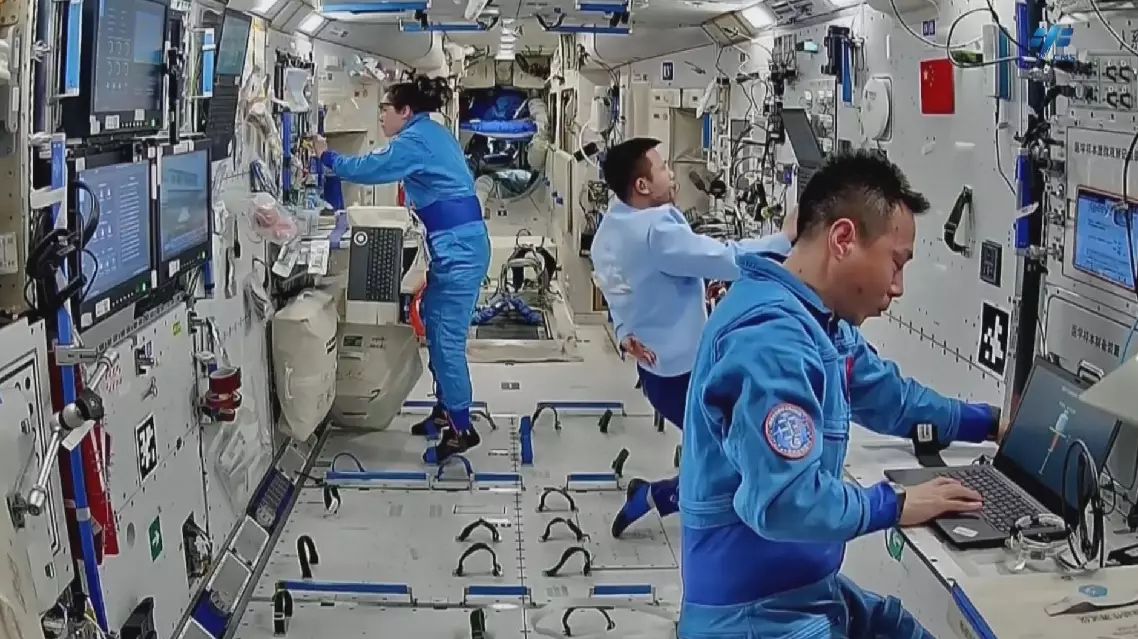
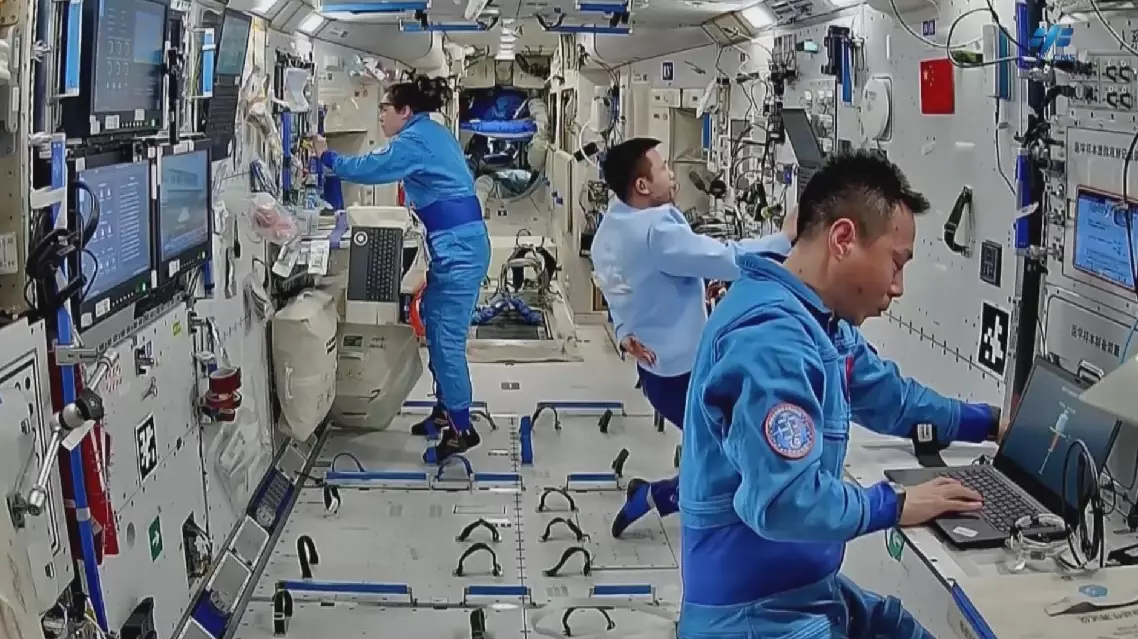
The Shenzhou-19 crew members aboard China's Tiangong space station carried out a range of scientific experiments and tests, and completed environmental monitoring, station management and some other tasks last week, according to the China Manned Space Agency (CMSA).

The astronauts used electroencephalogram (EEG) equipment to carry out tests for a number of experiments. Data collected will help ground-based researchers explore areas such as the impact of gravity on visual motion processing and the effects of brainwave music intervention on regulating inhibitory control functions during long-duration space flights.

More Images
Shenzhou-19 crew conducts science experiments in space

Shenzhou-19 crew conducts science experiments in space
Shenzhou-19 crew conducts science experiments in space
Shenzhou-19 crew conducts science experiments in space

Shenzhou-19 crew conducts science experiments in space

Shenzhou-19 crew conducts science experiments in space

Shenzhou-19 crew conducts science experiments in space

Shenzhou-19 crew conducts science experiments in space

The crew also completed the tests for a number of experiments such as fine motor control and visual motion gravity representation as planned, with the use of fine motor measurement instruments, eye trackers and other equipment, as well as related experimental software.

Additionally, the trio used the plantar pressure collection equipment to obtain data under different flight conditions, helping researchers explore and map relationships between different motion state parameters and plantar pressure.

Experimental projects in the field of microgravity physics science are progressing as planned.

The crew replaced the experimental samples in the fluid physics experiment cabinet and the containerless experiment cabinet, and completed a number of tasks such as the vacuuming of exhaust gases in the combustion cabinet.

Besides, the crew, together with China's first space station AI flight robot "Xiao Hang", completed a number of experiments including the research on multimodal interaction technology.

In addition, the astronauts carried out environment monitoring, equipment inspection and maintenance and other tasks inside the space station.

They also performed works including medical checks and weightlessness protection exercises.

The Shenzhou-19 crew, including the country's first female space engineer, was sent into space on Oct 30, 2024 for a six-month mission, which includes 86 space science research and technology experiments, as announced by CMSA prior to the launch.

Shenzhou-19 crew conducts science experiments in space

Shenzhou-19 crew conducts science experiments in space
Shenzhou-19 crew conducts science experiments in space

Shenzhou-19 crew conducts science experiments in space

Shenzhou-19 crew conducts science experiments in space
Shenzhou-19 crew conducts science experiments in space

Shenzhou-19 crew conducts science experiments in space

Shenzhou-19 crew conducts science experiments in space

⁠⁠⁠⁠⁠⁠⁠China's natural gas production is projected to reach 300 billion cubic meters by 2030, according to a development report released in Beijing.

The report, covering the development of China's oil and gas industry during the country's 14th Five-Year Plan period (2021–2025), said proven geological reserves rose by 7 billion tons of oil and 7 trillion cubic meters of gas, up 43 percent and 40 percent respectively from the previous five-year period. Oil and gas production hit record highs.

"The oil output is likely to reach between 215 and 216 million tons this year. Natural gas has seen major growth during the 14th Five-Year Plan period (2021–2025), with annual domestic output rising by nearly 13 billion cubic meters. In the 15th Five-Year Plan period (2026-2030), we expect annual increases of more than 10 billion cubic meters, reaching 300 billion cubic meters around 2030," said Wu Mouyuan, deputy director of the Economics and Technology Research Institute of China National Petroleum Corporation (CNPC).

The report forecast that China's energy structure will feature less coal, stable oil and gas, and rising non-fossil fuels over the next decade.

By 2060, fossil fuels are expected to account for 23 percent of the energy mix, hydropower and nuclear 19 percent, wind 25 percent, and solar 30 percent, the report said.

"In the next five years, through the integrated development of fossil energy and renewables, we will achieve a heathy, stable, and resilient energy system. Clean energy will continue to grow rapidly. More than 90 percent of renewable energy will be consumed via electricity, so the electrification at end-use sectors is a key direction of transformation in the future," said Wu.

With the rapid growth of artificial intelligence and new high-energy industries, China's power demand will exceed 20 trillion kilowatt hours by 2060, double the 2025 level. Electrification at end-use sectors is expected to reach 62 percent, rising by nearly one percentage point annually, the report projected.

China to see gas output hitting 300 bcm by 2030: report

China to see gas output hitting 300 bcm by 2030: report

Recommended Articles