The rising popularity of museums across China reflects the booming public cultural demand and has inspired archaeologists to delve deeper into the profound history of Chinese civilization, said a member of the 14th National Committee of the Chinese People's Political Consultative Conference (CPPCC) on Monday.
Chen Xingcan, a researcher at Institute of Archaeology under the Chinese Academy of Social Sciences, shared his observations during a group interview ahead of the closing meeting of the third session of the 14th CPPCC National Committee at the Great Hall of the People in Beijing.
The archaeologist cited the huge visitor numbers seen during the most recent public holiday as a further sign of the growing enthusiasm for cultural tourism, with museums nationwide welcoming 72 million people between during the first week of the Chinese New Year holiday.
He noted the Yinxu Museum, which opened in central China's Henan Province last February at the site of the ancient capital of the late Shang Dynasty (1600 B.C.-1046 B.C.), welcomed 1.8 million visitors in its first year of operation.
Meanwhile, the Sanxingdui Museum in southwest China's Sichuan Province attracted six million visitors last year after opening the previous summer, sharing some of the artifacts found at the Sanxingdui Ruins which are regarded as being among the world's greatest archaeological findings of the 20th century.
Chen attributed the huge public enthusiasm for the museums to improved living standards, with people having more disposable income, and said that the deepening of archaeological work in unearthing more ancient secrets has further heightened interest.
"Indeed, there's a 'museum craze'. The main reason is that over the past 40 years of reform and opening up, people's living standards have improved, and the demands of the general public for both spiritual and material life have risen. Therefore, as an important cultural product, museums, to some extent, meet the public's need for spiritual life, and people are willing to visit museums to learn about our ancient times and history," Chen explained.
"Our understanding of the history of our unified multi-ethnic nation and its interactions with other civilizations has been greatly expanded and enriched by archaeological work. I'm delighted to see that the public is willing to visit museums and learn about our long-lasting Chinese civilization through cultural relics. It also encourages us to continue our works in archaeological excavation, interpretation, and public presentation of cultural relics," Chen said.
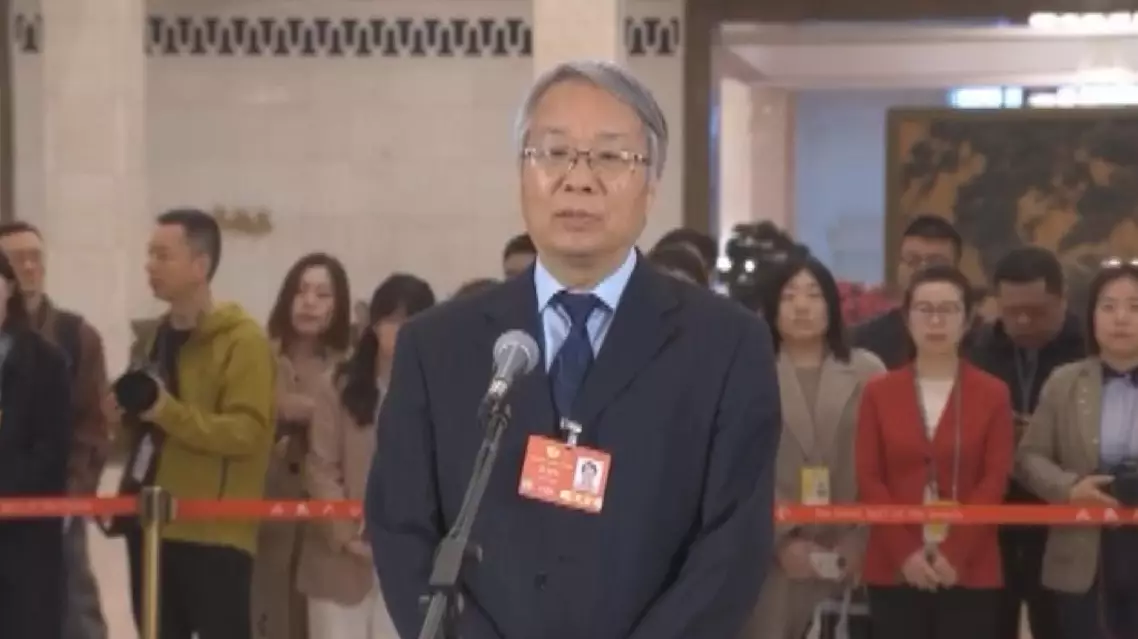
'Museum craze' in China inspires archaeologists to dig deeper: CPPCC member
China's newly approved Inner Mongolia Pilot Free Trade Zone (FTZ) is expected to help turn the northern border areas into a new frontier of opening-up.
China on Thursday released a plan for the establishment of the China (Inner Mongolia) Pilot Free Trade Zone, bringing the total number of pilot free trade zones nationwide to 23. Leveraging its unique location linking Russia, Mongolia and wider Eurasia, the zone is designed to advance the country's high-level opening-up through policy support, industrial upgrading and improved connectivity.
The pilot FTZ covers 119.74 square kilometers and comprises three subzones in Hohhot, capital of the autonomous region, Manzhouli, a northern border city, and Erenhot, a land port on the China-Mongolia border, each tasked with differentiated functions and the development of industries tailored to local conditions.
Specifically, the Hohhot subzone will serve as a central hub, focusing on developing specialty industries and innovation clusters. The Manzhouli subzone will build on China-Russia-Mongolia cooperation to become an important gateway to Northeast Asia and Europe. The Erenhot subzone will tap into the China-Mongolia-Russia Economic Corridor and serve as a model for cooperation with neighboring countries.
At the Hohhot Comprehensive Bonded Zone, a gold and silver refining project due to start operations will have an annual processing capacity of 100 tonnes of gold and 1,000 tonnes of silver.
The Manzhouli subzone will prioritize industries including the processing of imported resources, cross-border tourism, cross-border financial services and port services.
"Following the approval of the free trade zone, companies like ours are more confident in expanding our cross-border business further and broadening its scope. Specifically, we aim to achieve full coverage across the entire industrial chain," said Cui Rongzheng, head of Manzhouli Xincheng Supply Chain Limited Company.
Notably, in the first quarter of this year, the Erenhot Railway Port, a key hub on the "middle corridor" of the China-Europe Railway Express, handled a record-high 1,145 freight train trips, a 22.3 percent increase from last year, underscoring its role in stabilizing global supply chains and supporting foreign trade growth.
"The establishment of the Inner Mongolia Pilot Free Trade Zone will strengthen links between border provinces and China's inland regions, and enhance cooperation between land ports, coastal ports and inland ports. It is expected to play a key role in improving the wellbeing of ethnic minority populations in the border areas and turning China's northern border areas into a new frontier of opening-up," said Wang Xuekun, head of the Chinese Academy of International Trade and Economic Cooperation under the Ministry of Commerce.
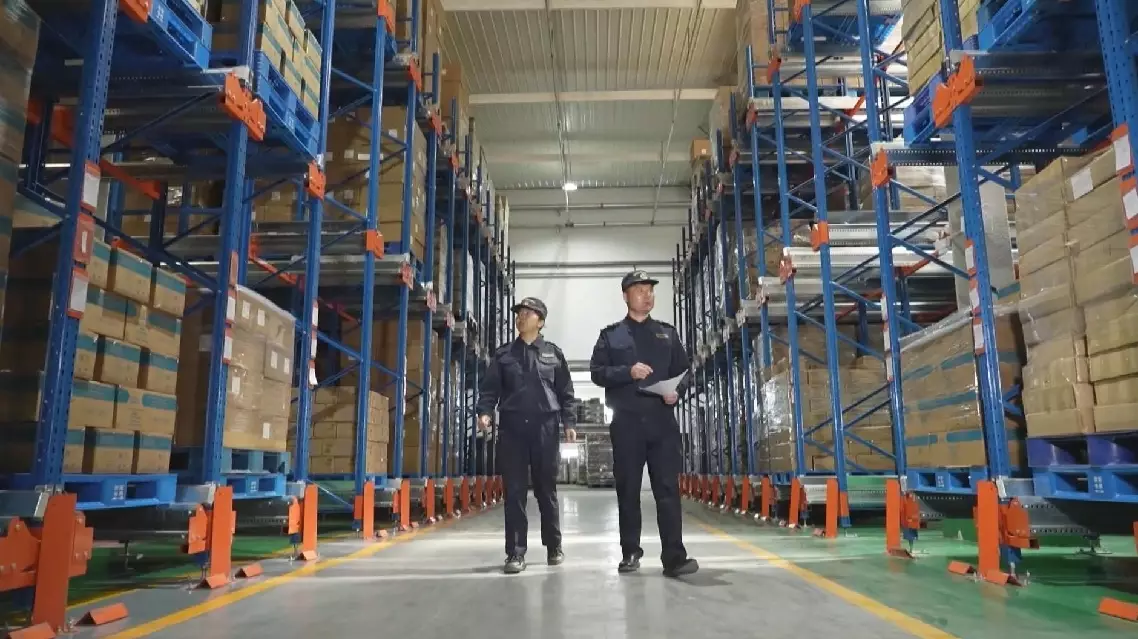
Inner Mongolia FTZ subzones to drive coordinated opening-up