The 14th National People's Congress (NPC), China's top legislature, on Tuesday concluded its third annual session.
President Xi Jinping, also general secretary of the Communist Party of China (CPC) Central Committee and chairman of the Central Military Commission, and other Chinese leaders attended the closing meeting held at the Great Hall of the People in Beijing.
Li Hongzhong, vice chairman of the NPC Standing Committee, delivered a speech at the meeting.
At the meeting, NPC deputies passed the resolutions on the government work report, and the work reports of the NPC Standing Committee, the Supreme People's Court and the Supreme People's Procuratorate, as well as an amendment to the Law on Deputies to the National People's Congress and to the Local People's Congresses at Various Levels.
They also passed the resolutions on the implementation of the 2024 plan for national economic and social development and the plan for 2025, and on the implementation of the central and local budgets in 2024 and the budgets for 2025.
The deputies approved the national economic and social development plan for 2025 and the central budget for 2025.
The NPC is China's highest organ of power through which the Chinese people exercise their state power. It focuses on major national-level political and socioeconomic development issues.
This year's session of the NPC opened on March 5.
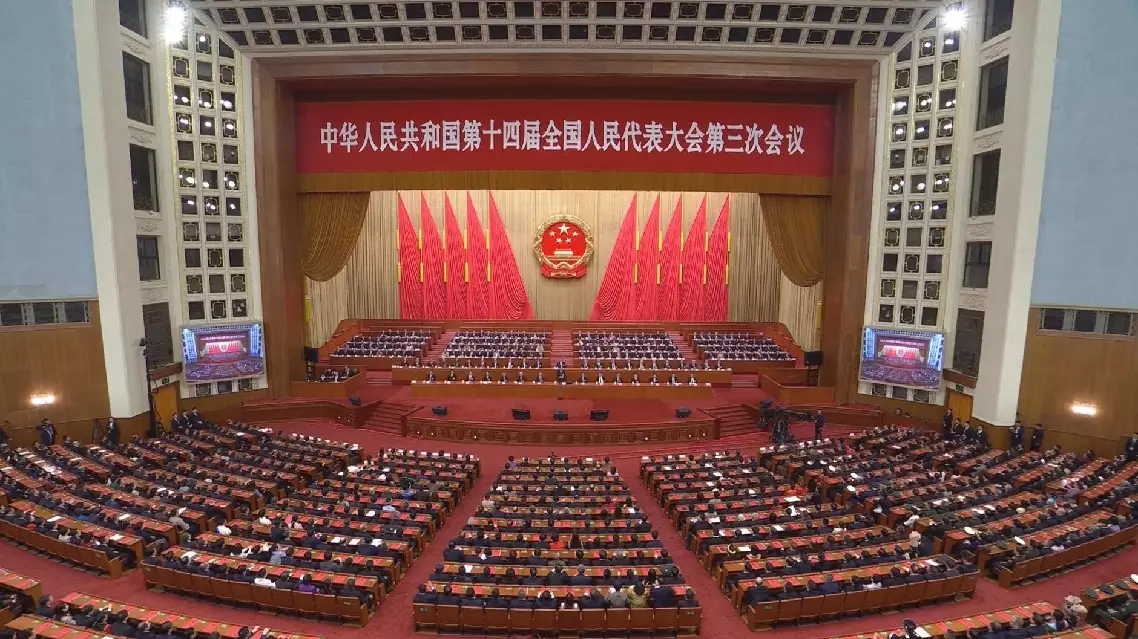
National People's Congress closes annual session
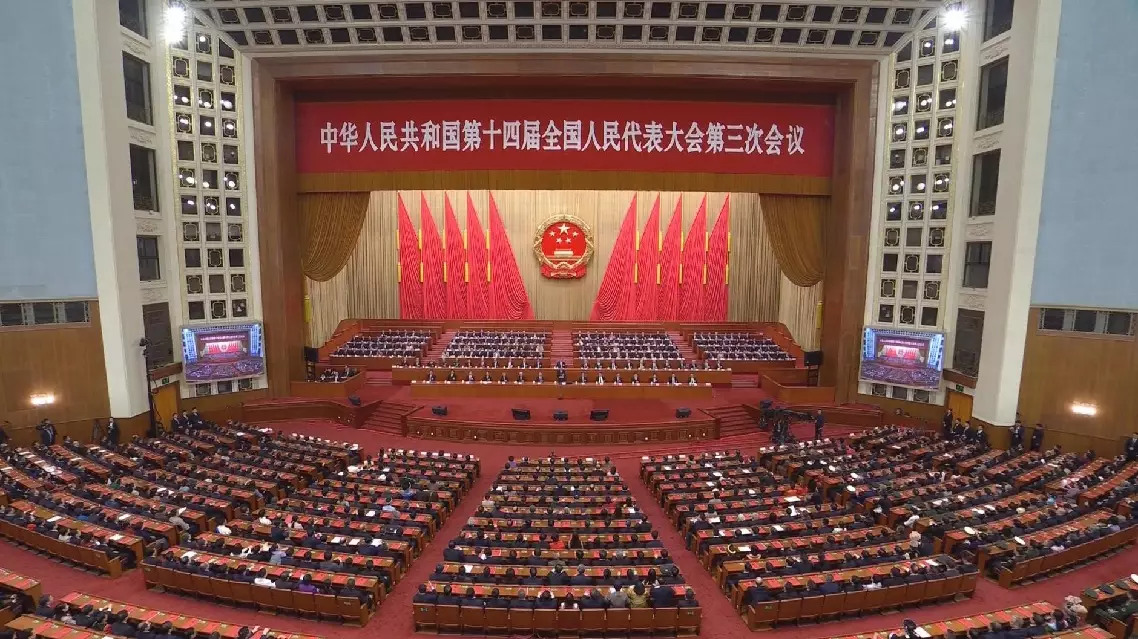
National People's Congress closes annual session
Voices of opposition from media and political circles are growing in Japan, after Prime Minister Sanae Takaichi reaffirmed her intention to revise the country's postwar pacifist Constitution on Sunday.
Major newspapers published editorials condemning the move, highlighting widespread street protests fueled by public anxiety that Japan could abandon its peacekeeping role and become an aggressor nation.
The outlets stressed that the postwar pillars of peace and sovereignty must not be forgotten.
Politicians have also voiced sharp criticism on social media.
A senator said the Constitution, particularly Article 9, has acted as a crucial barrier preventing reckless actions like deploying troops to the Middle East.
A former lawmaker said forgetting history invites crisis, while a sitting legislator has condemned the effort as an attempt to turn the nation into a "war profiteer" at the expense of citizens' lives.
Takaichi, on Sunday, the country's Constitution Memorial Day, reaffirmed her intention to revise the Constitution.
Speaking in a video message to a gathering of revision proponents, Takaichi stressed that the postwar supreme law, which serves as the foundation of the country, "should be periodically updated in accordance with the demands of the times," the Kyodo News reported.
Takaichi said that her ruling Liberal Democratic Party (LDP) would "advance discussions in the Diet (Japan's parliament) aimed at reaching decisions while securing the cooperation of other parties."
Japan's Constitution, which took effect in 1947, is often referred to as the pacifist Constitution because its Article 9 renounces war as a sovereign right and prohibits Japan from possessing "war potential."
Takaichi is pushing for the first-ever change to the Constitution. According to the Kyodo News, possible amendments include revisions to Article 9, the clause widely seen as the cornerstone of Japan's postwar pacifist stance.
Just weeks ago, at an LDP convention on April 12, Takaichi declared that "the time has come" to reform the Constitution, saying that "we would like to hold next year's convention with a proposal for a constitutional amendment in sight," a move that has triggered deep concern and large-scale protests in Japan.
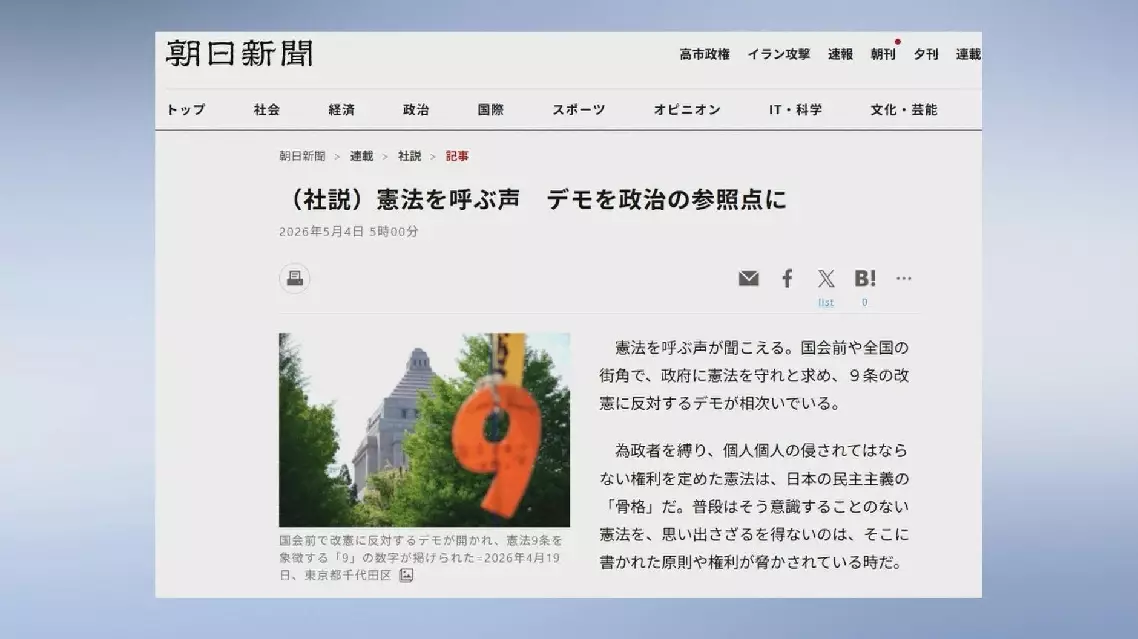
Opposition voices rise in Japan against revision of pacifist constitution