Developing new types of offshore trade will enable China to expand foreign trade, thus injecting new vitality into the country's high-quality economic development, said experts.
Developing foreign trade is crucial for China to maintain economic vitality both domestically and internationally, and to enhance its ability to allocate global resources. Experts believe that new types of offshore trade will allow Chinese companies to play a more dominant role in global commerce.
China has been the world's largest goods trader for eight consecutive years. It is also a major trading partner for over 150 countries and regions, and it has signed 23 free trade agreements with 30 countries and regions.
Against this backdrop, experts said that promoting the development of new types of offshore trade will help China's foreign trade entities overcome domestic resource limitations and cultivate new trade models and driving forces. This is necessary for China to adapt to changing international trade trends, further enhance trade facilitation, reduce or avoid trade frictions, and accelerate the deployment and improvement of the country's position in the global value chain of new types of trade.
In traditional offshore trade, Chinese companies acted as participants by supplying goods through offshore companies established in places like Singapore to sell Chinese products "to the world."
Experts said that due to increasingly fierce global trade competition, Chinese companies need to move beyond traditional trade thinking to participate in global trade. "New types of offshore trade" primarily refers to the development of offshore trade led by companies within China.
Essentially, Chinese companies are shifting from being suppliers of goods to playing a service role similar to offshore economies like Singapore, selling goods from countries other than China to the world.
"This represents a value leap from 'buying from China, selling to the world' to 'buying globally, selling globally'. This is of great significance for enhancing China's ability to control global trade resources and helping to build a strong trading nation," said Li Jun, director of the Institute of International Trade in Services at the Chinese Academy of International Trade and Economic Cooperation (CAITEC) under the Ministry of Commerce.
The term "new types of offshore trade" made its first appearance in the government work report during this year's "two sessions", listed as an important measure to cultivate new growth points in foreign trade.
The most prominent "new" change in China's current development of new types of offshore trade is the "new" role. China is utilizing economic zones such as pilot free trade zones to establish its own domestic offshore companies to lead the development of offshore trade.
"In the past, we were participants, and now we are leaders. In the past, China was the supplier of goods, and now China is the leader in the offshore trade value chain," said Li.
Its "newness" is also reflected in the new trends of digitalization and service orientation. New types of offshore trade make full use of digital technology and are deeply integrated with new business formats such as cross-border e-commerce and digital trade, achieving innovation and expansion of business models.
In addition, China's development of new types of offshore trade generally requires reliance on digital regulatory platforms, using modern technology to supervise the authenticity of offshore trade businesses.
"The term 'new types of offshore trade' made its debut in the government work report and was listed as an important measure to foster new growth points in foreign trade. This not only highlights the new positioning of new types of offshore trade at the national policy level, but also indicates that China's foreign trade will become more diverse, which is conducive to promoting the development of new foreign trade formats and improving the quality and efficiency of China's foreign trade," said Li.
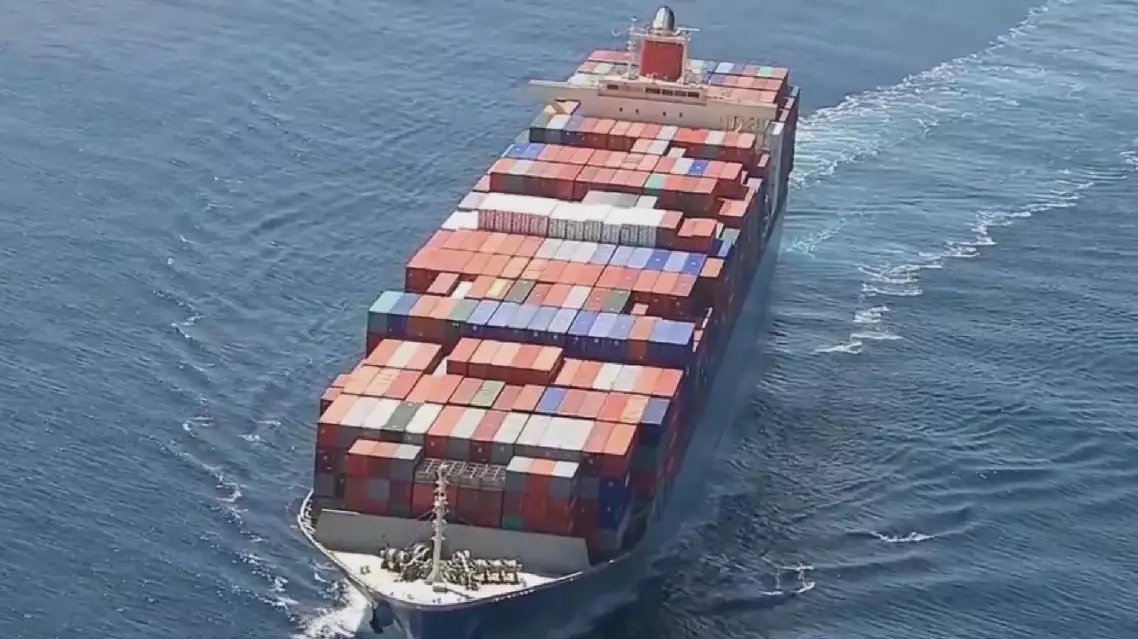
China expands foreign trade with new types of offshore trade