A Chinese-made historical documentary made its much-anticipated UK premiere in London on Monday night, leading audience members through the heroic rescue of British prisoners of war by Chinese fishermen during World War II.
Titled 'The Sinking of the Lisbon Maru', the film recounts how a Japanese armed troop carrier was hit by a torpedo from an American submarine, unaware that the ship was carrying 1,800 British and Commonwealth prisoners of war.
As the boat started to sink, the Japanese troops locked the prisoners below deck. Many managed to escape but were shot at as they jumped into the sea.
More than 800 prisoners died, but a flotilla of poor Chinese fishermen from a nearby island risked their lives amid the shooting and managed to take almost 400 survivors back to their small island.
More than 100 relatives of British prisoners of war who had been aboard the ill-fated ship attended the documentary's premiere at the Regent Street Cinema. The relatives said they were touched by the sincerity of the film's storytelling.
"The thing that comes across is that despite the politics, despite the aggravation that’s in the world, when you get right down to it, people are friendly," said Ken Salmon, whose father survived the Lisbon Maru incident.
"I couldn't stop crying. I was a sobbing mess, so emotional. It's so beautifully made. All the individual stories, that's what really, really makes the film," said Lindsey Archer, whose uncle died on the Japanese ship.
The documentary's director Fang Li, who first learned of the incident 10 years ago, launched a search for the sunken ship as well as surviving relatives, which led to the film's production.
"We all should remember between people to people, no matter British or Chinese, they are all civilians and friends. And I would say people should remember during the wartime, during World War II, we were allies," he said.
Representatives from the regimental headquarters of units that had prisoners aboard the Lisbon Maru also attended the premiere and were astounded that the stories of their forebearers were finally being told.
"Regimentally, of course, this is a very important event. So we are delighted it's been recognized at long last," said Major Alastair Goulden, who represents UK infantry's Middlesex Regiment through the Queen’s Regimental Association.
"We live in a chaotic world. We can all recognize that. But I think it's always important to remember some of the factual human stories, where we have come together and where there is humanity," Colonel Andy Smith, another representative for the historic Middlesex Regiment.
'The Sinking of the Lisbon Maru' will go on general release in cinemas around the United Kingdom later this week.
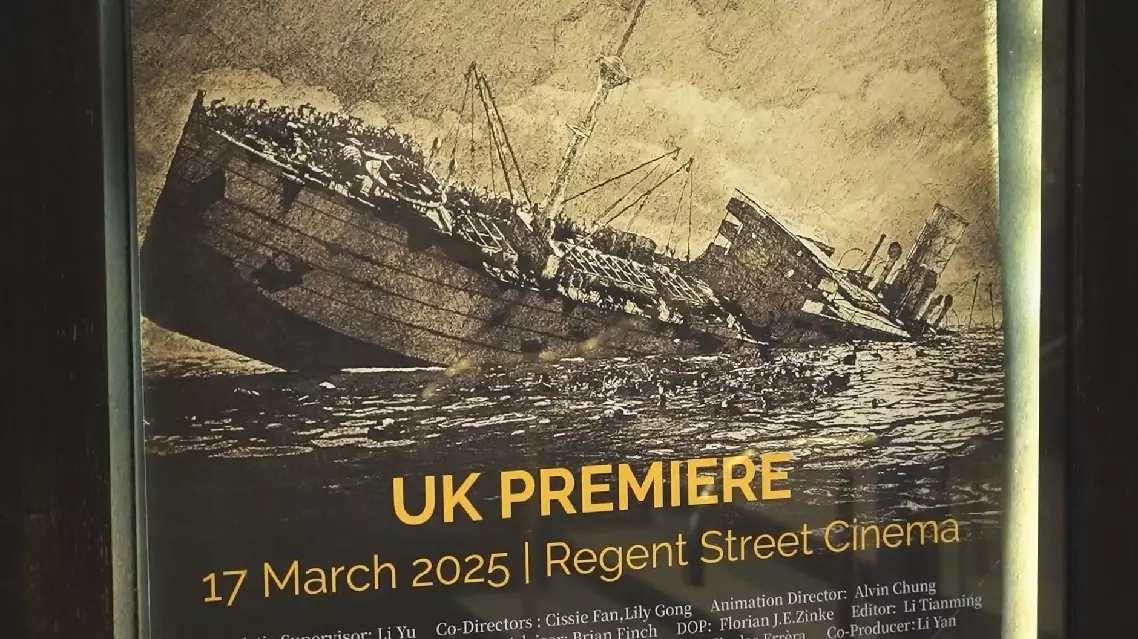
Chinese-made documentary "Sinking of Lisbon Maru" premieres in London