Leading global banks have raised their forecasts for China's economic outlook in 2025, citing the continued upward trajectory the world's second largest economy has maintained since the start of the year.
International investment bank Morgan Stanley recently increased its GDP growth forecast for China by 0.5 percentage points, citing the stronger-than-expected performance in the first quarter and robust investment momentum in emerging industries.
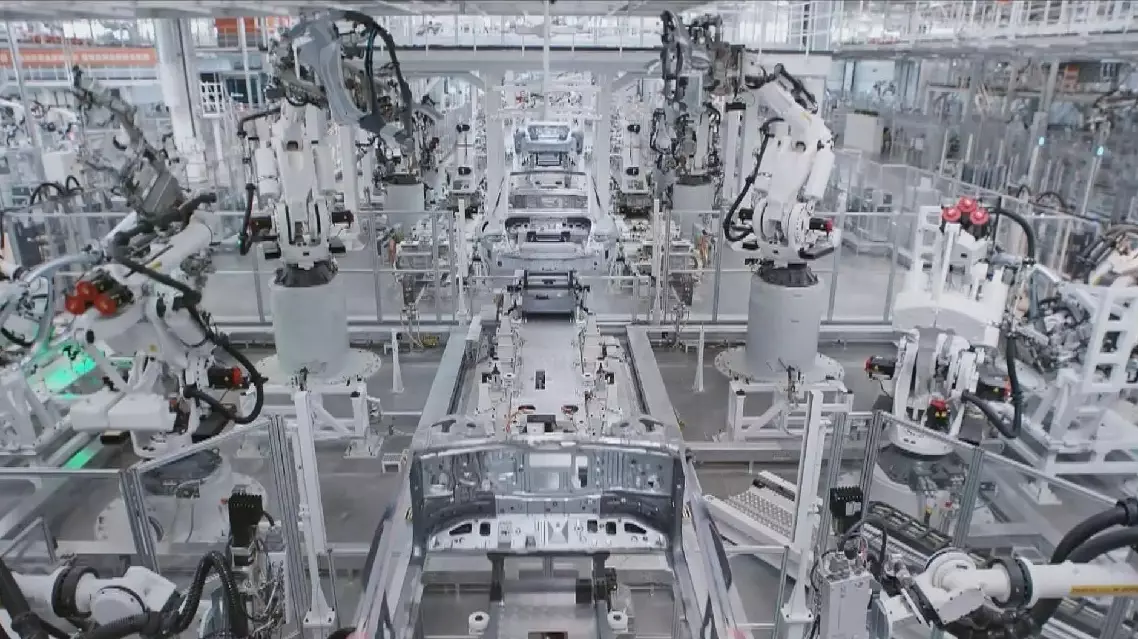
"China's economy had a good start in the first quarter. Companies are showing a keener interest than last year in investing in sci-tech innovation sectors such as advanced manufacturing, new energy, smart driving, and AI applications in robotics, with investment levels expected to continue rising," said Robin Xing, chief China economist at Morgan Stanley.
Similarly, other major foreign financial institutions, including JPMorgan Chase, HSBC, Goldman Sachs, and Nomura, have also adjusted their forecasts upwards, reflecting growing optimism about China's economic outlook.
Research reports highlight that China's economy has demonstrated remarkable resilience and potential across various sectors, thanks to policy support, market dynamism, and ongoing industrial transformation.
"Policies, such as expanding the scope of consumer goods trade-in programs and increasing basic pension benefits and medical subsidies for urban and rural residents, are expected to play a key role in boosting consumer confidence," said Ding Shuang, chief economist for Greater China and North Asia at Standard Chartered.
Goldman Sachs predicts that by 2030, artificial intelligence could contribute 0.2 to 0.3 percentage points annually to China's GDP growth. Meanwhile, HSBC reports that favorable policies in China are giving strong support to technological innovation and significantly boosting corporate confidence, which will contribute to more sustainable and comprehensive economic growth.
The foreign financial institutions generally agree that continued macroeconomic policy support will play a positive role in advancing China's economy expansion.
Global banks raise China's growth forecasts for 2025

China will take more effective measures to improve people's wellbeing, especially in education, healthcare, and social security, an official said Thursday in Beijing at a press conference on the interpretation of this year's government work report, which was submitted to the national legislature for deliberation earlier in the day.
Shen Danyang, head of the government work report drafting team and director of the State Council Research Office, said centering on enhancing educational equity and quality, the report made arrangements for education at all educational stages and of all types.
"Regarding preschool education, the policy of free education in the year prior to entering primary school will continue to be implemented this year, which is commonly referred to as free admission to the senior class of kindergartens. So, how can the income reduction of kindergartens be addressed? Subsidies will be provided by both the central and local governments, with the central government taking the lion's share. This year, the funds allocated to support the development of preschool education will increase significantly by 37.8 percent to ensure the implementation of the beneficial policy," he said.
Regarding senior high school education, Shen said the report stated that the supply of regular senior high school places will be increased,
Specifically, for areas with a continuous net inflow of population, a number of regular high schools will be planned and constructed on an annual basis. For regions with a temporary shortage of school places, priority will be given to the renovation and expansion of existing teaching buildings, student dormitories and canteens, he said.
Shen said the report put forward many supportive measures in healthcare.
"For instance, it urged efforts to strengthen coordination in drug use at the grassroots level, which mean improving the list of essential drugs, and optimizing the channels for drug supply and drug use coordination between upper- and lower-level medical and health institutions to make it more convenient for the public to use drugs at their doorstep. Besides, the report has made arrangements for supporting the development of innovative drugs for the third consecutive year. This year, China will strengthen the coordination of supportive policies in an all-round way, further address issues such as the barriers facing innovative drugs entering hospitals, and better meet the diverse medical and medication needs of the people," he said.
In terms of social security, Shen said the report proposed to continue raising the minimum standard of basic pensions for urban and rural residents -- a policy will benefit over 180 million elderly people.
"The central government will allocate 1.25 trillion yuan (about 181.25 billion U.S. dollars) in subsidy funds to ensure the timely and full payment of pensions. In response to the insufficient protection of the rights and interests of people engaging in new occupations, the report proposed to steadily and orderly expand the scale of the pilot program for occupational injury insurance. This year, the policy will cover 31 provincial-level regions across the country and the Xinjiang Production and Construction Corps. Meanwhile, enterprises specializing in travel, instant delivery and intra-city freight delivery will be included in the pilot program, which will ensure the safety of more laborers, such as food delivery workers and online car-hailing drivers," he said.
China to improve people's wellbeing in education, healthcare, social security: official