Skip to Content Facebook Feature Image

Germany's rising military expenditure sparks public debate

China

China

China

Germany's rising military expenditure sparks public debate

2025-03-30 16:53 Last Updated At:20:57

Germany's decision to boost military spending has fueled debate, with officials and experts scrutinizing its feasibility and broader implications.

On March 18, Germany's new government passed an amendment to its Basic Law, allowing for increased borrowing to support defense, security, and aid to Ukraine.

The new policy removes debt ceilings for spending on defense, civil protection, intelligence agencies, and aid to conflict-affected countries that exceeds 1 percent of GDP. By the end of 2025, defense spending alone is projected to reach 3 percent of GDP, amounting to approximately 129 billion euros annually.

This significant increase has raised concerns among Germans, especially given the current financial constraints in education, research, and social welfare.

Critics argue that the increased military budget could come at the expense of other social programs, while others question whether this expansion will truly benefit Germany's economy or merely deepen its reliance on the U.S. military-industrial complex.

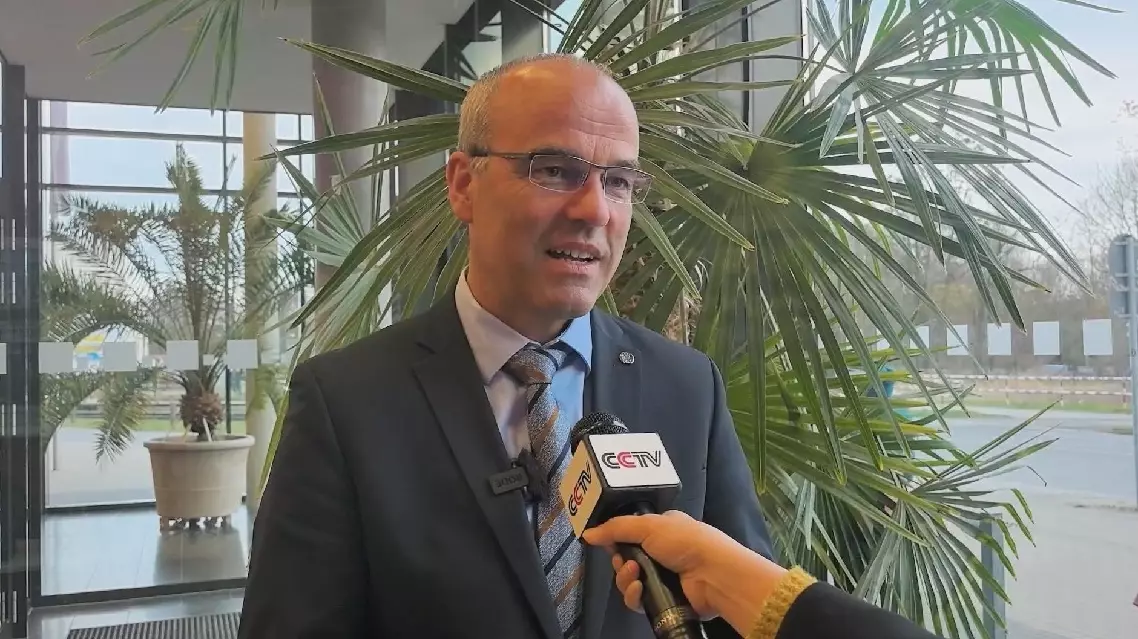
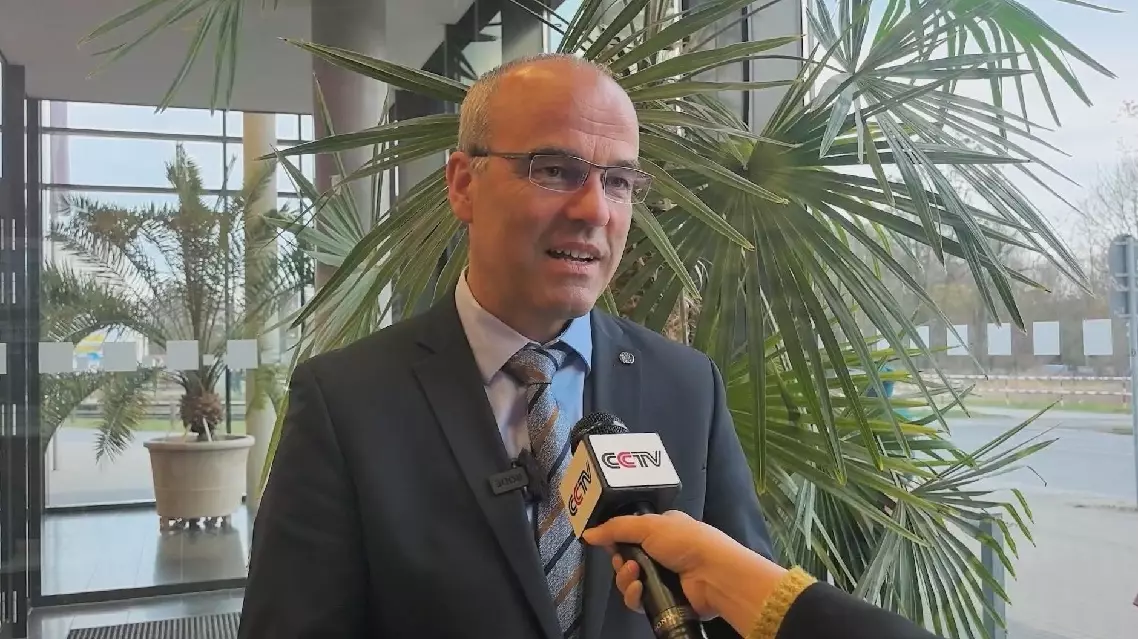
Rainer Rothfuss, a member of the federal parliament, voiced concerns about the policy's long-term impact.

"War and imagined military needs are being used as a temporary band-aid to save the German economy. But this is a bad sign. We must always remember that military spending is ultimately supported by taxes. If we want to increase military investment, we have to raise taxes on individuals and businesses, or cut other spending, or lower their priority, such as education, research, and development. These are the areas that keep the economy competitive in the long run. I deeply regret the government's policy on this," he said.

Despite efforts to grow its domestic military industry, Germany continues to rely heavily on U.S. technology and components. This reliance is particularly evident in the maintenance of military equipment sent to Ukraine, with many critical parts sourced from the U.S., raising questions about who truly benefits from Germany's military expansion.

Rainer Rupp, a German journalist, highlighted the deep entanglement of Germany's military industry with the U.S.

"Germany has no choice but to cooperate with the U.S. because many parts and technologies needed to produce large weapon systems are still imported from the U.S. In addition, the maintenance of our existing weapons also has to be done by the U.S. In other words, Germany's military industry is actually deeply dependent on the U.S. If the U.S. decides to ease relations with Russia and restore economic cooperation, Europe's military expansion may be meaningless," he said.

Joachim Bonatz, a German economic expert, pointed to the role of the U.S. military-industrial complex and media groups in driving the demand for increased arms production.

"The U.S. companies that want to increase arms production are part of the military-industrial complex. There are also media groups. They want to ensure a continuous flow of military orders," said Bonatz.
Germany's rising military expenditure sparks public debate
Germany's rising military expenditure sparks public debate
Germany's rising military expenditure sparks public debate
Germany's rising military expenditure sparks public debate
Visiting Chinese Foreign Minister Wang Yi said Saturday China is willing to work with Lesotho to strengthen exchanges on governance experience, enhance coordination in multilateral affairs, and advance the China-Lesotho strategic partnership.

Wang, also a member of the Political Bureau of the Communist Party of China Central Committee, made the remarks when meeting with Lesotho Prime Minister Sam Matekane in the capital of Lesotho.

During the meeting, Wang congratulated Lesotho on the 60th anniversary of its independence this year, and spoke highly of Lesotho government's efforts to prioritize economic development and steer the African country onto a path of sustainable growth. Since the Beijing Summit of the Forum on China-Africa Cooperation (FOCAC) in 2024, the two sides have advanced cooperation under the 10 partnership action plans unveiled at the summit, successfully implementing a number of key projects to effectively promote Lesotho's development and revitalization, Wang said.

China stands ready to work with Lesotho to strengthen exchanges on governance experience, enhance coordination in multilateral affairs, and push for greater development of the China-Lesotho strategic partnership, he added.

Calling on the two sides to firmly support each other, Wang said that China will accelerate the implementation of its zero-tariff policy for African countries, including Lesotho, expand bilateral trade, investment and industrial cooperation, facilitate broader access of Lesotho's specialty products to the Chinese market, and continue to support Lesotho's national development.

China will continue to stand firmly with African countries, uphold justice for the Global South, including Lesotho, oppose unilateralism and acts of bullying, and work together to build a community with a shared future for humanity, Wang said.

On his part, Matekane said during the meeting that Lesotho cherishes its friendship with China and the strategic partnership between the two countries, and expressed gratitude for China's valuable support for the development of African countries, including Lesotho.

Lesotho firmly adheres to the one-China principle and resolutely supports China in safeguarding its core interests, he said, noting that his country stands ready to strengthen strategic mutual trust with China, expand people-to-people exchanges, jointly implement the outcomes of the FOCAC Beijing Summit, and deepen cooperation in areas such as infrastructure, manufacturing and energy.

Matekane stressed that China's zero-tariff policy for African products will inject new impetus into Lesotho's development. He also expressed Lesotho's willingness to strengthen solidarity and cooperation with China on multilateral platforms such as BRICS to jointly address global challenges.

On the same day, Wang also held talks with Lejone Mpotjoana, minister of foreign affairs and international relations of Lesotho.

China, Lesotho to strengthen exchanges, advance cooperation

China, Lesotho to strengthen exchanges, advance cooperation

China, Lesotho to strengthen exchanges, advance cooperation

China, Lesotho to strengthen exchanges, advance cooperation

Recommended Articles