Shenzhen City's Nanshan District, a tech hub in south China renowned for its ultramodern infrastructure, has officially initiated a pilot program for the commercial operation of intelligent connected vehicles (ICVs).
Guidelines for the program, which came into effect on Feb 5 and are set to run for a period of two years, aim to accelerate the application of self-driving technology and prop up the high-quality development of the region's ICV industry, paving the way for a new era in transportation.
ICVs engaged in commercial operations, including passenger cars, commercial vehicles, and specialized operation vehicles will take part in the program. Vehicle fleets will be required to have drivers on board, with a ratio of at least one safety officer for every three unmanned commercial operation pilot vehicles.
According to the district, the first batch of ICVs engaged in pilot commercial operations went to five autonomous mobility service providers, including Pony.ai and OnTime Mobility. The initial application for the commercial operation pilot is capped at 30 vehicles.
Meanwhile, Nanshan District also announced the first batch of functional unmanned vehicle undergoing road tests in 2025 for five companies, including Unity Drive, a Shenzhen-based firm that produces multifunctional ICVs for various industrial applications.
"In the future, we plan to carry out pilot tests in the science park and actively explore the deep integration of 5G and large AI models to give unmanned vehicles more powerful intelligent decision-making capabilities," said Kuang Hanqin, director of the internet of vehicles business unit at Unity Drive.
By the end of 2025, the number of driverless vehicles on Shenzhen roads will exceed the 1,000-unit benchmark. The city will become a model of the high-quality development of ICVs in China, as well as a leading city with an ICV industrial cluster, according to the city's action plan on developing the driverless vehicle industrial cluster (2022-2025).
"Shenzhen has more than 2,700 companies in the upstream and downstream of the intelligent connected vehicles sector. The scenario-based application can be used as a guide to further pool talents, innovation and capital to the upstream and downstream of Shenzhen's intelligent connected vehicles at a faster pace, thereby achieving the large-scale development of the entire industry," said Wei Fulei, director of the Finance, Taxation, Trade and Industrial Development Research Center under the China Development Institute.
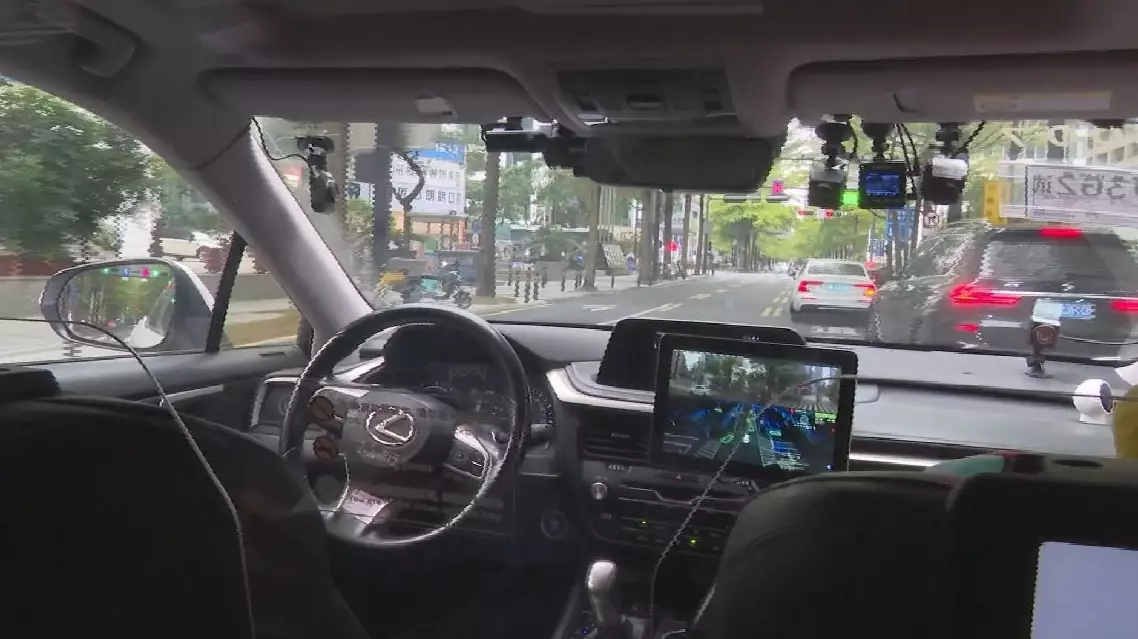
Shenzhen puts intelligent connected vehicles into commercial operation
Visiting Chinese Foreign Minister Wang Yi said Saturday China is willing to work with Lesotho to strengthen exchanges on governance experience, enhance coordination in multilateral affairs, and advance the China-Lesotho strategic partnership.
Wang, also a member of the Political Bureau of the Communist Party of China Central Committee, made the remarks when meeting with Lesotho Prime Minister Sam Matekane in the capital of Lesotho.
During the meeting, Wang congratulated Lesotho on the 60th anniversary of its independence this year, and spoke highly of Lesotho government's efforts to prioritize economic development and steer the African country onto a path of sustainable growth. Since the Beijing Summit of the Forum on China-Africa Cooperation (FOCAC) in 2024, the two sides have advanced cooperation under the 10 partnership action plans unveiled at the summit, successfully implementing a number of key projects to effectively promote Lesotho's development and revitalization, Wang said.
China stands ready to work with Lesotho to strengthen exchanges on governance experience, enhance coordination in multilateral affairs, and push for greater development of the China-Lesotho strategic partnership, he added.
Calling on the two sides to firmly support each other, Wang said that China will accelerate the implementation of its zero-tariff policy for African countries, including Lesotho, expand bilateral trade, investment and industrial cooperation, facilitate broader access of Lesotho's specialty products to the Chinese market, and continue to support Lesotho's national development.
China will continue to stand firmly with African countries, uphold justice for the Global South, including Lesotho, oppose unilateralism and acts of bullying, and work together to build a community with a shared future for humanity, Wang said.
On his part, Matekane said during the meeting that Lesotho cherishes its friendship with China and the strategic partnership between the two countries, and expressed gratitude for China's valuable support for the development of African countries, including Lesotho.
Lesotho firmly adheres to the one-China principle and resolutely supports China in safeguarding its core interests, he said, noting that his country stands ready to strengthen strategic mutual trust with China, expand people-to-people exchanges, jointly implement the outcomes of the FOCAC Beijing Summit, and deepen cooperation in areas such as infrastructure, manufacturing and energy.
Matekane stressed that China's zero-tariff policy for African products will inject new impetus into Lesotho's development. He also expressed Lesotho's willingness to strengthen solidarity and cooperation with China on multilateral platforms such as BRICS to jointly address global challenges.
On the same day, Wang also held talks with Lejone Mpotjoana, minister of foreign affairs and international relations of Lesotho.
China, Lesotho to strengthen exchanges, advance cooperation