The death toll of Friday's powerful 7.9-magnitude earthquake in central Myanmar rose to 2,056, according to the latest release by the country's State Administration Council Information Team.
Another 3,900 were injured and 270 others remained missing as of 12:00 Monday, said the release.
The quake, the strongest recorded in the country in a century, rocked the Sagaing Region of Myanmar, with an epicenter close to Mandalay, the country's second-largest city.
In Sagaing City, a correspondent for China Media Group (CMG) observed that the earthquake had caused widespread damage in the urban area, bringing down buildings and leaving rubble everywhere on both sides of roads. Some houses fell apart, with only a roof remaining.
"The urban area of Sagaing City is very severely damaged, with 80 percent of it destroyed," said a local resident.
"Many people died in the earthquake in the area where we live, as well as on nearby streets and Sagaing Hill. The urban area is worst-hit, causing the largest number of casualties. Some roads and bridges collapsed completely. Many people were buried under rubber," he added.
Meanwhile, in Mandalay, some high-rise buildings have completely collapsed, complicating rescue efforts in the Southeast Asian nation.
Foreign rescue teams and supplies have arrived in Myanmar to help the impoverished country cope with the deadly earthquake.
About 400 Chinese earthquake experts, rescuers and medics are participating in earthquake relief efforts in different parts of Myanmar. So far, Chinese teams have rescued six survivors in severely-hit Mandalay and Nay Pyi Taw.
"The Chinese rescue teams came to help us. They have asked about our situation and needs. They have given us aid and support. Thank you very much. I hope I can express my gratitude to the Chinese rescue teams on behalf of the people in the affected areas," said a Mandalay resident.
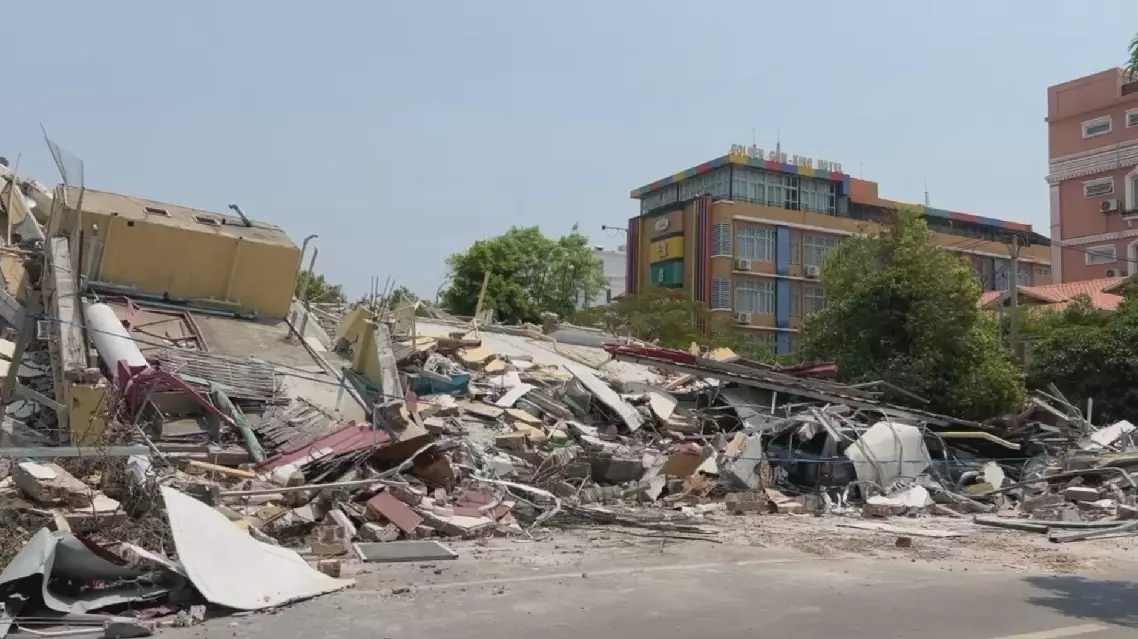
Myanmar earthquake leaves 2,056 killed, 3,900 injured, 270 missing
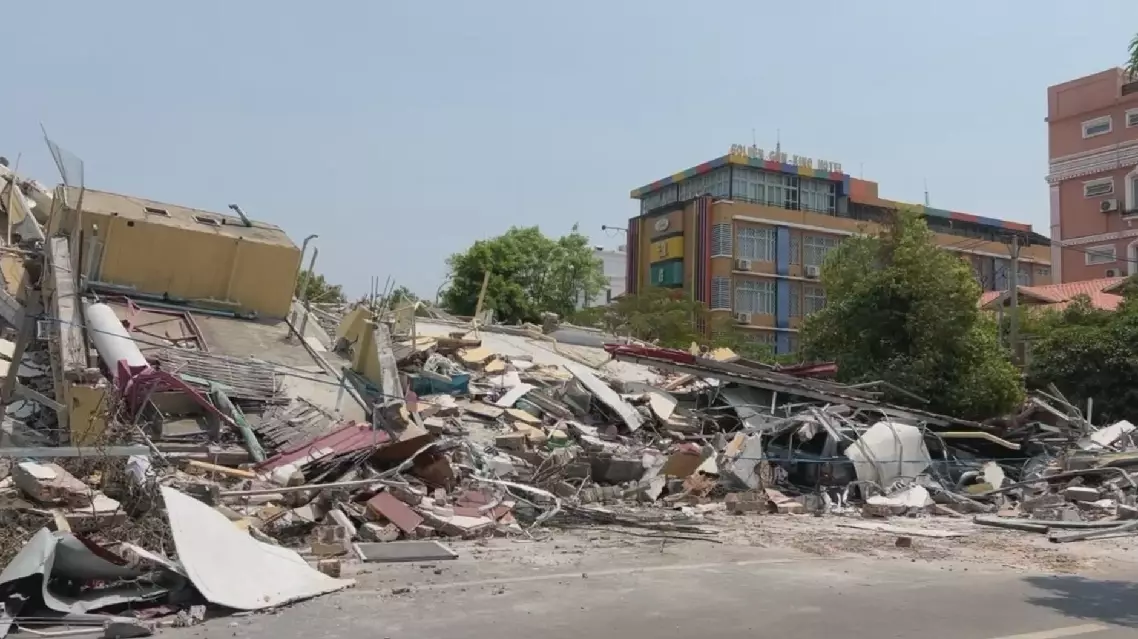
Myanmar earthquake leaves 2,056 killed, 3,900 injured, 270 missing
Rising military tensions in the Persian Gulf are casting a heavy shadow over Iraq's economy, raising concerns about the fate of oil exports and maritime trade.
The recent targeting and burning of two foreign tankers carrying Iraqi oil within Iraq's territorial waters marks a significant escalation, signaling that a closure of the Strait of Hormuz is now a tangible threat. Such a scenario would halt Iraq's oil exports to global markets, dealing a severe blow to an economy that relies on oil revenues as its main source of funding for both operational and investment budgets.
With the main maritime route for its oil exports disrupted, Iraq is now looking to the central bank's reserves to cushion the shock of lost oil revenues and to ensure the payment of government employees' salaries.
"The other impact Iraq fears is the economic fallout from the closure of the Strait of Hormuz. This will affect Iraq just as it will other countries, but it will hit Iraq harder, because Iraq relies mainly, almost 90 percent of its resources, on oil sales. So the economic impact on Iraq will be significant. The consequences are both political and economic," said Hamza Mustafa, an Iraqi journalist.
The Iraqi government has few alternatives for exporting oil through other routes. The Ceyhan pipeline, which carries Iraqi oil through Turkey, remains shut, leaving the Gulf, now a conflict zone, as the only outlet. Recently, Iraqi officials have begun discussing the need to boost non-oil revenues to mitigate the economic impact of the ongoing conflict.
"We are doing everything in our power to keep this war away from our country, because Iraq cannot withstand more conflict. Our country has reached a critical economic stage in recent years, both before and after the previous regime. We have learned many lessons. As parliament, we will push for decisions that serve our citizens and our country," said Saqr Al-Muhammadawi, a member of Iraq's parliament.
According to a statement by Alireza Tangsiri, commander of the Iranian Navy, the Strait of Hormuz has not yet been militarily blocked and is merely under control. The strait "is only closed to the tankers and ships belonging to our enemies, to those who are attacking us and their allies. Others are free to pass," he said.
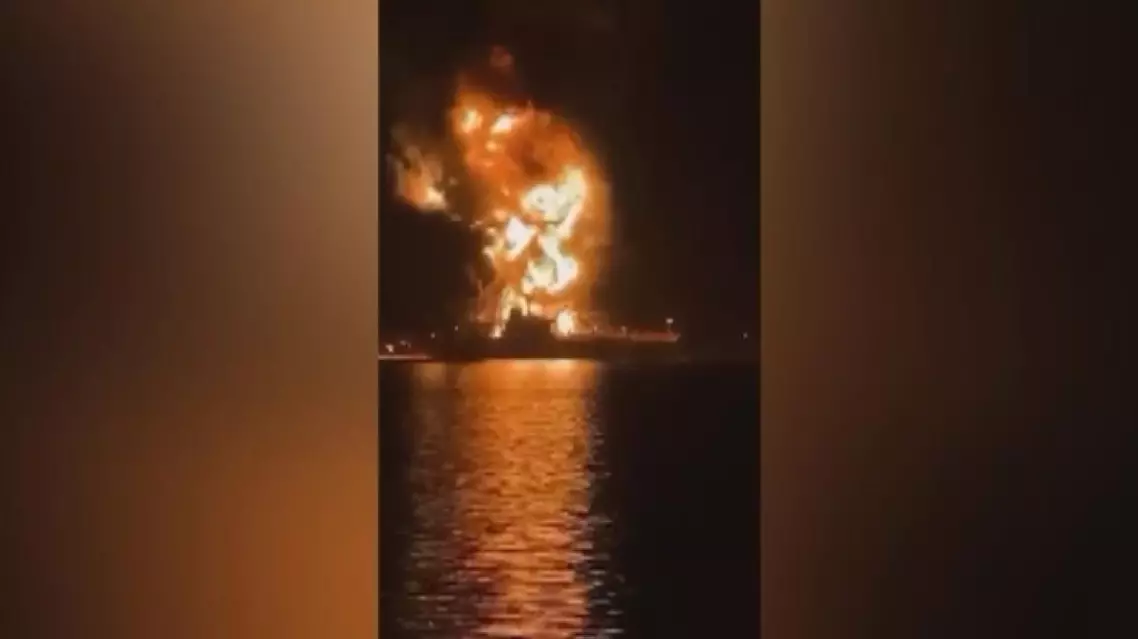
Gulf tensions raise fears for Iraqi's oil-funded economy