MIAMI (AP) — A federal judge in Florida has blocked the imports of a high-priced fish from protected waters near Antarctica, siding with U.S. regulators who argued they were required to block imports amid a diplomatic feud triggered by Russia's obstruction of longstanding conservation efforts at the bottom of the world.
Judge David Leibowitz, in a ruling Monday, dismissed a lawsuit filed in 2022 by Texas-based Southern Cross Seafoods that alleged it had suffered undue economic harm by what it argued was the U.S. government's arbitrary decision to bar imports of Chilean sea bass.
The case, closely watched by conservation groups and the fishing industry, stems from Russia’s rejection of catch limits for marine life near the South Pole.
Every year for four decades, 26 governments banded together in the Commission on the Conservation of Antarctic Marine Living Resources, or CCAMLR, to set catch limits for Patagonia toothfish, as Chilean sea bass is also known, based on the recommendations of a committee of international scientists.
But in 2021, and ever since, Russian representatives to the treaty organization have refused to sign off on the catch limits in what many see as a part of a broader push by President Vladimir Putin's government to stymie international cooperation on a range of issues. Russia's refusal was an effective veto because the commission works by consensus, meaning any single government can hold up action.
The U.K.’s response to Russia's gambit was to unilaterally set its own catch limit for Chilean sea bass — lower than the never-adopted recommendation of the scientific commission — and issue its own licenses to fish off the coast of South Georgia, an uninhabited island it controls in the South Atlantic. That drew fire from environmentalists as well as U.S. officials, who fear it could encourage even worse abuse, undermining international fisheries management.
Leibowitz in his ruling sided with the U.S. government's interpretation of its treaty obligations, warning that the U.K.'s eschewing of the procedures established by CCAMLR risked overfishing in a sensitive part of the South Atlantic and undermining the very essence of the treaty.
“Unlimited fishing would by no means further the goals of CCAMLR to protect the Antarctic ecosystem,” he wrote. “Allowing one nation to refuse to agree on a catch limit for a particular fish only to then be able to harvest that fish in unlimited quantities would contravene the expressed purposes of CCAMLR.”
The ruling effectively extends an existing ban on imports from all U.K.-licensed fishing vessels operating near South Georgia, which is also claimed by Argentina. However, the fish is still available in the U.S. from suppliers authorized by Australia, France and other countries in areas where Russia did not object to the proposed catch limits.
Chilean sea bass from South Georgia was for years some of the highest-priced seafood at U.S. supermarkets and for decades the fishery was a poster child for international cooperation, bringing together global powers like Russia, China and the U.S. to protect the chilly, crystal blue southern ocean from the sort of fishing free-for-all seen elsewhere on the high seas.
Southern Cross originally filed it lawsuit in the U.S. Court of International Trade but it was moved last year to federal court in Ft. Lauderdale, where the company received two shipments of seabass from a British-Norwegian fishing company in 2022.
An attorney for Southern Cross, which doesn't have a website and lists as its address a waterfront home in a Houston suburb, declined to comment.
Environmental groups praised the ruling.
“Allowing any country to sidestep agreed limits and fish freely undermines decades of hard-won international cooperation and threatens one of the last intact marine ecosystems on the planet,” said Andrea Kavanagh, who directs Antarctic and Southern Ocean work for Pew Bertarelli Ocean Legacy.
But some fishing industry executives said caving to Russia's geopolitical posturing unnecessarily hurts American consumers and businesses.
“Blocking access to the resource will not improve the fishery’s sustainability but could very well cost U.S. jobs and exacerbate food inflation,” said Gavin Gibbons, the chief strategy officer for The National Fisheries Institute, America’s largest seafood trade association.
— This story was supported by funding from the Walton Family Foundation. The AP is solely responsible for all content. __ Contact AP’s global investigative team at Investigative@ap.org or https://www.ap.org/tips/
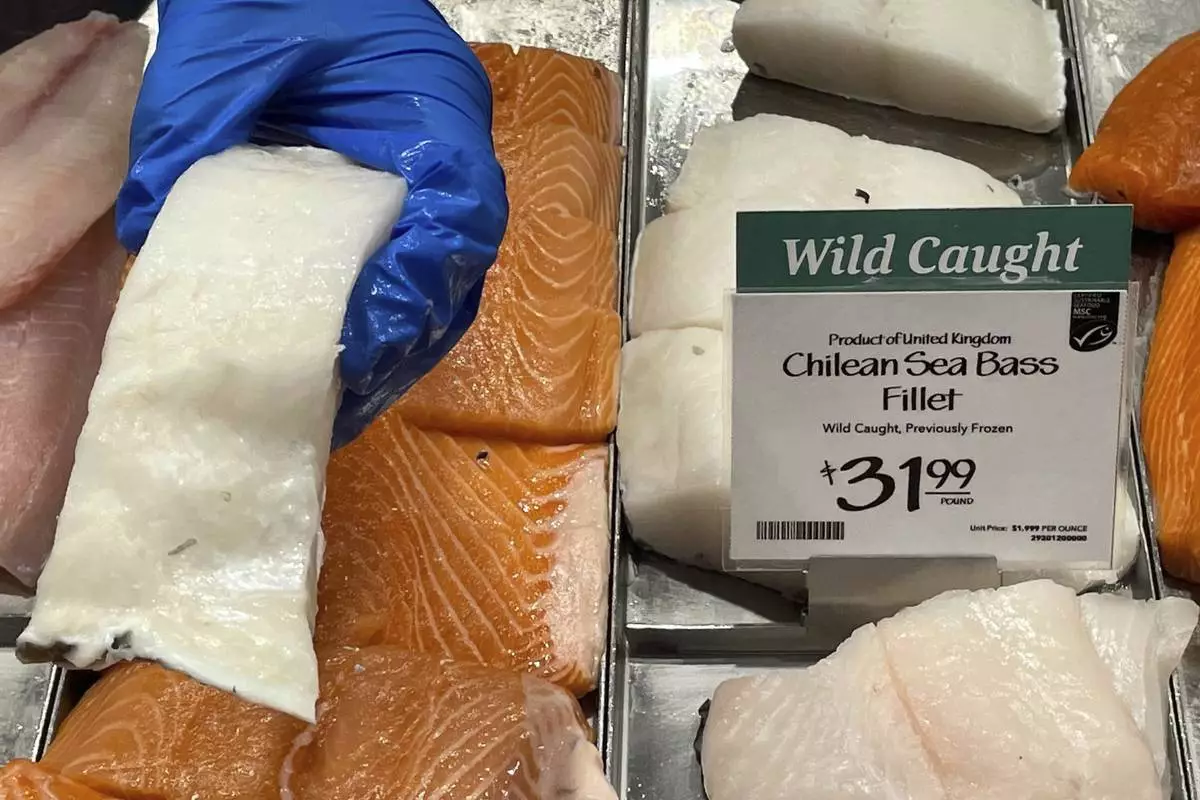
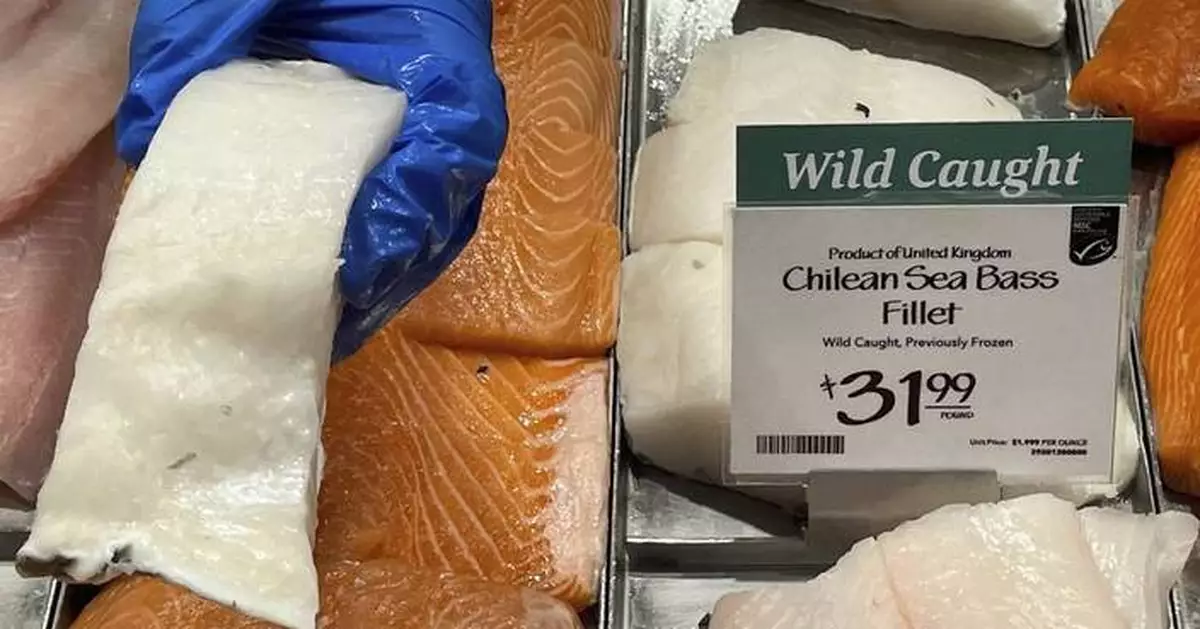
FILE - Fillets of Chilean sea bass caught near the U.K.-controlled South Georgia island are displayed for sale at a Whole Foods Market in Cleveland, Ohio on June 17, 2022. (AP Photo/Joshua Goodman, file)