Skip to Content Facebook Feature Image

Can one of Africa's largest refugee camps evolve into a city?

News

Can one of Africa's largest refugee camps evolve into a city?
News

News

Can one of Africa's largest refugee camps evolve into a city?

2025-04-07 13:38 Last Updated At:13:41

KAKUMA, Kenya (AP) — Windswept and remote, set in the cattle-rustling lands of Kenya’s northwest, Kakuma was never meant to be permanently settled.

It became one of Africa’s most famous refugee camps by accident as people escaping calamity in countries like South Sudan, Ethiopia and Congo poured in.

More Images
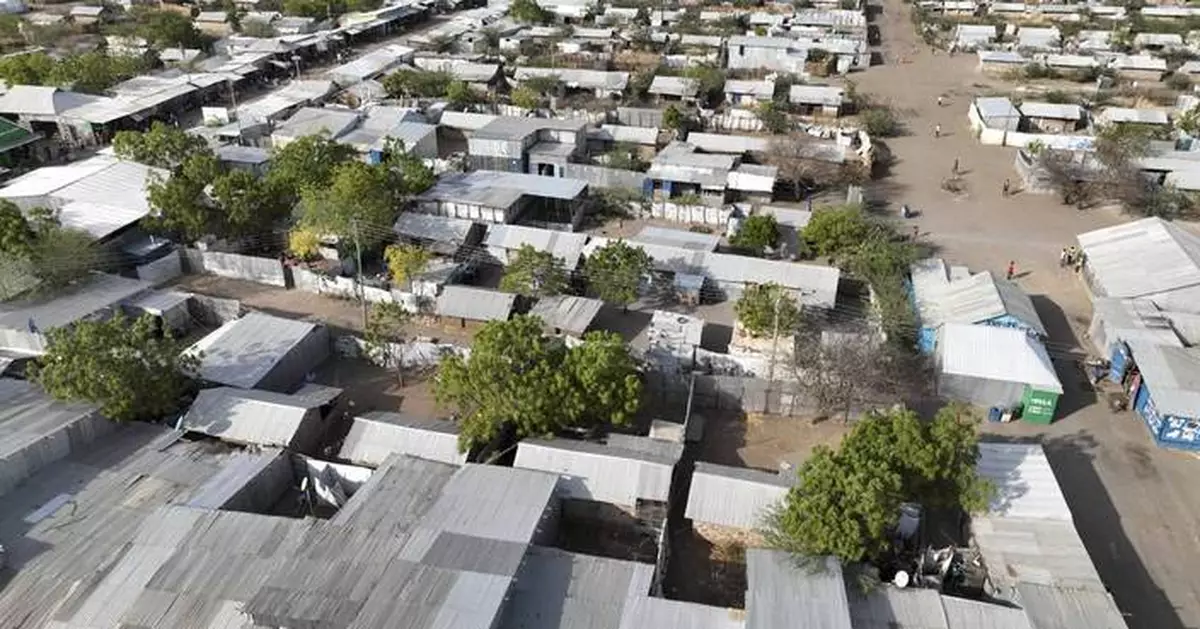
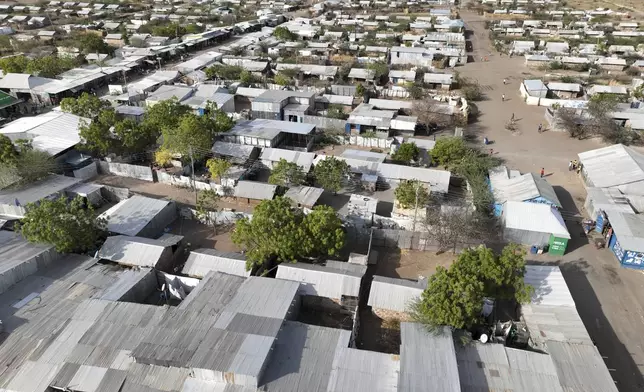
General view of Kakuma refugee camp in Turkana county, Kenya, Saturday, Feb. 15, 2025. (AP Photo/Jackson Njehia)
General view of Kakuma refugee camp in Turkana county, Kenya, Saturday, Feb. 15, 2025. (AP Photo/Jackson Njehia)

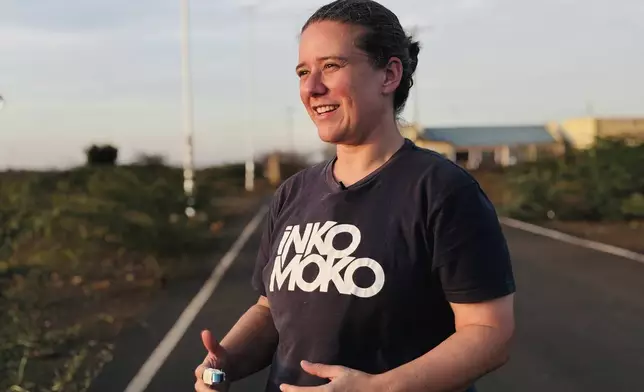
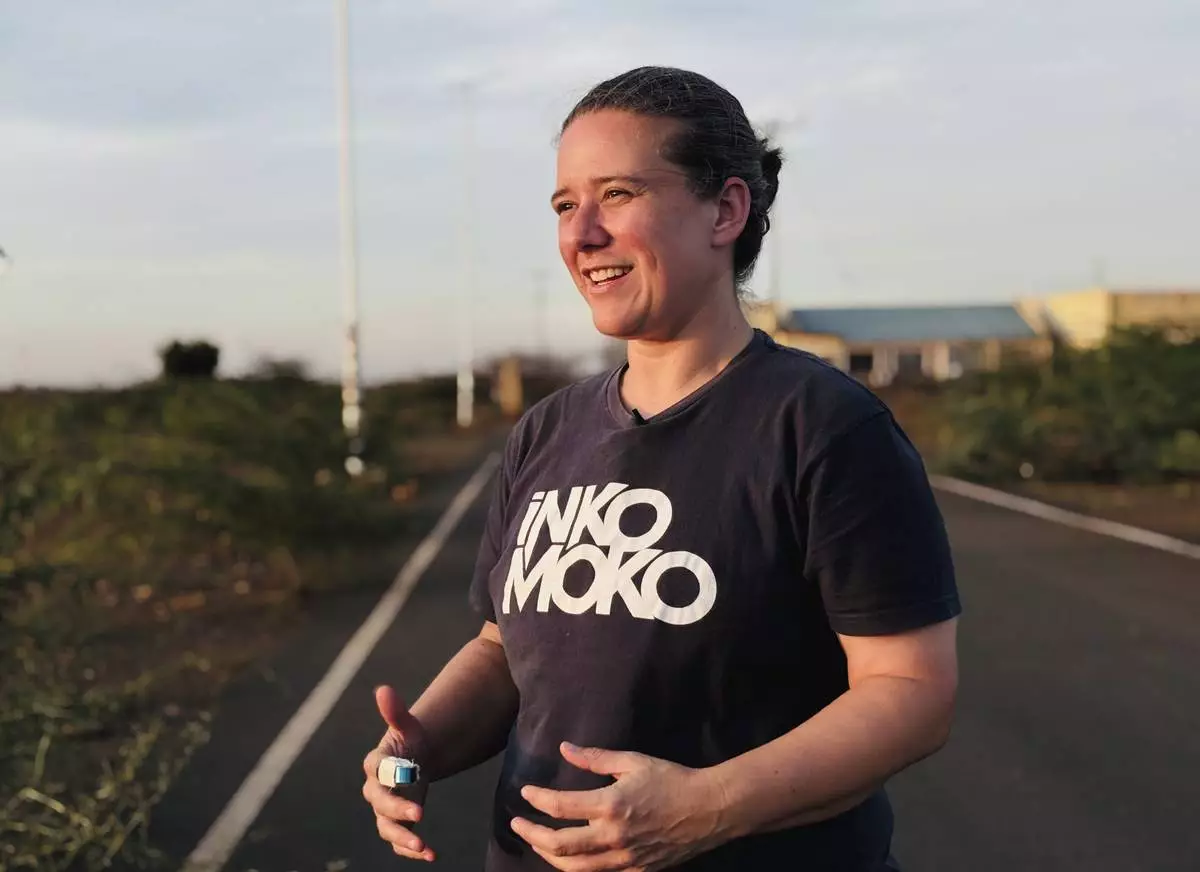
Julienne Oyler, who runs Inkomoko, a charity providing financial training, talks during an interview with the Associated Press Kakuma refugee camp in Turkana county, Kenya, Saturday, Feb. 15, 2025. (AP Photo/Jackson Njehia)
Julienne Oyler, who runs Inkomoko, a charity providing financial training, talks during an interview with the Associated Press Kakuma refugee camp in Turkana county, Kenya, Saturday, Feb. 15, 2025. (AP Photo/Jackson Njehia)

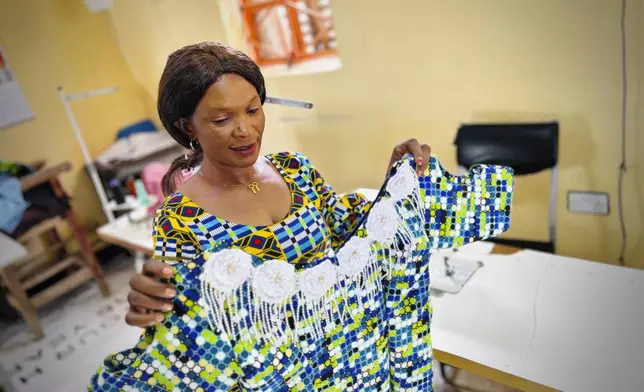
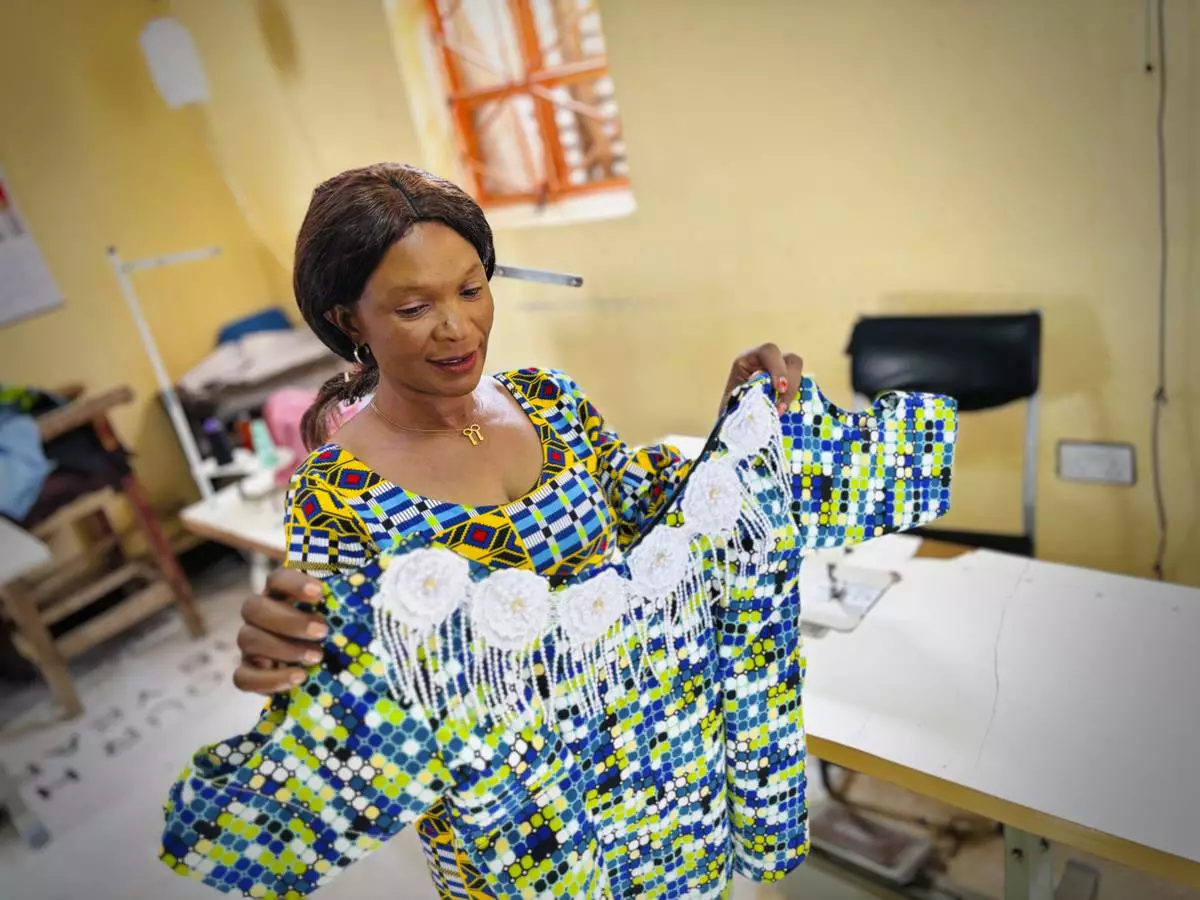
Adele Mubalama, holds a cloth at her boutique in Kakuma refugee camp, Turkana County, Kenya, Saturday, Feb. 15, 2025. (AP Photo/Jackson Njehia)
Adele Mubalama, holds a cloth at her boutique in Kakuma refugee camp, Turkana County, Kenya, Saturday, Feb. 15, 2025. (AP Photo/Jackson Njehia)

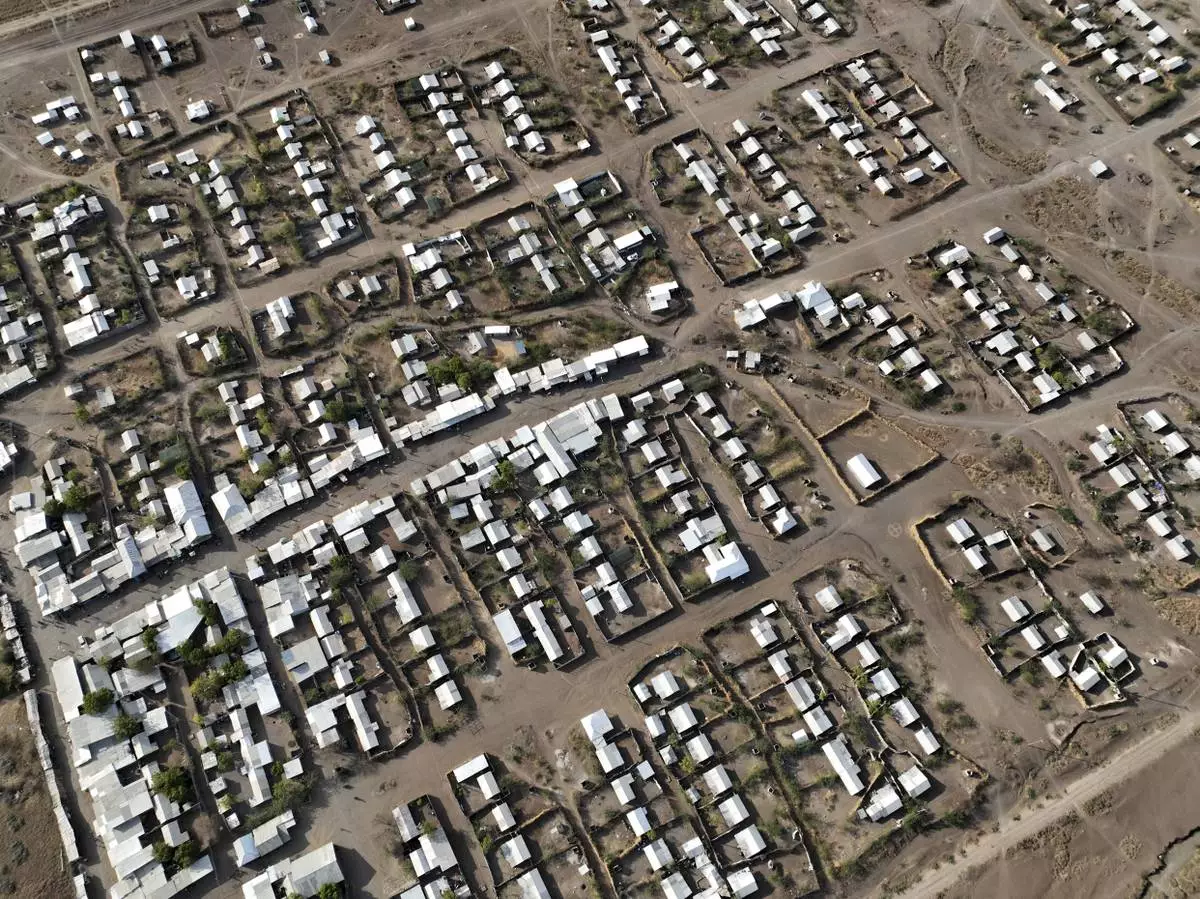
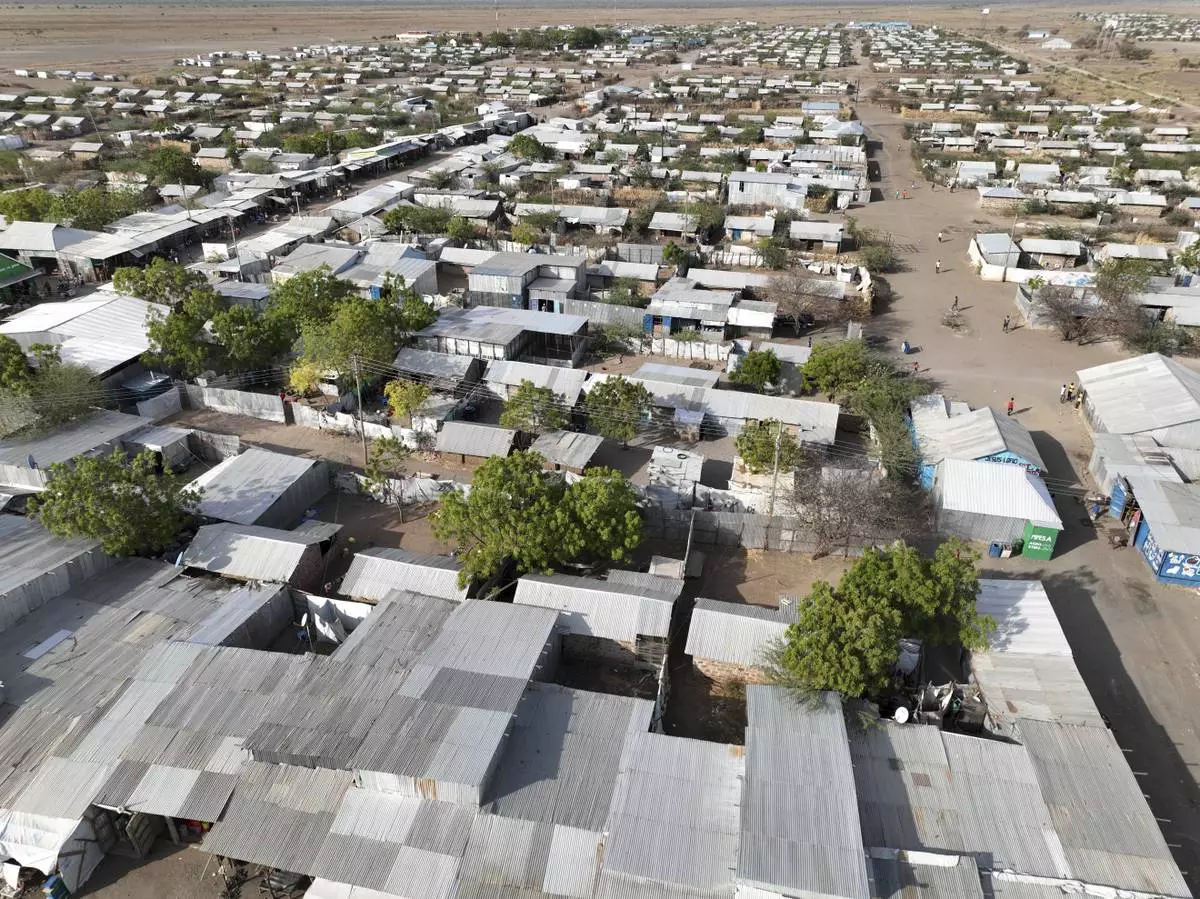
General view part of Kakuma refugee camp in Turkana county, Kenya, Saturday, Feb. 15, 2025. (AP Photo/Jackson Njehia)

General view part of Kakuma refugee camp in Turkana county, Kenya, Saturday, Feb. 15, 2025. (AP Photo/Jackson Njehia)

More than three decades after its first tents appeared in 1992, Kakuma houses 300,000 refugees. Many rely on aid to survive. Some recently clashed with police over shrinking food rations and support.

Now the Kenyan government and humanitarian agencies have come up with an ambitious plan for Kakuma to evolve into a city.

Although it remains under the United Nations' management, Kakuma has been redesignated a municipality, one that local government officials later will run.

It is part of broader goal in Kenya and elsewhere of incorporating refugees more closely into local populations and shifting from prolonged reliance on aid.

The refugees in Kakuma eventually will have to fend for themselves, living off their incomes rather than aid. The nearest city is eight hours' drive away.

Such self-reliance is not easy. Few refugees can become Kenyan citizens. A 2021 law recognizes their right to work in formal employment, but only a tiny minority are allowed to do so.

Forbidden from keeping livestock because of the arid surroundings and the inability to roam widely, and unable to farm due to the lack of adequate water, many refugees see running a business as their only option.

Startup businesses require capital, and interest rates on loans from banks in Kakuma are typically around 20%. Few refugees have the collateral and documentation needed to take out a loan.

Denying them access to credit is a tremendous waste of human capital, said Julienne Oyler, who runs Inkomoko, a charity providing financial training and low-cost loans to African businesses, primarily in displacement-affected communities.

“We find that refugee business owners actually have the characteristics that make world-class entrepreneurs,” she said.

“They are resilient. They are resourceful. They have access to networks. They have adaptability. In some ways, what refugees unfortunately have had to go through actually makes a really good business owner.”

Other options available include microloans from other aid groups or collective financing by refugee-run groups. However, the sums involved are usually insufficient for all but the smallest startups.

One of Inkomoko’s clients in Kakuma, Adele Mubalama, led seven young children — six of her own and an abandoned 12-year-old she found en route — on a hazardous journey to the camp through four countries after the family was forced to leave Congo in 2018.

At the camp it took six months to find her husband, who had fled two months earlier, and six more to figure out how to make a living.

“It was difficult to know how to survive,” Mubalama said. “We didn’t know how to get jobs and there were no business opportunities.”

After signing up for a tailoring course with a Danish charity, she found herself making fabric masks during the COVID-19 pandemic.

Able to borrow from Inkomoko at half the rate charged by banks, she expanded, taking on 26 employees and buying new sewing machines. Last year she made a profit of $8,300 — a huge amount when many refugees live on allowances or vouchers of about $10 or less a month.

Another beneficiary is Mesfin Getahun, a former soldier who fled Ethiopia for Kakuma in 2001 after helping students who had protested against the government. He has grown his “Jesus is Lord” shops, which sell everything from groceries to motorcycles, into Kakuma’s biggest retail chain. That's thanks in part to $115,000 in loans from Inkomoko.

Trading with other towns is also essential. Inkomoko has linked refugee businesses with suppliers in Eldoret, a city 300 miles (482 kilometers) to the south, to cut out expensive middlemen and help embed Kakuma into Kenya's economy.

Some question the vision of Kakuma becoming a thriving, self-reliant city.

Rahul Oka, an associate research professor with the University of Notre Dame said it lacks the resources — particularly water — and infrastructure to sustain a viable economy that can rely on local production.

“You cannot reconstruct an organic economy by socially engineering one,” said Oka, who has studied economic life at Kakuma for many years.

Two-way trade remains almost nonexistent. Suppliers send food and secondhand clothes to Kakuma, but trucks on the return journey are usually empty.

And the vast majority of refugees lack the freedom to move elsewhere in Kenya, where jobs are easier to find, said Freddie Carver of ODI Global, a London-based think tank.

Unless this is addressed, solutions offering greater opportunities to refugees cannot deliver meaningful transformation for most of them, he said.

“If you go back 20 years, a lot of refugee rights discourse was about legal protections, the right to work, the right to stay in a country permanently,” Carver said. “Now it’s all about livelihoods and self-sufficiency. The emphasis is so much on opportunities that it overshadows the question of rights. There needs to be a greater balance.”

For more on Africa and development: https://apnews.com/hub/africa-pulse

The Associated Press receives financial support for global health and development coverage in Africa from the Gates Foundation. The AP is solely responsible for all content. Find AP’s standards for working with philanthropies, a list of supporters and funded coverage areas at AP.org.
General view of Kakuma refugee camp in Turkana county, Kenya, Saturday, Feb. 15, 2025. (AP Photo/Jackson Njehia)
General view of Kakuma refugee camp in Turkana county, Kenya, Saturday, Feb. 15, 2025. (AP Photo/Jackson Njehia)

Julienne Oyler, who runs Inkomoko, a charity providing financial training, talks during an interview with the Associated Press Kakuma refugee camp in Turkana county, Kenya, Saturday, Feb. 15, 2025. (AP Photo/Jackson Njehia)
Julienne Oyler, who runs Inkomoko, a charity providing financial training, talks during an interview with the Associated Press Kakuma refugee camp in Turkana county, Kenya, Saturday, Feb. 15, 2025. (AP Photo/Jackson Njehia)

Adele Mubalama, holds a cloth at her boutique in Kakuma refugee camp, Turkana County, Kenya, Saturday, Feb. 15, 2025. (AP Photo/Jackson Njehia)
Adele Mubalama, holds a cloth at her boutique in Kakuma refugee camp, Turkana County, Kenya, Saturday, Feb. 15, 2025. (AP Photo/Jackson Njehia)

General view part of Kakuma refugee camp in Turkana county, Kenya, Saturday, Feb. 15, 2025. (AP Photo/Jackson Njehia)

General view part of Kakuma refugee camp in Turkana county, Kenya, Saturday, Feb. 15, 2025. (AP Photo/Jackson Njehia)
CARACAS, Venezuela (AP) — Venezuela’s government accused the United States of attacking civilian and military installations in multiple states after at least seven explosions and low-flying aircraft were heard around 2 a.m. local time Saturday in the capital, Caracas.

The Pentagon and White House did not immediately respond to requests for comment.

Smoke could be seen rising from the hangar of a military base in Caracas. Another military installation in the capital was without power.

People in various neighborhoods rushed to the streets. Some could be seen in the distance from various areas of Caracas.

“The whole ground shook. This is horrible. We heard explosions and planes,” said Carmen Hidalgo, a 21-year-old office worker, her voice trembling. She was walking briskly with two relatives, returning from a birthday party. “We felt like the air was hitting us.”

Venezuela’s government, in the statement, called on its supporters to take to the streets.

“People to the streets!” the statement said. “The Bolivarian Government calls on all social and political forces in the country to activate mobilization plans and repudiate this imperialist attack.”

The statement added that President Nicolás Maduro had “ordered all national defense plans to be implemented” and declared “a state of external disturbance.”

This comes as the U.S. military has been targeting, in recent days, alleged drug-smuggling boats. On Friday, Venezuela said it was open to negotiating an agreement with the U.S. to combat drug trafficking.

Maduro also said in a pretaped interview aired Thursday that the U.S. wants to force a government change in Venezuela and gain access to its vast oil reserves through the monthslong pressure campaign that began with a massive military deployment to the Caribbean Sea in August.

Maduro has been charged with narco-terrorism in the U.S. The CIA was behind a drone strike last week at a docking area believed to have been used by Venezuelan drug cartels in what was the first known direct operation on Venezuelan soil since the U.S. began strikes on boats in September.

U.S. President Donald Trump for months had threatened that he could soon order strikes on targets on Venezuelan land. The U.S. has also seized sanctioned oil tankers off the coast of Venezuela, and Trump ordered a blockade of others in a move that seemed designed to put a tighter chokehold on the South American country’s economy.

The U.S. military has been attacking boats in the Caribbean Sea and the eastern Pacific Ocean since early September. As of Friday, the number of known boat strikes is 35 and the number of people killed is at least 115, according to numbers announced by the Trump administration.

They followed a major buildup of American forces in the waters off South America, including the arrival in November of the nation’s most advanced aircraft carrier, which added thousands more troops to what was already the largest military presence in the region in generations.

Trump has justified the boat strikes as a necessary escalation to stem the flow of drugs into the U.S. and asserted that the U.S. is engaged in an “armed conflict” with drug cartels.

Meanwhile, Iranian state television reported on the explosions in Caracas on Saturday, showing images of the Venezuelan capital. Iran has been close to Venezuela for years, in part due to their shared enmity of the U.S.

Pedestrians walk past the Miraflores presidential palace after explosions and low-flying aircraft were heard in Caracas, Venezuela, Saturday, Jan. 3, 2026. (AP Photo/Cristian Hernandez)

Pedestrians walk past the Miraflores presidential palace after explosions and low-flying aircraft were heard in Caracas, Venezuela, Saturday, Jan. 3, 2026. (AP Photo/Cristian Hernandez)

Residents evacuate a building near the Miraflores presidential palace after explosions and low-flying aircraft were heard in Caracas, Venezuela, Saturday, Jan. 3, 2026. (AP Photo/Cristian Hernandez)

Residents evacuate a building near the Miraflores presidential palace after explosions and low-flying aircraft were heard in Caracas, Venezuela, Saturday, Jan. 3, 2026. (AP Photo/Cristian Hernandez)

Smoke raises at La Carlota airport after explosions and low-flying aircraft were heard in Caracas, Venezuela, Saturday, Jan. 3, 2026. (AP Photo/Matias Delacroix)

Smoke raises at La Carlota airport after explosions and low-flying aircraft were heard in Caracas, Venezuela, Saturday, Jan. 3, 2026. (AP Photo/Matias Delacroix)

Pedestrians run after explosions and low-flying aircraft were heard in Caracas, Venezuela, Saturday, Jan. 3, 2026. (AP Photo/Matias Delacroix)

Pedestrians run after explosions and low-flying aircraft were heard in Caracas, Venezuela, Saturday, Jan. 3, 2026. (AP Photo/Matias Delacroix)

Smoke raises at La Carlota airport after explosions and low-flying aircraft were heard in Caracas, Venezuela, Saturday, Jan. 3, 2026. (AP Photo/Matias Delacroix)

Smoke raises at La Carlota airport after explosions and low-flying aircraft were heard in Caracas, Venezuela, Saturday, Jan. 3, 2026. (AP Photo/Matias Delacroix)

Smoke raises at La Carlota airport after explosions and low-flying aircraft were heard in Caracas, Venezuela, Saturday, Jan. 3, 2026. (AP Photo/Matias Delacroix)

Smoke raises at La Carlota airport after explosions and low-flying aircraft were heard in Caracas, Venezuela, Saturday, Jan. 3, 2026. (AP Photo/Matias Delacroix)

Pedestrians run after explosions and low-flying aircraft were heard in Caracas, Venezuela, Saturday, Jan. 3, 2026. (AP Photo/Matias Delacroix)

Pedestrians run after explosions and low-flying aircraft were heard in Caracas, Venezuela, Saturday, Jan. 3, 2026. (AP Photo/Matias Delacroix)

Recommended Articles