The increase of holdings of exchange-traded funds (ETFs) by China's state-owned investment company Central Huijin Investment Ltd. (Central Huijin) will stop panic selling on the country's capital market, and help the company better arrange its investments in strategic cutting-edge industries and serve high-quality growth, a Chinese expert has said.
Affected by sweeping global plunges triggered by U.S. tariffs, major Chinese equity indices -- including the benchmark Shanghai Composite Index, the Shenzhen Component Index, and the ChiNext Index -- suffered notable losses on Monday.
In response to the downturn, some state-owned capital operation firms moved quickly to increase their holdings of domestic equities, voicing strong confidence in the long-term outlook of the country's capital market.
Central Huijin said Tuesday it has full confidence and sufficient capability to maintain the stable operation of the Chinese capital market.
The company released a statement on Monday expounding on its decision to once again increase its holdings of ETFs.
With robust asset strength, abundant liquidity and smooth funding channels, Central Huijin has consistently played an important strategic role in ensuring the stability of the capital market, according to the statement.
The company emphasized its firm confidence in the long-term prospects of the capital market, underpinned by its positive outlook on China's economic future, and noted its full recognition of the current investment value of A-shares.
Central Huijin reaffirmed its commitment to serving as a stabilizer in the capital market and actively mitigating abnormal fluctuations. It would act decisively when needed, the company said.
The company will also steadily increase its holdings of various market-style ETFs, intensify its buying efforts and ensure a balanced investment structure.
"Central Huijin has chosen ETFs as a major tool to steady markets because ETFs can be traded fast and thus help quickly absorb market pressure brought by heavy selling of stocks. So ETFs have advantages in terms of liquidity. In addition, ETFs tracking indexes are able to avoid risks of individual stocks. In the meantime, by increasing holdings of ETFs like CSI 300 ETFs and Shanghai Stock Exchange's sci-tech innovation board 50 ETFs, Central Huijin is able to systematically arrange its investments in core assets of the Chinese economy and China's strategic cutting-edge industries," said Tian Lihui, head of the Institute of Finance and Development at Nankai University.
As a controlling or participating shareholder in over 20 financial institutions, and often likened to a "stabilization fund," the company has been instrumental in bolstering market stability and resilience since 2008.
"In the short term, Central Huijin is a stabilizer, as its addition of fund into the capital market helps stop panic selling and prevent systemic spread of risks. In the medium term, Central Huijin is a bellwether. It has clearly shown the country's aim of providing fundamental guarantee for the capital market and giving the market time for recovery. In the long run, Central Huijin plays a guiding role in promoting economic transformation and upgrade and high-quality development of Chinese economy and enterprises," said Tian.
Following the statement of Central Huijin, China's central bank pledged to firmly support the company in increasing its holding of stock index funds and provide sufficient re-lending support when necessary.
Apart from Central Huijin, multiple state-owned investment firms have also increased stock holdings or unveiled plans to accelerate share buybacks.
Moreover, the National Financial Regulatory Administration on Tuesday announced measures to raise the cap on equity investments by insurance funds, with greater support for equity investments in strategic emerging industries and fostering new quality productive forces.
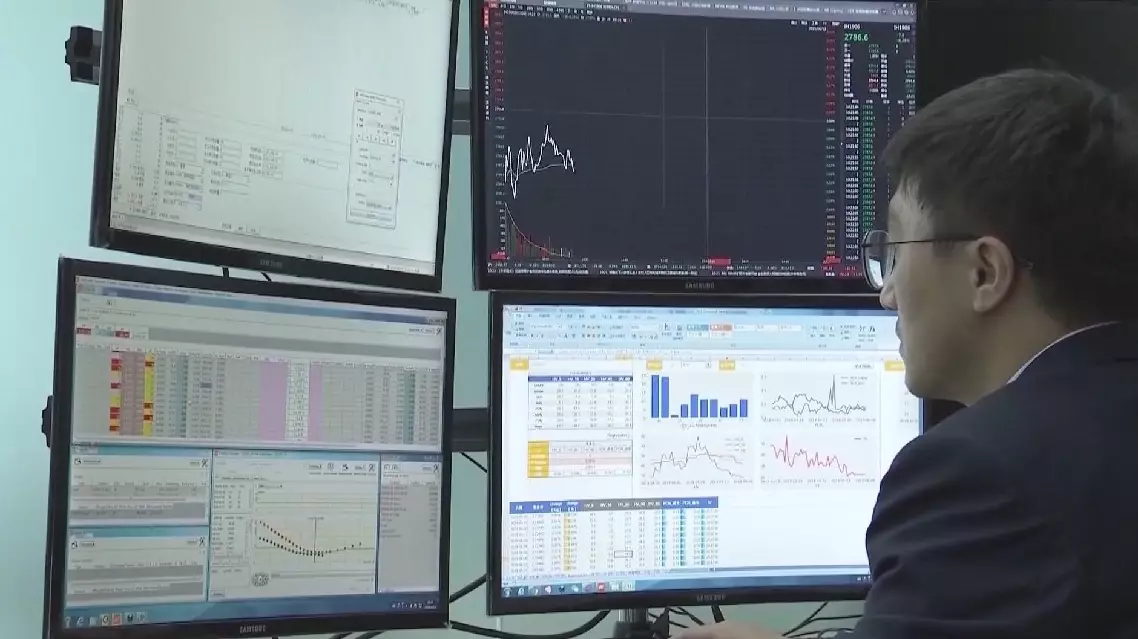
Central Huijin's increase of ETF holdings stops panic selling: expert