As the uncertainty surrounding the Trump administration's tariff policies fuels inflationary fears in the United States, a number of consumers have resorted to panic buying amid growing concerns that costs could shoot up.
With price hikes expected on goods such as automobiles, beauty products, and even on everyday food items, many residents say they have been rushing out to stock up before prices climb even further.
In recent street interviews with the China Global Television Network (CGTN), New York residents shared how the impact of the ongoing tariff war is affecting their daily lives.
"Actually, I already have. I've already started stocking up. My mother has a whole stockpile, and she's panicking. But I told her we're going to be okay, as we live in New York City," said Amelia Guilford, a retail worker who was visiting her mother in the city.
With many anticipating a rise in inflation, many Americans are concerned about the long-term financial impact, and say they are now being more prudent with their money.
"I think we have to [spend more carefully]. Because otherwise you're going to be in real trouble economically or in debt, because if you spend more than what you get, that's going to be a lot of trouble," said Jose Pena, a janitor.
The tariffs, which directly affect the price of imported goods, have led to predictions of significant price increases, particularly on goods coming from China, which has been the biggest target of the tariffs.
"[Products] from China are going to be more expensive. I cannot exactly name what kind of products one by one, but every one that comes from China is going to be more expensive, without a doubt," said Pena.
Public frustration is evident, with some questioning the logic behind U.S. President Donald Trump's risky and unpredictable pursuit of tariffs on other countries, as the debate over the long-term consequences of the policy intensifies.
"I think he's just making enemies, and I trust him not. And I think he's making a mess of everything. I think it's all going to come around and flip back. The changes he's doing are completely unsustainable," said Lois Adams, a nurse, as she expressed her disapproval of Trump's approach.
Ordinary Americans are facing up to the harsh reality of rising prices and remain anxious about the future economic impact of the continuing trade war.
Jerome Wilkins, a security worker, voiced concerns about the broader societal implications of the tariffs, warning it will again be the poorest people who suffer the most.
"I think that the tariffs are horrible. I think that it's like privatizing America, and instead of America being a country for the people, it's a corporation for the rich. And it's just for them to get richer, while the poor get poorer. And that's basically how I feel," said Wilkins.
Meanwhile, the Chinese government announced it would raise tariffs on all imported U.S. goods from 34 percent to 84 percent, effective Wednesday, in response to the U.S. decision to escalate its "reciprocal tariffs" on Chinese products, further adding to the economic strain.

Tariff war triggers panic buying in US, raising public concerns over rising costs

Tariff war triggers panic buying in US, raising public concerns over rising costs

Tariff war triggers panic buying in US, raising public concerns over rising costs
Amidst overlapping global challenges, international experts at the 2026 Global Governance Forum in north China's Hebei Province emphasized that rebuilding confidence and cooperation in global governance requires enhanced dialogue, the establishment of common rules in emerging fields, and a fairer, more inclusive international system that amplifies the voice of the Global South.
Held from October 23 to 25 in Xiong'an, China's "city of the future" built on the North China Plain, the forum brought together nearly 400 representatives from over 90 countries. Spanning five major sectors and 22 thematic seminars, the event provided a platform for diverse stakeholders in politics, economy, technology, culture, and think tanks to jointly address governance challenges and promote inclusive, multi-stakeholder global governance reform.
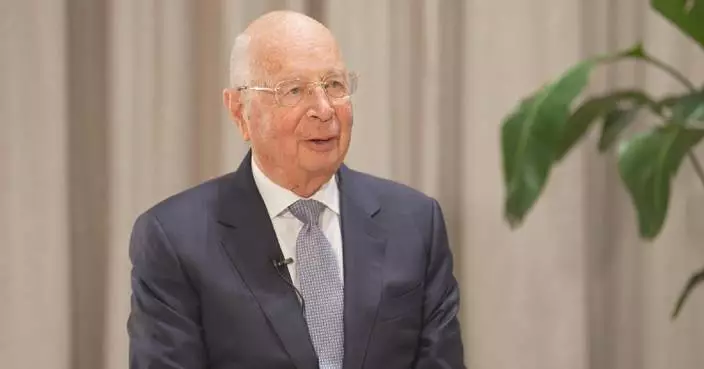
"In this conference, I met some American representatives, a remarkable businessman. I asked him, 'what are you doing here?' And he said, 'I wanted to discuss Global Governance Initiative.' I said, 'Listen, I don't believe because whatever China proposes, the U.S. will object. And he said no. And he mentioned specific subject -- AI. He said, 'I want to make my humble contribution into establishing (of) global governance in AI.' So among Americans, this idea is also receiving some understanding. More dialogue is required and I would underline the weight of this forum," said Djoomart Otorbaev, former prime minister of Kyrgyzstan.
In today's world, where deficits in peace, development, security, and governance are intertwined, rebuilding confidence and cooperation is the most scarce international public good. In response, China has proactively set the agenda to address pressing concerns, such as advancing the reform of the UN-centered governance system, cooperating on new frontiers like cyberspace, outer space, and AI, and bridging civilizational divides amidst geopolitical rivalry.
"And there were some specific initiatives which we also have discussed, which is to set the global governance for the outer space, for the deep seas, for some areas of the planet like the Antarctica, where there is various needs for more common rules. One area the world is looking for is artificial intelligence and we need to regulate globally and efficient intelligence to avoid the worst. So if we work together, we can get the benefits and make sure that we make it much more difficult to do the harm," said Erik Solheim, chairman of the EU-Asia Centre and former UN under-secretary-general and former executive director of the UN Environment Programme.
"The world has become a global village, but this global village is now fighting. There's a problem going on in the Middle East, there's a problem going on in Africa, but China is trying to promote a conclusive thing so that the world can be peaceful. Because of this Global Governance Initiative, China has been able to tell the world (that) how to work together," said Khalid Taimur Akram, executive director of the Pakistan Research Center for a Community with a Shared Future.
Since its proposal over a year ago, the Global Governance Initiative has garnered support and responses from over 160 countries and international organizations.
During the forum, China announced pragmatic measures to further implement the initiative, reaffirming its firm support for multilateralism and the core status of the United Nations, while emphasizing the need to enhance the representation and voice of the Global South in international affairs to translate the initiative from a Chinese proposal into broader international practice.
"It's that combination of defense of the games that arise from the existence of the international system, but improving it, updating it, performing it, making it fairer, particularly to the great mass of developing countries, which is why the Chinese proposals meet a lot of support, particularly from the Global South, but also from fair minded people in other countries," said Keith Bennett, vice chairman of UK 48 Group Club.
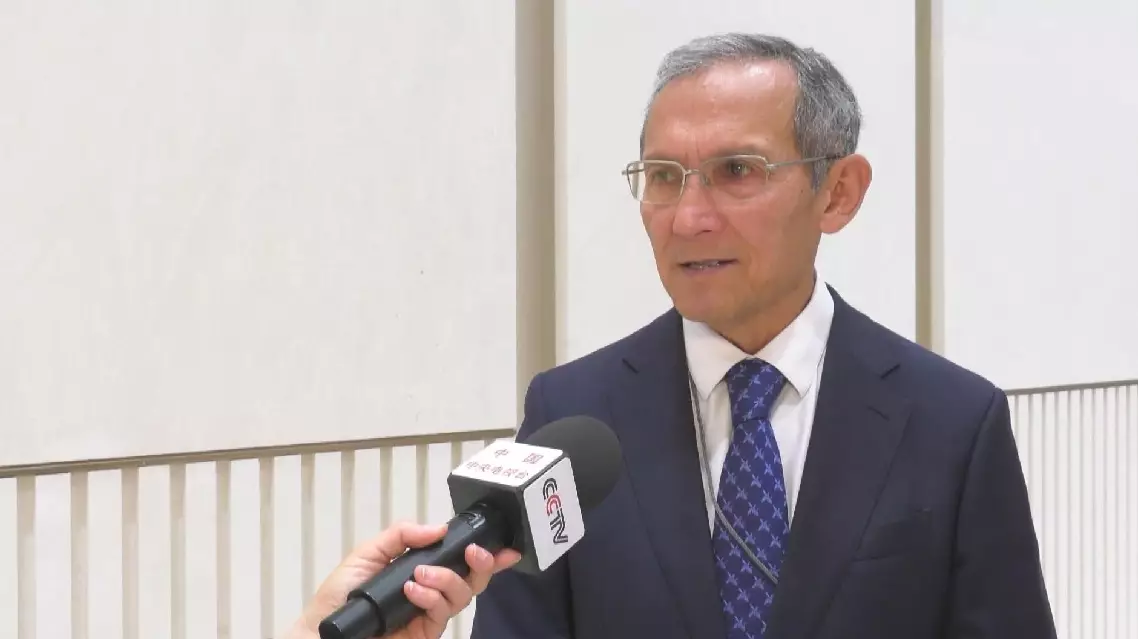
Participants of Global Governance Forum hail China's contribution to fairer international order