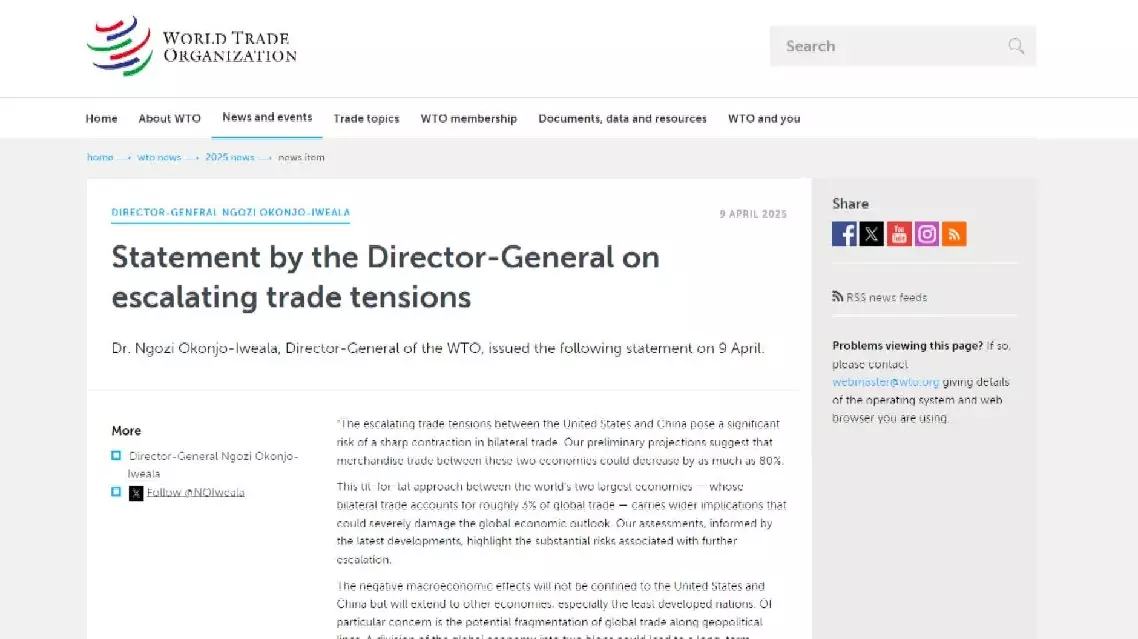
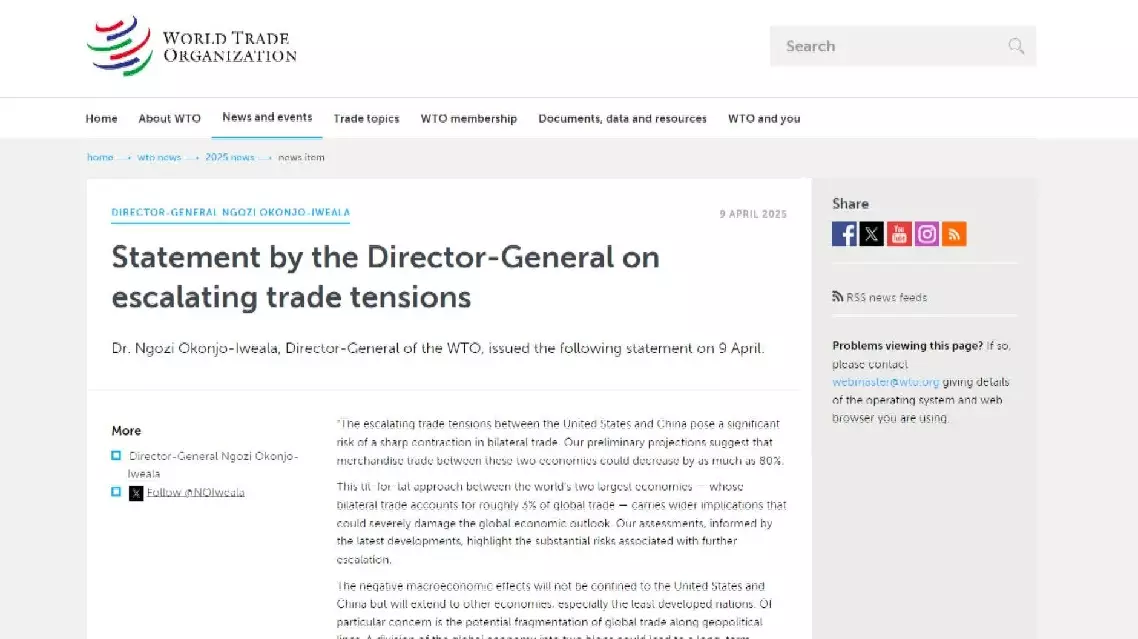
Director-General of the World Trade Organization (WTO), Ngozi Okonjo-Iweala, warned on Wednesday that the escalating trade tensions sparked by U.S. tariff measures could lead to a sharp contraction in bilateral trade between the United States and China and damage other economies.
After several days of chaos on the global financial markets, Trump on Wednesday suddenly announced a 90-day pause of the higher tariff rates to all countries except China, to whom he declared he was raising the "reciprocal" tariff rate to 125 percent, with the total levy on Chinese goods surging to a staggering 145 percent.
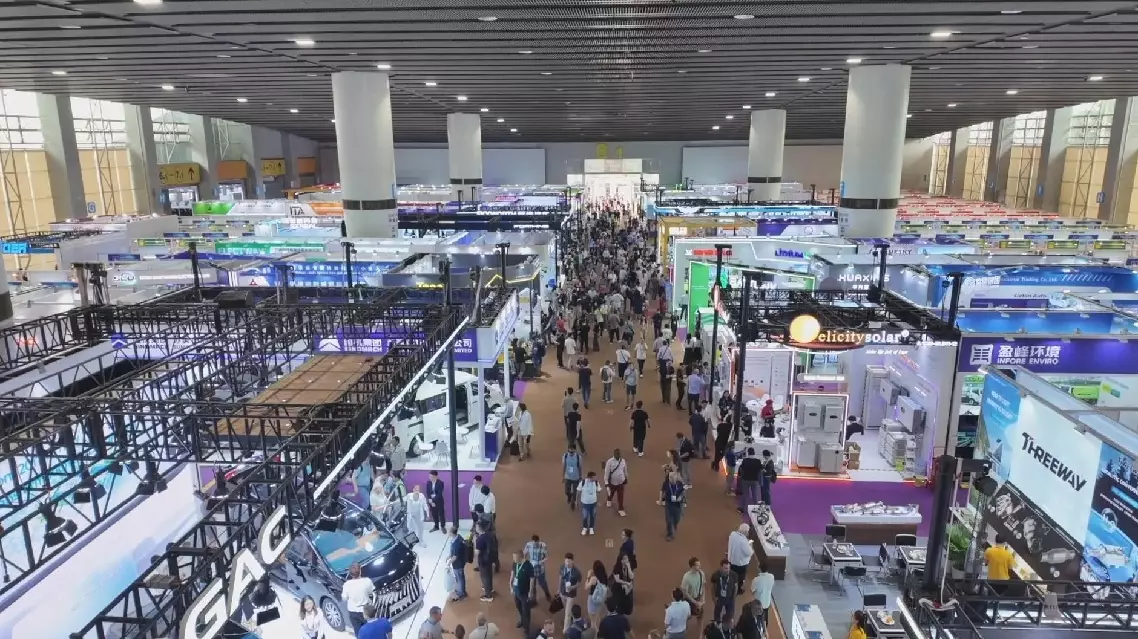
Preliminary projections suggest that merchandise trade between the two countries - which accounts for roughly 3 percent of global trade - could decrease by as much as 80 percent, according to the WTO chief.
She further warned that the negative macroeconomic effects will not be confined to the United States and China but extend to other economies, especially the least developed nations. Of particular concern is the potential fragmentation of global trade along geopolitical lines. A division of the global economy into two blocs could lead to a long-term reduction in global real GDP by nearly 7 percent, she said.
The director-general urged all WTO members to address challenges through cooperation and dialogue. She said it is critical for the global community to work together to preserve the international trading system's openness.
In a separate article titled "America's big trade win," published in March, the WTO chief pointed out that the "trade deficit" excuse the U.S. uses for its additional tariffs is unwarranted, as the country is leading the way in global services trade, running surpluses with other economies.
According to the article, in 2023, U.S. services exports were worth more than one trillion U.S. dollars, accounting for 13 percent of the global total. The country runs a services trade surplus with most major economies, including key partners in Europe, Asia, and the Americas, to nearly 300 billion U.S. dollars in 2024.
U.S. companies last year received more than 144 billion dollars in intellectual property royalties and licensing fees -- much more than their global counterparts.
"American workers are reaping the rewards," the article pointed out. Services exports directly generated 4.1 million jobs in the U.S. in 2022, with the average hourly wage about 25 percent higher than that in the manufacturing sector, data from the U.S. International Trade Administration showed.
US tariff measures could reduce trade with China by 80 pct, damage global economy: WTO chief
US tariff measures could reduce trade with China by 80 pct, damage global economy: WTO chief