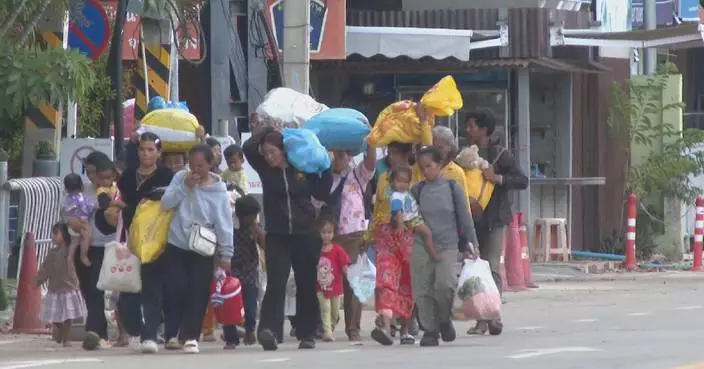
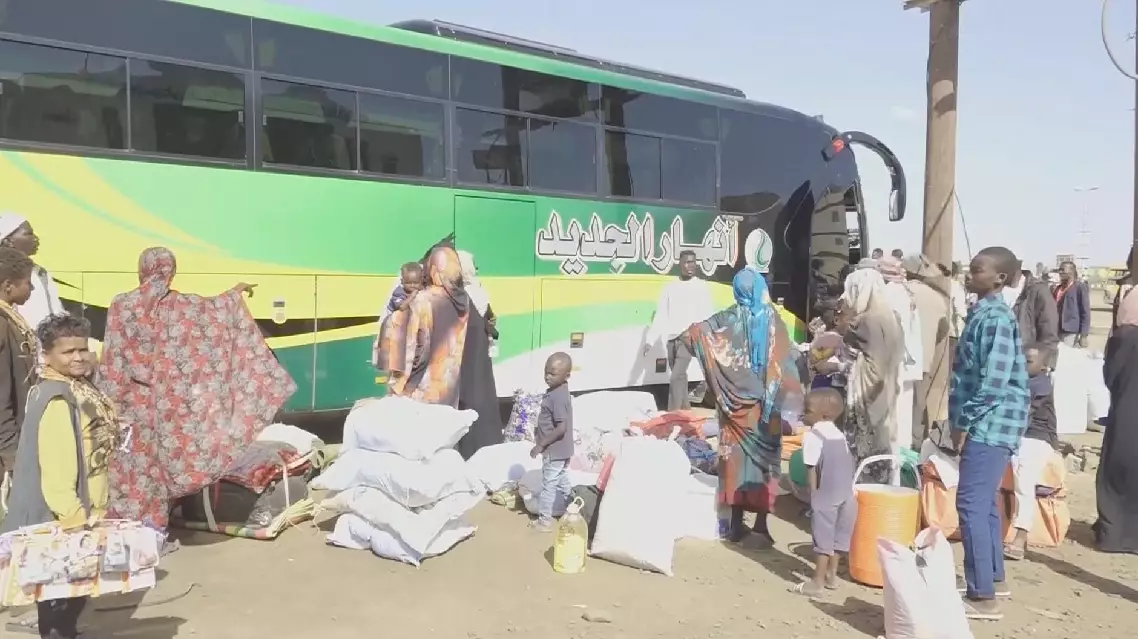
After enduring prolonged displacement, some Sudanese have returned to relatively stable regions of their homeland, only to face the heartbreaking reality of homes reduced to rubble.
Since mid-April 2023, Sudan has been gripped by a brutal conflict between the Sudanese Armed Forces and the paramilitary Rapid Support Forces. The violence has displaced nearly 13 million people, with close to 4 million seeking refuge in neighboring countries, according to the UN Refugee Agency (UNHCR) on Monday.
Red Sea State in eastern Sudan was once among the regions with the highest concentration of internally displaced people, having hosted over 200,000 people at its peak.
In March this year, the Red Sea State government, in collaboration with several non-governmental organizations, launched a program to facilitate the voluntary return of displaced individuals who had fled to eastern Sudan due to the ongoing conflict.
As relative stability returns to parts of central Sudan, many long-displaced Sudanese have begun their journeys home with renewed hope. Displaced individuals in other regions have also started to return to areas where the security situation has improved.
According to data from the International Organization for Migration (IOM), nearly 400,000 Sudanese have returned to their hometowns between late December 2024 and March this year.
"I was forced to flee my hometown seven or eight months ago. The experience was full of hardship and sorrow. This return program helped reunite me with my family, and I hope to restart my life smoothly," said Juma Awad, a displaced person.
Unfortunately, many Sudanese who have returned to their hometowns have found their former homes reduced to rubble. Some houses remain only as crumbling walls, while others, though structurally intact, have been stripped of all belongings due to looting.
Severely damaged infrastructure has posed serious challenges for returnees, including shortages of water and electricity, collapsed drainage and waste management systems, and heightened risks of infectious disease outbreaks.
"Many hospitals and government offices are not operational, and a large number of residential buildings have been destroyed," said Badr al-Din, a returnee.
According to the United Nations International Children's Emergency Fund (UNICEF), approximately 90 percent of schools in Sudan have closed, and 17 million students have been forced to drop out due to the ongoing armed conflict. The education sector has also seen a large-scale loss of teachers.
Nevertheless, some educators have chosen to remain and continue teaching subjects such as Arabic and mathematics to children of various ages.
"Despite the dire circumstances, I firmly believe that education must not be interrupted. We are doing everything we can to keep the school running," said Ayda Ahmed, a local schoolteacher.
The brutal fighting has killed at least 29,700 people and displaced nearly 13 million people, creating what the United Nations has described as a "humanitarian crisis of industrial proportions."
Displaced Sudanese return home to find devastation