Skip to Content Facebook Feature Image

What happens next after judge warns of possible contempt prosecution over deportation flights order

ENT

What happens next after judge warns of possible contempt prosecution over deportation flights order
ENT

ENT

What happens next after judge warns of possible contempt prosecution over deportation flights order

2025-04-17 06:32 Last Updated At:07:10

WASHINGTON (AP) — A federal judge's ruling that the Trump administration appears to have willfully violated his order to turn around planes of migrants headed for El Salvador increases the prospect of officials being held in criminal contempt of court and potentially facing possible prosecution.

U.S. District Judge James Boasberg said in his ruling on Wednesday that probable cause exists to hold the administration in contempt over its defiance of his order in the case involving migrants sent to a notorious El Salvador prison. The judge is giving the administration a chance to remedy the violation first before moving forward with such an action.

The White House says it's planning to appeal.

It's the latest standoff between the administration and the judiciary, which has blocked a slew of President Donald Trump's sweeping executive actions around immigration and other matters.

Here's what to know about the judge's ruling, contempt of court and what happens next:

The case stems from Trump's invocation of a 1798 wartime law, the Alien Enemies Act, to deport Venezuelan migrants it accuses of being gang members. During an emergency hearing last month after several migrants sued, Boasberg had ordered the administration not to deport anyone in its custody under the act.

When told there were already planes in the air headed to El Salvador, which has agreed to house deported migrants in a notorious prison, the judge said the aircraft needed to be returned to the United States. That didn't happen.

Hours later, El Salvador’s president, Nayib Bukele, announced that the deportees had arrived in his country. In a social media post, he said, “Oopsie...too late” above an article referencing Boasberg’s order.

The Justice Department has argued the judge's order didn’t apply to planes that had already left U.S. airspace by the time his command came down.

Boasberg said the government's “actions on that day demonstrate a willful disregard for its Order.” Even though the Supreme Court earlier this month vacated Boasberg's ruling that blocked the deportations, the judge said that does not “excuse the government's violation."

Boasberg said the administration can avoid contempt proceedings if it attempts to remedy the violation by retaking custody of the deportees, who were sent to the El Salvador prison in violation of his order, so they have a chance to challenge their removal. The judge wrote that the government “would not need to release any of those individuals, nor would it need to transport them back to the homeland," but it's unclear how that would work.

Boasberg said if the administration chooses not to remedy the violation, he will move forward with trying to identify the official or officials who made the decision not to turn the planes around. The judge said he would start by asking the government to submit written declarations in court, but he could turn to hearings with live witnesses under oath or depositions.

Then, he could refer the matter for prosecution. Since Trump's Justice Department leadership would almost certainly opt not to bring a case, the judge said he would appoint another attorney to prosecute the contempt case should the government decline to do so.

Rory Little, a law professor of constitutional law at UC Law San Francisco, believes the government could easily avoid a contempt finding.

“Boasberg doesn’t suggest it, but if they put those 200 people back on a plane and brought them back, that would purge the contempt for sure. It’s just that we don’t think Trump’s going to do that,” Little said.

Little said Boasberg suggested a “much less intrusive method” for the administration to comply with his order.

“He is being as careful as he can be to avoid the face-to-face, ugly confrontation that we all think must be coming sooner or later,” he said.

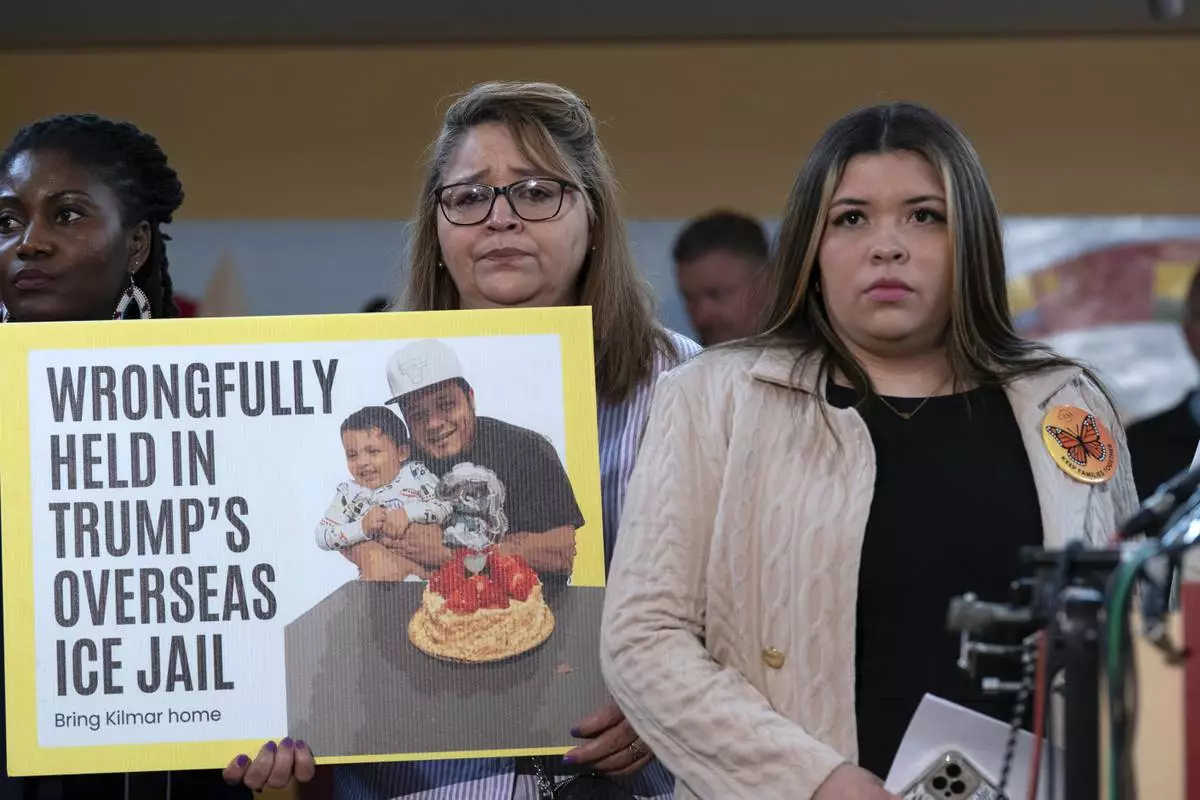
The administration could also be facing possible contempt of court in another case involving Kilmar Abrego Garcia, a Maryland man whom the administration has acknowledged was mistakenly sent to the El Salvador prison. The judge in that case has said she is determining whether to undertake contempt proceedings, saying officials “appear to have done nothing to aid in Abrego Garcia’s release from custody and return to the United States" despite a Supreme Court ruling that the administration must “facilitate” his release.

Judges have been willing to hold officials and agencies in contempt for failing to abide by rulings, even occasionally seeking to impose fines and imprisonment. But higher courts have almost always overturned them, Yale law professor Nicholas Parrillo wrote in a 2018 Harvard Law Review article that surveyed thousands of cases and turned up 82 contempt findings by federal judges since the end of World War II.

In a long-running dispute over money, the federal government holds in trust for Native American tribes, U.S. District Judge Royce Lamberth held interior secretaries Gale Norton, a Republican, in 2002, and Bruce Babbitt, a Democrat, in 1999, in contempt and twice ordered the Interior Department to disconnect its computers.

The federal appeals court in Washington overturned the contempt charge against Norton and finally removed Lamberth from the case in 2006.

Even without sanctions, though, contempt findings “have a shaming effect that gives them substantial if imperfect deterrent power,” Parrillo wrote. But he acknowledged that the potency of contempt rests on the widely shared view that officials comply with court orders.

In 1987, a divided Supreme Court ruled that district court judges have the authority to appoint private attorneys to prosecute criminal contempt actions. Justice Antonin Scalia, who disagreed with the majority decision, concluded that the courts don’t have the power to appoint attorneys to conduct contempt prosecutions.

Stanford Law School professor Robert Weisberg, who teaches criminal procedure, said Boasberg's claim that the government flagrantly violated his order is “very convincing.”

“This looks so sound to me that I think it will be difficult to win a reversal, which means we may have a standoff,” he said.

Weisberg said he is concerned that the showdown between the judge and administration could move the government even closer to a constitutional crisis.

“I’m supposed to say, because everybody else does, that we have to be careful about using the term ‘constitutional crisis.’ It means too many things, it’s overused,” he said. “That aside, what the country has been waiting for ... some with happy anticipation, is for a flat-out refusal to obey a legal court order. This is pretty close.”

Maryland Sen. Chris Van Hollen speaks to the press in La Libertad, El Salvador, where he arrived regarding Kilmar Abrego Garcia, a Salvadoran citizen who was living in Maryland and deported to El Salvador by the Trump administration, Wednesday, April 16, 2025. (AP Photo/Salvador Melendez)
Maryland Sen. Chris Van Hollen speaks to the press in La Libertad, El Salvador, where he arrived regarding Kilmar Abrego Garcia, a Salvadoran citizen who was living in Maryland and deported to El Salvador by the Trump administration, Wednesday, April 16, 2025. (AP Photo/Salvador Melendez)

Jennifer Vasquez Sura, the wife of Kilmar Abrego Garcia of Maryland, who was mistakenly deported to El Salvador, right, stands with supporters during a news conference at CASA's Multicultural Center in Hyattsville, Md., Friday, April 4, 2025. (AP Photo/Jose Luis Magana)
Jennifer Vasquez Sura, the wife of Kilmar Abrego Garcia of Maryland, who was mistakenly deported to El Salvador, right, stands with supporters during a news conference at CASA's Multicultural Center in Hyattsville, Md., Friday, April 4, 2025. (AP Photo/Jose Luis Magana)

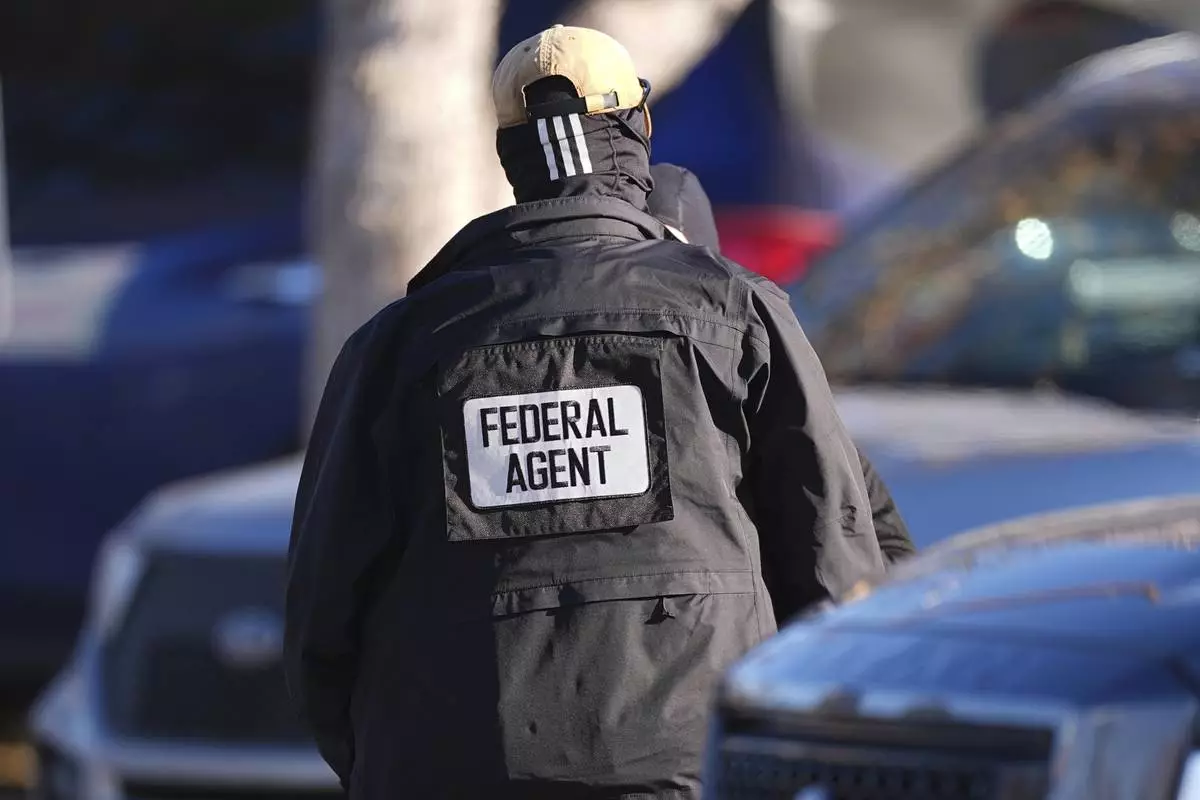
FILE - A member of law enforcement stand near an entrance to an apartment complex during a raid by federal agents Feb. 5, 2025, in east Denver. (AP Photo/David Zalubowski, File)

FILE - A member of law enforcement stand near an entrance to an apartment complex during a raid by federal agents Feb. 5, 2025, in east Denver. (AP Photo/David Zalubowski, File)
NEW YORK (AP) — Kamala Harris “wrote off rural America" during the 2024 presidential campaign and failed to attack Donald Trump with sufficient “negative firepower," according to a long-awaited post-election autopsy released on Thursday by the Democratic National Committee.

The committee's chair, Ken Martin, shared the 192-page report only after facing intense internal pressure from frustrated Democratic operatives concerned with his leadership. Martin had originally promised to release the autopsy, only to keep it under wraps for months because he was concerned it would be a distraction ahead of the midterms as Democrats mobilize to take back control of Congress.

On Tuesday, Martin apologized for his handling of the situation and conceded that the report was withheld because it “was not ready for primetime."

Although the autopsy criticizes Democrats' focus on “identity politics,” it sidesteps some of the most controversial elements of the 2024 campaign. The report does not address former President Joe Biden’s decision to seek reelection, the rushed selection of Harris to replace him on the ticket or the party's acrimonious divide over the war in Gaza.

“I am not proud of this product; it does not meet my standards, and it won’t meet your standards,” Martin wrote in an essay on Substack on Thursday. “I don’t endorse what’s in this report, or what’s left out of it. I could not in good faith put the DNC’s stamp of approval on it. But transparency is paramount.”

A spokesperson for Harris did not immediately respond to a request for comment.

The initial reaction from Democratic operatives was a mix of bafflement and anger over Martin's handling of the situation.

“Why not say this in 2024, or bring in more people to finish it, instead of turning this into the dumbest media cycle for 7-8 months?” Democratic strategist Steve Schale wrote on social media.

The postelection report, which was authored by Democratic consultant Paul Rivera, calls for “a renewed focus on the voters of Middle America and the South, who have come to believe they are not included in the Democratic vision of a stronger and more dynamic America for everyone.”

“Millions of Americans are suffering from poor access to healthcare, manufacturing and job losses, and a failing infrastructure, yet continue to be persuaded to vote against their best interests because they do not see themselves reflected in the America of the Democratic Party,” the report says.

The autopsy points to a reduction in support and training for Democratic state parties, voter registration shifts and “a persistent inability or unwillingness to listen to all voters.”

Thursday's release comes as Martin confronts a crisis of confidence among party officials who are increasingly concerned about the health of their political machine barely a year into his term. Some Democratic operatives have had informal discussions about recruiting a new chair, even though most believe that Martin’s job wasn't in serious jeopardy ahead of the midterm elections.

The report found that Harris and her allies failed to focus enough on Trump's negatives, especially his felony convictions. This was part of a broader criticism that Democrats' messaging is too focused on reason and winning arguments, “even in cycles when the electorate is defined by rage.”

“There was a decision in the 2024 Democratic leadership not to engage in negative advertising at the scale required,” the report states. “The Trump campaign and supportive Super PACs went full throttle against Vice President Harris, but there was not sufficient or similar negative firepower directed at Trump by Democrats.”

The report continues: “It was essential to prosecute a more effective case as to why Trump should have been disqualified from ever again taking office. The grounds were there, but the messaging did not make the case.”

Trump's attack on Harris' transgender policies were cited as a key contrast.

Specifically, the report suggested the Democratic nominee was “boxed” in by the Trump campaign's “very effective” ad that highlighted Harris' previous statement of support for taxpayer-funded gender-affirming surgeries for prison inmates.

Democratic pollsters believed that “if the Vice President would not change her position – and she did not – then there was nothing which would have worked as a response," the report said.

The report criticized Harris' outreach to key segments of America while condemning the party's focus on “identity politics.”

“Harris wrote off rural America, assuming urban/suburban margins would compensate. The math doesn’t work,” the report says. “You can’t lose rural areas by overwhelming margins and make it up elsewhere when rural voters are a significant share of the electorate. If Democrats are to reclaim leadership in the Heartland or the South, candidates must perform well in rural turf. Show up, listen, and then do it again.”

The report also references Democrats' underperformance with male voters of color.

“Male voters require direct engagement. The gender gap can be narrowed. Deploy male messengers, address economic concerns, and don’t assume identity politics will hold male voters of color,” it says.

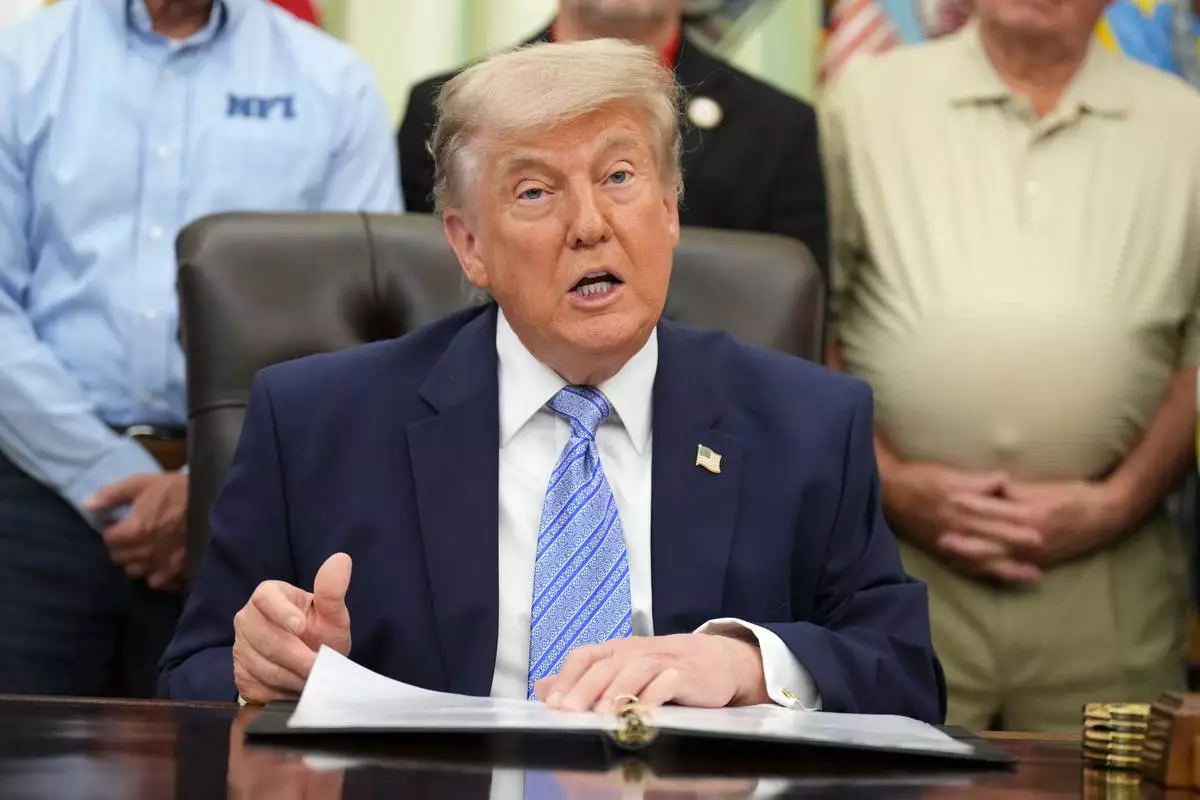
President Donald Trump speaks during an event about loosening a federal refrigerant rule, in the Oval Office at the White House, Thursday, May 21, 2026, in Washington. (AP Photo/Jacquelyn Martin)

President Donald Trump speaks during an event about loosening a federal refrigerant rule, in the Oval Office at the White House, Thursday, May 21, 2026, in Washington. (AP Photo/Jacquelyn Martin)

Former Vice President Kamala Harris speaks during a fireside chat on Thursday, May 7, 2026, in Las Vegas. (AP Photo/Ty ONeil)

Former Vice President Kamala Harris speaks during a fireside chat on Thursday, May 7, 2026, in Las Vegas. (AP Photo/Ty ONeil)

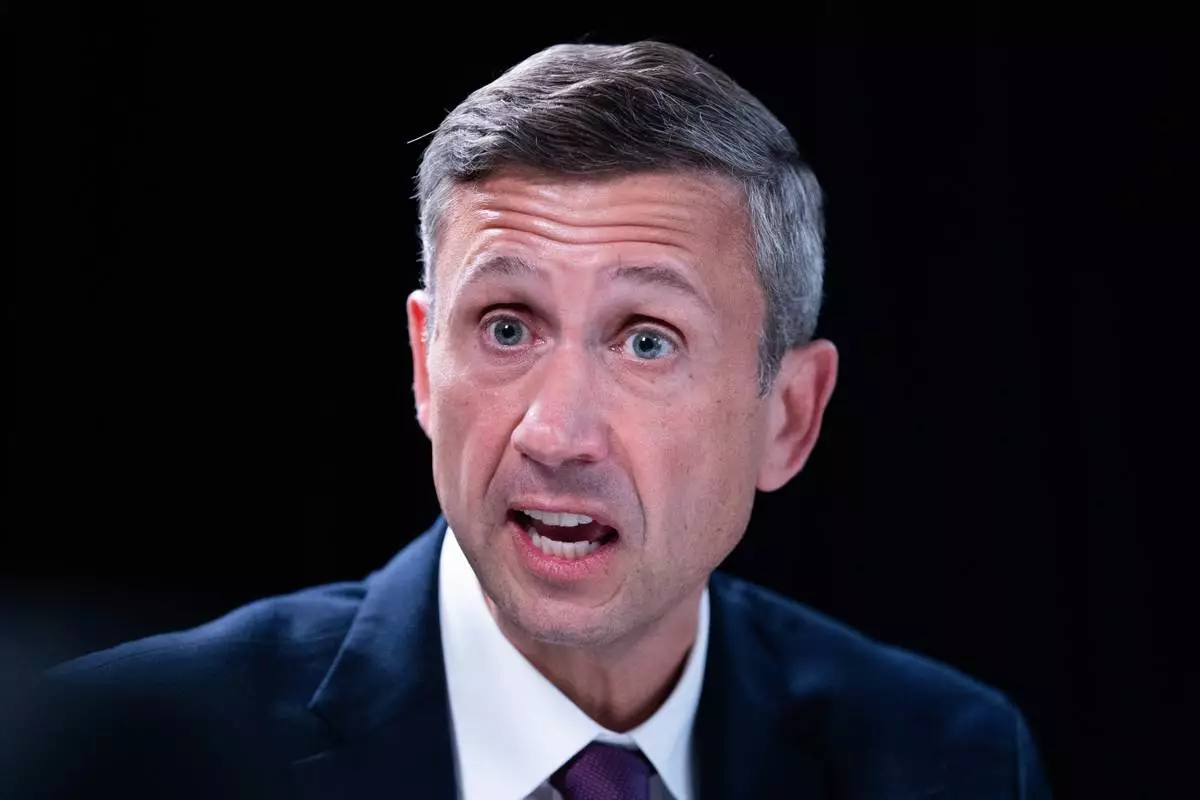
FILE - Democratic National Committee chair Ken Martin speaks during an interview with The Associated Press at DNC headquarters, Jan. 12, 2026, in Washington. (AP Photo/Allison Robbert, File)

FILE - Democratic National Committee chair Ken Martin speaks during an interview with The Associated Press at DNC headquarters, Jan. 12, 2026, in Washington. (AP Photo/Allison Robbert, File)

Recommended Articles