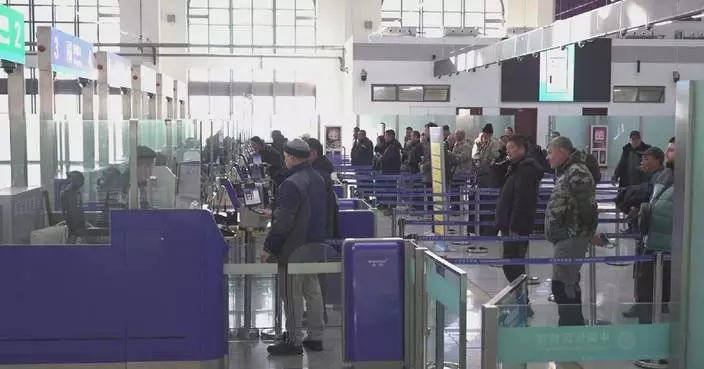
Cambodian Princess Norodom Jenna extended warm greetings and presented a special welcome gift to Chinese President Xi Jinping when he arrived in Phnom Penh on Thursday.
The princess bestowed Xi with a jasmine flower bracelet -- a traditional good luck charm which holds deep cultural significance in Cambodia -- and delivered well wishes in Chinese to the arriving guests at the airport.
Xi is paying a state visit to Cambodia at the invitation of King Norodom Sihamoni, with this marking his second visit to the Southeast Asian country in nine years.
Speaking at the airport just ahead of Xi's arrival, Princess Jenna said she felt very happy and honored to present the flower bracelet to the Chinese president, and said she is also hopeful Xi's visit will help deepen ties between China and Cambodia.
"[His visit will] focus on our Cambodian-China friendship, which is going to make our Cambodian-China friendship [grow] even closely [through] his presence for this trip. So we're all very happy," she said.
The princess said she had recently visited China herself and hopes to have the chance to return to the country soon.
"Because I just came back. So, I will maybe go back very soon too," she said.
Cambodia marks the final leg of Xi's five-day, three-nation Southeast Asia tour which saw him complete state visits to Vietnam and Malaysia prior to arriving in Phnom Penh.

Cambodian princess presents welcome gift to Xi at airport
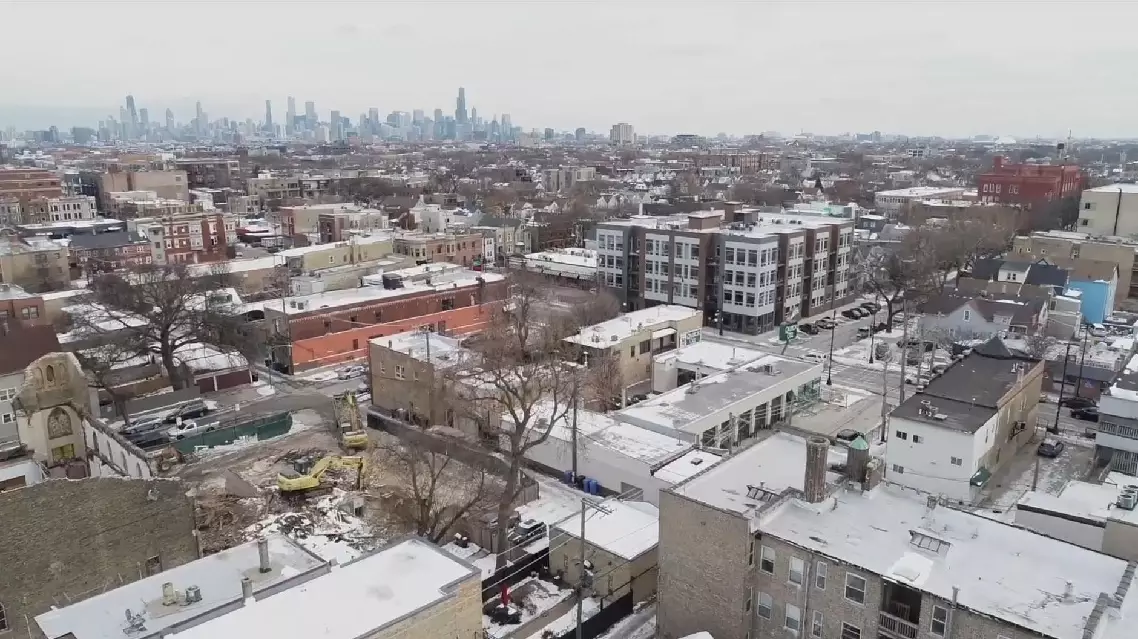
Chicago policymakers have introduced measures to increase housing supply, in a move that local activists and construction industry stakeholders have hailed as key to easing affordability pressures on residents.
According to the city's 2025 annual report on homelessness, Chicago is facing its largest gap in affordable and available housing in a decade, with the annual Point-in-Time (PIT) Count estimating that 7,452 people were experiencing homelessness, either in shelters or unsheltered locations, on January 23, 2025.
Steven Vance, a social worker in Chicago, said policies that previously curbed the city's housing supply have pushed up rent costs amid demographic changes.
"Households are declining in size, and that means we need more homes, and I thought it was strange that we would artificially restrict how many homes could get built in Chicago. Right now in Chicago, we have one of the highest rent growths, compared year to year in the country, and so now is a pivotal time to allow more housing," he said.
To address the challenge, Chicago has introduced zoning and land-use reforms, including the Additional Dwelling Units (ADU) Ordinance, aimed at increasing residential density and expanding housing supply.
The ordinance effectively expands housing access across the city by allowing ADUs in attics, basements, and accessory buildings, easing the rent burden and creating more budget-friendly housing options.
"In December 2020, City Council adopted an ordinance that would legalize ADUs in five pilot areas. (With ADU,) rents will maybe not always come down, but they will not climb as quickly as they are now if we have more housing options," he said.
The construction sector in the city has welcomed the policy change, with builders jumping on the opportunity to create new structures. For many in the industry, boosting housing supply is not just about doing business, but about addressing the issue of affordability as Chicago residents themselves.
"The housing market in Chicago has been impacted by the ADU program, to me, in a really big way. It's enabled a lot more rental projects to be constructed. I want there to be more housing in Chicago. I think there is a need for that, and I think there's also a need for responsible development that maintains the character of the neighborhood. Affordable housing to me is a really important issue, and to me, the biggest denominator in affordable housing is the lack of supply. The best route to affordable housing is to have an influx of housing," said Nick Serra, a construction professional.
Chicago expands housing supply to ease affordability pressure