Skip to Content Facebook Feature Image

New guideline to further facilitate China's cross-border flow of financial data: experts

China

China

China

New guideline to further facilitate China's cross-border flow of financial data: experts

2025-04-18 13:39 Last Updated At:14:27

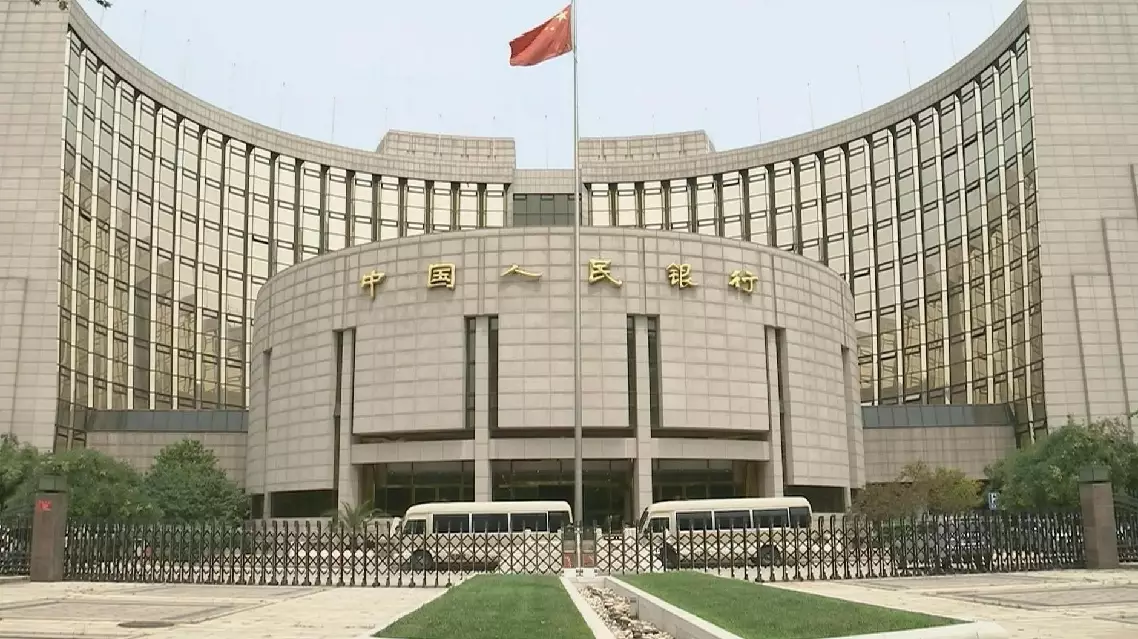
A new guideline China has issued on regulating the cross-border flow of financial data will help enhance data security and efficiency, while advancing high-standard opening up of the financial sector, said experts on Thursday.

The guideline, released by six departments, including the People's Bank of China and the National Financial Regulatory Administration, aims to improve efficiency and compliance of cross-border flow of financial data.

It further clarifies the conditions for data export and specifies the list of data items permitted for cross-border transfer to facilitate smoother data flow.

Regarding areas such as cross-border payments, remittances, account openings, and shopping, the guideline specifies scenarios where data export is exempt from security assessments for outbound data transfers, where personal information export standard contracts can be signed, or where data export is permitted through personal information protection certification.

For cases where data cross-border compliance obligations cannot be exempted but practical needs require data export, the guideline has categorized over 60 common financial business scenarios.

"The guideline provides solutions to many of our difficulties, allowing us to offer faster and better financial services. It basically covers all possible business scenarios of our bank," said Ginger Cheng, CEO of DBS Bank (China) Limited.

Financial institutions should adopt effective data security protection efforts and technical measures to safeguard data security, according to the guideline.

"Mainly targeting data security risks and the possible spillover and spread of security risks caused by cross-border data flows, the guideline first sorts out the categories, descriptions and corresponding lists of personal information data items of financial business scenarios, so as to prevent financial institutions from illegally transferring data abroad due to excessive discretion," said Hong Yanqing, professor of School of Law with Beijing Institute of Technology.

Industry experts believe that providing financial institutions with clear regulatory guidance will facilitate safer, more orderly, and efficient cross-border data flow in the financial sector. This will help create a more business-friendly and inclusive environment, further enhancing international competitiveness, as well as influence in rule-making.

"Overall, the release of the guidelines conforms to the trend of high-level opening up and high-quality development in the financial industry, providing systematic and specific operational guidance for cross-border data compliance. It not only provides a clearer compliance path for Chinese and foreign financial institutions, but also will improve the competitiveness and influence of China's financial industry in the international market in the long term," Hong said.
New guideline to further facilitate China's cross-border flow of financial data: experts


New guideline to further facilitate China's cross-border flow of financial data: experts

China's Central Archives on Saturday released a batch of newly declassified Soviet documents related to Unit 731 of the Japanese Imperial Army in World War II, adding new and compelling evidence to the historical record of Japan's notorious germ warfare crimes.

The archive copies, which China received from Russia, include trial records of Unit 731 members, investigation reports on the unit's crimes, and internal official correspondence of Soviet authorities, covering the period running from May 11, 1939 to Dec. 25, 1950.

During World War II, the Japanese invading forces established a biological warfare network across multiple Asian countries, with Unit 731 located in Harbin, northeast China's Heilongjiang Province, serving as a top-secret base for biological weapons and human experiments.

At least 3,000 people from China, the Soviet Union and other countries and regions were used in human experiments conducted by Unit 731.

"This year marks the 80th anniversary of the victory in the Chinese People's War of Resistance Against Japanese Aggression and the World Anti-Fascist War. At this significant moment, the Central Archives of China has released the declassified Soviet interrogation files of Unit 731, which were transferred to China by Russia," said Zhao Cong, director of the Department of International Exchange and Cooperation of the Central Archives.

According to China's Central Archives, the archives provided by Russia reveal the Soviet investigation process during the early stage of the Khabarovsk War Crimes Trials in 1949, identifying more than 200 individuals linked to the crimes of Unit 731, and ultimately singling out 12 war criminals for public trials.

These individuals confessed to violating international conventions and to preparing and carrying out biological warfare.

According to Zhao, the newly released archives form a clear and comprehensive chain of evidence that lays out the full organizational structure of Unit 731, its capacity to research, develop, and produce biological weapons, and its horrific crimes, including human experiments.

"The archives provided by Russia, together with the preserved Unit 731 sites and existing evidence in China, reinforce and corroborate one another, further confirming the crimes committed by the Japanese militarists during their war of aggression against China. The materials include interrogations of Unit 731 personnel, interrogation notes, and personal testimonies," she noted.

Experts believe that these archives provide concrete historical evidence of Japan's biological warfare crimes in China, further confirming that Japan's biological warfare was a top-down, state-organized war crime and offering irrefutable proof for restoring historical truth.

China releases historical evidence from Russia on notorious Japanese Unit 731

China releases historical evidence from Russia on notorious Japanese Unit 731

Recommended Articles