Skip to Content Facebook Feature Image

Strange sell-off in the dollar raises the specter of investors losing trust in the US under Trump

Business

Strange sell-off in the dollar raises the specter of investors losing trust in the US under Trump
Business

Business

Strange sell-off in the dollar raises the specter of investors losing trust in the US under Trump

2025-04-19 03:26 Last Updated At:03:32

NEW YORK (AP) — Among the threats tariffs pose to the U.S. economy, none may be as strange as the sell-off in the dollar.

Currencies rise and fall all the time because of inflation fears, central bank moves and other factors. But economists worry that the recent drop in the dollar is so dramatic that it reflects something more ominous as President Donald Trump tries to reshape global trade: a loss of confidence in the U.S.

The dollar's dominance in cross-border trade and as a safe haven has been nurtured by administrations of both parties for decades because it helps keep U.S. borrowing costs down and allows Washington to project power abroad — enormous advantages that could possibly disappear if faith in the U.S. was damaged.

“Global trust and reliance on the dollar was built up over a half century or more," says University of California, Berkeley, economist Barry Eichengreen. "But it can be lost in the blink of an eye.”

Since mid-January, the dollar has fallen 9% against a basket of currencies, a rare and steep decline, to its lowest level in three years.

Many investors spooked by Trump don't think the dollar will be pushed quickly from its position as the world's reserve currency, instead expecting more of a slow decline. But even that is scary enough, given the benefits that would be lost.

With much of world's goods exchanged in dollars, demand for the currency has stayed strong even as the U.S. has doubled federal debt in a dozen years and does other things that would normally send investors fleeing. That has allowed the U.S. government, consumers and businesses to borrow at unnaturally low rates, which has helped speed economic growth and lift standards of living.

Dollar dominance also allows the U.S. to push around other countries like Venezuela, Iran and Russia by locking them out of a currency they need to buy and sell with others.

Now that “exorbitant privilege," as economists call it, is suddenly at risk.

"The safe haven properties of the dollar are being eroded," said Deutsche Bank in a note to clients earlier this month warning of a “confidence crisis." Added a more circumspect report by Capital Economics, “It is no longer hyperbole to say that the dollar’s reserve status and broader dominant role is at least somewhat in question."

Traditionally, the dollar would strengthen as tariffs sink demand for foreign products.

But the dollar not only failed to strengthen this time, it fell, puzzling economists and hurting consumers. The dollar lost more than 5% against the euro and pound, and 6% against the yen since early April.

As any American traveler abroad knows, you can buy more with a stronger dollar and less with a weaker one. Now the price of French wine and South Korean electronics and a host of other imports could cost more not only due to tariffs but a weaker currency, too.

And any loss of safe-haven status could hit U.S. consumers in another way: Higher rates for mortgages and car financing deals as lenders demand more interest for the added risk.

More worrisome is possible higher interest rates on the ballooning U.S. federal debt, which is already at a risky 120% of U.S. annual economic output.

“Most countries with that debt to GDP would cause a major crisis and the only reason we get away with it is that the world needs dollars to trade with,” says Benn Steil, an economist at the Council on Foreign Relations. ”At some point people are going to look seriously at alternatives to the dollar. ”

They already have, with a little help from a U.S. economic rival.

China has been striking yuan-only trading deals with Brazil for agricultural products, Russia for oil and South Korea for other goods for years. It has also been making loans in yuan to central banks desperate for cash in Argentina, Pakistan and other countries, replacing the dollar as the emergency funder of last resort.

Another possible U.S. alternative in future years if their market grows: cryptocurrencies.

Said BlackRock Chairman Larry Fink in his annual shareholder letter about dollar dominance, ”If deficits keep ballooning, America risks losing that position to digital assets like Bitcoin.”

Not everyone is convinced that a big reason the dollar is falling is because of lost faith in the U.S.

Steve Ricchiuto, an economist at Mizuho Financial, says dollar weakness reflects anticipation of higher inflation due to tariffs. But even if investors aren’t as comfortable holding dollars, he says, they really don't have much of a choice. No other currency or other asset, like yuan or bitcoin or gold, is vast enough to handle all the demand.

“The U.S. will lose the reserve currency when there is someone out there to take it away," Ricchiuto says. "Right now there isn’t an alternative.”

Maybe so, but Trump is testing the limits.

It's not just the tariffs, but the erratic way he’s rolled them out. The unpredictability makes the U.S. seem less stable, less reliable, and a less safe place for their money.

There are also questions about his logic justifying the policy. Trump says U.S. tariffs will drive down trade deficits, which he cites as evidence that countries are “ripping off” America. But in calculating the tariffs, he looked at trade deficits only in goods, not services in which the U.S. excels. Most economists think trade deficits are not a sign of national weakness anyway because they do nothing to impede economic growth and prosperity.

Trump has also repeatedly threatened to chip away at the independence of the Federal Reserve, raising fears that he will force interest rates lower to boost the economy even if doing so risks stoking runaway inflation. That is a sure fire way to get people to flee the dollar. After Fed Chair Jerome Powell said Wednesday that he would wait to make any rate moves, Trump blasted him, saying “Powell’s termination cannot come fast enough!”

Economists critical of Trump’s April 2 tariff announcement recall another event, the Suez Crisis of 1956, that broke the back of the British pound. The military attack on Egypt was poorly planned and badly executed and exposed British political incompetence that sank trust in the country. The pound fell sharply, and its centuries-long position as the dominant trading and reserve currency crumbled.

Berkeley’s Eichengreen says Liberation Day, as Trump called April 2, could be remembered as a similar turning point if the president isn't careful.

“This is the first step down a slippery slope where international confidence in the U.S. dollar is lost."
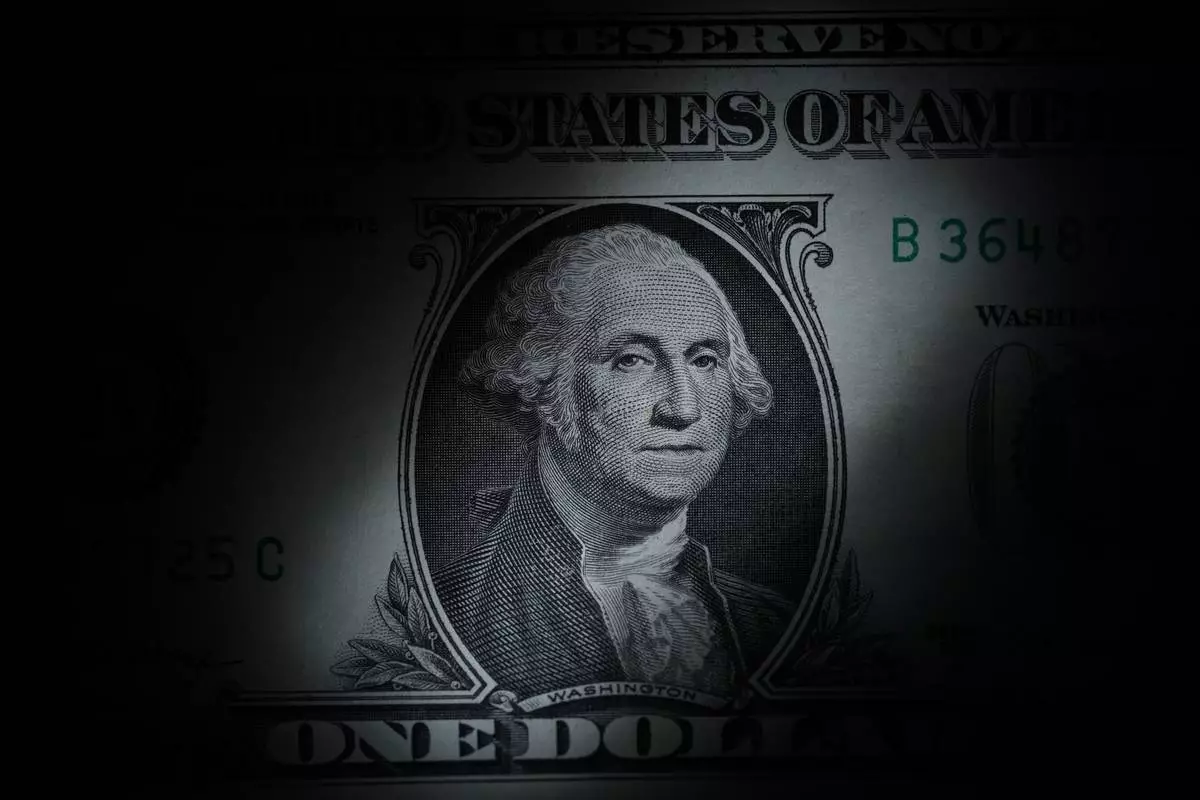
FILE - The likeness of George Washington is seen on a U.S. one dollar bill, March 13, 2023, in Marple Township, Pa. (AP Photo/Matt Slocum, File)
FILE - The likeness of George Washington is seen on a U.S. one dollar bill, March 13, 2023, in Marple Township, Pa. (AP Photo/Matt Slocum, File)
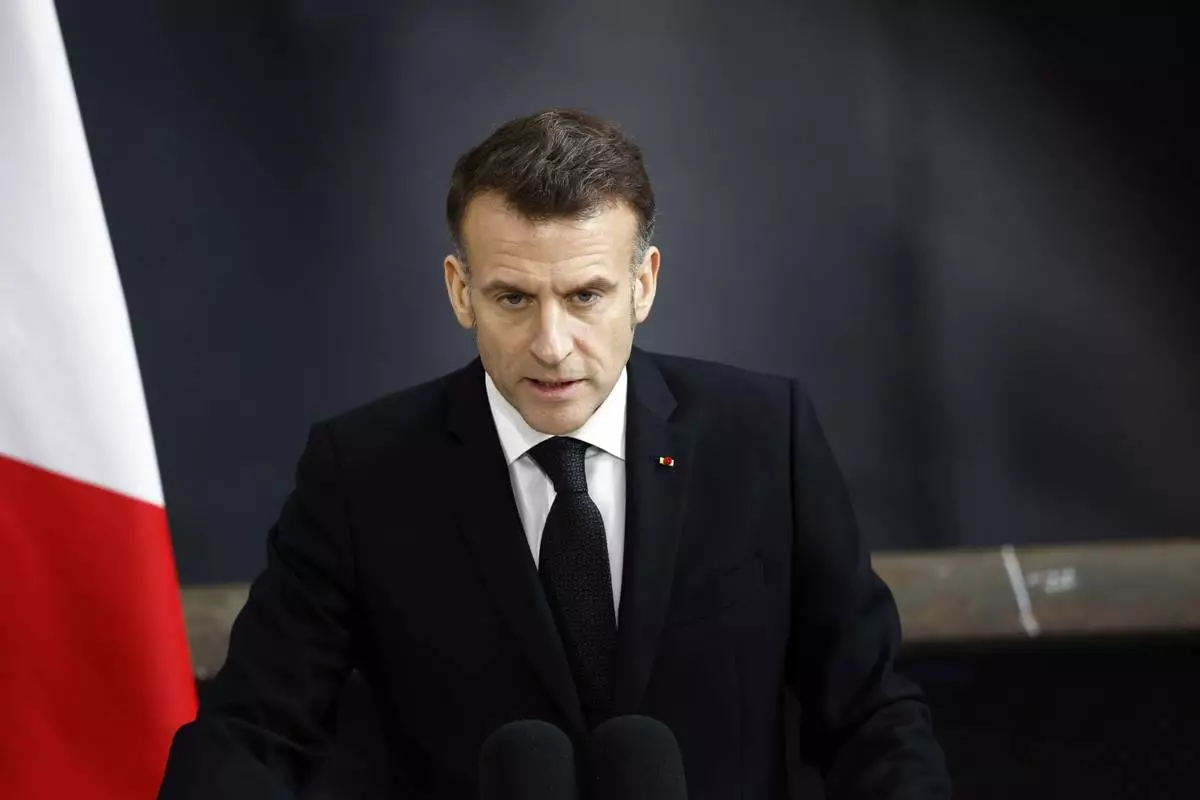
L’ILE LONGUE, France (AP) — French President Emmanuel Macron announced Monday that France will increase its nuclear arsenal and for the first time allow the temporary deployment of its nuclear-armed aircraft to allied countries, in a new strategy aimed at strengthening Europe’s independence.

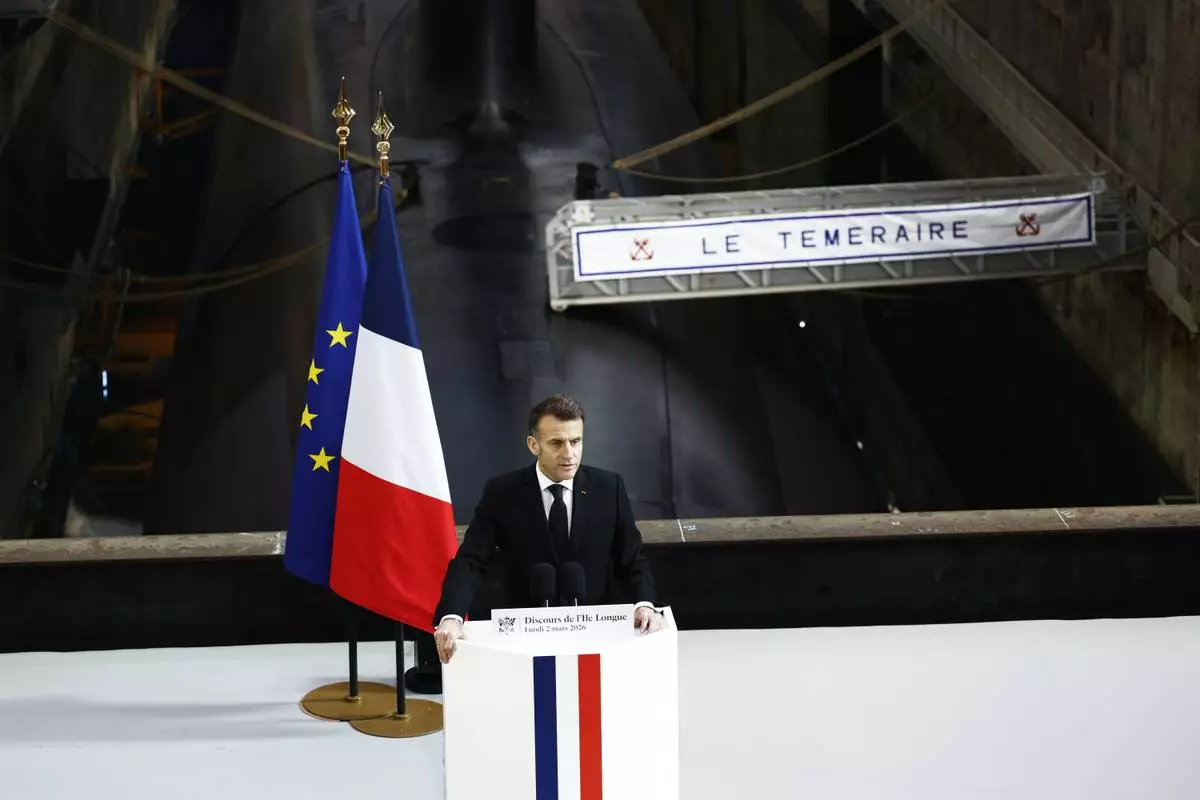
Macron made the announcements during a speech outlining his country's nuclear strategy at a military base at L’Ile Longue in northwestern France that hosts the country’s ballistic missile submarines.

“To be free, one needs to be feared,” Macron said.

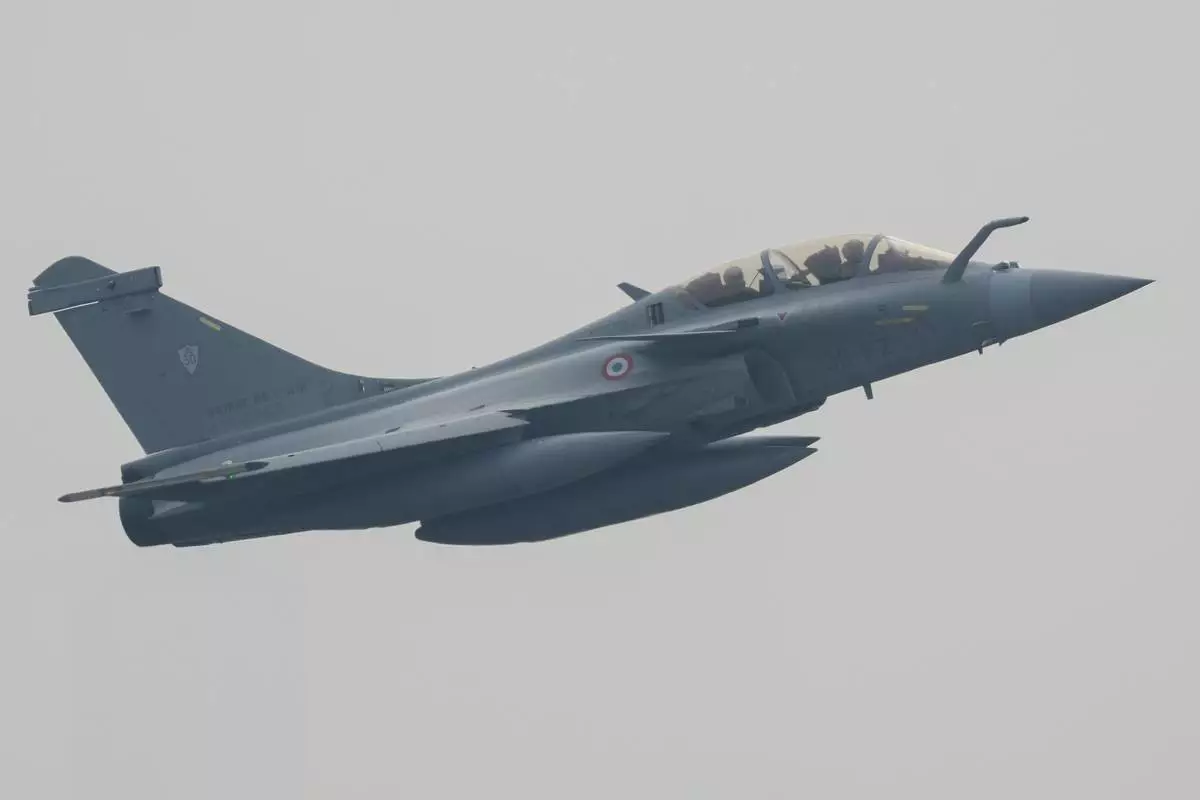
Macron said the new posture could “provide for the temporary deployment of elements of our strategic air forces to allied countries," but said there would be no sharing of decision-making with any other nation regarding the use of the nuclear weapons.

Talks about such arrangements have started with Britain, Germany, Poland, the Netherlands, Belgium, Greece, Sweden and Denmark, Macron said.

Macron’s long-planned speech, scheduled before the most recent outbreak of hostilities in Iran, was aimed at spelling out how French nuclear weapons fit into Europe’s security amid concerns raised on the continent by recurring tensions with U.S. President Donald Trump and Russia’s full-scale invasion of Ukraine.

France also will allow partners to participate in deterrence exercises and allow allies’ non-nuclear forces to participate in France’s nuclear activities, said Macron, who is the commander-in-chief of the armed forces under the French constitution.

European partners welcomed the new strategy of France, which has been the only nuclear power in the European Unio n since Britain’s exit from the bloc in 2020.

In a joint statement, Macron and German Chancellor Friedrich Merz said the two countries would deepen integration in deterrence starting this year, “including German conventional participation in French nuclear exercises and joint visits to strategic sites.”

In a letter to Dutch lawmakers, Defense Minister Dilan Yesilgöz-Zegerius and Foreign Minister Tom Berendsen said the Netherlands was in strategic talks with France on nuclear deterrence as "a supplement to, and not a replacement for, NATO’s collective defense and nuclear deterrence capabilities."

Polish Prime Minister Donald Tusk wrote on X that “we are arming up together with our friends so that our enemies will never dare to attack us.”

Macron also announced that France will increase its number of nuclear warheads from the current level of below 300, but did not give a figure for the increase. It will be the first time France increases its nuclear arsenal since at least 1992.

“I have decided to increase the numbers of warheads of our arsenal,” Macron said. “My responsibility is to ensure that our deterrence maintains — and will maintain in the future — its assured destructive power."

“If we had to use our arsenal, no state, however powerful, could shield itself from it, and no state, however vast, would recover from it,” Macron said.

European leaders have voiced growing doubts about U.S. commitments to help defend Europe under the so-called nuclear umbrella, a policy long intended to ensure that allies — particularly NATO members — would be protected by American nuclear forces in the event of a threat.

Macron said that recent changes in U.S. defense strategy amid the emergence of new threats have demonstrated a refocusing of American priorities and have encouraged Europe to take more direct responsibility for its own security. He said Europeans should take their destiny more firmly into their hands.

Some European nations have already taken up an offer Macron made last year to discuss France’s nuclear deterrence and even associate European partners in nuclear exercises.

Last month, Merz said he’d had “initial talks” with Macron on the issue and had publicly theorized about German Air Force planes possibly being used to carry French nuclear bombs. But Macron ruled out any such possibility in Monday's speech.

France and Britain also adopted a joint declaration in July that allows both nations' nuclear forces, while independent, to be “coordinated.” The U.K., no longer an EU member but a NATO ally, is the only other country in Western Europe with a nuclear deterrent.

Macron has consistently insisted any decision to use France’s nuclear weapons would remain only in the hands of the French president.

Macron added that the evolution of France competitors’ defenses, the emergence of regional powers, the possibility of coordination among adversaries, and the risks linked to proliferation led him to the conclusion that it was essential for France to enhance its nuclear arsenal.

The International Campaign to Abolish Nuclear Weapons, which won the Nobel Peace Prize in 2017, said Macron’s plan could cost billions of euros (dollars), jeopardize France's international commitments and lead Russia to interpret it as a “major provocation” that could risk escalation.

“This represents a significant step backward in light of France’s obligations under the Nuclear Non-Proliferation Treaty,” said Jean-Marie Collin, the head of the group’s French office. “Increasing its arsenal reflects a dynamic of participation in an arms race, contradicting the spirit, if not the letter, of this treaty, which commits nuclear-armed states to pursue nuclear disarmament.”

“On a strategic level, Russia would very likely consider this initiative as a major provocation, with risks of escalation.

Petrequin reported from Paris. Jamey Keaten in Geneva, Mike Corder in The Hague, Netherlands, and Claudia Ciobanu in Warsaw contributed to this report.

French President Emmanuel Macron delivers a speech next to the submarine 'Le Temeraire' (The Temerarious) at the Nuclear submarines Navy base of Ile Longue in Crozon, France, Monday March 2, 2026. (Yoan Valat/Pool Photo via AP)

French President Emmanuel Macron delivers a speech next to the submarine 'Le Temeraire' (The Temerarious) at the Nuclear submarines Navy base of Ile Longue in Crozon, France, Monday March 2, 2026. (Yoan Valat/Pool Photo via AP)

French President Emmanuel Macron delivers a speech next to the submarine 'Le Temeraire' (The Temerarious) at the Nuclear submarines Navy base of Ile Longue in Crozon, France, Monday March 2, 2026. (Yoan Valat/Pool Photo via AP)

French President Emmanuel Macron delivers a speech next to the submarine 'Le Temeraire' (The Temerarious) at the Nuclear submarines Navy base of Ile Longue in Crozon, France, Monday March 2, 2026. (Yoan Valat/Pool Photo via AP)

FILE - France's Rafale B twin-seat multirole fighter performs during the Pegase 2024 mission at Halim Perdanakusuma airport in Jakarta, Indonesia, Wednesday, July 24, 2024. (AP Photo/Tatan Syuflana, File)

FILE - France's Rafale B twin-seat multirole fighter performs during the Pegase 2024 mission at Halim Perdanakusuma airport in Jakarta, Indonesia, Wednesday, July 24, 2024. (AP Photo/Tatan Syuflana, File)

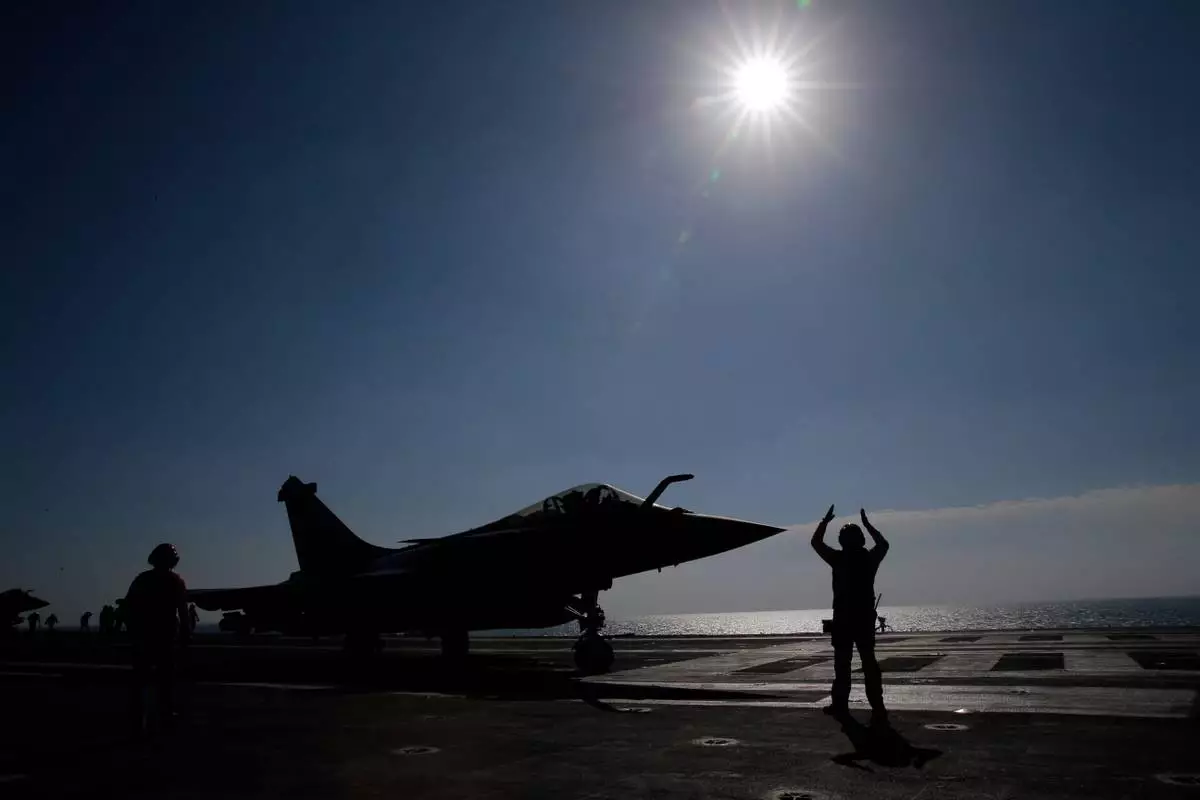
FILE - A Rafale M single seater fighter jet is catapulted on France's flagship Charles de Gaulle aircraft carrier in the Persian Gulf, Jan. 12, 2016. (AP Photo/Christophe Ena, File)

FILE - A Rafale M single seater fighter jet is catapulted on France's flagship Charles de Gaulle aircraft carrier in the Persian Gulf, Jan. 12, 2016. (AP Photo/Christophe Ena, File)

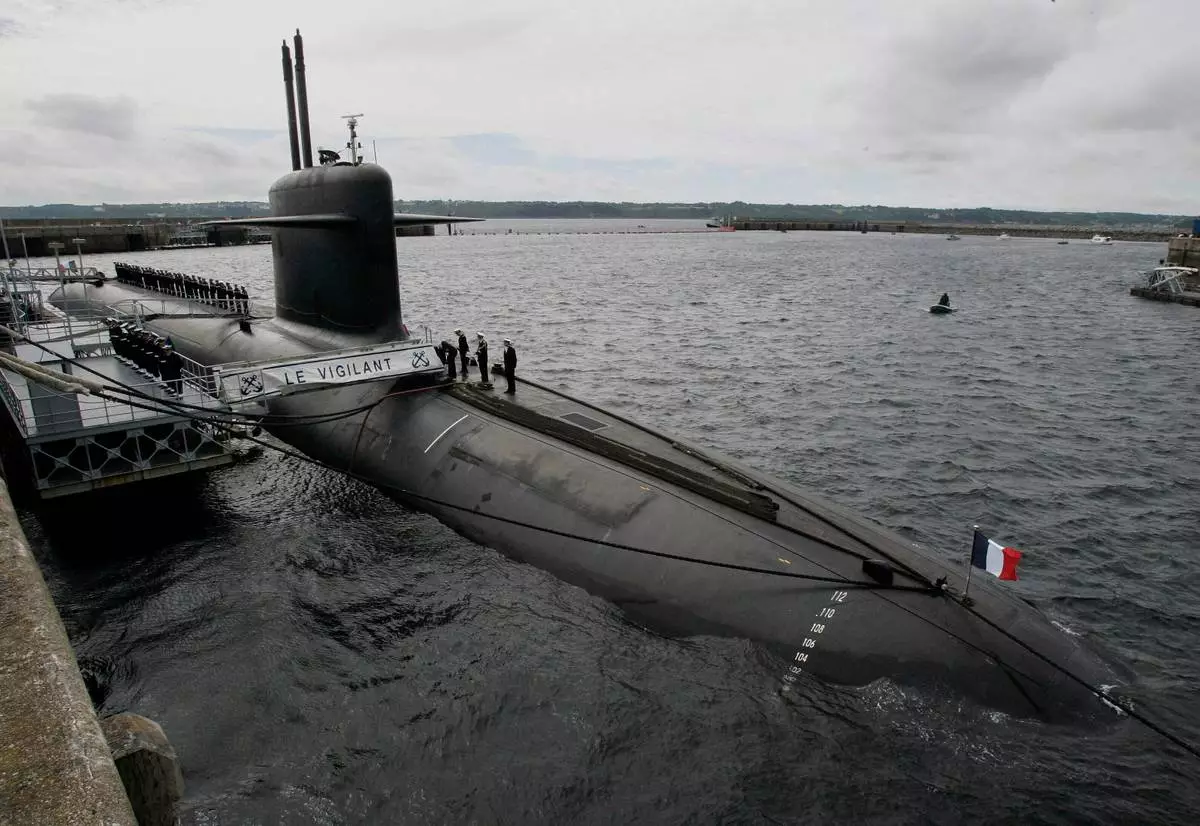
FILE - French Marine officers wait atop "Le Vigilant" nuclear submarine at L'Ile Longue military base, near Brest, Brittany, July 13, 2007. (AP Photo/Francois Mori, Pool, File)

FILE - French Marine officers wait atop "Le Vigilant" nuclear submarine at L'Ile Longue military base, near Brest, Brittany, July 13, 2007. (AP Photo/Francois Mori, Pool, File)

Recommended Articles