Skip to Content Facebook Feature Image

US and Iran say talks over Tehran's nuclear program make progress and set plans for more

News

US and Iran say talks over Tehran's nuclear program make progress and set plans for more
News

News

US and Iran say talks over Tehran's nuclear program make progress and set plans for more

2025-04-20 04:40 Last Updated At:04:51

ROME (AP) — Iran and the United States plan to meet over Tehran’s rapidly advancing nuclear program again next week, after both sides said they made progress in their talks Saturday in Rome.

A U.S. official confirmed that at a point during the negotiations in Rome, President Donald Trump’s special envoy Steve Witkoff and Iranian Foreign Minister Abbas Araghchi spoke face to face.

More Images
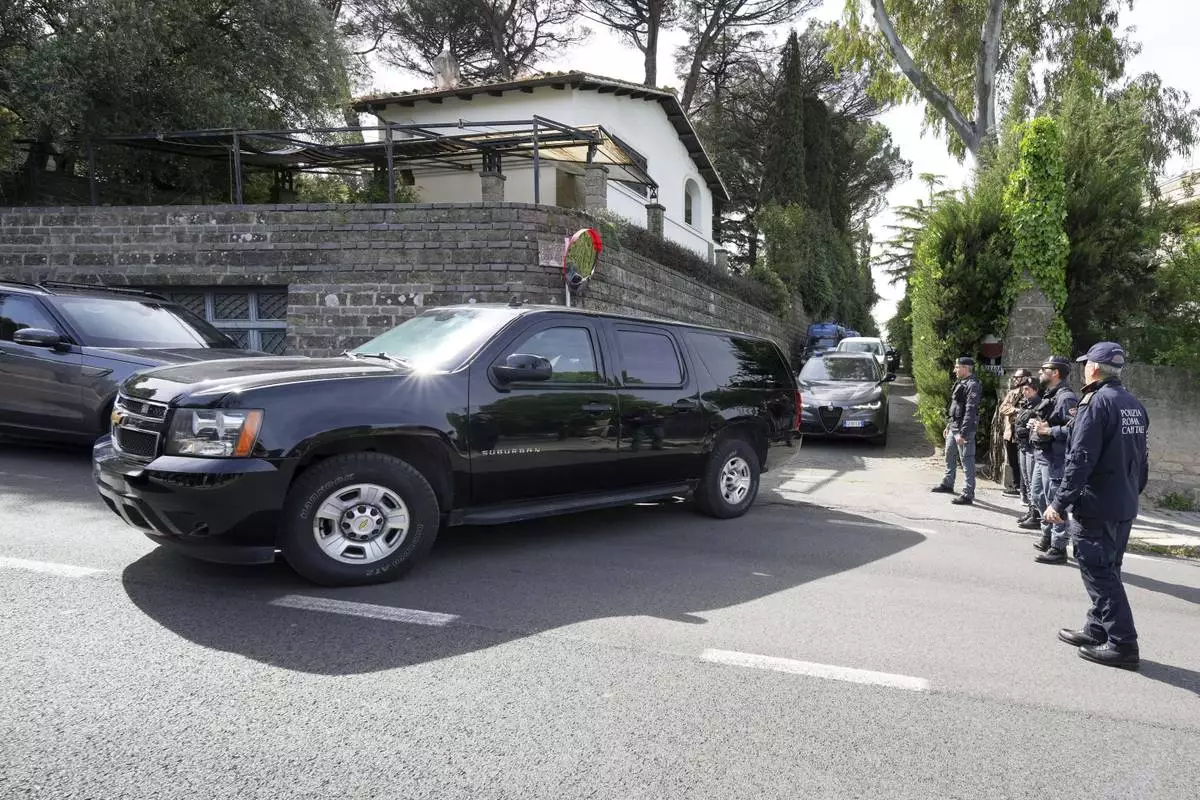
U.S. delegates leave the Omani Embassy in Rome after closed-door meeting with an Iranian delegation to discuss Tehran's rapidly advancing nuclear program, Saturday, April 19, 2025. (AP Photo/Andrew Medichini)

U.S. delegates leave the Omani Embassy in Rome after closed-door meeting with an Iranian delegation to discuss Tehran's rapidly advancing nuclear program, Saturday, April 19, 2025. (AP Photo/Andrew Medichini)

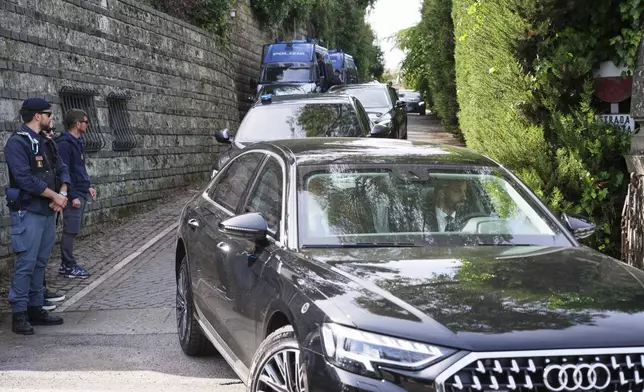
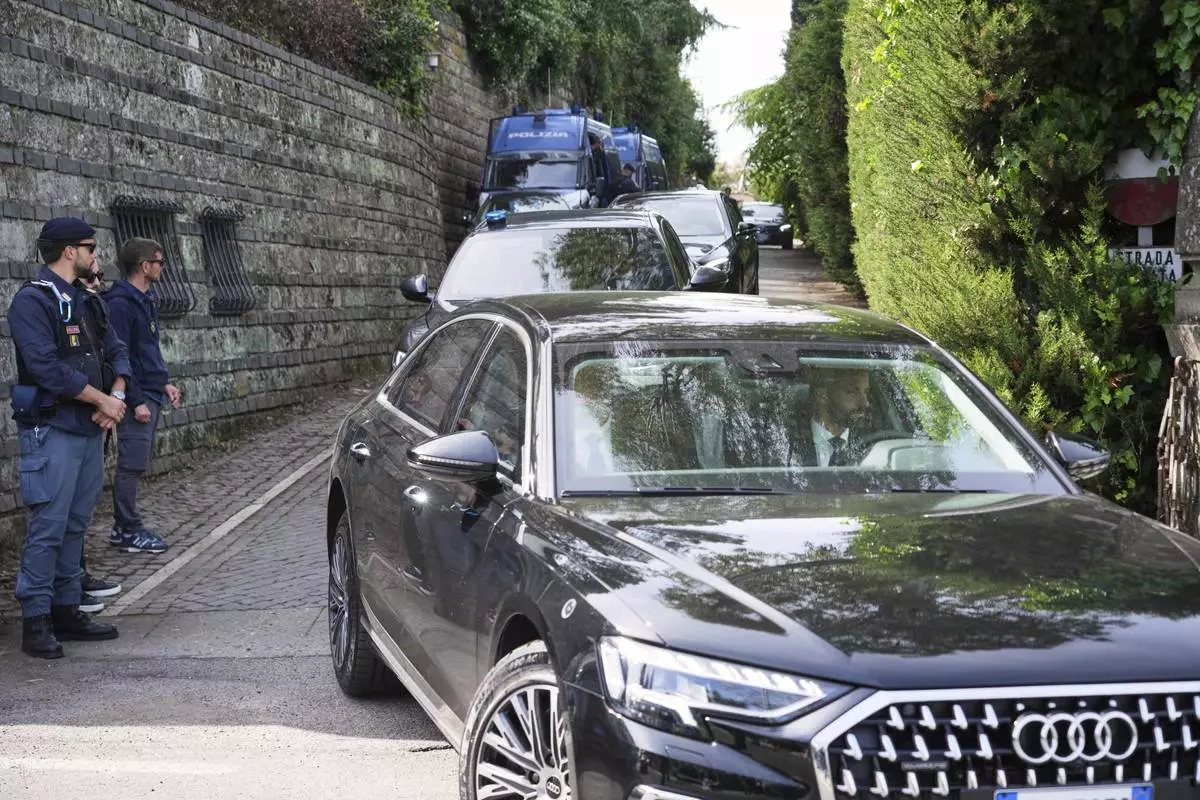
Iranian delegates leave the Omani Embassy in Rome after closed-door meeting with a U.S. delegation to discuss Tehran's rapidly advancing nuclear program, Saturday, April 19, 2025. (AP Photo/Andrew Medichini)
Iranian delegates leave the Omani Embassy in Rome after closed-door meeting with a U.S. delegation to discuss Tehran's rapidly advancing nuclear program, Saturday, April 19, 2025. (AP Photo/Andrew Medichini)
Iranian delegates leave the Omani Embassy in Rome after closed-door meeting with a U.S. delegation to discuss Tehran's rapidly advancing nuclear program, Saturday, April 19, 2025. (AP Photo/Andrew Medichini)
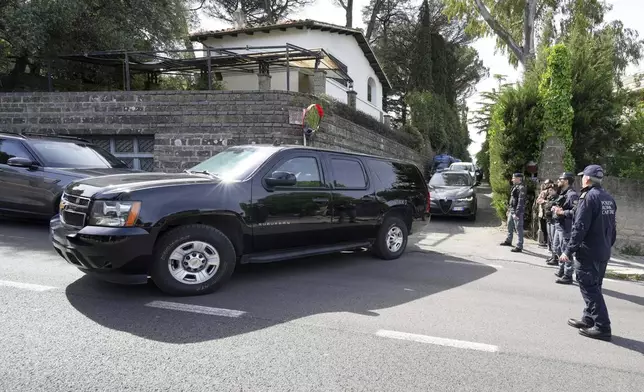
Iranian delegates leave the Omani Embassy in Rome after closed-door meeting with a U.S. delegation to discuss Tehran's rapidly advancing nuclear program, Saturday, April 19, 2025. (AP Photo/Andrew Medichini)
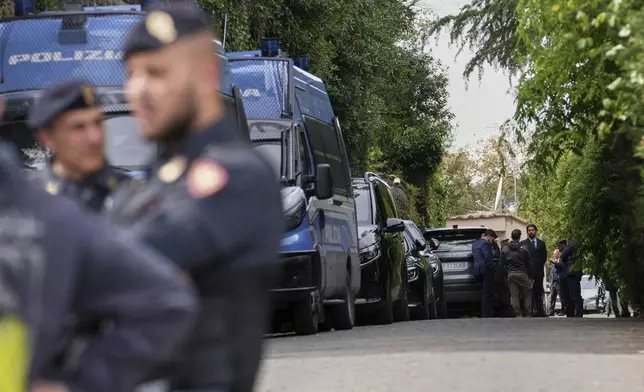
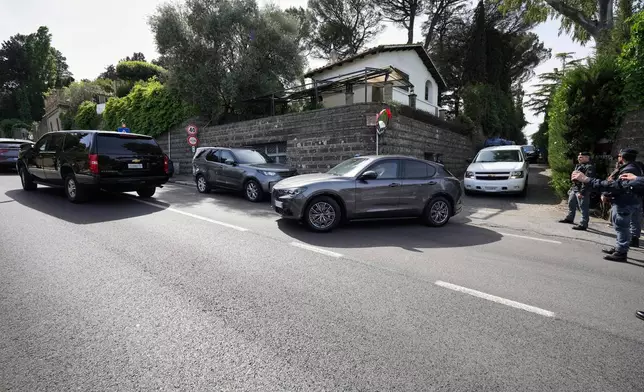
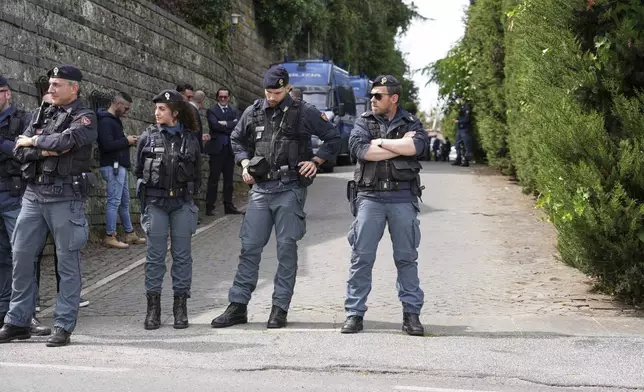
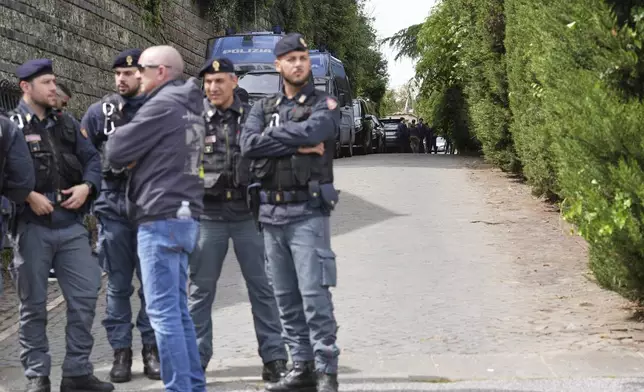
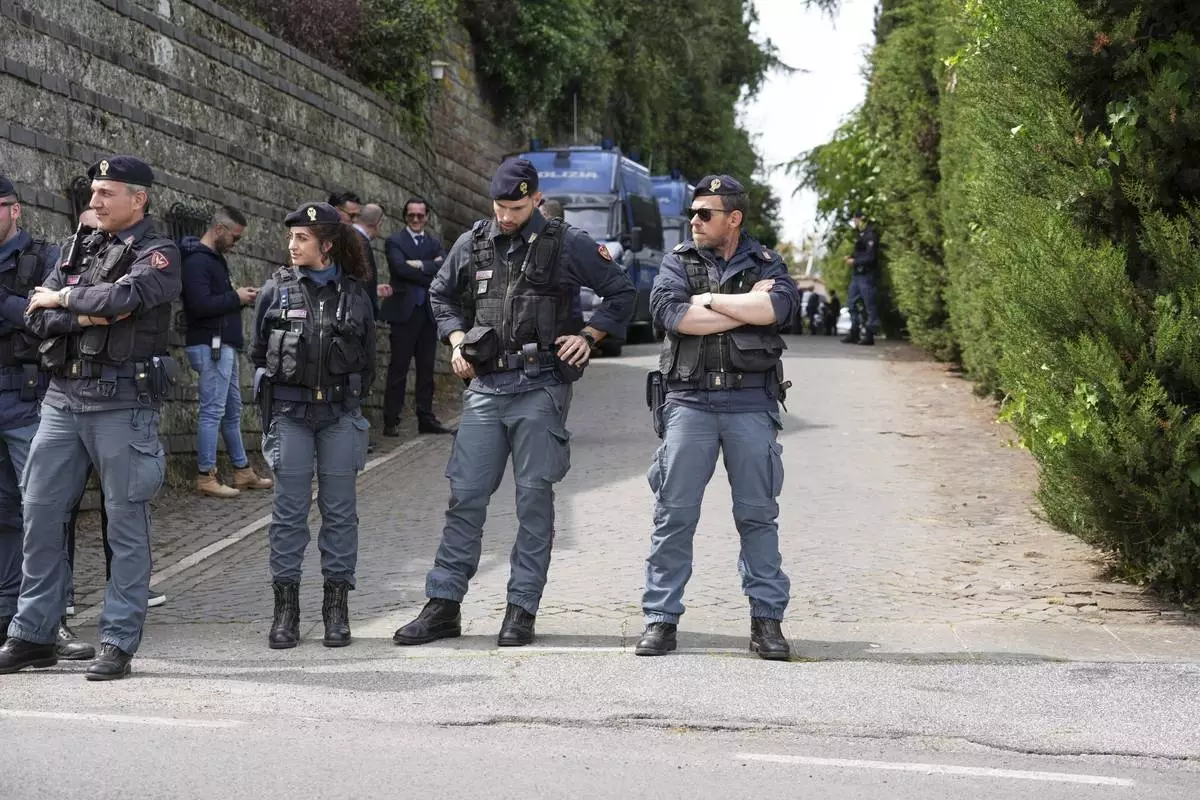
Police patrol outside theOmani Embassy in Rome during a closed-door meeting between U.S. and Iranian delegations to discuss Tehran's rapidly advancing nuclear program, Saturday, April 19, 2025. (AP Photo/Andrew Medichini)
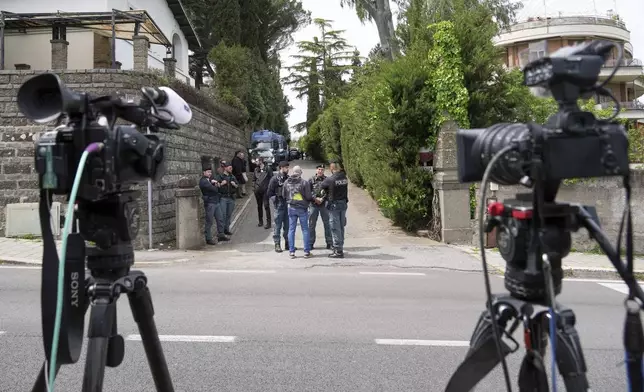
Police patrol outside theOmani Embassy in Rome during a closed-door meeting between U.S. and Iranian delegations to discuss Tehran's rapidly advancing nuclear program, Saturday, April 19, 2025. (AP Photo/Andrew Medichini)
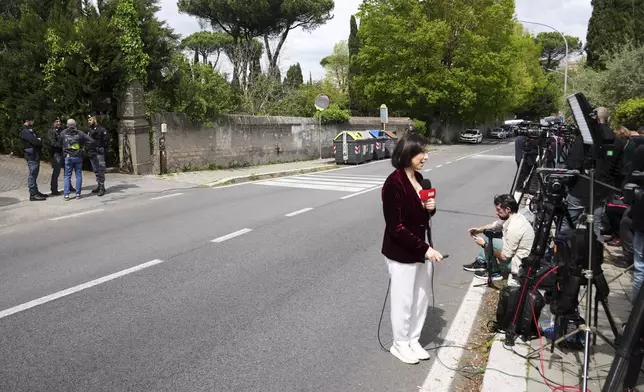
Iranian delegates leave the Omani Embassy in Rome after closed-door meeting with a U.S. delegation to discuss Tehran's rapidly advancing nuclear program, Saturday, April 19, 2025. (AP Photo/Andrew Medichini)
Iranian delegates leave the Omani Embassy in Rome after closed-door meeting with a U.S. delegation to discuss Tehran's rapidly advancing nuclear program, Saturday, April 19, 2025. (AP Photo/Andrew Medichini)
U.S. delegates leave the Omani Embassy in Rome after closed-door meeting with an Iranian delegation to discuss Tehran's rapidly advancing nuclear program, Saturday, April 19, 2025. (AP Photo/Andrew Medichini)

U.S. delegates leave the Omani Embassy in Rome after closed-door meeting with an Iranian delegation to discuss Tehran's rapidly advancing nuclear program, Saturday, April 19, 2025. (AP Photo/Andrew Medichini)

Police patrol outside the Omani Embassy in Rome during a closed-door meeting between U.S. and Iranian delegations to discuss Tehran's rapidly advancing nuclear program, Saturday, April 19, 2025. (AP Photo/Andrew Medichini)

Police patrol outside the Omani Embassy in Rome during a closed-door meeting between U.S. and Iranian delegations to discuss Tehran's rapidly advancing nuclear program, Saturday, April 19, 2025. (AP Photo/Andrew Medichini)

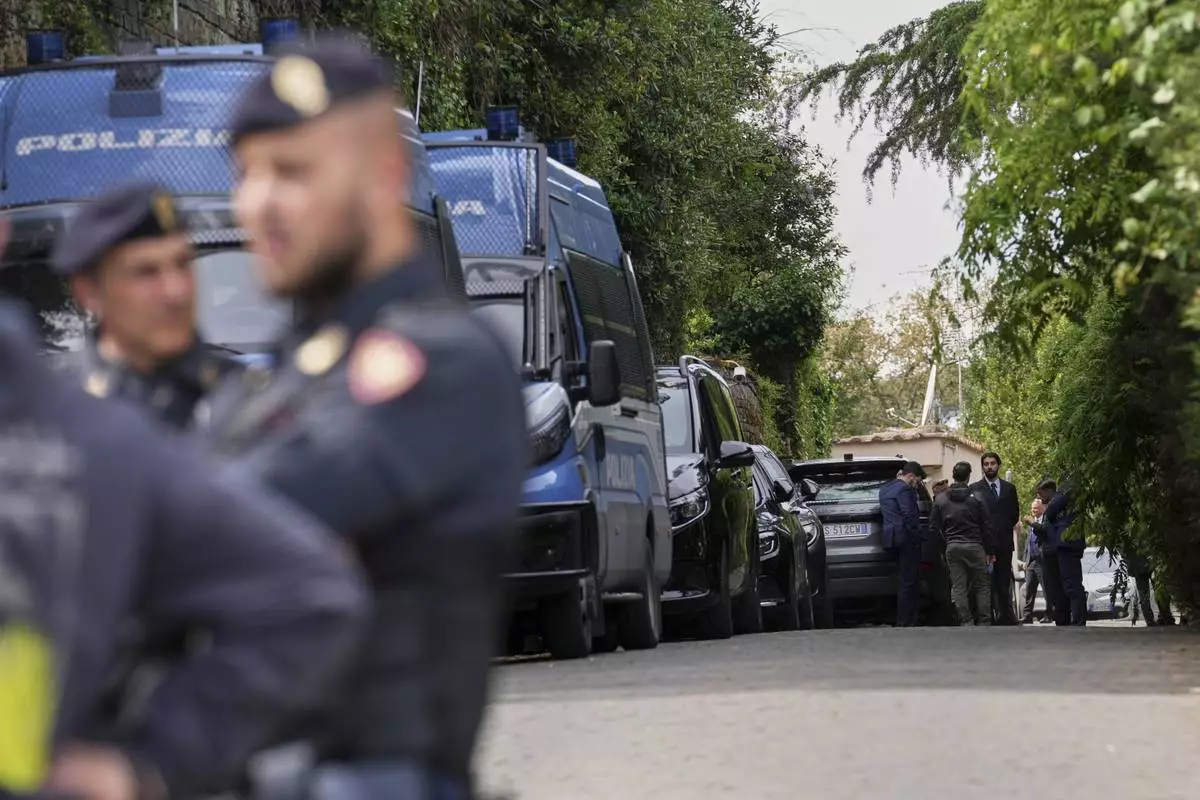
Police and reporters stand outside the Omani Embassy in Rome during a closed-door meeting between U.S. and Iranian delegations to discuss Tehran's rapidly advancing nuclear program, Saturday, April 19, 2025. (AP Photo/Andrew Medichini)

Police and reporters stand outside the Omani Embassy in Rome during a closed-door meeting between U.S. and Iranian delegations to discuss Tehran's rapidly advancing nuclear program, Saturday, April 19, 2025. (AP Photo/Andrew Medichini)

Police and reporters stand outside the Omani Embassy in Rome during a closed-door meeting between U.S. and Iranian delegations to discuss Tehran's rapidly advancing nuclear program, Saturday, April 19, 2025. (AP Photo/Andrew Medichini)

Police and reporters stand outside the Omani Embassy in Rome during a closed-door meeting between U.S. and Iranian delegations to discuss Tehran's rapidly advancing nuclear program, Saturday, April 19, 2025. (AP Photo/Andrew Medichini)

Police patrol outside the Omani Embassy in Rome during a closed-door meeting between U.S. and Iranian delegations to discuss Tehran's rapidly advancing nuclear program, Saturday, April 19, 2025. (AP Photo/Andrew Medichini)

Police patrol outside the Omani Embassy in Rome during a closed-door meeting between U.S. and Iranian delegations to discuss Tehran's rapidly advancing nuclear program, Saturday, April 19, 2025. (AP Photo/Andrew Medichini)

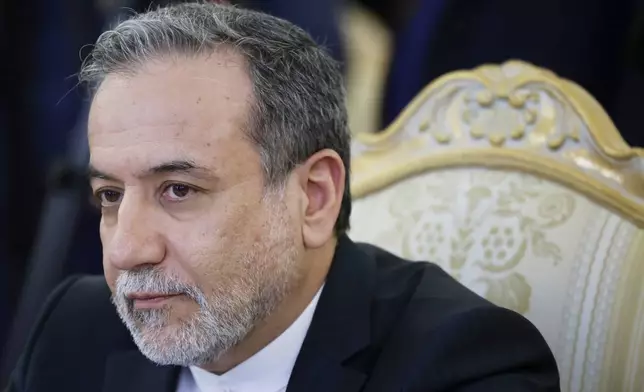
Iranian Foreign Minister Abbas Araghchi speaks with Russian Foreign Minister Sergey Lavrov during their meeting in Moscow, Russia, Friday, April 18, 2025. (Tatyana Makeyeva/Pool Photo via AP)
Iranian Foreign Minister Abbas Araghchi speaks with Russian Foreign Minister Sergey Lavrov during their meeting in Moscow, Russia, Friday, April 18, 2025. (Tatyana Makeyeva/Pool Photo via AP)

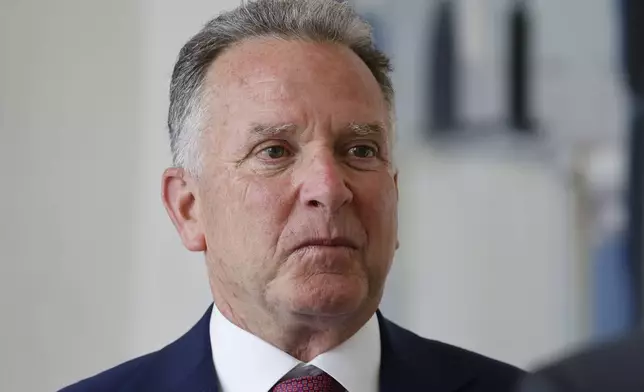
US Special Envoy Steve Witkoff, listening to French President Emmanuel Macron prior to a meeting at the Elysee Palace in Paris, Thursday, April 17, 2025. (Ludovic Marin, Pool Photo via AP)

US Special Envoy Steve Witkoff, listening to French President Emmanuel Macron prior to a meeting at the Elysee Palace in Paris, Thursday, April 17, 2025. (Ludovic Marin, Pool Photo via AP)

Before they meet again in Oman on April 26, Araghchi said technical-level talks would be held in the coming days. That experts would be discussing details of a possible deal suggests movement in the talks and comes as Trump has pushed for a rapid agreement while threatening military action against Iran.

The sides “made very good progress in our direct and indirect discussions,” according to a senior Trump administration official who spoke on condition of anonymity to discuss a private diplomatic meeting.

In a post on X, Araghchi similarly said they made “progress on principles and objectives of a possible deal.” He added, however, that “optimism may be warranted but only with a great deal of caution.”

He told Iranian state television earlier that “I hope that we will be in a better position after the technical talks.”

While the U.S. said both direct and indirect discussions were held, Iranian officials described them as indirect, like those last weekend in Muscat, Oman, with Omani Foreign Minister Badr al-Busaidi shuttling between them in different rooms.

“These talks are gaining momentum and now even the unlikely is possible,” al-Busaidi said on X.

In a separate post, Oman's Foreign Ministry said the sides agreed to keep talking to seek a deal that ensures Iran is "completely free of nuclear weapons and sanctions, and maintaining its ability to develop peaceful nuclear energy.”

That talks are even happening represents a historic moment, given the decades of enmity between the two countries since the 1979 Islamic Revolution and the U.S. Embassy hostage crisis. Trump, in his first term, unilaterally withdrew from Iran's nuclear deal with world powers in 2018, setting off years of attacks and negotiations that failed to restore the accord that drastically limited Tehran's enrichment of uranium in exchange for the lifting of economic sanctions.

At risk is a possible American or Israeli military strike on Iran’s nuclear sites, or the Iranians following through on their threats to pursue an atomic weapon. Meanwhile, tensions in the Middle East have spiked over the Israel-Hamas war in the Gaza and after U.S. airstrikes targeting Yemen's Iranian-backed Houthi rebels killed more than 70 people and wounded dozens more.

“I’m for stopping Iran, very simply, from having a nuclear weapon,” Trump said Friday. “I want Iran to be great and prosperous and terrific.”

Before the Iran talks started, Witkoff met in Rome with Rafael Mariano Grossi, head of the International Atomic Energy Agency, according to a person familiar with the meeting who spoke on condition of anonymity to share details that were not made public.

The U.N. nuclear watchdog agency would likely be key in verifying compliance by Iran should a deal be reached, as it did with the 2015 accord Iran reached with world powers.

In a flurry of gatherings, Grossi also met with Italian Foreign Minister Antonio Tajani, who sat down with Araghchi before the U.S.-Iran talks.

A diplomatic deal “is built patiently, day after day, with dialogue and mutual respect,” Tajani said in a statement.

Witkoff had been in Paris for talks about Ukraine as Russia's full-scale war there grinds on. He also met in the French capital with Israeli Prime Minister Benjamin Netanyahu’s strategic affairs minister, Ron Dermer, and Mossad chief David Barnea.

Dermer was in Rome on Saturday and spotted at the same hotel where Witkoff was staying. It was unclear if that was a coincidence, and there was no indication Dermer was part of the Iran talks.

Araghchi in recent days paid a visit to Moscow, where he met with Russian President Vladimir Putin.

Russia, one of the world powers involved in Tehran's 2015 nuclear deal, could be a key participant in any future deal reached between Tehran and Washington. Analysts suggest Moscow could potentially take custody of Iran's uranium enriched to 60% purity — a short, technical step away from weapons-grade levels of 90%.

Oman's capital hosted the first round of negotiations last weekend, which saw Araghchi and Witkoff meet face to face after indirect talks. Oman, a sultanate on the eastern edge of the Arabian Peninsula, has long served as an interlocutor between Iran and the West.

Ahead of the talks, however, Iran seized on comments by Witkoff first suggesting Iran could enrich uranium at 3.67%, then later saying that all enrichment must stop.

Ali Shamkhani, an adviser to Supreme Leader Ayatollah Ali Khamenei, wrote on X before the talks that Iran would not accept giving up its enrichment program like Libya or agreeing to using uranium enriched abroad for its nuclear program.

"Iran has come for a balanced agreement, not a surrender,” he wrote.

Iran's internal politics are still inflamed over the mandatory hijab, or headscarf, with women still ignoring the law on the streets of Tehran. Rumors also persist over the government potentially increasing the cost of subsidized gasoline in the country, which has sparked nationwide protests in the past

Iran's rial currency plunged to over 1 million to a U.S. dollar earlier this month. The currency has improved with the talks, however, something Tehran hopes will continue.

Meanwhile, two used Airbus A330-200 long sought by Iran's flag carrier, Iran Air, arrived at Tehran's Mehrabad International Airport on Thursday, flight-tracking data analyzed by The Associated Press showed. The planes, formerly of China's Hainan Airlines, had been in Muscat and re-registered to Iran.

The aircraft have Rolls-Royce engines, which include significant American parts and servicing. Such a transaction would need approval from the U.S. Treasury given sanctions on Iran. The State Department and Treasury did not respond to requests for comment.

Under the 2015 deal, Iran could purchase new aircraft and had lined up tens of billions of dollars in deals with Airbus and Boeing Co. However, the manufacturers backed away from the deals over Trump's threats to the nuclear accord.

Gambrell reported from Dubai, United Arab Emirates. Associated Press writer Nasser Karimi in Tehran, Iran, contributed to this report.
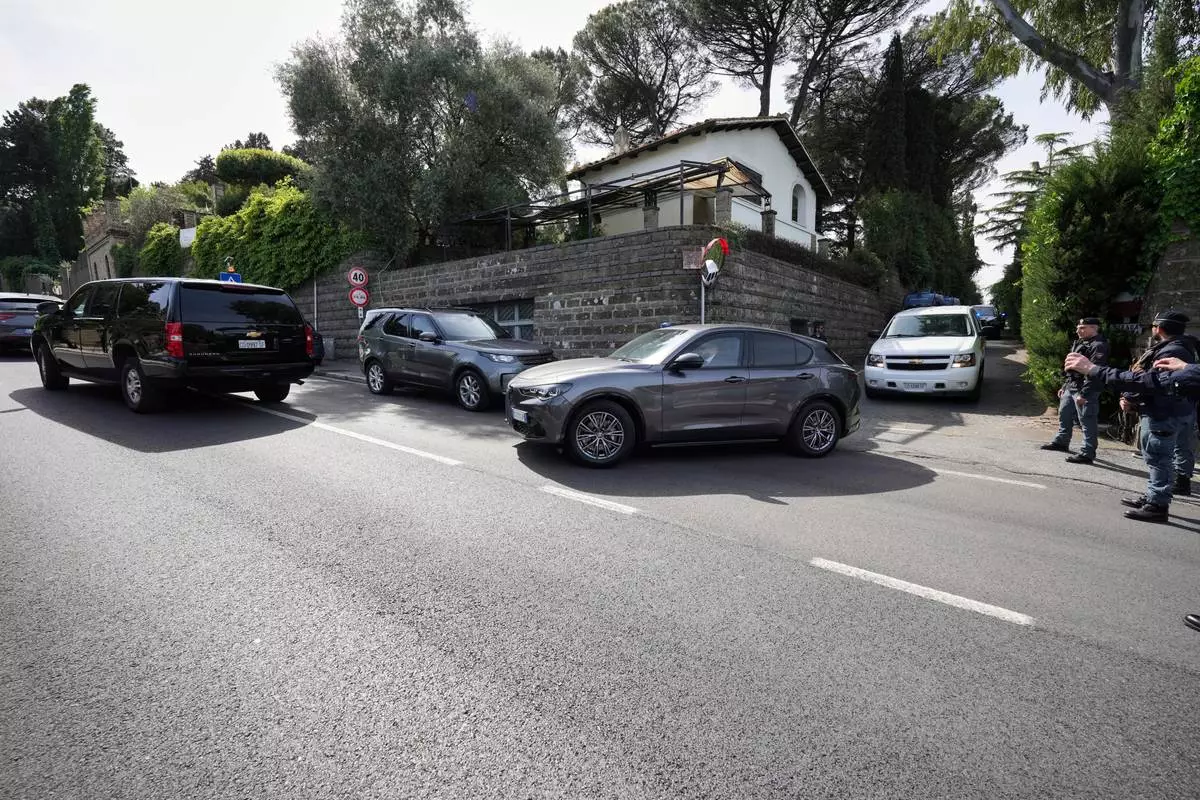
U.S. delegates leave the Omani Embassy in Rome after closed-door meeting with an Iranian delegation to discuss Tehran's rapidly advancing nuclear program, Saturday, April 19, 2025. (AP Photo/Andrew Medichini)

U.S. delegates leave the Omani Embassy in Rome after closed-door meeting with an Iranian delegation to discuss Tehran's rapidly advancing nuclear program, Saturday, April 19, 2025. (AP Photo/Andrew Medichini)

Iranian delegates leave the Omani Embassy in Rome after closed-door meeting with a U.S. delegation to discuss Tehran's rapidly advancing nuclear program, Saturday, April 19, 2025. (AP Photo/Andrew Medichini)
Iranian delegates leave the Omani Embassy in Rome after closed-door meeting with a U.S. delegation to discuss Tehran's rapidly advancing nuclear program, Saturday, April 19, 2025. (AP Photo/Andrew Medichini)
Iranian delegates leave the Omani Embassy in Rome after closed-door meeting with a U.S. delegation to discuss Tehran's rapidly advancing nuclear program, Saturday, April 19, 2025. (AP Photo/Andrew Medichini)
Iranian delegates leave the Omani Embassy in Rome after closed-door meeting with a U.S. delegation to discuss Tehran's rapidly advancing nuclear program, Saturday, April 19, 2025. (AP Photo/Andrew Medichini)
Police patrol outside theOmani Embassy in Rome during a closed-door meeting between U.S. and Iranian delegations to discuss Tehran's rapidly advancing nuclear program, Saturday, April 19, 2025. (AP Photo/Andrew Medichini)
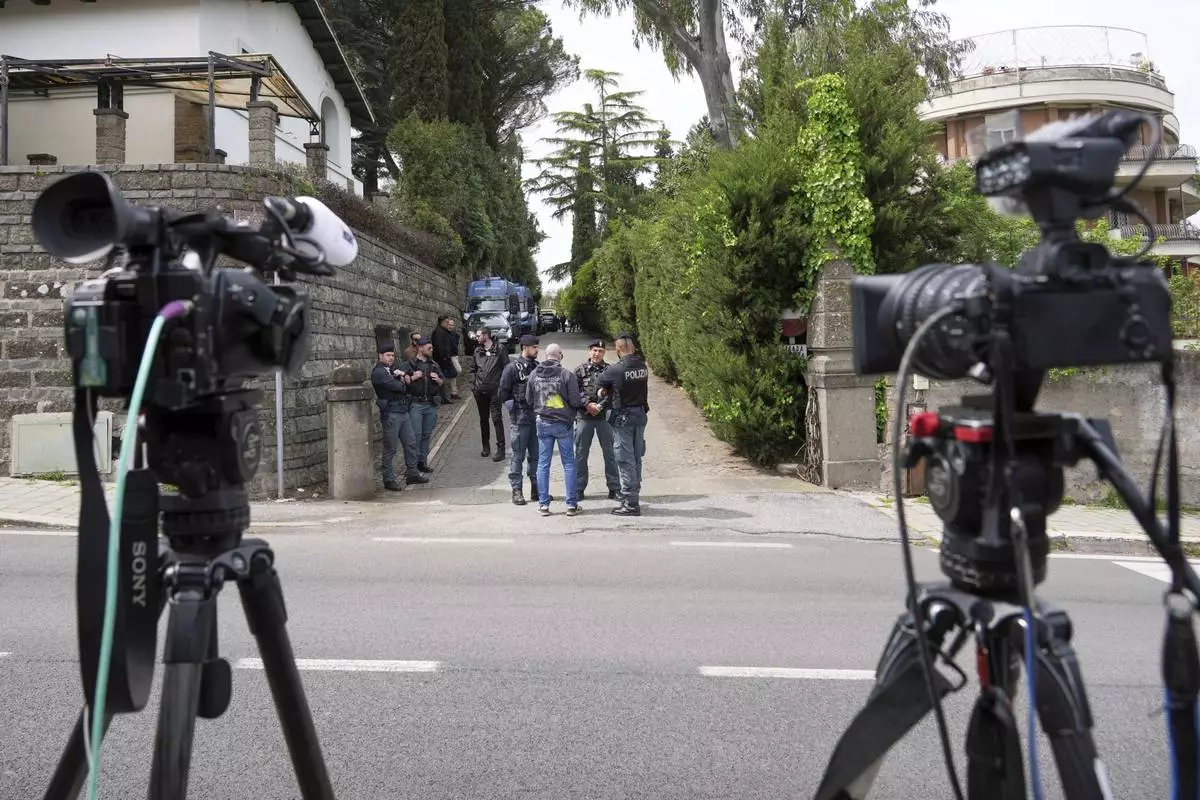
Police patrol outside theOmani Embassy in Rome during a closed-door meeting between U.S. and Iranian delegations to discuss Tehran's rapidly advancing nuclear program, Saturday, April 19, 2025. (AP Photo/Andrew Medichini)
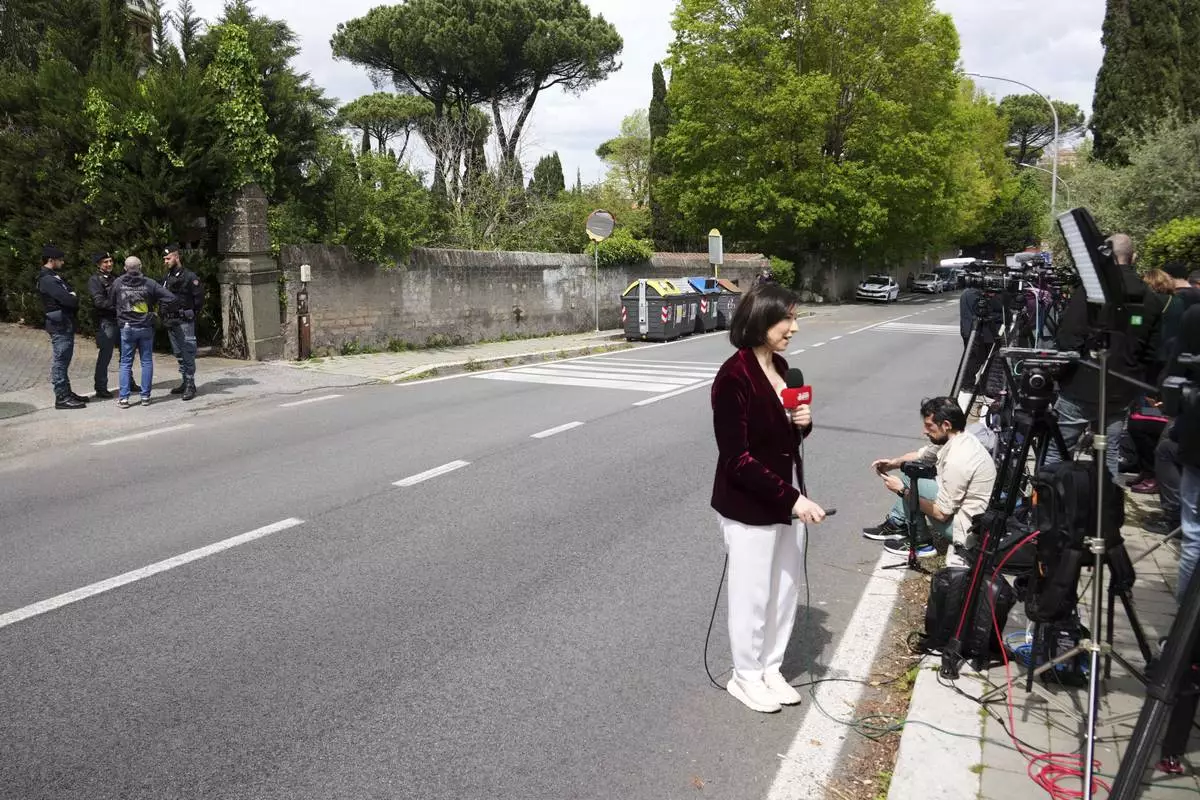
Iranian delegates leave the Omani Embassy in Rome after closed-door meeting with a U.S. delegation to discuss Tehran's rapidly advancing nuclear program, Saturday, April 19, 2025. (AP Photo/Andrew Medichini)
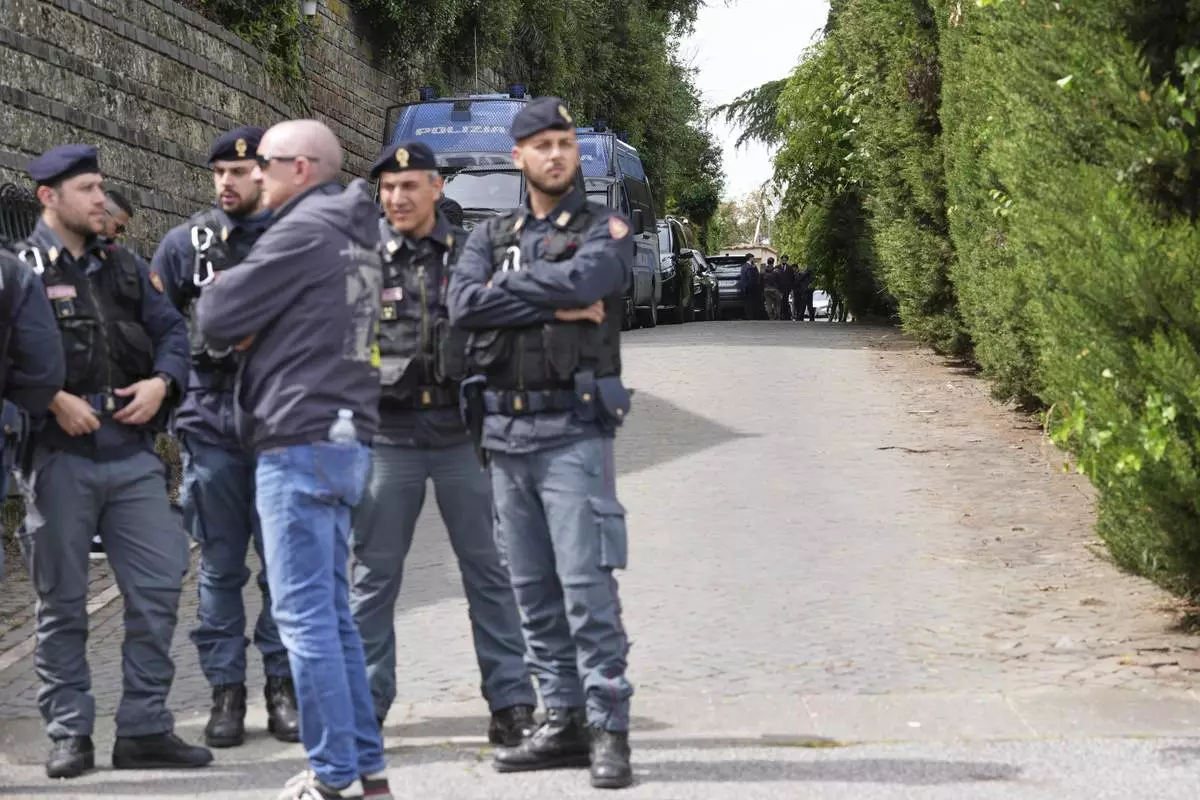
Iranian delegates leave the Omani Embassy in Rome after closed-door meeting with a U.S. delegation to discuss Tehran's rapidly advancing nuclear program, Saturday, April 19, 2025. (AP Photo/Andrew Medichini)
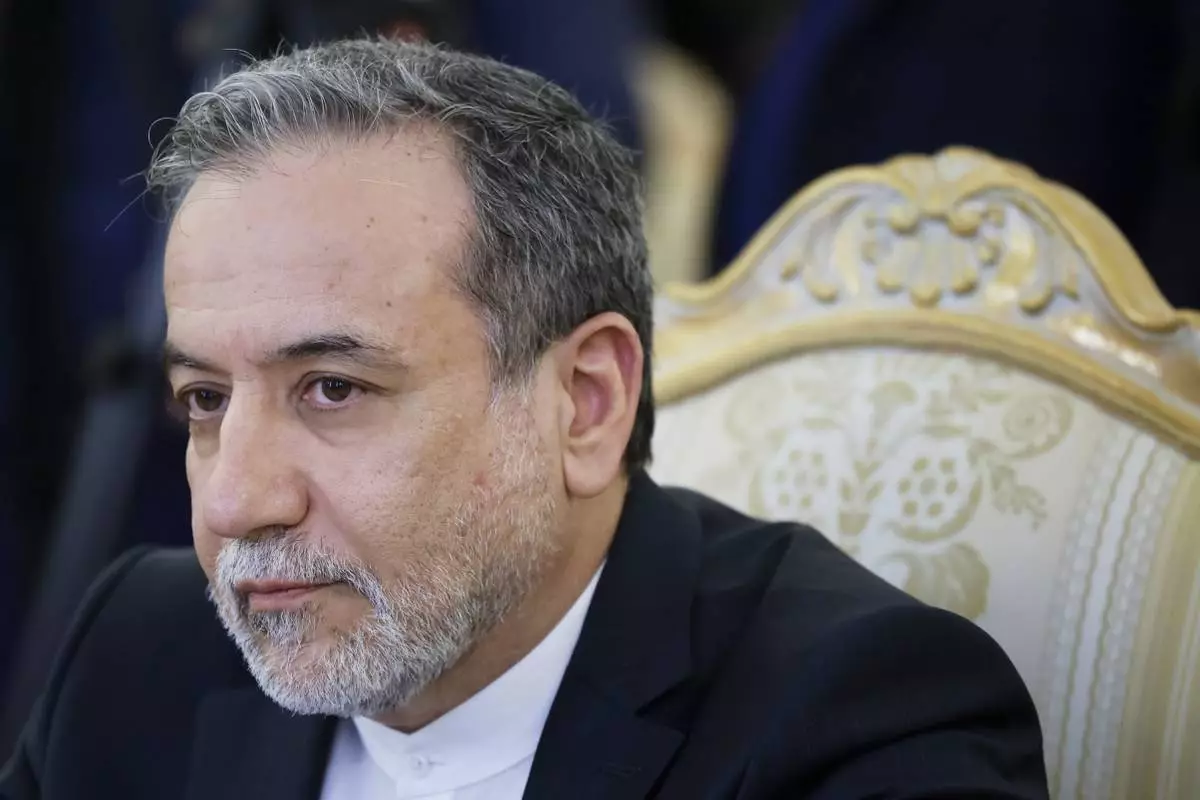
U.S. delegates leave the Omani Embassy in Rome after closed-door meeting with an Iranian delegation to discuss Tehran's rapidly advancing nuclear program, Saturday, April 19, 2025. (AP Photo/Andrew Medichini)

U.S. delegates leave the Omani Embassy in Rome after closed-door meeting with an Iranian delegation to discuss Tehran's rapidly advancing nuclear program, Saturday, April 19, 2025. (AP Photo/Andrew Medichini)

Police patrol outside the Omani Embassy in Rome during a closed-door meeting between U.S. and Iranian delegations to discuss Tehran's rapidly advancing nuclear program, Saturday, April 19, 2025. (AP Photo/Andrew Medichini)

Police patrol outside the Omani Embassy in Rome during a closed-door meeting between U.S. and Iranian delegations to discuss Tehran's rapidly advancing nuclear program, Saturday, April 19, 2025. (AP Photo/Andrew Medichini)

Police and reporters stand outside the Omani Embassy in Rome during a closed-door meeting between U.S. and Iranian delegations to discuss Tehran's rapidly advancing nuclear program, Saturday, April 19, 2025. (AP Photo/Andrew Medichini)

Police and reporters stand outside the Omani Embassy in Rome during a closed-door meeting between U.S. and Iranian delegations to discuss Tehran's rapidly advancing nuclear program, Saturday, April 19, 2025. (AP Photo/Andrew Medichini)

Police and reporters stand outside the Omani Embassy in Rome during a closed-door meeting between U.S. and Iranian delegations to discuss Tehran's rapidly advancing nuclear program, Saturday, April 19, 2025. (AP Photo/Andrew Medichini)

Police and reporters stand outside the Omani Embassy in Rome during a closed-door meeting between U.S. and Iranian delegations to discuss Tehran's rapidly advancing nuclear program, Saturday, April 19, 2025. (AP Photo/Andrew Medichini)

Police patrol outside the Omani Embassy in Rome during a closed-door meeting between U.S. and Iranian delegations to discuss Tehran's rapidly advancing nuclear program, Saturday, April 19, 2025. (AP Photo/Andrew Medichini)

Police patrol outside the Omani Embassy in Rome during a closed-door meeting between U.S. and Iranian delegations to discuss Tehran's rapidly advancing nuclear program, Saturday, April 19, 2025. (AP Photo/Andrew Medichini)

Iranian Foreign Minister Abbas Araghchi speaks with Russian Foreign Minister Sergey Lavrov during their meeting in Moscow, Russia, Friday, April 18, 2025. (Tatyana Makeyeva/Pool Photo via AP)
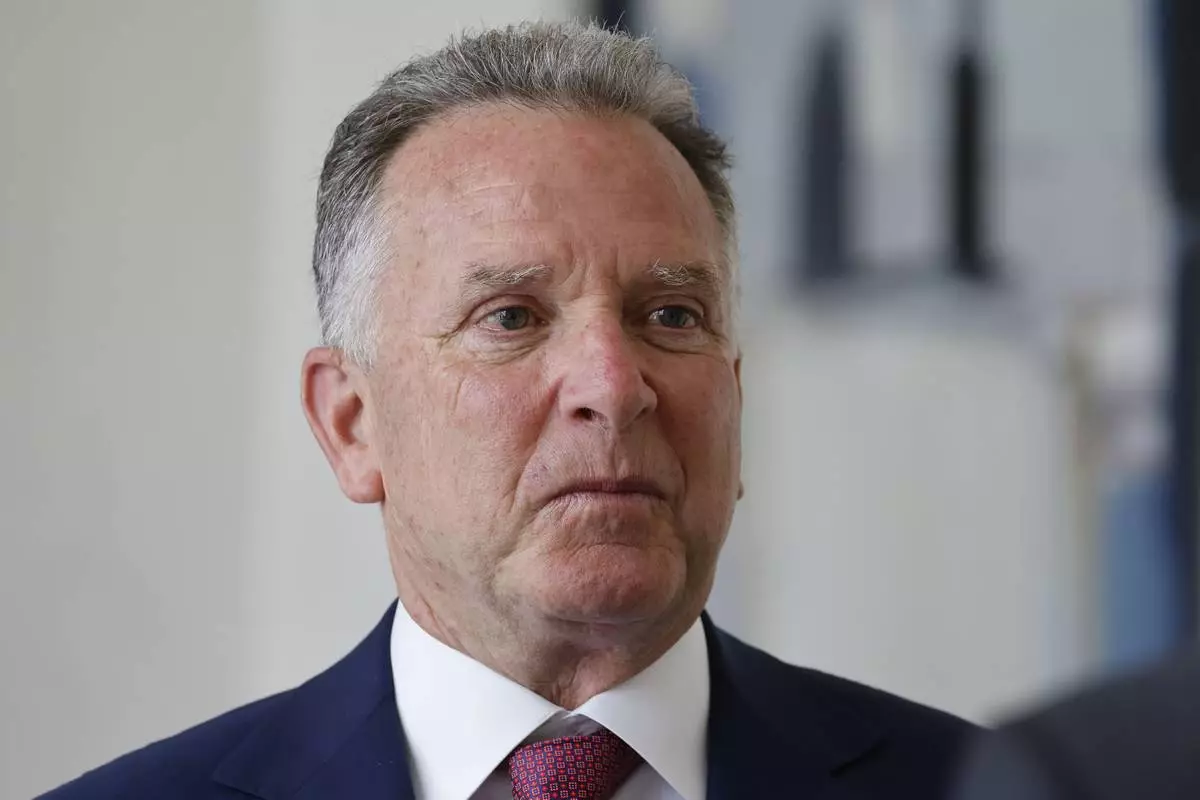
Iranian Foreign Minister Abbas Araghchi speaks with Russian Foreign Minister Sergey Lavrov during their meeting in Moscow, Russia, Friday, April 18, 2025. (Tatyana Makeyeva/Pool Photo via AP)

US Special Envoy Steve Witkoff, listening to French President Emmanuel Macron prior to a meeting at the Elysee Palace in Paris, Thursday, April 17, 2025. (Ludovic Marin, Pool Photo via AP)
US Special Envoy Steve Witkoff, listening to French President Emmanuel Macron prior to a meeting at the Elysee Palace in Paris, Thursday, April 17, 2025. (Ludovic Marin, Pool Photo via AP)
Russia’s nuclear-capable Oreshnik missile system has entered active service in Belarus, Russia’s Defense Ministry said Tuesday, as the U.S. efforts to broker a deal to end the nearly four-year war in Ukraine have entered a pivotal stage.

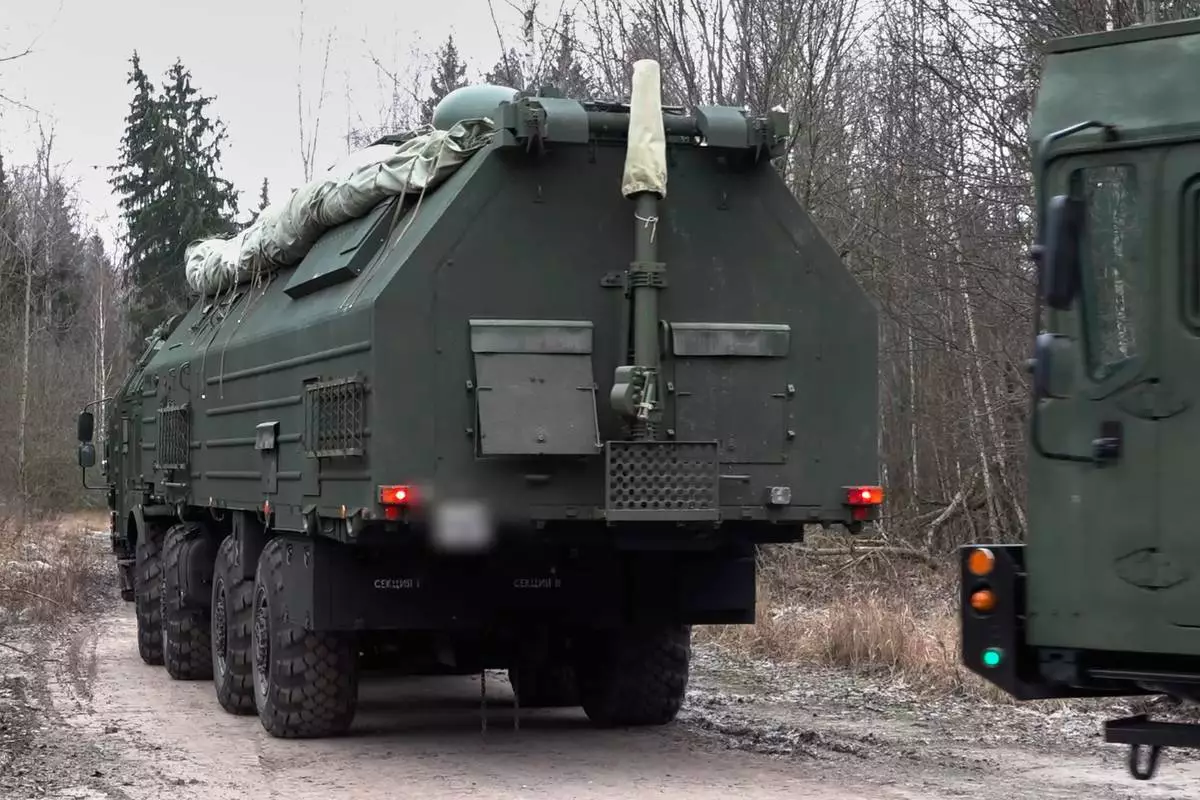
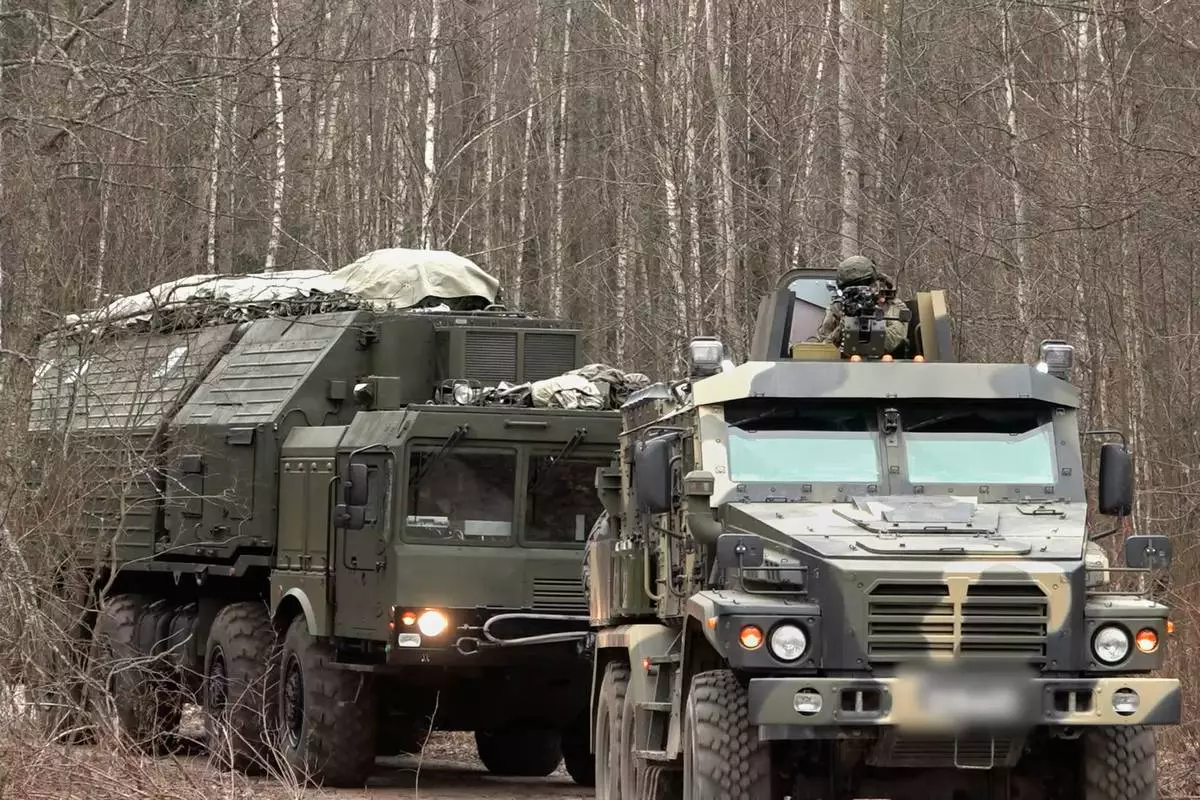
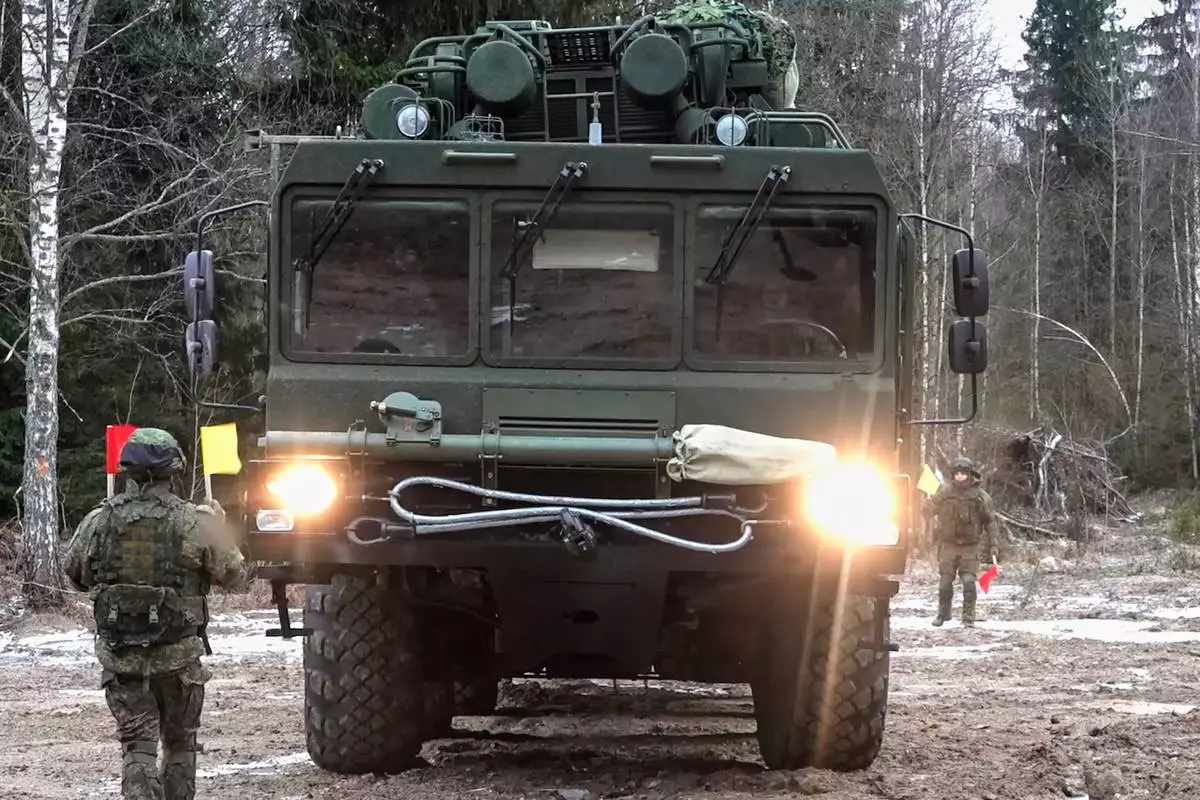
The ministry released a video showing combat vehicles that are part of the mobile intermediate range ballistic missile system driving across a forest as part of combat training. The ministry’s announcement followed a statement from Belarusian President Alexander Lukashenko, who said earlier this month that the Oreshnik had arrived in the country. Lukashenko said that up to 10 such missile systems will be stationed in Belarus.

Russian President Vladimir Putin said earlier this month that the Oreshnik would enter combat duty before the year's end. He made the statement at a meeting with top Russian military officers, where he warned that Moscow will seek to extend its gains in Ukraine if Kyiv and its Western allies reject the Kremlin’s demands in peace talks.

The announcement comes at a critical time for Russia-Ukraine peace talks. U.S. President Donald Trump hosted Ukrainian President Volodymyr Zelenskyy at his Florida resort Sunday and insisted that Kyiv and Moscow were “closer than ever before” to a peace settlement.

However, Moscow and Kyiv remain deeply divided on key issues, including whose forces withdraw from where in Ukraine and the fate of Ukraine’s Russian-occupied Zaporizhzhia nuclear power plant, one of the 10 biggest in the world. Trump noted that the monthslong U.S.-led negotiations could still collapse.

Putin has sought to portray himself as negotiating from a position of strength as Ukrainian forces strain to keep back the bigger Russian army.

Russia first tested a conventionally armed version of the Oreshnik — Russian for hazelnut tree — to strike a Ukrainian factory in November 2024. Putin has bragged that Oreshnik’s multiple warheads plunge at speeds of up to Mach 10 and can’t be intercepted, and that several of them used in a conventional strike could be as devastating as a nuclear attack.

The Russian leader has warned the West that Russia could use the Oreshnik next against allies of Kyiv that allowed it to strike inside Russia with their longer-range missiles.

The Belarusian Defense Ministry said Tuesday that the Oreshnik has a range of up to 5,000 kilometers (3,100 miles).

Russian state media boasted that it would take the missile only 11 minutes to reach an air base in Poland and 17 minutes to reach NATO headquarters in Brussels. There’s no way to know whether it’s carrying a nuclear or a conventional warhead before it hits the target.

Intermediate-range missiles can fly between 500 to 5,500 kilometers (310 to 3,400 miles). Such weapons were banned under a Soviet-era treaty that Washington and Moscow abandoned in 2019.

Russia previously has deployed tactical nuclear weapons to the territory of its Belarus, whose territory it used to launch a full-scale invasion of Ukraine in February 2022. Lukashenko has said that his country has several dozen Russian tactical nuclear weapons.

While signing a security pact with Lukashenko in December 2024, Putin said that even with Russia controlling the Oreshniks, Moscow would allow Minsk to select the targets. He noted that if the missiles are used against targets closer to Belarus, they could carry a significantly heavier payload.

In 2024, the Kremlin released a revised nuclear doctrine, noting that any nation’s conventional attack on Russia that is supported by a nuclear power will be considered a joint attack on his country. The threat was clearly aimed at discouraging the West from allowing Ukraine to strike Russia with longer-range weapons and appears to significantly lower the threshold for the possible use of Russia’s nuclear arsenal.

The revised Russian doctrine also placed Belarus under the Russian nuclear umbrella.

Lukashenko has ruled the nation of 9.5 million with an iron fist for more than three decades. His government has been repeatedly sanctioned by the West for its crackdown on human rights and for allowing Moscow to use its territory for the invasion of Ukraine. Belarusian opposition leader Sviatlana Tsikhanouskaya has said that the deployment of Oreshnik to Belarus deepens the country’s military and political dependence on Russia.

Follow AP’s coverage of the war in Ukraine at https://apnews.com/hub/russia-ukraine

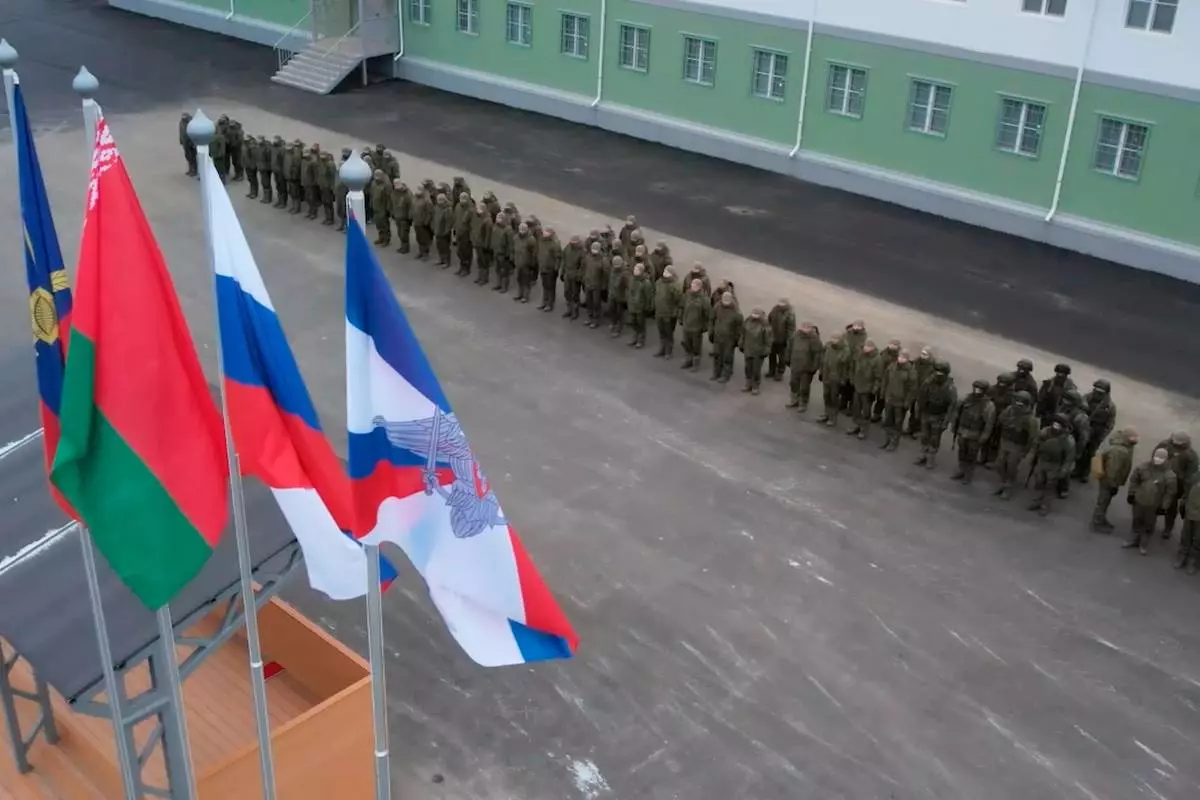
In this image made from video provided by Russian Defense Ministry Press Service on Monday, Dec. 29, 2025, Russian troops line up at a base in Belarus where the Oreshnik missile system was deployed in Belarus. (Russian Defense Ministry Press Service via AP)

In this image made from video provided by Russian Defense Ministry Press Service on Monday, Dec. 29, 2025, Russian troops line up at a base in Belarus where the Oreshnik missile system was deployed in Belarus. (Russian Defense Ministry Press Service via AP)

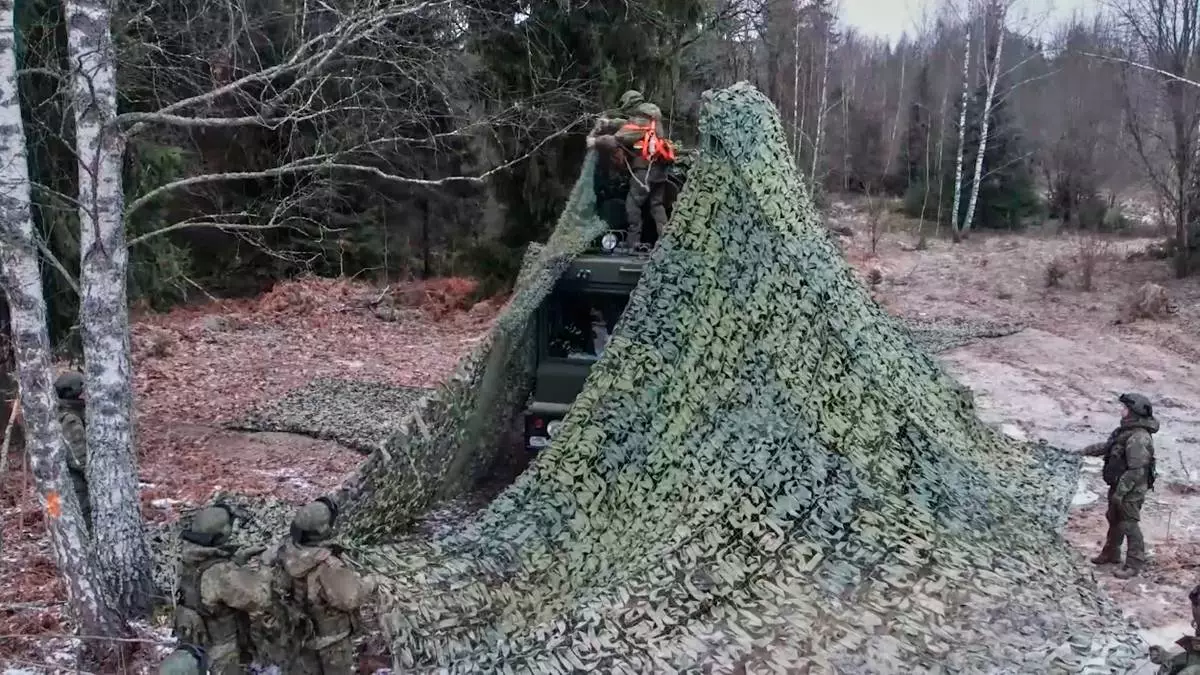
In this image made from video provided by Russian Defense Ministry Press Service on Monday, Dec. 29, 2025, Russian solders camouflage one of the trucks of the Russia's Oreshnik missile system with a net during training in an undisclosed location in Belarus. (Russian Defense Ministry Press Service via AP)

In this image made from video provided by Russian Defense Ministry Press Service on Monday, Dec. 29, 2025, Russian solders camouflage one of the trucks of the Russia's Oreshnik missile system with a net during training in an undisclosed location in Belarus. (Russian Defense Ministry Press Service via AP)

In this image made from video provided by Russian Defense Ministry Press Service on Monday, Dec. 29, 2025, A Russia's Oreshnik missile system is seen during a training in an undisclosed location in Belarus. (Russian Defense Ministry Press Service via AP)

In this image made from video provided by Russian Defense Ministry Press Service on Monday, Dec. 29, 2025, A Russia's Oreshnik missile system is seen during a training in an undisclosed location in Belarus. (Russian Defense Ministry Press Service via AP)

In this image made from video provided by Russian Defense Ministry Press Service on Monday, Dec. 29, 2025, A Russia's Oreshnik missile system is seen during a training in an undisclosed location in Belarus. (Russian Defense Ministry Press Service via AP)

In this image made from video provided by Russian Defense Ministry Press Service on Monday, Dec. 29, 2025, A Russia's Oreshnik missile system is seen during a training in an undisclosed location in Belarus. (Russian Defense Ministry Press Service via AP)

In this image made from video provided by Russian Defense Ministry Press Service on Monday, Dec. 29, 2025, A Russia's Oreshnik missile system is seen during a training in an undisclosed location in Belarus. (Russian Defense Ministry Press Service via AP)

In this image made from video provided by Russian Defense Ministry Press Service on Monday, Dec. 29, 2025, A Russia's Oreshnik missile system is seen during a training in an undisclosed location in Belarus. (Russian Defense Ministry Press Service via AP)

Recommended Articles