Skip to Content Facebook Feature Image

Audi showcases"in China for China" strategy with electric vehicles at Auto Shanghai

China

China

China

Audi showcases"in China for China" strategy with electric vehicles at Auto Shanghai

2025-04-25 19:56 Last Updated At:21:07

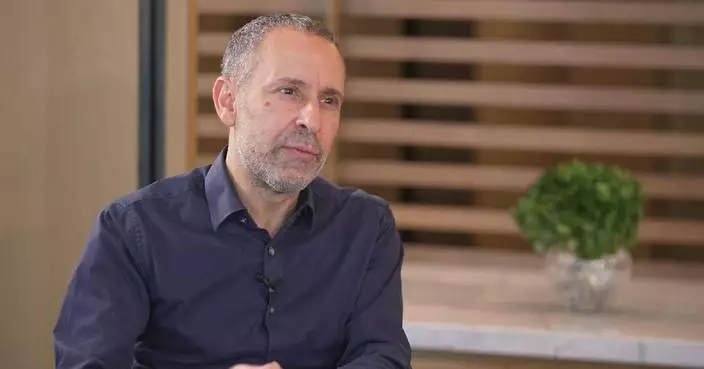
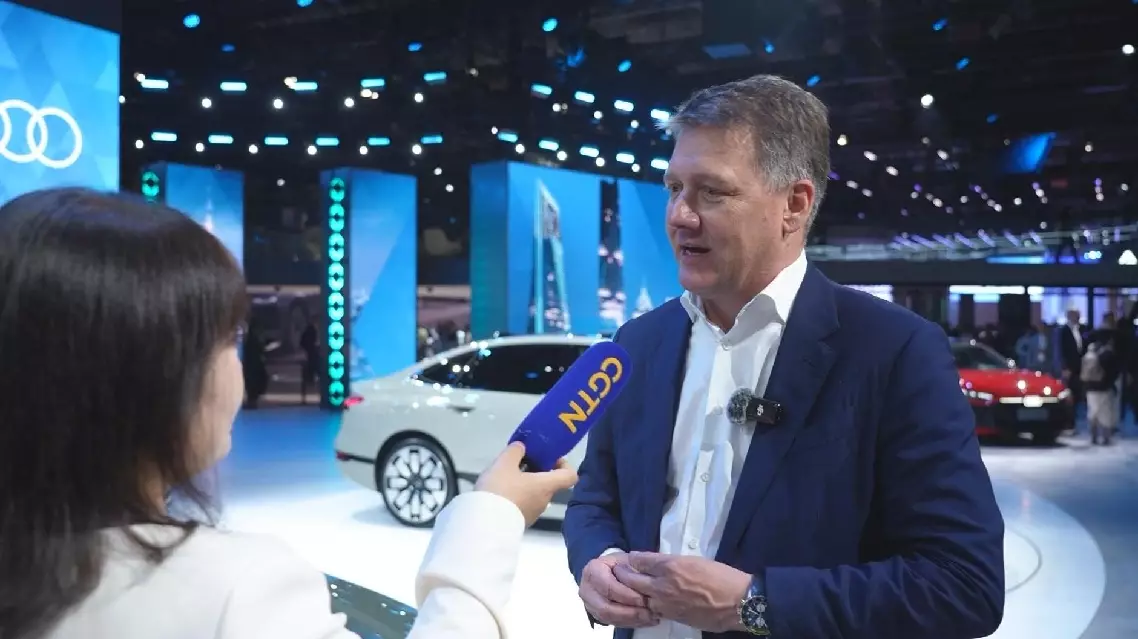
Audi remains committed to deepening its "in China for China" strategy, focusing on innovation and striving for greater success in its key market, said CEO Gernot Döllner.

At the 21st Shanghai International Automobile Industry Exhibition, Audi unveiled a strong lineup of all-electric vehicles alongside its local partners, reaffirming its long-term commitment to the Chinese market.

"We have always been inspired by our Chinese customers. We have always done development 'in China for China' and we are now bringing it to the next level, with both joint ventures, with SAIC. We for the first time co-developed the car together with strong design. It was quality with chassis technology from Audi and with the Chinese ecosystem that's brought from SAIC to the party. So we really have our Chinese customers in the focus," Döllner said at the event.

In the face of escalating U.S.-China tariff tensions and the European Union's exploration of alternative tariff plans, including minimum price benchmarks for Chinese-made electric vehicles, the Audi CEO reiterated the company's commitment to free trade.

He also expressed confidence in the company's strategy, highlighting its localized operations in China as a key advantage.

"We believe that Free Trade is the right way to handle that. And we are really happy to have a strategy where we are already localized in China. So we see ourselves perfectly set up in the Chinese market. We have a strategy like that also in mind for the U.S.," he said.

Also known as Auto Shanghai, the 10-day event got underway in the eastern China metropolis on Wednesday and is expected to see over 100 new product debuts among the 1,000 participating auto brands, while over 100,000 daily visitors are set to descend on one of the world's largest auto shows.
Audi showcases"in China for China" strategy with electric vehicles at Auto Shanghai


Audi showcases"in China for China" strategy with electric vehicles at Auto Shanghai
A veteran agricultural scientist and deputy to the National People's Congress (NPC), China's national legislature, shared his decades-long mission to reduce the country's reliance on food imports and safeguard its food security by developing high-yield, disease-resistant wheat varieties.

Gao Derong, a researcher from the Lixiahe Regional Institute of Agricultural Sciences in east China's Jiangsu Province, detailed his relentless pursuit of better wheat varieties while taking a question at a press conference on the sidelines of the ongoing "two sessions", a major event in China's political calendar.

He has dedicated more than 30 years to wheat breeding and succeeded in the fight against Fusarium head blight, a serious fungal disease of cereals, including wheat and other small-grain crops, by implanting "disease-resistant genes" inside seeds.

"After 30 years of countless and repeated trials, we finally developed our first Fusarium head blight resistant variety in 2021. It exhibits strong disease resistance and high yield, with a yield of up to 600 kg per mu (0.066 hectare) in a demonstration plot. This means farmers can use fewer pesticides, produce more wheats, and secure a more stable harvest," said Gao.

Addressing the tight rotation schedule in the rice-wheat rotation system in south China, his team developed time-smart varieties like "Yangmai 25," which can be sown as late as December and still achieve a yield of 6,00 kg per mu.

"We have also cultivated a high-quality weak-gluten wheat variety tailored for biscuits and pastries, reversing China's long-standing reliance on imports. These grain varieties, like elite guard teams, help us hold our rice bowl firmly and contribute to securing our food security," Gao said.

As an NPC deputy, Gao extends his research from the lab to the field, gathering farmers' concerns alongside experimental data.

"My duty as a deputy is also written in the fields. 'Can we construct high-standard farmland at an accelerated pace?' 'Can we have more targeted agricultural subsidies?' These are the voices I often heard in the fields, which I carefully recorded like experimental data and transformed into suggestions," he said. Gao said he will continue working to enable the land to yield more grain, help farmers increase their incomes, and contribute to ensuring national food security.

This year's "two sessions," the annual meetings of China's top political advisory body and national legislature, opened in Beijing Wednesday and Thursday, respectively. As the world's second-largest economy embarks on the inaugural year of its 15th Five-Year Plan (2026-2030) period, these gatherings will serve both as a review of past achievements, and as a strategic compass guiding the nation's future development.

NPC deputy vows to fortify China's food security through seed innovation

NPC deputy vows to fortify China's food security through seed innovation

Recommended Articles