NEW YORK (AP) — Growing up on the south side of Chicago, the Rev. Dr. Howard-John Wesley was given the message early on: What one wore as a Black man mattered.
Wesley’s pastor father, who migrated from Louisiana after World War II in search of more opportunities than those readily available to Black people in the Deep South, “always had an impeccable sense of shirt and tie and suit.”
“In order to move in certain spaces where colored people were not allowed to be, you want to be dressed the right way to be able to fit in,” says Wesley, 53, now a senior pastor in Alexandria, Virginia.
But Wesley also got an early warning: What he wore could be used against him. His father forbade baseball caps because some street gang members wore them in certain ways, and his father was concerned authorities would make stereotypical or racist assumptions about his son if he were seen wearing one.
Clothing as message. Fashion and style as tools, signifiers of culture and identity, whether intentional or assumed. There's likely no group for whom that's been more true than Black men. It's not just what they wear, but also how it's been perceived by others seeing it on a Black man, sometimes at serious cost.
“It's always a dialogue, between what you can put on and what you can't take off,” says Jonathan Square, assistant professor at Parsons School of Design and among the advisers to a new exhibit at the Metropolitan Museum of Art’s Costume Institute that kicks off with Monday's Met Gala.
“Superfine: Tailoring Black Style,” opening to the public May 10, focuses on Black designers and menswear. It uses the 2009 book, “Slaves to Fashion: Black Dandyism and the Styling of Black Diasporic Identity,” by guest curator and Barnard College professor Monica L. Miller, as a foundational inspiration for the show. The dress code for the celebrity-laden, fashion extravaganza fundraiser that is the Met Gala is “Tailored For You,” with high-profile Black male entertainers like Pharrell Williams, Lewis Hamilton, Colman Domingo and A$AP Rocky joining Vogue editor Anna Wintour as co-chairs.
“When we’re talking about Black men ... we are talking about a group, an ethnic and racial group and cultural group that has historically dealt with adversity, oppression, systemic oppression,” says Kimberly Jenkins, fashion studies scholar and founder of the Fashion and Race Database, who contributed an essay for the exhibit's catalog. “And so clothing matters for them in terms of social mobility, self-expression, agency.”
Through the decades, that self-expression has taken many forms and been adopted by others. Take the zoot suit, born in urban centers like New York’s Harlem and popularized during World War II, with its wide-legged, high-waisted pants and long suit coats with padded shoulders. The 1980s and 1990s saw the rise of styles related to hip-hop culture, such as jeans worn sagging off the hips, oversized jerseys and jackets with designer logos. Hoodies, sneakers and other streetwear were popularized by Black men before becoming global fashion staples.
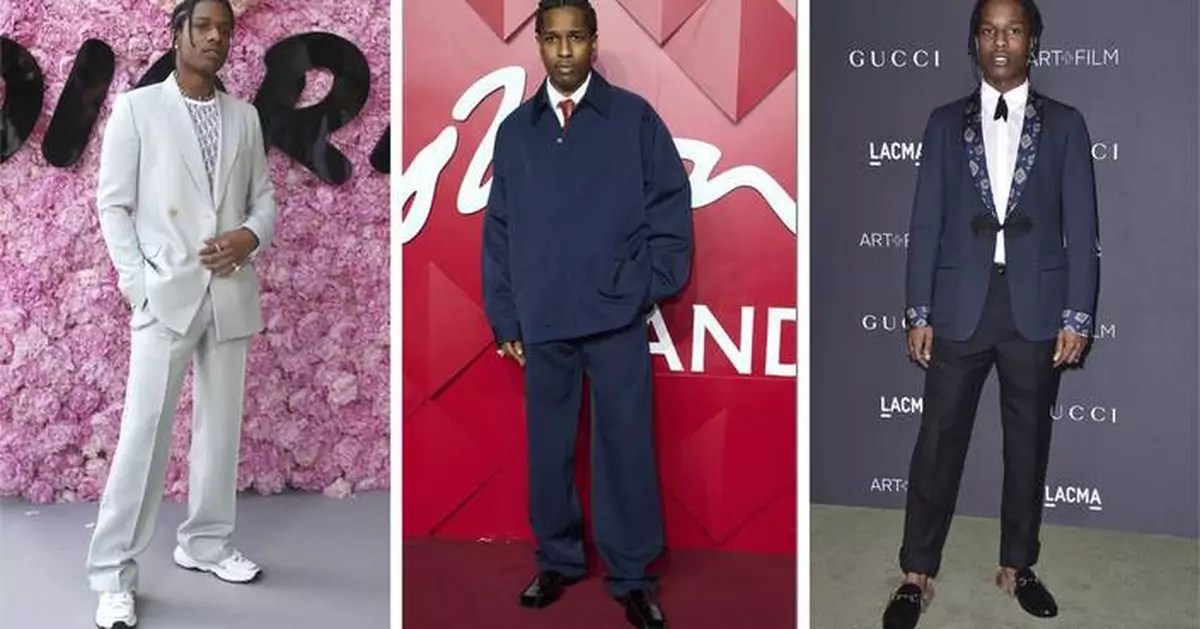
For some, it was about always being dressed “appropriately” or “respectably” to demonstrate to the mainstream that Black men were in fact equal, not lesser beings, criminals or thugs. The Met exhibit, for example, includes material from civil rights activist W.E.B. Du Bois that showcases how seriously he took the tailoring of his clothes. Gala co-host A$AP Rocky made a point of tailored suits and high fashion earlier this year during his trial on firearms charges for which he was ultimately found not guilty — Yves Saint Laurent even sent out a press release touting his court attire.
Others purposely picked their clothing as a pushback and challenge to white standards of what was acceptable, like the Black Panthers' berets and black leather jackets, or colorful dashikis that signaled connection to Pan-Africanism.
But it has never been a one-way message. Debates over the clothes Black men wear and how they wear them have at times turned into a form of cultural and literal policing, like when a young Black man sued a New York department store in 2013, saying he was racially profiled and detained by police after buying an expensive belt.
Elka Stevens, associate professor and fashion design program coordinator at Howard University, describes a gatekeeping weaponization of fashion, where some believe “people don’t have the right to wear the finest designer clothes based upon their skin color, or how they look, or how they’re being classified.”
“But if you don’t dress at a particular standard, or you don’t dress what’s considered to be appropriate for said venue or occasion, that gets weaponized as well,” she adds.
Zoot suits were condemned in the WWII era as unpatriotic for how much fabric they required during wartime scarcity. When Allen Iverson and other athletes started bringing hip-hop style and sensibility to the NBA, the league pushed back in 2005 with a dress code calling for business attire for players on the sidelines to promote what it considered a “professional” image.
And even as streetwear styles and sneakers have become big business for global fashion, they can still be looked down upon based on the body wearing them, says Stevens.
“That which was previously associated with street culture and particularly Black street culture, now is part of our everyday,” she says. “But again, who’s wearing it makes a huge difference.”
There’s perhaps no starker example than that of Trayvon Martin, the 17-year-old killed in Florida in 2012. He was shot by a man who found the sight of the hoodie-wearing Black teen suspicious, leading to the confrontation in which Martin died.
Even as hoodies have become essential dressing for everyone from kids to corporate CEOs, it's “the presence of that person who we’ve identified as being Black or someone identifies as being Black that causes the problem no matter what, no matter what they have on,” Stevens says.
It's a reality of life in the United States that Wesley has wrestled with. After Martin's death, he wore a hoodie while behind the pulpit at Alfred Street Baptist Church and spoke of his worries about how his own young sons would be perceived.
Like his father before him and for the same reasons, there were certain styles he never allowed his sons — now 21 and 18 — to wear. Sagging jeans? He “just won’t allow it. I refuse to. Not only because of fear of being stereotyped by the police, but also labeled by society. Maybe I’m wrong for that. I don’t know,” Wesley says.
“To me, it’s a shame that my attire can neither hide my color, it can never elevate me above it in your stereotype, but it can always confirm it,” Wesley says. “So my suit doesn’t get me out of, ‘Oh, he’s still a Black man who’s a threat,’ but the hoodie makes it go, ‘Oh, he’s a Black man who’s the threat.’”
For more coverage of the 2025 Met Gala, visit https://apnews.com/hub/met-gala.
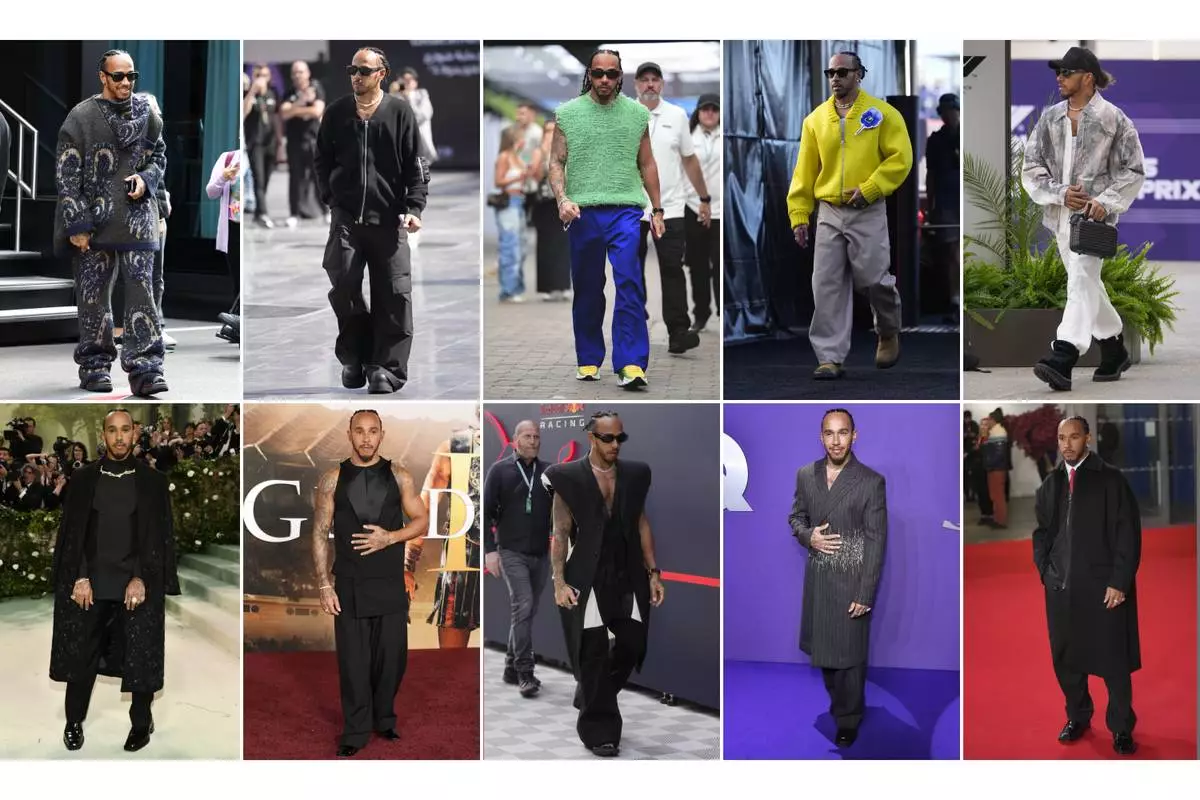
This combination photo shows various fashion worn by Formula One driver Lewis Hamilton. (AP Photo)
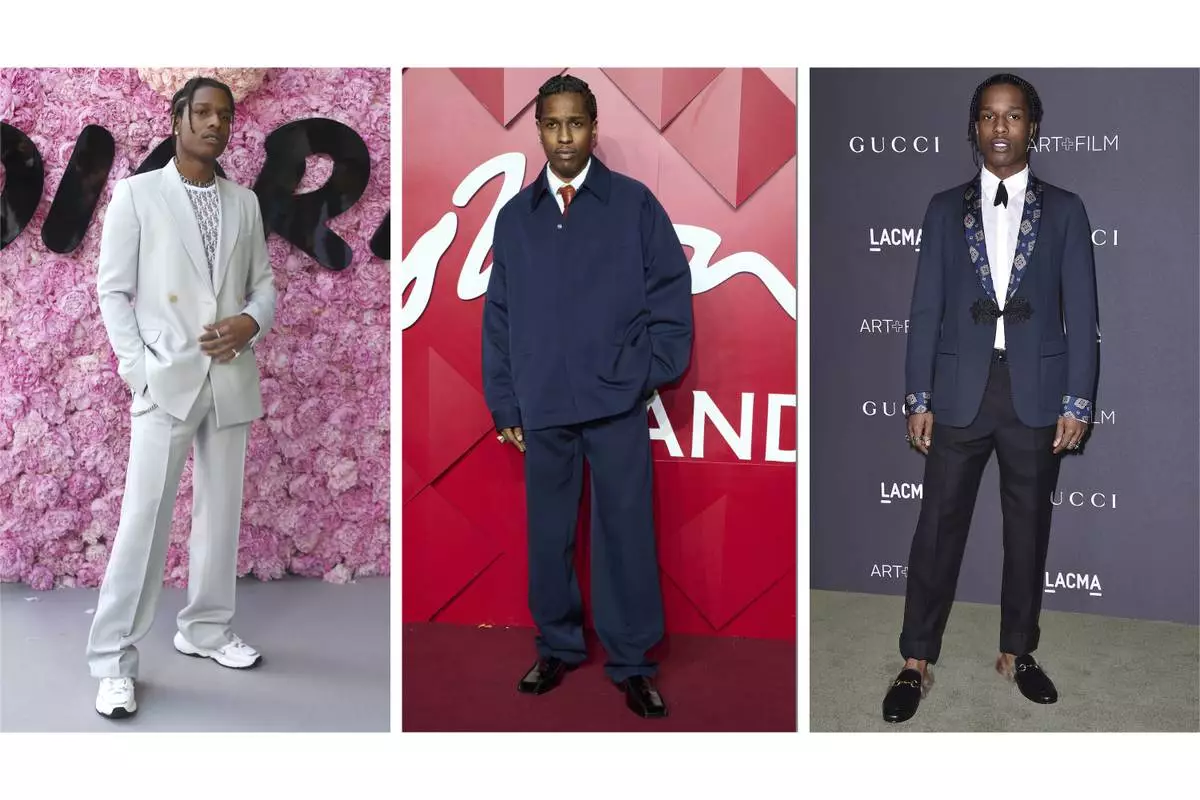
This combination photo shows various fashion worn by rapper A$AP Rocky. (AP Photo)