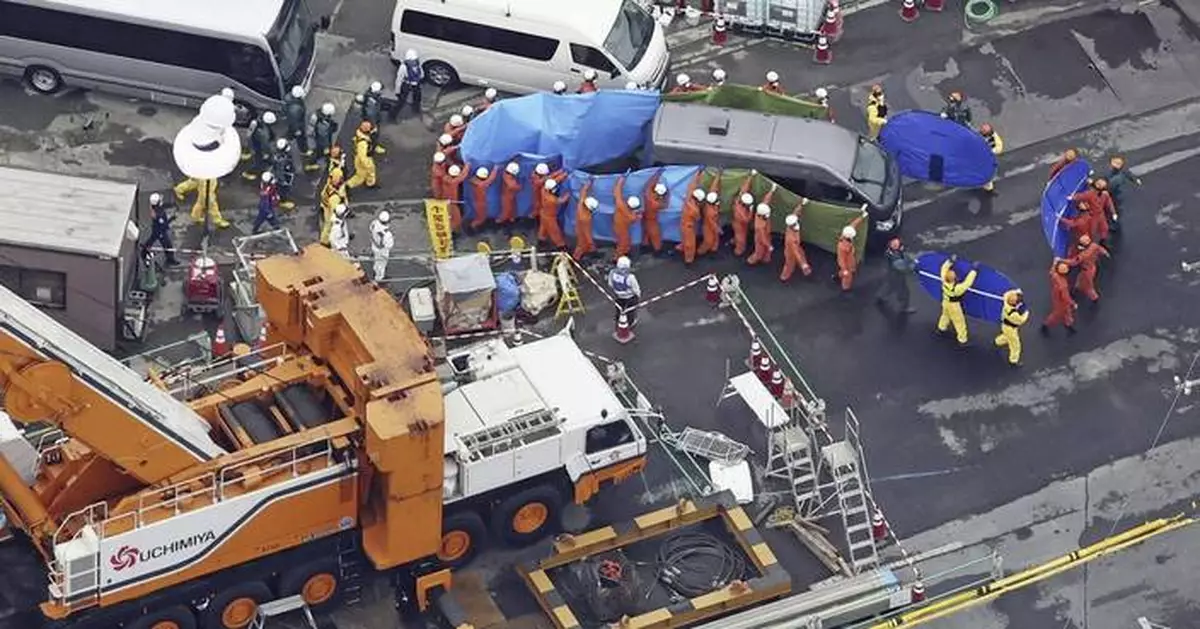
TOKYO (AP) — The body of a truck driver was recovered Friday three months after his vehicle fell into a sinkhole that suddenly appeared while he was driving on a road near Tokyo.
The 3-ton truck fell into the hole in Yashio City, just northeast of the Japanese capital, in January. During an earlier search and rescue operation, workers tried to lift the truck but only its flat-bed came out. The 74-year-old driver, trapped in the cabin of the truck, was believed to have been swept to a location about 30 meters (yards) downstream.
On Friday, after three months of preparation to build a safe underground pathway for workers to reach the targeted area, rescuers wearing helmets and hazmat suits went inside of it and recovered the body, officials said.
Experts say the Yashio sinkhole was caused by corrosion in sewer pipes. The unsteady ground and a hollow space below it had hampered the rescue, while residents were asked to cut back on water use to minimize sewage water going through the area.
The case was a wakeup call about the aging infrastructure in Japan, where most of its main public infrastructure was built during the rapid economic growth of the 1960s and 1970s.
According to the Land, Infrastructure and Transport Ministry, more than 10,500 sinkholes were found across Japan, many of them related to sewage facilities in urban areas.
Yashio Mayor Shinobu Oyama, in a statement, offered his prayer for the driver and condolences to his family. He pledged to do his utmost for the speedy reconstruction of the damaged road.
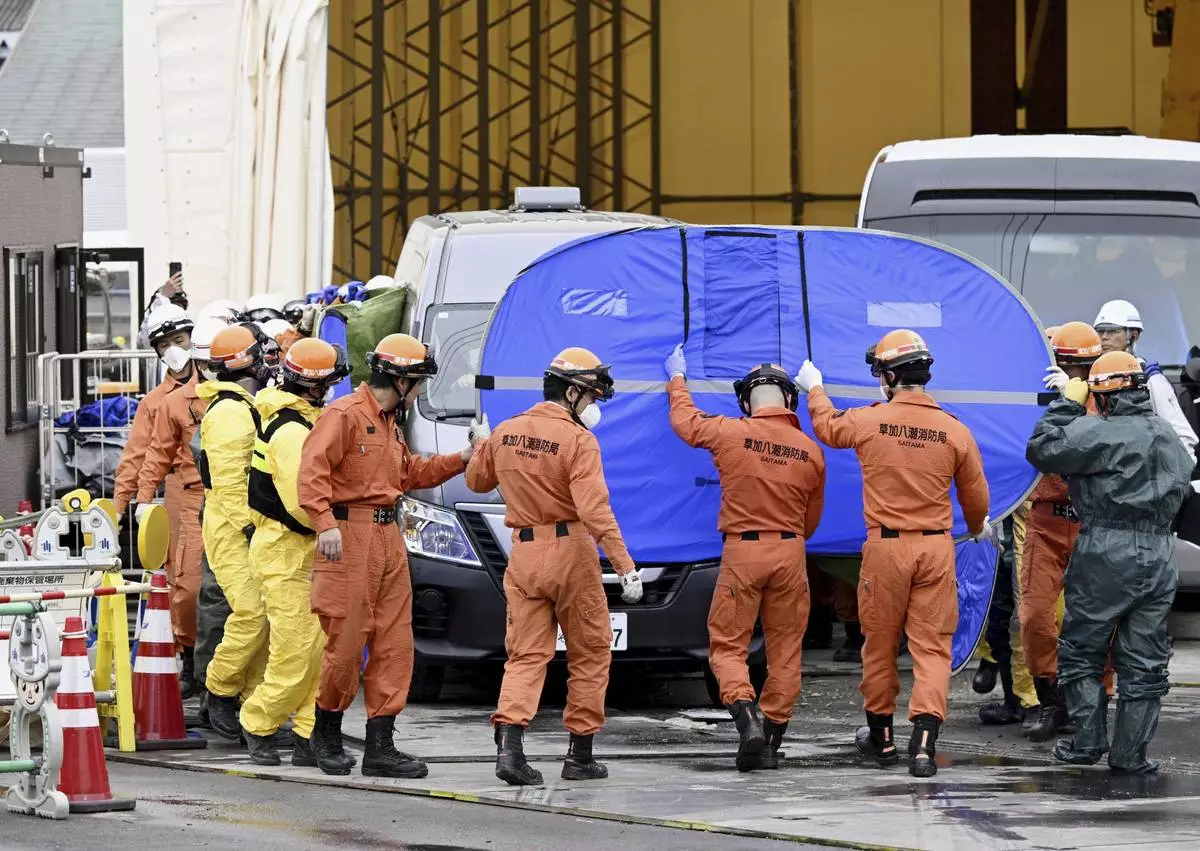
A vehicle carrying a body, believed to be that of the driver found during a search inside the sewer pipe, leaves the scene of the road collapse accident on a street, Friday May 2, 2025 in in Yashio, northeast of Tokyo. (Kyodo News via AP)

A vehicle, top right, carrying a body, believed to be that of the driver found during a search inside the sewer pipe, leaves the scene of the road collapse accident on a street, Friday May 2, 2025 in in Yashio, northeast of Tokyo. (Kyodo News via AP)
BISMARCK, N.D. (AP) — Federal officials on Thursday gave final approval for the Dakota Access oil pipeline to continue operating its contentious Missouri River crossing, an outcome that comes nearly a decade after boisterous protests against the project on the North Dakota prairie.
The U.S. Army Corps of Engineers’ decision to grant the key easement means the pipeline will keep operating but with added conditions for detecting leaks and monitoring groundwater, among others. The announcement brings an end to a drawn-out legal and regulatory saga stemming from the protests in 2016 and 2017, though further litigation over the pipeline is likely.
The $3.8 billion, multistate pipeline has been transporting oil since June 2017 from North Dakota’s Bakken oil field to a terminal in Illinois. The line carries about 4% of U.S. daily oil production, or roughly 540,000 barrels per day,
The Corps is “decisively putting years of delays to rest and moving out to safely execute this crossing beneath Lake Oahe," Assistant Secretary of the Army for Civil Works Adam Telle said in a statement.
The pipeline crosses the river upstream from the Standing Rock Sioux Tribe’s reservation, which straddles the Dakotas. The tribe has long opposed the pipeline, fearing a spill and contamination of its water supply. In 2016 and 2017, thousands of people camped and protested for months near the river crossing.
The protests resulted in hundreds of arrests and related criminal cases and lawsuits, some of them still ongoing, including litigation that threatens the future of the environmental group Greenpeace.
In December, the Corps released its final environmental impact statement nearly six years after a federal judge ordered a more rigorous review of the pipeline's crossing. In that document, the Corps endorsed the option to grant the easement for the crossing and keep the pipeline operating with modifications.
Those measures include enhanced leak detection and monitoring systems, expanded groundwater and surface water monitoring and third-party expert evaluation of the leak and detection systems, among others, the Corps said. The conditions also include water supply contingency planning and other studies coordinated with affected tribes.
The Corps had weighed several options, including removing or abandoning the pipeline's river crossing or even rerouting it north. The agency said its decision “best balances public safety, protection of environmental resources, and leak detection and response considerations while meeting the project’s purpose and need.”
Pipeline developer Energy Transfer hailed the decision, saying the pipeline has been safely operating for nearly 10 years and is critical to the country’s energy infrastructure.
“We want to thank the Corps for the tremendous amount of time and effort put in by so many to bring this matter to a thoughtful close,” said Vicki Granado, a company spokesperson.
The Associated Press sent text messages and emails to media representatives for the tribe and left a voicemail at the tribe's headquarters. They didn't immediately respond Thursday.
North Dakota Republican Gov. Kelly Armstrong, Interior Secretary and former North Dakota governor Doug Burgum and U.S. Senators John Hoeven and Kevin Cramer each welcomed the decision to ensure the pipeline continues operating.
The Corps' announcement came as officials and oil industry leaders were gathered for a trade conference in Bismarck.
Energy Transfer and Enbridge are in early stages of a project to move about 250,000 daily barrels of light Canadian crude oil through the Dakota Access Pipeline by using another pipeline and building a 56-mile connecting line, spokespersons for the companies said. Enbridge will decide sometime in mid-2026 whether to move ahead.
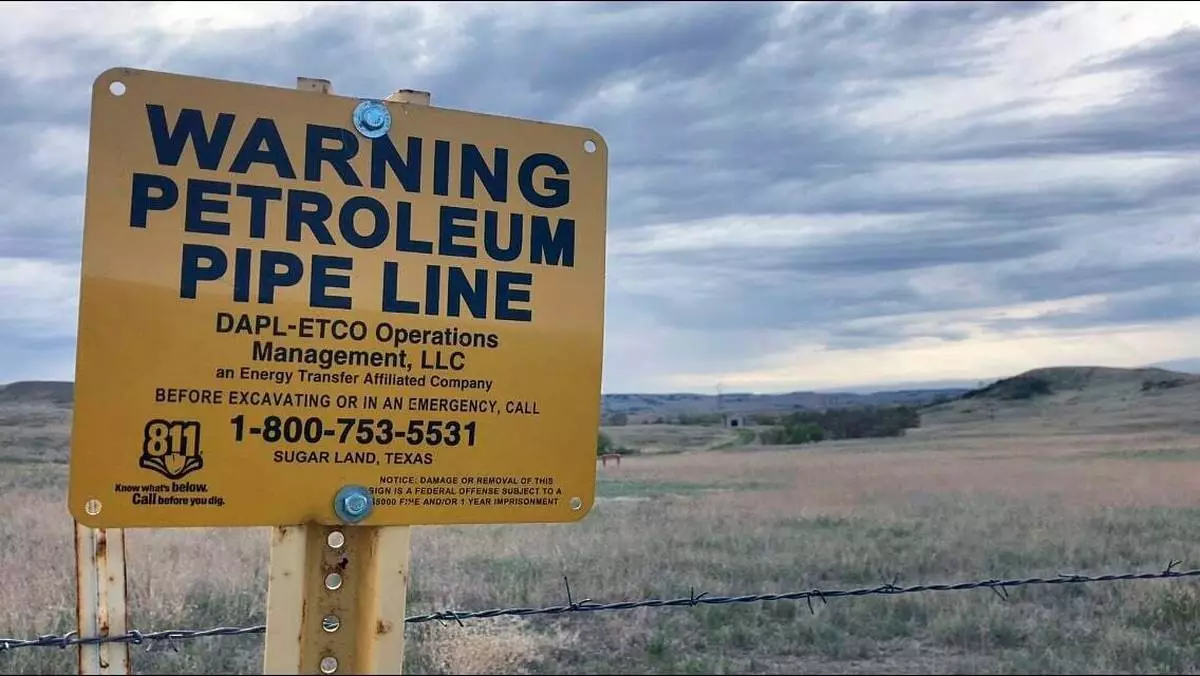
FILE - A sign for the Dakota Access Pipeline is seen north of Cannonball, N.D. and the Standing Rock Reservation on May 20, 2021. (AP Photo/Matthew Brown, File)