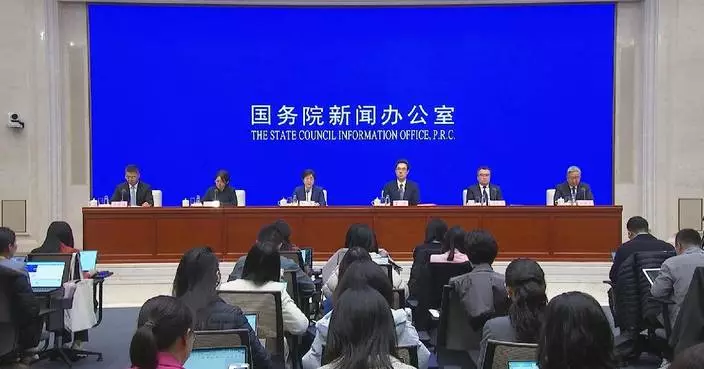
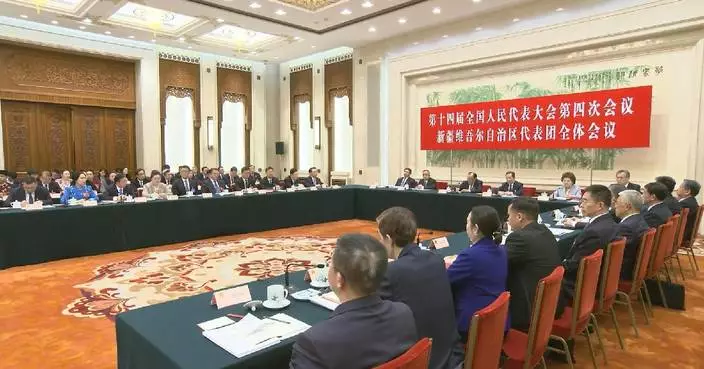
China will establish a tiered AI education system spanning primary, junior high, and senior high schools to guide students from foundational cognitive awareness to practical technological innovation, according to policy documents unveiled Monday.
At the primary school level, the Ministry of Education (MOE) prioritizes AI literacy through exposure to basic technologies, such as voice recognition and image classification.
Building on this foundation, junior high school students will deepen their understanding of AI logic, examine machine learning processes, and develop critical thinking to identify misinformation in generative AI outputs.
Progressing to senior secondary education, the focus shifts toward applied innovation. Students will use accumulated AI knowledge to design and refine AI algorithm models, while cultivating interdisciplinary systems thinking.
To achieve the goals, the MOE will integrate AI-enabled teaching competencies into the teacher training framework. Additionally, it mandates schools to develop age-appropriate curricula with tiered instructional practices that align with cognitive development stages.
Notably, the MOE underscores generative AI's pedagogical potential. "Teachers can empower generative AI tools to construct interactive teaching and create immersive learning experiences," said an official overseeing basic education.
The official also called for strengthening students' logical and innovative thinking through generative AI-powered interactive learning ecosystems.
Meanwhile, the MOE prohibits students from submitting AI-generated content as academic work or examination responses. Simultaneously, it demands that teachers cultivate learners' capacity for critical thinking of AI outputs, thereby fostering authentic engagement in information processing.
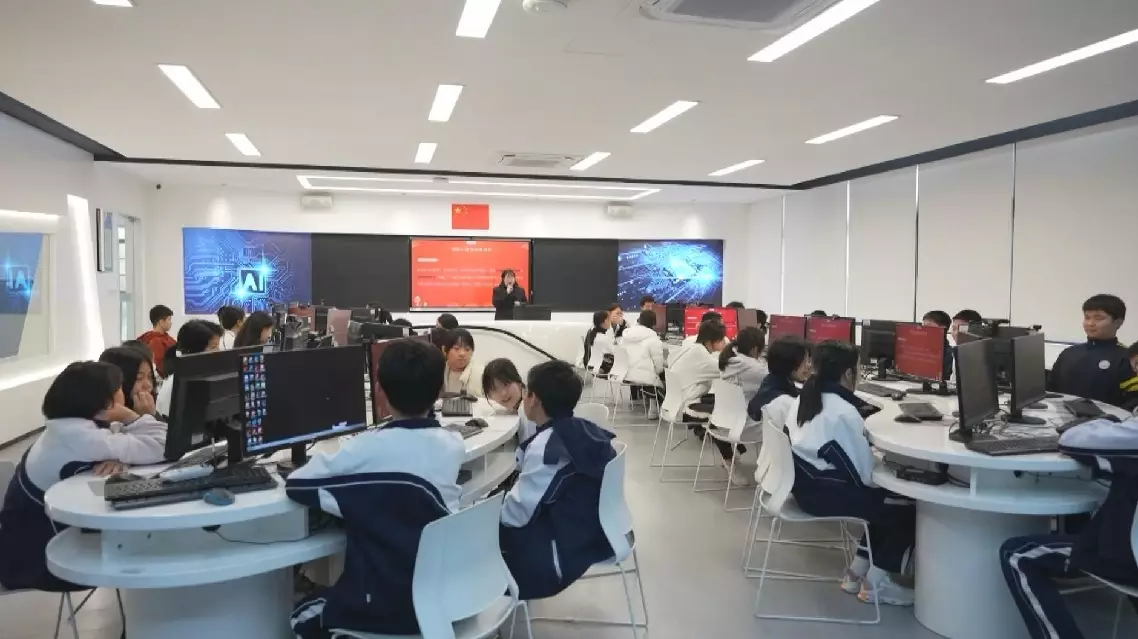
China advances AI curriculum to cover full basic education
As China's 15th Five-Year Plan enters its inaugural year, Kenneth Fok Kai-kong, a re-elected Hong Kong deputy in the National People's Congress, said he hopes Hong Kong can better integrate into and contribute to the nation's overall development.
That involves ensuring Hong Kong's voice is heard in the development of national strategies, while effectively communicating the central government's vision to the people of Hong Kong, Fok said.
This year, Fok brought nine proposals to the ongoing 14th National People's Congress (NPC), China's top legislature, covering different areas including sports, culture, aviation and consumption.
"I'm always very concerned about sports and culture. This is where really my heart lies. But I think as a deputy I should also have a much broader [vision], not just concentrate on one specific area. So, of course, I mentioned about sports and also Greater Bay Area sports. But another issue, maybe first time I brought it to the table, is about our aviation hub. How do we keep up with the race with all the regional hubs also rising at the same time? This is our core strategy, core competence in Hong Kong and how do we make it better," Fok said in an interview with China Global Television Network (CGTN) released on Saturday.
In the 2026 Government Work Report delivered by Chinese Premier Li Qiang at the opening session of the 14th NPC on Thursday, Guangdong-Hong Kong-Macao Greater Bay Area is encouraged to build itself into a world-class city cluster.
The report also pledged to develop the Greater Bay Area into an international center for scientific and technological innovation.
"I also think about the national objectives, what are the important milestones we are trying to hit in the next five years, next 10 years. China has been doing so well and it's such a great exporter to the world as a part of the world village. But we need to strengthen ourselves by increasing consumption. Actually, consumption should be the core of our engine. We should enable our own population to be able to consume more to boost the economy," he said.
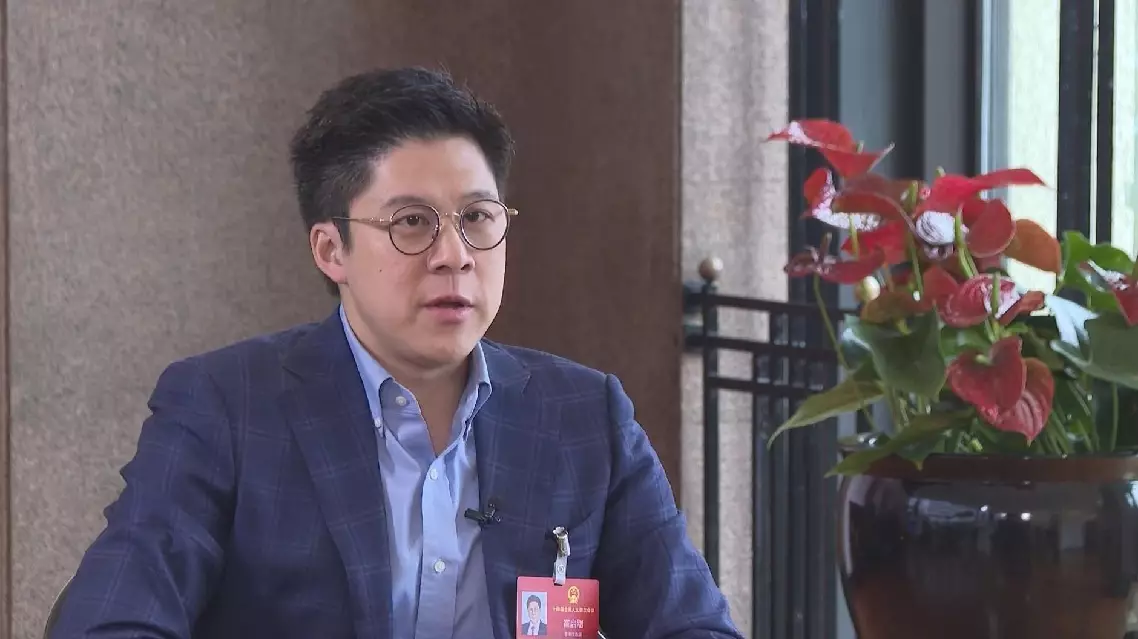
China's NPC deputy discusses how HK can better integrate into country’s overall development