Skip to Content Facebook Feature Image

China-CELAC cooperation significantly boosts trade, tech collaboration: experts

China

China

China

China-CELAC cooperation significantly boosts trade, tech collaboration: experts

2025-05-13 21:03 Last Updated At:21:47

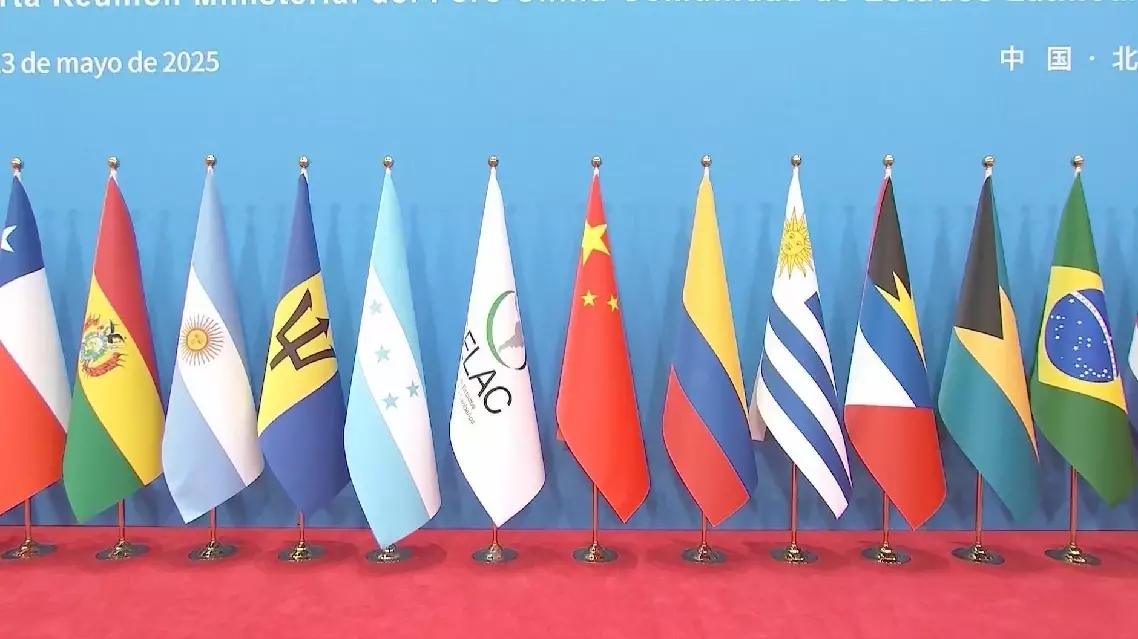
Latin American experts have highlighted how China's engagement with the region has significantly boosted trade, technology collaboration, and infrastructure development through the China-CELAC Forum and the Belt and Road Initiative.

In an interview with China Global Television Network (CGTN) ahead of the fourth ministerial meeting of the China-CELAC (Community of Latin American and Caribbean States) Forum, which opened on Tuesday in Beijing, the experts elaborated that this partnership is driving common growth.

Jorge Eduardo Malena, director of the Asian Affairs Committee of the Argentine Council for International Relations, said that since its inception in 2015, the China-CELAC Forum has emerged as a basis for dialogue between China and Latin America, providing a platform that promotes mutual understanding and cooperation.

"One of its most outstanding diplomatic achievements is the improvement of political coordination between China and the 33 countries of Latin America and the Caribbean. On the economic front, the forum has facilitated a significant rise in bilateral trade. Furthermore, infrastructure financing has expanded under the BRI with over 20 CELAC countries joining the initiative. In line with this broader agenda, the 2022-2024 joint action plan emphasizes priorities such as green development, digital connectivity and public health," he said.

Fernando Brancoli, associate professor of international security at the Federal University of Rio de Janeiro, noted the China-Brazil cooperation across various sectors such as agriculture, energy, and infrastructure.

"There is a huge investment right now on enhancing agricultural technology, for example, with Chinese companies and Brazilian companies engaging, for example, on how to construct better machinery on the field and things like that. Also, specialists from agriculture systems in Brazil are going to China right now to spend some time there. The second, I would say, is energy. There are a lot of collaborations in oil, gas and renewable energy sectors that could be mutually beneficial. Brazilian cities right now are basically filled with Chinese electric cars,"he said.

"And last I would say infrastructure is quite important right now, I would say, to Chinese-Brazilian relations. Chinese has been investing massive in Brazilian infrastructure such as railways, ports. And this could also facilitate smoother trade flows and economic growth in this sense. So this, of course, these areas present opportunities to deep economic ties and foster sustainable growth for both nations," Brancoli added.

Professor Luciano Campos from the Universidad de Buenos Aires emphasized Argentina's imports of high-tech products from China, highlighting that the Chinese trade financing could create more opportunities for the Latin American country.

"China produces a lot of goods with aggregated value that Argentina imports such as electronics, computers. So, that trade flow is very relevant and very fruitful for both countries. They both benefit from that trade flow. I guess that besides trade flow, Argentina could enormously benefit from more capital inflows probably coming from China. There is already more and more capital inflows coming from China," he said.
China-CELAC cooperation significantly boosts trade, tech collaboration: experts

China-CELAC cooperation significantly boosts trade, tech collaboration: experts

From cutting-edge technology exhibitions to retail stores thousands of kilometers away from Europe and Southeast Asia, China-made robot vacuum cleaners are increasingly becoming a popular choice among consumers worldwide.

At electronics retailers in Berlin, Germany, Chinese brands such as Roborock and Dreame occupy prominent positions in dedicated robot vacuum sections, offering a wide range of products priced between 200 and 2,000 euros.

Many local consumers said that when purchasing smart home appliances including robot vacuum cleaners, they tend to give priority to Chinese-made products.

"It's a good price and good quality. It's also the innovation. I have a feeling that the European brands are not innovating enough," said one customer.

"I think they're always on top of the other technologies. They are getting them out faster. A lot of us are switching to the Chinese technology," another consumer said.

Germany is one of the most important overseas markets for China's floor-cleaning robots.

According to data from market research firm GfK, from January to November 2025, more than six out of 10 robot vacuum cleaners sold in Western Europe were Chinese brands.

Industry data also point to a strong global momentum.

According to the International Data Corporation (IDC), global shipments of smart robot vacuum cleaners reached 17.424 million units in the first three quarters of 2025, representing a year-on-year increase of 18.7 percent.

Chinese brands including Roborock, Ecovacs, Dreame, Xiaomi and Narwal ranked among the world's top five in terms of shipment volume, with a combined share of nearly 70 percent of the global market.

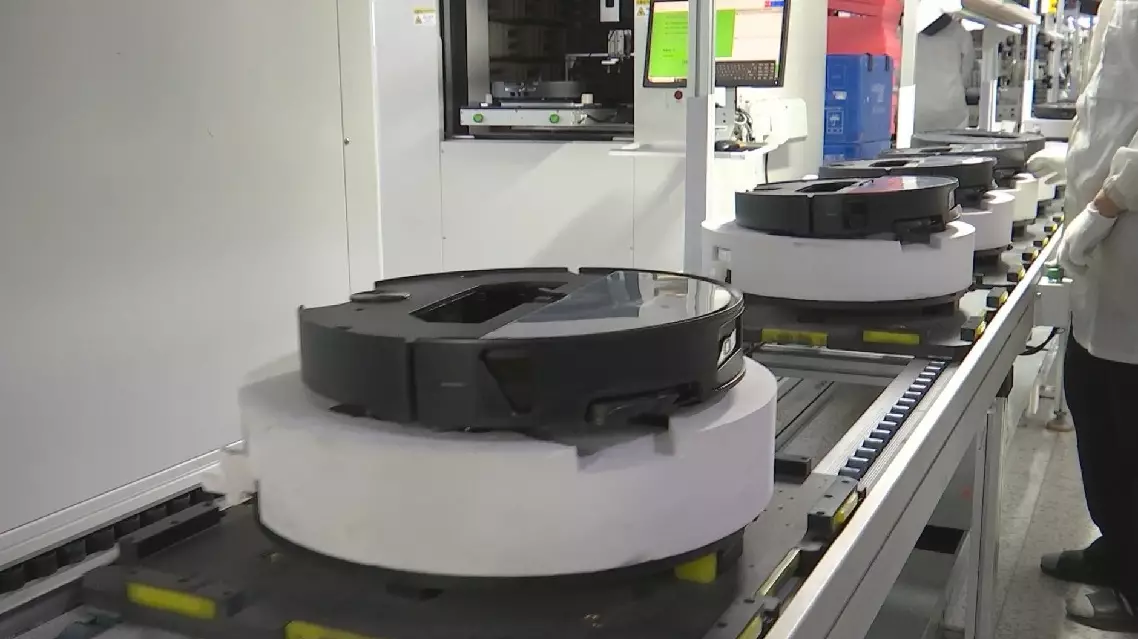
At a robot vacuum cleaner manufacturing plant in Huizhou, south China's Guangdong Province, workers were seen stepping up production of newly launched models that recently debuted at the Consumer Electronics Show in the United States, which concluded Friday in Las Vegas, Nevada.

The factory adjusted its production lines as early as December 2025 and stocked inventory in advance for overseas markets to ensure that new products could be delivered to global consumers at the earliest possible time.

"In 2025, Roborock's global shipments exceeded 7.2 million units. Since 2024, overseas revenue has accounted for more than 50 percent of our total revenue. Our products have now been sold to more than 170 countries and regions, serving more than 20 million households worldwide," said Quan Gang, president of Roborock.

At another robot vacuum cleaner manufacturing facility in Dongguan, Guangdong, rising overseas orders have prompted the company to upgrade its production lines with intelligent technologies to further boost capacity. The factory is currently operating at full load to meet a growing demand.

"For 2026, we have already obtained overseas orders worth at least 300 million to 400 million yuan (around 43 million to 57.3 million U.S. dollars). In addition, we've engaged in strategic cooperation with European home appliance group Cebos Group, and our total confirmed orders have exceeded 600 million yuan (around 86 million U.S. dollars)," said Zhang Junbin, founder and CEO of Narwal Robotics.

Chinese robot vacuum brands gain strong global traction

Chinese robot vacuum brands gain strong global traction

Recommended Articles