Chinese President Xi Jinping held talks with Brazilian President Luiz Inacio Lula da Silva, who is on a state visit to China, in Beijing on Tuesday.
Facing a volatile and turbulent world, China and Brazil should uphold their aspiration of shouldering responsibilities for human progress and global development, Xi said, calling on the two countries to advance the building of China-Brazil community with a shared future, deepen the synergy of development strategies, and jointly drive enhanced solidarity and coordination among Global South countries.
Xi called for further strategic mutual trust between China and Brazil in consolidating the foundation of bilateral community with a shared future, noting that the two countries should uphold the fine tradition of mutual respect and mutual benefit, support each other on issues concerning their core interests and major concerns, strengthen exchanges at various levels and in various aspects, and ensure the long-term, healthy and stable development of bilateral relations.
Xi called for expansion of bilateral cooperation to enrich the China-Brazil community with a shared future, urging efforts to deepen effective alignment of the Belt and Road Initiative with Brazil's development strategy, give play to the role of various cooperation mechanisms between the two countries, strengthen cooperation in traditional fields such as infrastructure, agriculture and energy, expand new areas of cooperation including energy transition, aerospace, digital economy and artificial intelligence, and create more highlights for practical cooperation.
Xi called for more people-to-people exchanges for enhancing the vitality of the China-Brazil community with a shared future, noting that the 2026 China-Brazil Year of Culture should be an opportunity for the two sides to boost cooperation in culture, education, tourism, media and at the subnational level, and provide more facilitation for travel between the two countries.
Xi called for sticking to multilateral coordination so as to enhance the strength of the China-Brazil community with a shared future, saying that the two sides should step up coordination and collaboration in multilateral mechanisms including the United Nations, BRICS and the China-CELAC (Community of Latin American and Caribbean States) Forum, jointly uphold multilateralism, improve global governance, maintain international economic and trade order, and unequivocally oppose unilateralism, protectionism, and bullying.
For his part, Lula said the Brazil-China relationship is unbreakable and will not be disrupted by any external factor.
Lula said Brazil stands ready to deepen strategic cooperation with China, promote the building of Brazil-China community with a shared future, and help build a more just, peaceful and prosperous world.
Brazil is willing to align its development strategy with the Belt and Road Initiative, and deepen cooperation between the two countries in areas such as economy and trade, infrastructure, aerospace and finance, while expanding exchanges in youth and culture and improving bilateral friendship, said Lula.
He said it is of vital importance to safeguard multilateralism under the current circumstances, noting that Brazil is ready to work with China to strengthen strategic coordination in international affairs, jointly protect common interests of the Global South, and uphold international fairness and justice.
The two presidents also exchanged views on the Ukraine crisis. They agreed that China and Brazil, as a peace-loving progressive force, should enhance communication and coordination, give full play to the role of the Group of Friends for Peace, support Russia and Ukraine in initiating direct dialogue, and work with other countries in the Global South to continue playing a constructive role in resolving the crisis.
After their talks, the two presidents witnessed the signing of 20 cooperation documents covering the fields of development strategy alignment, science and technology, agriculture, digital economy, finance, inspection and quarantine, and media.
They also jointly met the press.
The two sides issued a joint statement on strengthening the building of a China-Brazil community with a shared future for a more just world and a more sustainable planet and jointly upholding multilateralism, and a joint statement on the Ukraine crisis.
President Xi and his wife Peng Liyuan hosted a welcoming banquet for President Lula and his wife Rosangela Lula da Silva Tuesday evening.
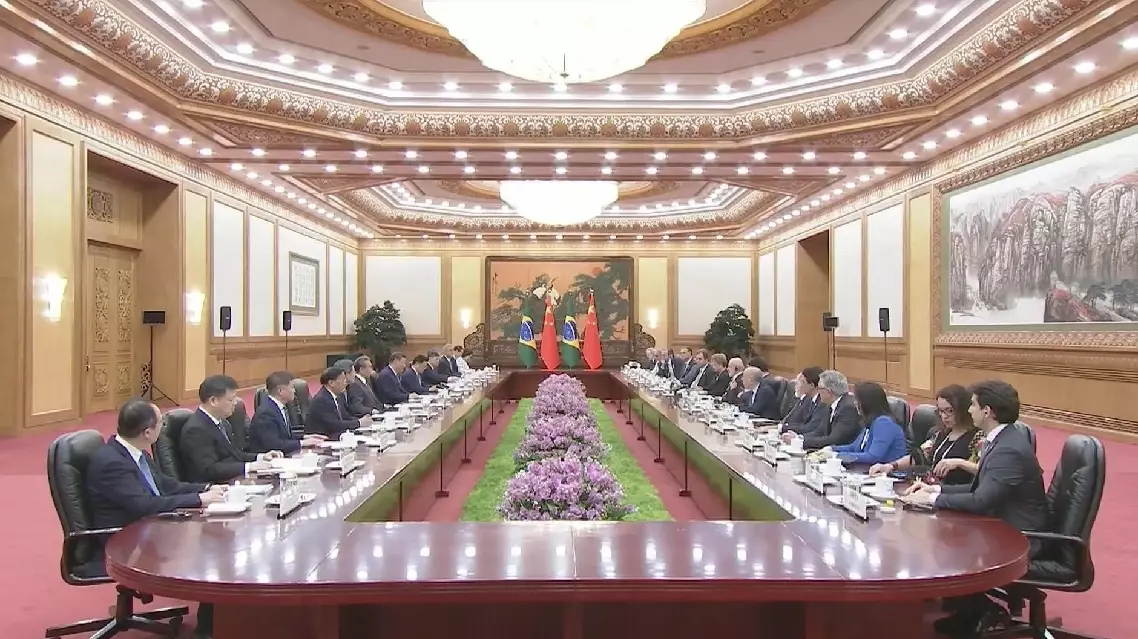
Xi holds talks with Brazilian president in Beijing
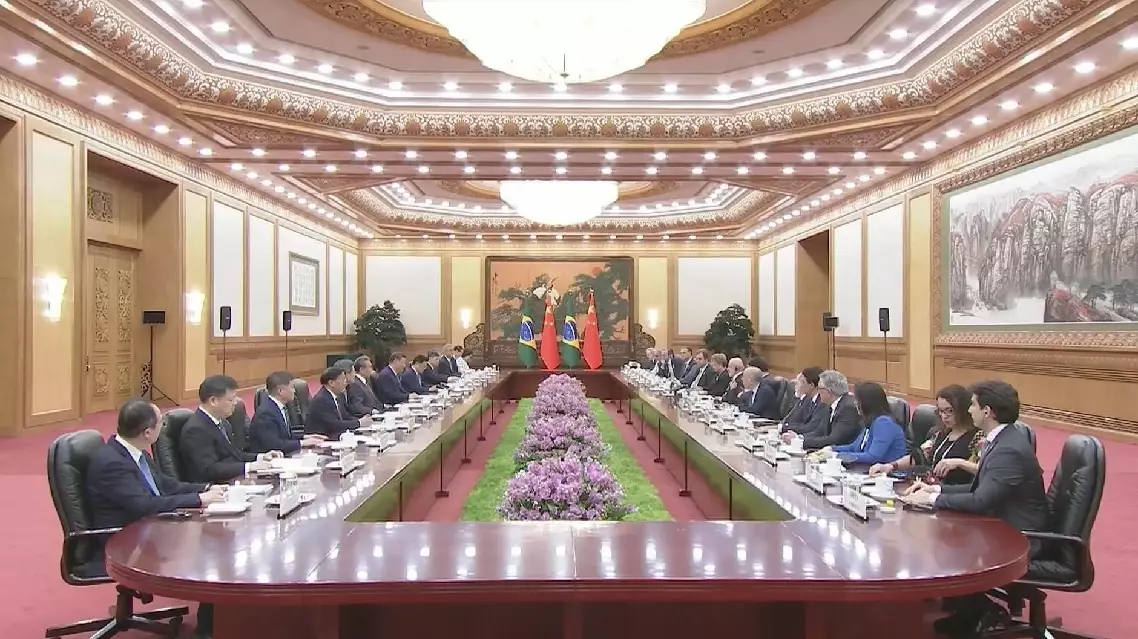
Xi holds talks with Brazilian president
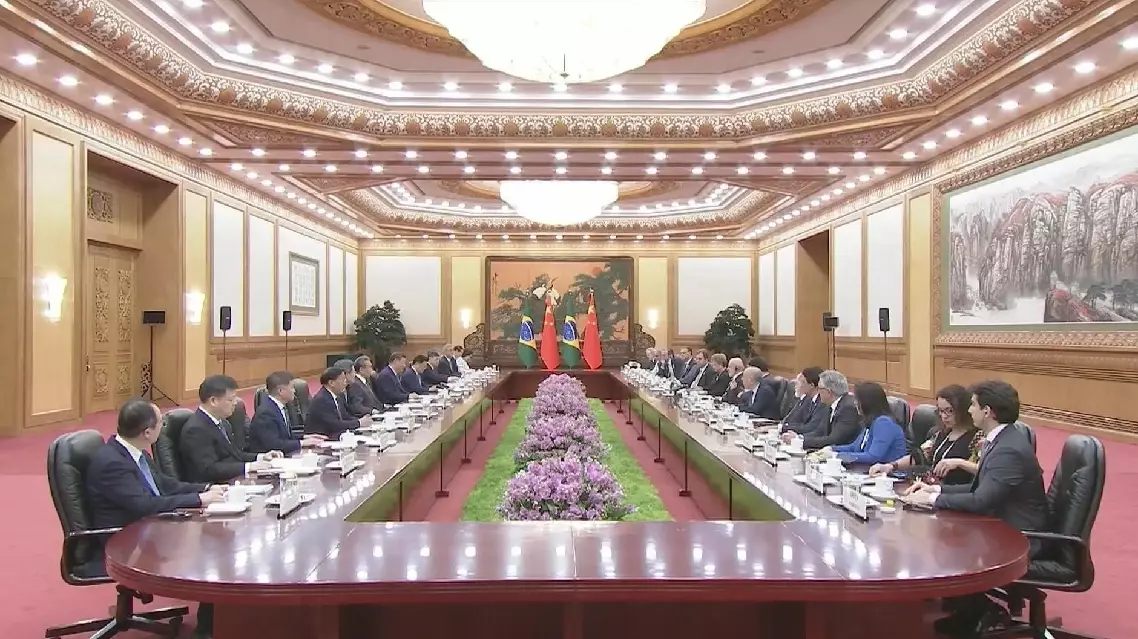
Xi holds talks with Brazilian president