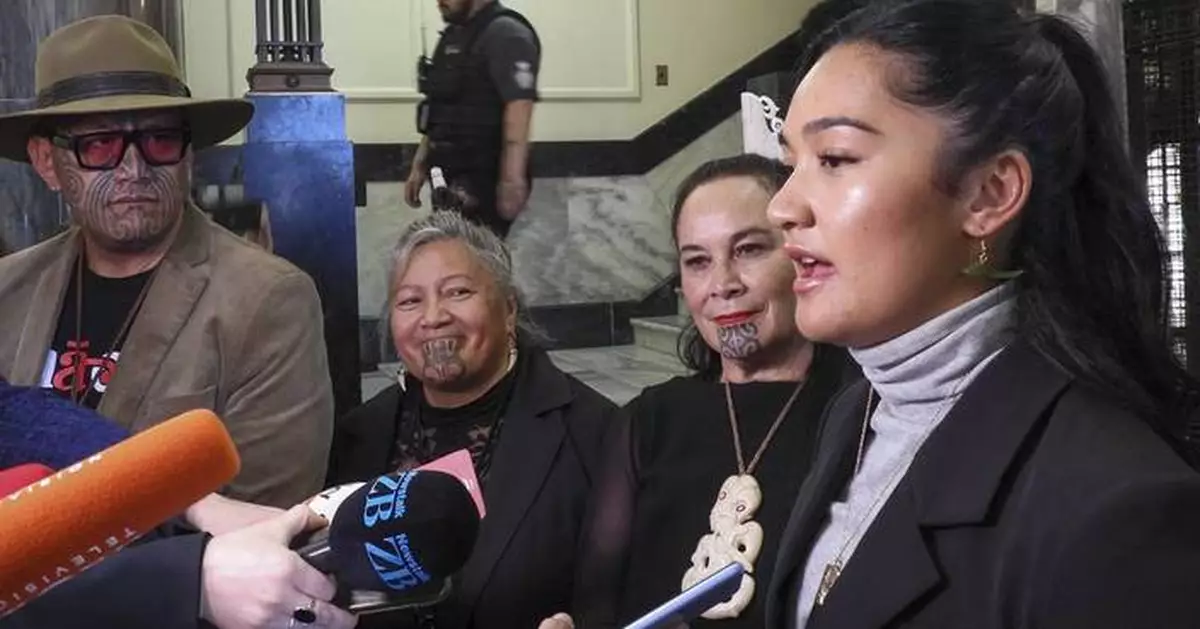
WELLINGTON, New Zealand (AP) — A New Zealand parliamentary committee has recommended the unprecedented suspensions of three Māori lawmakers for performing a protest haka in the debating chamber last year.
The haka is a chanting dance of challenge of great cultural importance in New Zealand, and the three lawmakers from Te Pāti Māori, the Māori party, performed one to oppose a controversial bill that would have redefined the country’s founding document.
A committee Wednesday recommended record suspensions and severe censure — the harshest penalties ever assigned to New Zealand parliamentarians — after finding the trio in contempt of Parliament.
Government bloc lawmakers, who hold the majority, are expected to endorse the penalties in a vote Tuesday. But Parliament’s Speaker Gerry Brownlee took the unusual step Thursday of saying he would first allow unlimited debate before the vote due to the severity of the proposed punishments.
The recommendations were the latest twist in the fraught saga over the bill, now defeated, that opponents said would have provoked constitutional havoc and reversed decades of progress for Māori, New Zealand’s Indigenous people.
Video of the legislators in full cry drew global attention last November. The bill they opposed was vanquished at a second vote in April.
However, some lawmakers from the center-right government objected to the Māori Party legislators’ protest during the first vote and complained to parliament’s speaker. At issue was the way the trio walked across the floor of the debating chamber towards their opponents while they performed the haka.
“It is not acceptable to physically approach another member on the floor of the debating chamber,” Wednesday’s report said, adding that the behavior could be considered intimidating. The committee denied the legislators were being punished for the haka, which is a beloved and sacred cultural institution in New Zealand life, but “the time at and manner in which it was performed” during a vote, according to the findings.
The committee deciding the fate of the lawmakers has members from all political parties. The government’s opponents disagreed with parts or all of the decision but were overruled.
“This was a very serious incident, and the likes of which I have never seen before in my 23 years in the debating chamber,” said the committee's chair, Judith Collins.
The three legislators didn’t appear before the committee when summoned in April because they said Parliament doesn’t respect Māori cultural protocol and they wouldn’t get a fair hearing.
“The process was grossly unjust, unfair, and unwarranted, resulting in an extreme sanction,” Māori party spokesperson and lawmaker Mariameno Kapa-Kingi said in a statement. “This was not about process, this became personal.”
The report recommended that Hana-Rāwhiti Maipi-Clarke, who at 22 is New Zealand’s youngest lawmaker, be suspended from Parliament for seven days. The co-leaders of her political party, Rawiri Waititi and Debbie Ngarewa-Packer, face 21-day bans.
Three days is the longest a lawmaker has been barred from the House before. Suspended legislators are not paid during their bans.
Waititi and Ngarewa-Packer, the leaders of the party that advocates Māori rights and holds six of Parliament’s 123 seats, have lambasted the committee’s process as intolerant of Māori principles and identity.
The pair received more severe sanctions than Maipi-Clarke because the younger lawmaker had written a letter of “contrition” to the committee, the report said.
The Principles of the Treaty of Waitangi Bill sought to redefine New Zealand’s founding document, the 1840 pact between the British Crown and Māori leaders signed during New Zealand’s colonization.
The English and Māori language versions of the treaty differed, and the Crown immediately began to breach both, resulting in mass land thefts and generations of disenfranchisement for Māori, who remain disadvantaged on almost every metric. But in recent decades, Māori protest movements have wrought growing recognition of the Treaty’s promises in New Zealand’s law, politics and public life.
That produced billion-dollar land settlements with tribes and strategies to advance Indigenous language and culture. Such policies were the target of the bill, drawn up by a minor libertarian party who denounced what they said was special treatment for Māori as they tried to rewrite the treaty's promises.

FILE - A protester against the Treaty Principles Bill sits outside Parliament in Wellington, New Zealand, Thursday, Nov. 14, 2024. (AP Photo/Charlotte Graham-McLay, File)

FILE -Hana-Rāwhiti Maipi-Clarke speaks to the thousands of people gathered outside New Zealand's parliament to protest a proposed law that would redefine the country's founding agreement between Indigenous Māori and the British Crown, in Wellington, Nov. 19, 2024. (AP Photo/Mark Tantrum, File)
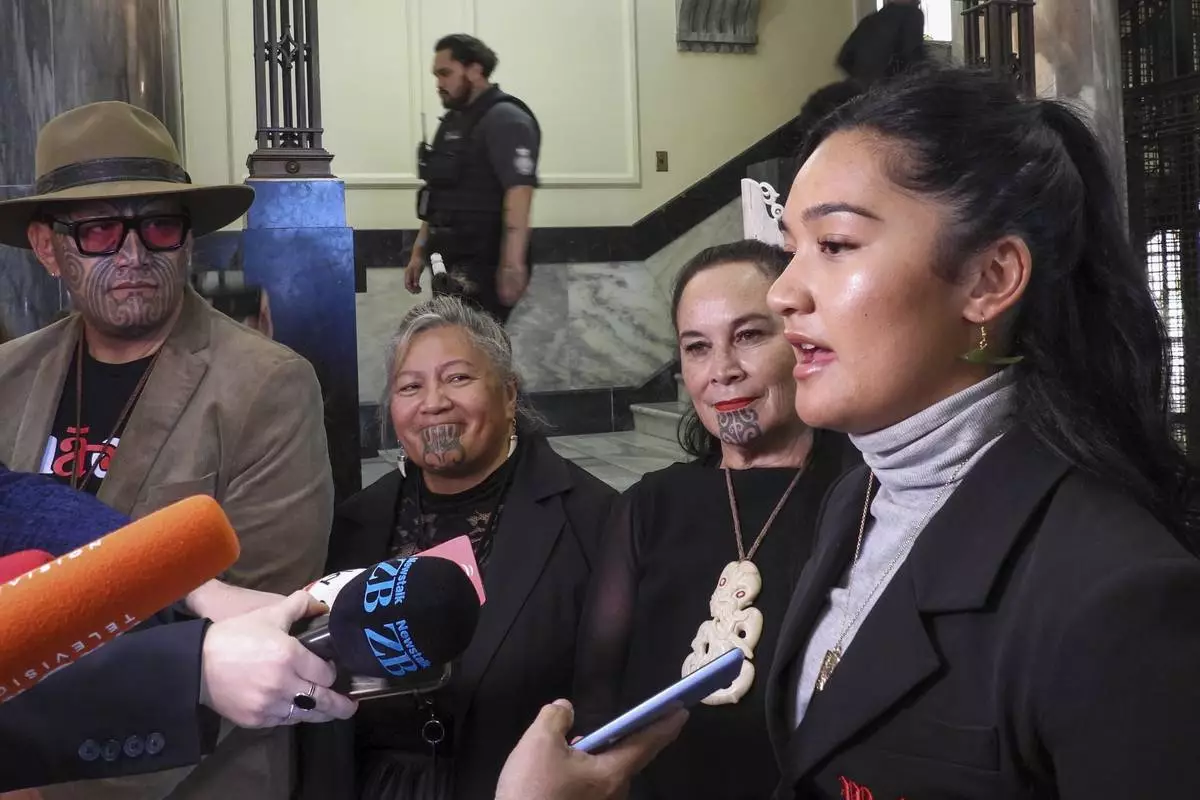
FILE -Hana-Rawhiti Maipi-Clarke, right, and her colleagues from Te Pāti Māori, talk to reporters following a protest inside Parliament in Wellington, New Zealand, Thursday, Nov. 14, 2024. (AP Photo/Charlotte Graham-McLay, File)
NEW YORK (AP) — Kamala Harris “wrote off rural America" during the 2024 presidential campaign and failed to attack Donald Trump with sufficient “negative firepower," according to a long-awaited post-election autopsy released on Thursday by the Democratic National Committee.
The committee's chair, Ken Martin, shared the 192-page report only after facing intense internal pressure from frustrated Democratic operatives concerned with his leadership. Martin had originally promised to release the autopsy, only to keep it under wraps for months because he was concerned it would be a distraction ahead of the midterms as Democrats mobilize to take back control of Congress.
On Tuesday, Martin apologized for his handling of the situation and conceded that the report was withheld because it “was not ready for primetime."
Although the autopsy criticizes Democrats' focus on “identity politics,” it sidesteps some of the most controversial elements of the 2024 campaign. The report does not address former President Joe Biden’s decision to seek reelection, the rushed selection of Harris to replace him on the ticket or the party's acrimonious divide over the war in Gaza.
“I am not proud of this product; it does not meet my standards, and it won’t meet your standards,” Martin wrote in an essay on Substack on Thursday. “I don’t endorse what’s in this report, or what’s left out of it. I could not in good faith put the DNC’s stamp of approval on it. But transparency is paramount.”
A spokesperson for Harris did not immediately respond to a request for comment.
The initial reaction from Democratic operatives was a mix of bafflement and anger over Martin's handling of the situation.
“Why not say this in 2024, or bring in more people to finish it, instead of turning this into the dumbest media cycle for 7-8 months?” Democratic strategist Steve Schale wrote on social media.
The postelection report, which was authored by Democratic consultant Paul Rivera, calls for “a renewed focus on the voters of Middle America and the South, who have come to believe they are not included in the Democratic vision of a stronger and more dynamic America for everyone.”
“Millions of Americans are suffering from poor access to healthcare, manufacturing and job losses, and a failing infrastructure, yet continue to be persuaded to vote against their best interests because they do not see themselves reflected in the America of the Democratic Party,” the report says.
The autopsy points to a reduction in support and training for Democratic state parties, voter registration shifts and “a persistent inability or unwillingness to listen to all voters.”
Thursday's release comes as Martin confronts a crisis of confidence among party officials who are increasingly concerned about the health of their political machine barely a year into his term. Some Democratic operatives have had informal discussions about recruiting a new chair, even though most believe that Martin’s job wasn't in serious jeopardy ahead of the midterm elections.
The report found that Harris and her allies failed to focus enough on Trump's negatives, especially his felony convictions. This was part of a broader criticism that Democrats' messaging is too focused on reason and winning arguments, “even in cycles when the electorate is defined by rage.”
“There was a decision in the 2024 Democratic leadership not to engage in negative advertising at the scale required,” the report states. “The Trump campaign and supportive Super PACs went full throttle against Vice President Harris, but there was not sufficient or similar negative firepower directed at Trump by Democrats.”
The report continues: “It was essential to prosecute a more effective case as to why Trump should have been disqualified from ever again taking office. The grounds were there, but the messaging did not make the case.”
Trump's attack on Harris' transgender policies were cited as a key contrast.
Specifically, the report suggested the Democratic nominee was “boxed” in by the Trump campaign's “very effective” ad that highlighted Harris' previous statement of support for taxpayer-funded gender-affirming surgeries for prison inmates.
Democratic pollsters believed that “if the Vice President would not change her position – and she did not – then there was nothing which would have worked as a response," the report said.
The report criticized Harris' outreach to key segments of America while condemning the party's focus on “identity politics.”
“Harris wrote off rural America, assuming urban/suburban margins would compensate. The math doesn’t work,” the report says. “You can’t lose rural areas by overwhelming margins and make it up elsewhere when rural voters are a significant share of the electorate. If Democrats are to reclaim leadership in the Heartland or the South, candidates must perform well in rural turf. Show up, listen, and then do it again.”
The report also references Democrats' underperformance with male voters of color.
“Male voters require direct engagement. The gender gap can be narrowed. Deploy male messengers, address economic concerns, and don’t assume identity politics will hold male voters of color,” it says.

President Donald Trump speaks during an event about loosening a federal refrigerant rule, in the Oval Office at the White House, Thursday, May 21, 2026, in Washington. (AP Photo/Jacquelyn Martin)

Former Vice President Kamala Harris speaks during a fireside chat on Thursday, May 7, 2026, in Las Vegas. (AP Photo/Ty ONeil)
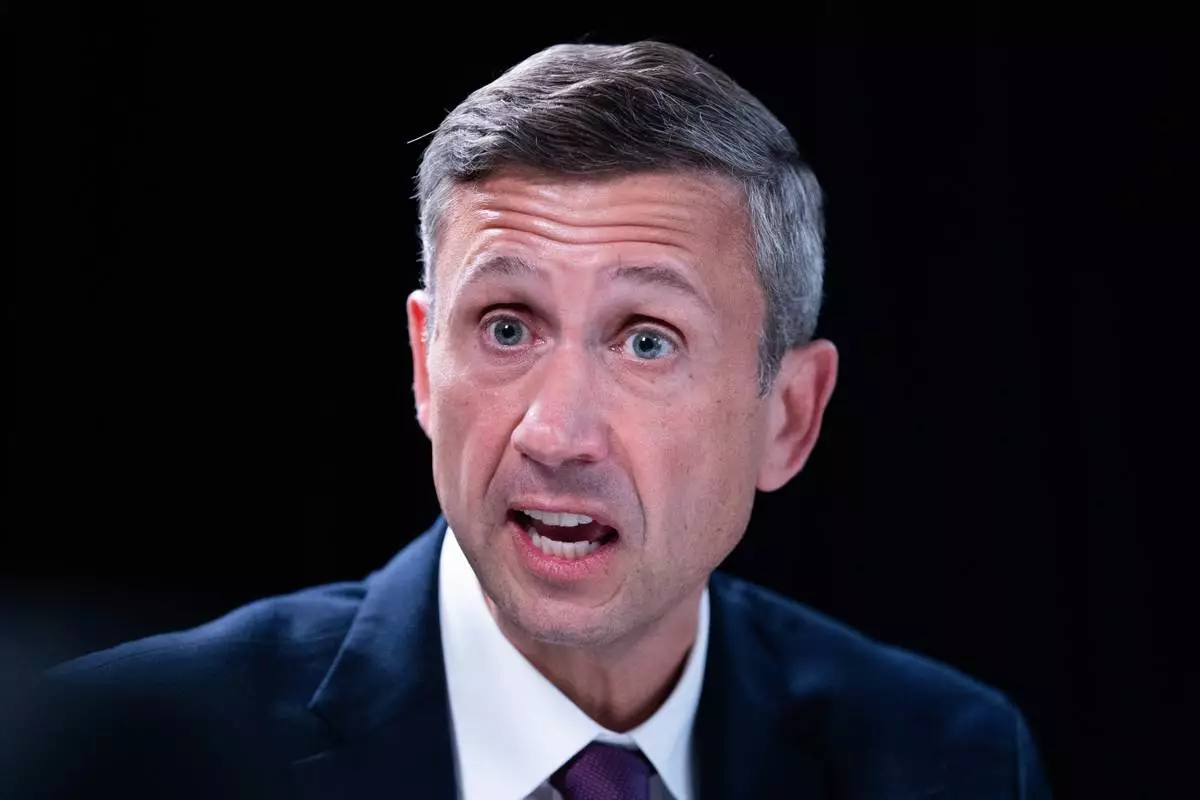
FILE - Democratic National Committee chair Ken Martin speaks during an interview with The Associated Press at DNC headquarters, Jan. 12, 2026, in Washington. (AP Photo/Allison Robbert, File)