WASHINGTON (AP) — A new humanitarian organization that has U.S. backing to take over aid delivery to starving civilians in Gaza said Wednesday that it expects to begin operations before the end of the month — after what it describes as key agreements from Israeli officials.
A statement from the group, called the Gaza Humanitarian Foundation, identified several U.S. military veterans, former humanitarian coordinators and security contractors that it said would lead the delivery effort. Many in the aid community believe it is meant to supplant the distribution system now run by the U.N. and other international aid agencies.
The foundation failed to address much of the criticism and unanswered questions that the international community has about the group, including who would fund the work and how much involvement the U.S., Israel or any other government or military would have in controlling life-saving aid for Palestinian civilians.
In an interview Wednesday with The Associated Press, Tom Fletcher, the U.N. humanitarian chief, said the U.S.-backed proposal is “far from being able to meet” the conditions of humanitarian law.
“That’s why we need to stick to the better plan, our plan A, which is just let us in. We can make sure this aid doesn’t get anywhere near Hamas,” Fletcher said, referencing Israeli accusations that the militant group is diverting supplies. “We have our procedures. We care more than anyone about making sure that it gets to the children and civilians and women who need it most.”
Israel has blocked food, fuel, medicine and all other supplies from entering Gaza for weeks, worsening a humanitarian crisis for 2.3 million Palestinians. Israel says the blockade aims to pressure Hamas to release the hostages it still holds and that it won’t allow aid back in until a system is in place that gives it control over distribution.
The U.N. and many aid groups have rejected Israel’s efforts to control aid distribution, saying it would be all but impossible for a new startup group to meet the humanitarian needs of Gaza civilians after 19 months of food shortages and war.
Aid groups say they also fear the attempt would violate humanitarian principles of operating independently with neutrality and impartiality.
In Wednesday's statement, foundation executive director Jake Wood, a U.S. military veteran and co-founder of an existing disaster relief group called Team Rubicon, said the commitment to starting operations within weeks follows discussions with Israeli officials.
Wood indicated Israelis had agreed to allow the foundation to deliver aid through existing systems in Gaza temporarily while the group builds new distribution sites that Israel has demanded for aid.
Israelis also have agreed to allow more sites to be constructed to allow aid distribution in all of Gaza, and look for ways to get aid to those too malnourished, maimed by fighting, too old or too young to travel long distances to one of the aid sides, the foundation's statement said.
The foundation was in the “final stages” of gathering enough aid to serve 300 million meals in the first 90 days of operation, Wood wrote.
Israel’s mission to the United Nations didn’t immediately respond to messages seeking comment about the foundation’s statement.
Amiri reported from the United Nations.
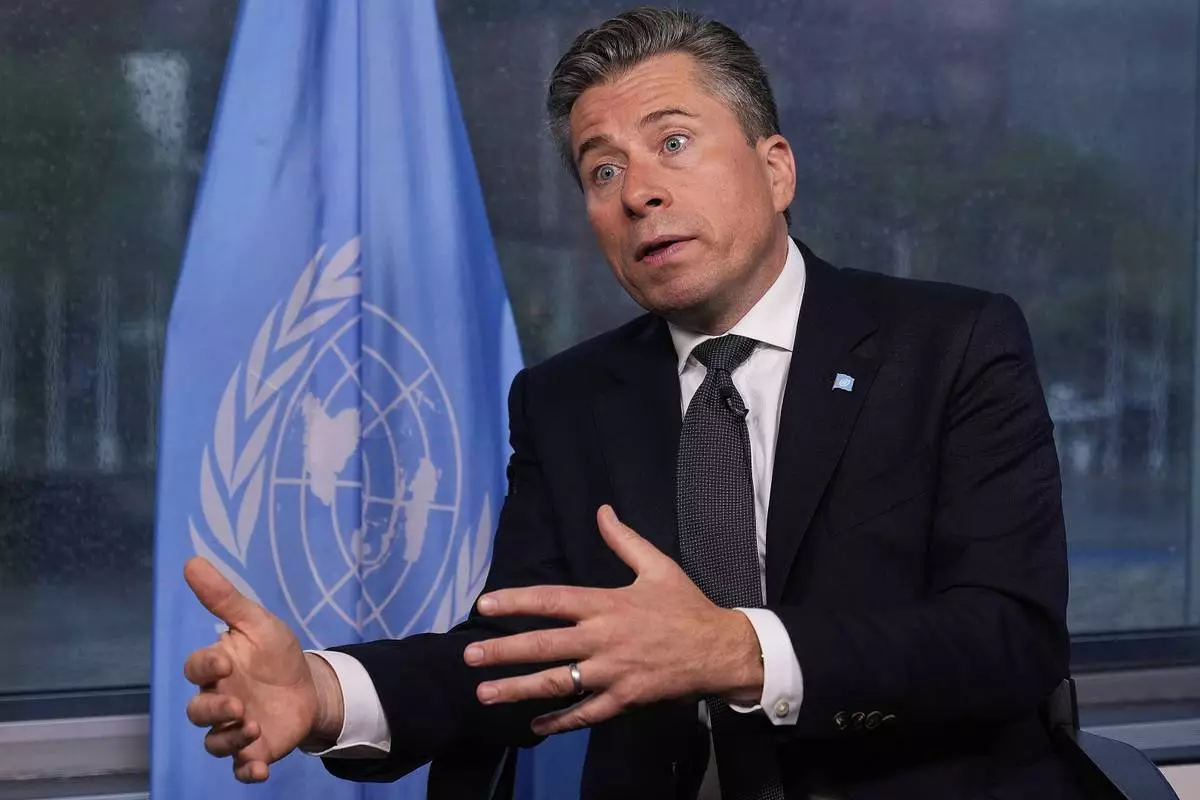
U.N. humanitarian chief Tom Fletcher responds to questions during an interview at United Nations headquarters, Wednesday, May 14, 2025. (AP Photo/Richard Drew)
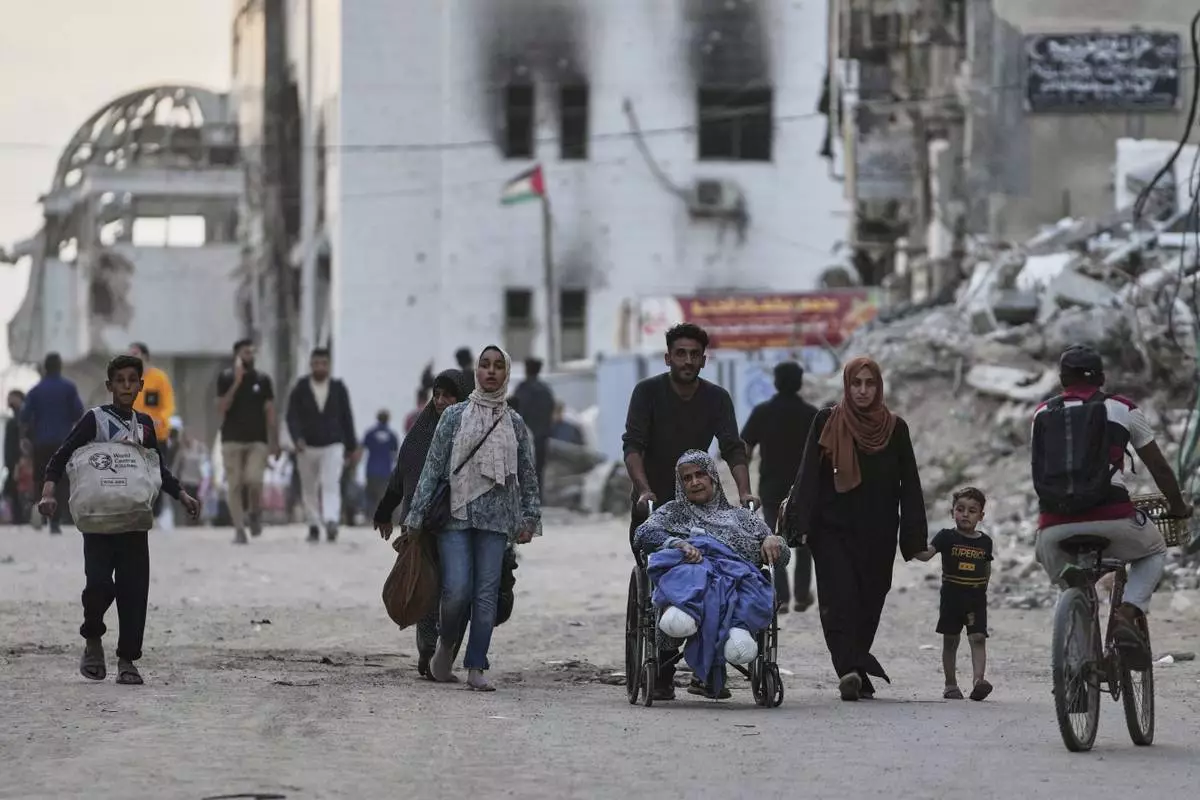
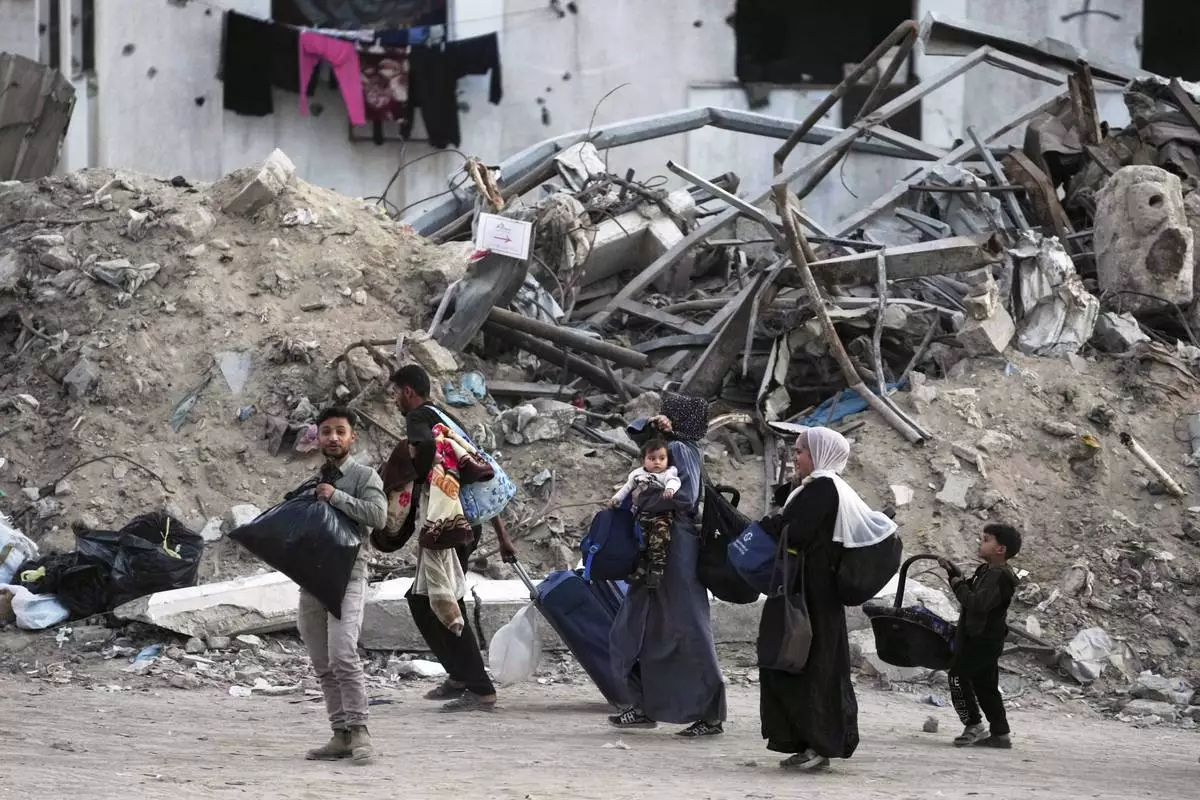
Palestinians evacuate after the Israeli army issued an evacuation warning for several schools and a hospital in Gaza City's Rimal neighborhood, Wednesday, May 14, 2025. (AP Photo/Jehad Alshrafi)

CARACAS, Venezuela (AP) — Venezuela’s government accused the United States of attacking civilian and military installations in multiple states after at least seven explosions and low-flying aircraft were heard around 2 a.m. local time Saturday in the capital, Caracas.
The Pentagon and White House did not immediately respond to requests for comment.
Smoke could be seen rising from the hangar of a military base in Caracas. Another military installation in the capital was without power.
People in various neighborhoods rushed to the streets. Some could be seen in the distance from various areas of Caracas.
“The whole ground shook. This is horrible. We heard explosions and planes,” said Carmen Hidalgo, a 21-year-old office worker, her voice trembling. She was walking briskly with two relatives, returning from a birthday party. “We felt like the air was hitting us.”
Venezuela’s government, in the statement, called on its supporters to take to the streets.
“People to the streets!” the statement said. “The Bolivarian Government calls on all social and political forces in the country to activate mobilization plans and repudiate this imperialist attack.”
The statement added that President Nicolás Maduro had “ordered all national defense plans to be implemented” and declared “a state of external disturbance.”
This comes as the U.S. military has been targeting, in recent days, alleged drug-smuggling boats. On Friday, Venezuela said it was open to negotiating an agreement with the U.S. to combat drug trafficking.
Maduro also said in a pretaped interview aired Thursday that the U.S. wants to force a government change in Venezuela and gain access to its vast oil reserves through the monthslong pressure campaign that began with a massive military deployment to the Caribbean Sea in August.
Maduro has been charged with narco-terrorism in the U.S. The CIA was behind a drone strike last week at a docking area believed to have been used by Venezuelan drug cartels in what was the first known direct operation on Venezuelan soil since the U.S. began strikes on boats in September.
U.S. President Donald Trump for months had threatened that he could soon order strikes on targets on Venezuelan land. The U.S. has also seized sanctioned oil tankers off the coast of Venezuela, and Trump ordered a blockade of others in a move that seemed designed to put a tighter chokehold on the South American country’s economy.
The U.S. military has been attacking boats in the Caribbean Sea and the eastern Pacific Ocean since early September. As of Friday, the number of known boat strikes is 35 and the number of people killed is at least 115, according to numbers announced by the Trump administration.
They followed a major buildup of American forces in the waters off South America, including the arrival in November of the nation’s most advanced aircraft carrier, which added thousands more troops to what was already the largest military presence in the region in generations.
Trump has justified the boat strikes as a necessary escalation to stem the flow of drugs into the U.S. and asserted that the U.S. is engaged in an “armed conflict” with drug cartels.
Meanwhile, Iranian state television reported on the explosions in Caracas on Saturday, showing images of the Venezuelan capital. Iran has been close to Venezuela for years, in part due to their shared enmity of the U.S.
Pedestrians walk past the Miraflores presidential palace after explosions and low-flying aircraft were heard in Caracas, Venezuela, Saturday, Jan. 3, 2026. (AP Photo/Cristian Hernandez)
Residents evacuate a building near the Miraflores presidential palace after explosions and low-flying aircraft were heard in Caracas, Venezuela, Saturday, Jan. 3, 2026. (AP Photo/Cristian Hernandez)
Smoke raises at La Carlota airport after explosions and low-flying aircraft were heard in Caracas, Venezuela, Saturday, Jan. 3, 2026. (AP Photo/Matias Delacroix)
Pedestrians run after explosions and low-flying aircraft were heard in Caracas, Venezuela, Saturday, Jan. 3, 2026. (AP Photo/Matias Delacroix)
Smoke raises at La Carlota airport after explosions and low-flying aircraft were heard in Caracas, Venezuela, Saturday, Jan. 3, 2026. (AP Photo/Matias Delacroix)
Pedestrians run after explosions and low-flying aircraft were heard in Caracas, Venezuela, Saturday, Jan. 3, 2026. (AP Photo/Matias Delacroix)