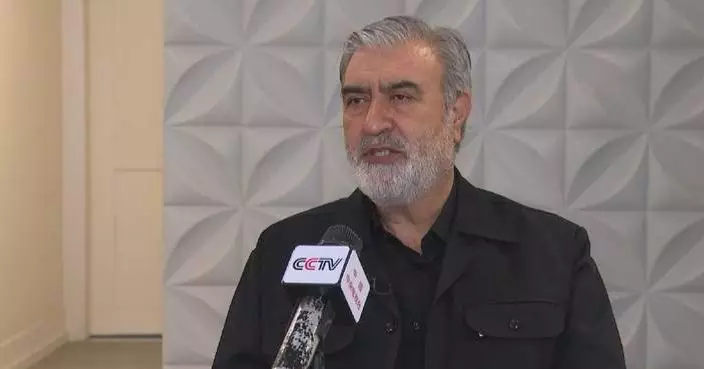
Latin America and the Caribbean (LAC) countries' strengthened collaboration with China is pivotal in bridging development gaps and tackling structural challenges such as industrial upgrading, a Brazilian expert told China Global Television Network (CGTN) on Wednesday.
Evandro Menezes de Carvalho, widely known by his Chinese name Gao Wenyong, is a professor of International Law and head of the Center for Brazil-China Studies at Getulio Vargas Foundation School of Law. He is also a professor at Fluminense Federal University School of Law.
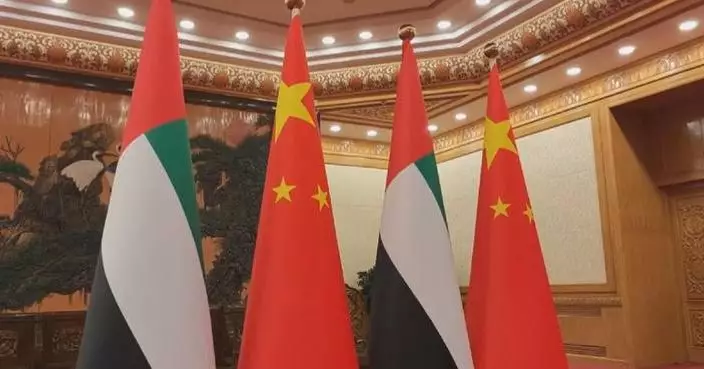
He shared his remarks following the announcement of five major programs aimed at advancing China’s shared development and revitalization with LAC countries. The announcement took place at the Fourth Ministerial Meeting of the China-CELAC Forum in Beijing on Tuesday.
During the forum's opening ceremony, Chinese President Xi Jinping announced the launch of the five major programs on solidarity, development and civilization to peace and people-to-people connectivity.
According to Carvalho, the expanding cooperation between LAC countries and China in areas such as technology, culture, and people-to-people exchanges will help LAC countries address their structural challenges, innovation and industrial upgrading.
"First, the science and technology partnerships such as clean energy, 5G, digital economy, artificial intelligence. So, all this presents a crucial opportunity for Latin America to bridge its development gap. Many countries in the region face structural challenges, innovation and industrial upgrading. We know this. But China's experience in this leap-frogging through technology and its willingness to share knowledge and investment in these sectors could be very transformative," he said.
The professor also highlighted the importance of cultural and people-to-people exchanges, citing initiatives such as annual study scholarships.
"And I mention cultural and people-to-people exchange, such as the offer of 3,500 scholarships annually. And this kind of, you know, initiatives play a long-term strategic role. These programs help form a generation of Latin American professionals who can better understand China, its language, culture and institutions. This is essential to overcome misunderstanding, fostering trust and ensuring that cooperation is not only transactional but deeply rooted in mutual comprehension and respect," Carvalho said.
During the five-day state visit of Brazilian President Luiz Inacio Lula da Silva, which ended on Wednesday, 20 cooperation agreements were signed covering various fields, including technology, agriculture, digital economy, finance, inspection and quarantine, and media. This visit marked Lula’s sixth trip to China and his second visit since 2023.
Regarding Lula's visit, Carvalho hailed China as an important and trustworthy partner, emphasizing that this is the fundamental reason behind Brazil’s pursuit of deeper cooperation with China.
"One of these outcomes of President Lula's visit to China is the advancement of cooperation science and technology in the digital economy. Of course, we know that there are a lot of space to develop these cooperations. And these are strategic sectors for Brazil's development and China has proven to be a global leader in both cooperation in science and technology and also digital economy. A partnership in these sectors in artificial intelligence, 5G infrastructure, digital platforms can help reduce Brazil's technological dependency on western countries and diversify its innovation ecosystem. And equally important, is, if I can mention here, the strengthening of agricultural cooperation. Of course, not only in terms of trade, where China remains Brazil's largest market, but also in areas such as sustainable agriculture and food security. And also particularly interesting is the agreement and cooperation on media issues. Media cooperation in an era marked by misinformation and competing narratives, dialogue between Brazilian and Chinese media institutions can contribute to a more balanced flow of information and promote mutual understanding between societies," Carvalho said.

Expert highlights China-LAC cooperation in addressing regional challenges