Recent exchanges between Indian and Pakistani troops along the Line of Control (LoC) have disrupted the lives of local residents in Kashmir, a region already struggling with poverty and uncertainty.
Pakistan and India announced on May 10 that they agreed on an immediate ceasefire. However, both sides have repeatedly condemned each other for violating the agreement.
For the people who live in the region, long-term peace is still a distant dream, and many still fear for their safety.
"Whenever there is shelling, or India fires missiles or bombs, we remain inside our homes. Some people have built bunkers. If there is space, we take our children in those bunkers. Life and death is in Allah's hands," said Muhammad Rafi Awan, a resident from Chakothi, a frontline village in Pakistan-administered Kashmir.
In Chinari, just a few kilometers from the LoC, families are still recovering from the fear, loss, and uncertainty that war leaves behind. Tourism, a lifeline in these remote valleys, has collapsed, and shops that once catered to visitors now struggle for survival.
"Everything stopped. No tourists, no business. We just open our shops and sit, hoping for peace, but ready to run to the bunker if things go wrong again," said shopkeeper Tariq Mahmood.
The fear is visible, etched into the faces of children and carved into the bunkers dug next to homes. Locals have poured what little they have into building shelters, leaving little for the building of their futures.
About 15 kilometers from the Line of Control, Muhammad Naseer Awan has given shelter to those whose homes were targeted by Indian forces.
"I have given shelter to over 100 people in my house. I am happy to host them, but this is no way to live. I appeal to the international community to resolve the Kashmir dispute, because it is only the Kashmiris that are suffering. Give us our own state and freedom," he said.
Meanwhile, residents of Poonch District in Indian-controlled Kashmir remained fearful after cross-border shelling.
"This area is no longer safe. I have never seen anything like this before. The way our area was targeted by mortar shells shows it is not a place worth living in. Similar incidents could happen again," said resident Paramjeet Singh.
The atmosphere remains somber at the home of Mohammad Akaram, who died when a mortar shell exploded outside his single-story house in the Sukka Katha area, and his family of seven is still receiving visitors offering condolences since the tragedy occurred.
"There is no one to look after his family now. He was the sole breadwinner. He leaves behind four daughters and two sons. The Government of India and Jammu and Kashmir should take care of them, because none of us can as we all come from poor families," said Mohammad Bashir, brother of Mohammad Akaram.
In the nearby neighborhood, Mohammad Tariq narrowly survived when mortar shells hit his kitchen garden, just meters from his home. However, his house was left in ruins, and he and his family now live in constant fear.
"My request to Prime Minister Modi is to put an end to this conflict. It is the poor who suffer the most. The solution lies in talks with the Pakistanis," he said.
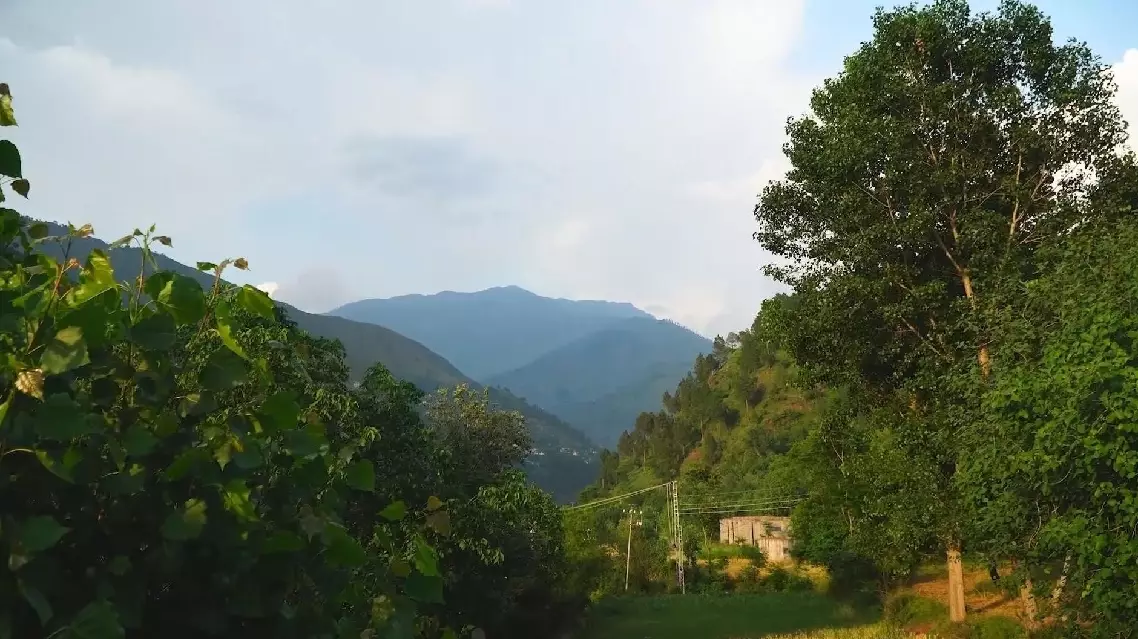
Kashmir residents yearn for lasting peace amid fragile ceasefire deal