Wang Huning, chairman of the National Committee of the Chinese People's Political Consultative Conference (CPPCC), met with President of the Chamber of Deputies of Mexico Sergio Gutiérrez Luna in Beijing on Tuesday.
Wang said China is willing to work with Mexico to actively implement the important consensus reached by the two heads of state, deepen practical cooperation, enhance people-to-people and cultural exchanges, jointly safeguard multilateralism, and promote the China-Mexico comprehensive strategic partnership to new heights.
The National Committee of CPPCC is ready to make contributions to promoting the development of bilateral relations, Wang added.
Sergio Gutiérrez said Mexico is willing to strengthen cooperation with China in areas such as trade, science and technology, education and cadre training, and jointly safeguard multilateralism.
The Chamber of Deputies of Mexico is willing to enhance friendly exchanges with the National Committee of the CPPCC and promote the continuous development of the comprehensive strategic partnership between the two countries, he said.
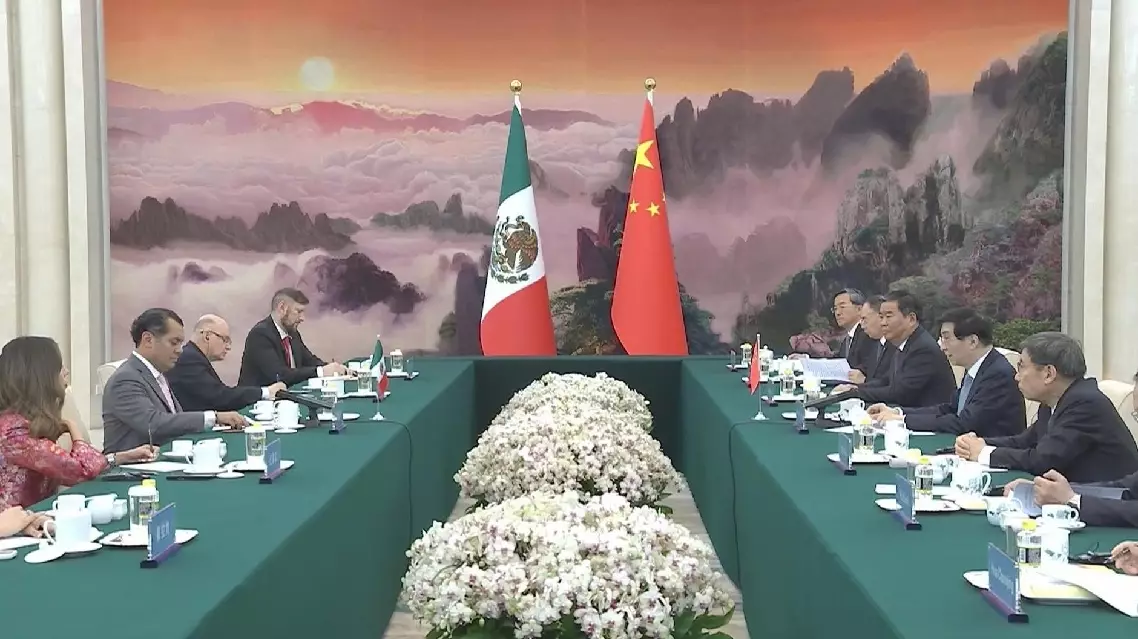
China's top political advisor meets president of Mexico's Chamber of Deputies
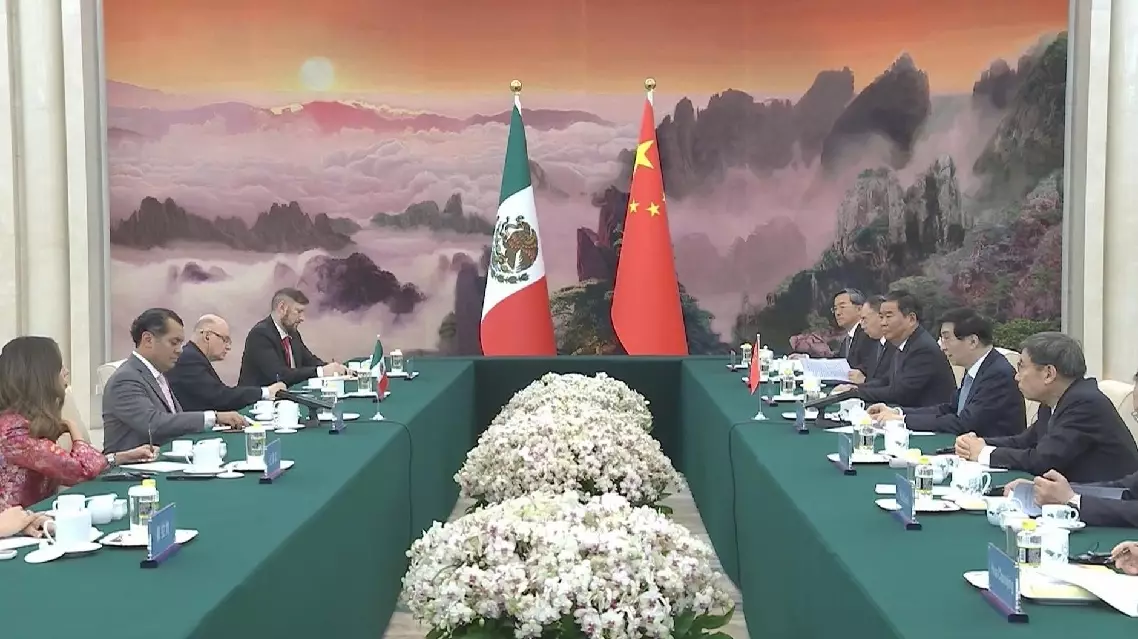
China's top political advisor meets president of Mexico's Chamber of Deputies
Xi'an, the capital city of what is now northwest China's Shaanxi Province, has played a pivotal role in facilitating China's exchanges with the rest of the world through the ancient Silk Road.
The city, which was called Chang'an in ancient China, served as the starting point of the Silk Road. Chang'an was the capital city of several ancient Chinese dynasties, including the Western Han and the Tang, from 202 BC to AD 907.
Stepping out of the Xi'an Railway Station, one will encounter the colossal ruins of the Danfeng Gate of the Daming Palace. This gate was the national gateway of the Tang Dynasty (618-907).
Over 1,300 years ago, envoys from all nations from every corner of the world would pass through this very gate to pay homage to what was then the world's most powerful empire.
In Istanbul, the Topkapi Palace Museum, built in 1478, was the heart of the Ottoman Empire.
As camel bells echoed across deserts from Chang'an and merchant ships sailed oceans from east China's Quanzhou City, treasures of civilization from ancient China ultimately settled within this museum.
Its collections include vast numbers of Chinese paintings, calligraphy, and precious gold and silver artifacts, among them 12,000 pieces of Chinese porcelain.
At the Topkapi Palace Museum, these porcelain wares now stand on display for the world, telling a history of civilizational exchange spanning Eurasia.
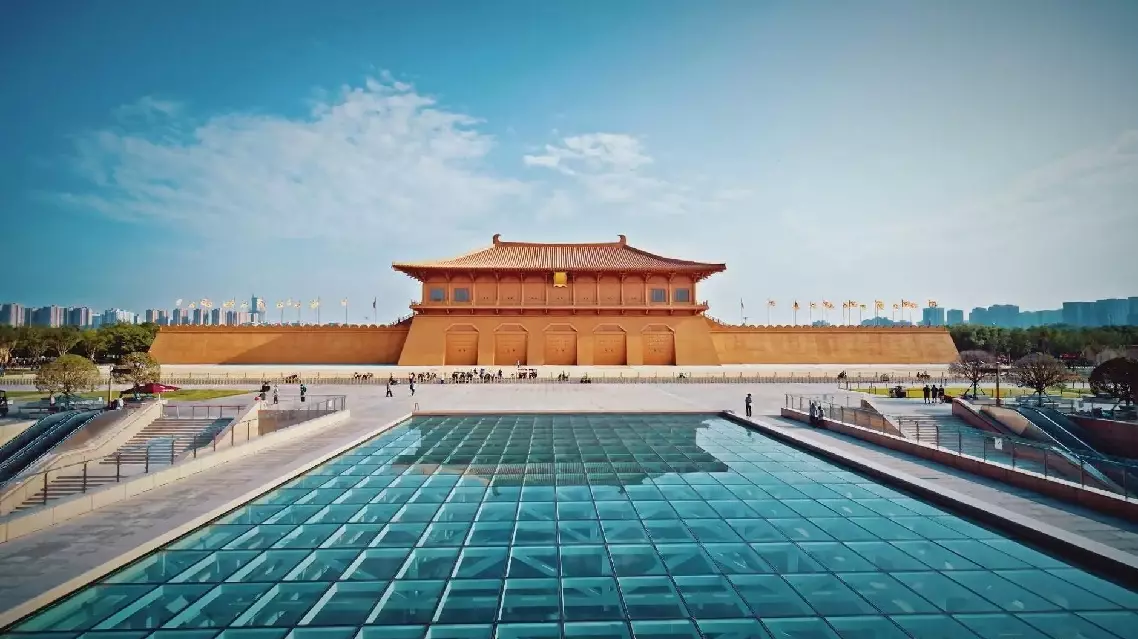
Northwest China's Xi'an plays pivotal role in boosting ancient exchanges with outside world