The Longmen Grottoes, a cultural gem situated in the central Chinese city of Luoyang, are a shining example of cultural preservation work thanks to the efforts of archeologists and guardians of the cherished site.
Chinese President Xi Jinping visited the Longmen Grottoes on Monday during his inspection trip to Henan Province.
Xi, also general secretary of the Communist Party of China Central Committee and chairman of the Central Military Commission, learned about efforts to enhance the protection and utilization of the historical and cultural heritage and promote the high-quality development of the cultural and tourism sector. He urged further efforts to protect, pass on and disseminate these treasures of Chinese culture.
"His biggest concern about the Longmen Grottoes is the preservation. Preservation is always the top priority. The General Secretary has shown great attention to issues such as the instability of the rock formations containing our stone relics, water leakage problems, weathering, and the impact of microorganisms. He asked detailed questions about these matters," said Yu Jie, Party secretary of the Longmen Grottoes Academy.
The Longmen Grottoes, an over 1,500-year-old UNESCO World Heritage Site, is home to one of the world's largest collections of stone carvings and Buddhist sculptures.
Today the archaeological protection of the grottoes has moved from rescuing relics to preventive protection, according to Ma Chaolong, deputy director of the Longmen Grottoes Academy's Grotto Conservation Center, who gave a report on the conservation work to the president, along with several department heads from the academy.
Ma said his work is much like that of a doctor – identifying the health threats to the grottoes and prescribing treatments that would be best for the site's long-term health.
"We're not focusing on the most exquisite parts, but on the parts with the most severe damages. You see, we've done a lot of work in these areas, including sealing these cracks. Additionally, we've implemented waterproofing measures by installing these cave eaves. These are some of the traditional methods we used in the past, like using stone, as well as some resin molds we created. A major advantage of our approach is that it is reversible. For instance, if we later find better methods or techniques, we could remove this stone treatment and it will not affect the implementation of new measures. This is an important principle in cultural relic preservation," Ma said of the protection works done to preserve the grottoes.
With the younger generation in China taking a strong interest in museums and traditional culture, the Longmen Grottoes site is also embracing the trend, launching marketing campaigns and innovative digital exhibitions over recent years.
"There is a growing trend of interest in archaeology and culture, with visiting museums becoming a new fashion. In particular, the younger generation's desire and demand for cultural heritage is unprecedented," Yu said, underlining that boosting tourism is an important part of promoting cultural preservation.
"The scenic spot ultimately depends on culture to attract visitors. The General Secretary spoke of positive interplay between culture and tourism, which I think is spot on. This aligns perfectly with our two main themes which are cultural heritage preservation and utilization. We need to carefully explore and present our cultural heritage in ways that appeal to visitors of all ages and backgrounds, making it more accessible and enjoyable. At the same time, we should use tourism as a means to ensure these cultural gems stay well preserved and shine on. This is our ultimate goal," Yu further said.
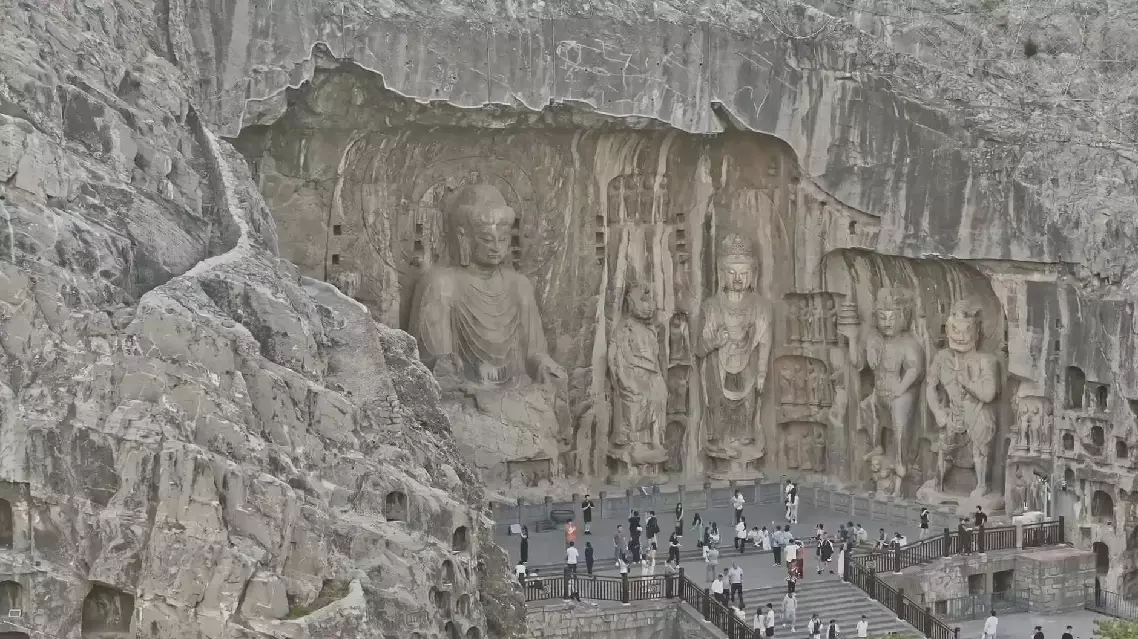
Longmen Grottoes a shining example of cultural preservation