MINNEAPOLIS (AP) — The score was already out of hand midway through the second quarter, when Shai Gilgeous-Alexander recognized the opening in Minnesota's drop pick-and-roll coverage and rose up at the elbow for the type of mid-range jumper Oklahoma City feasted on over the first two games of the Western Conference finals.
Instead of following through on that shot on Saturday night, though, the newly minted NBA MVP had a second thought.
Click to Gallery
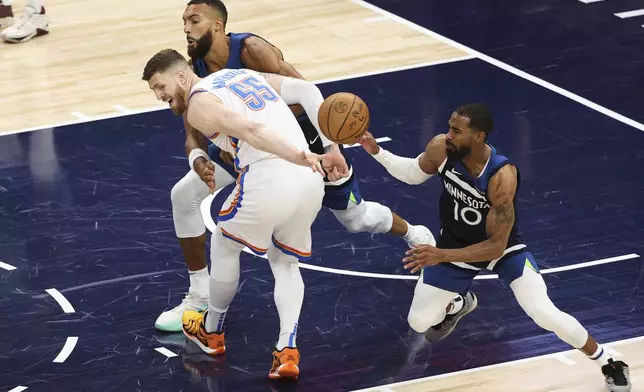
Oklahoma City Thunder center Isaiah Hartenstein (55), Minnesota Timberwolves center Rudy Gobert, and guard Mike Conley (10) reach for a loose ball during the first half of Game 3 of the Western Conference finals of the NBA basketball playoffs, Saturday, May 24, 2025, in Minneapolis. (AP Photo/Matt Krohn)
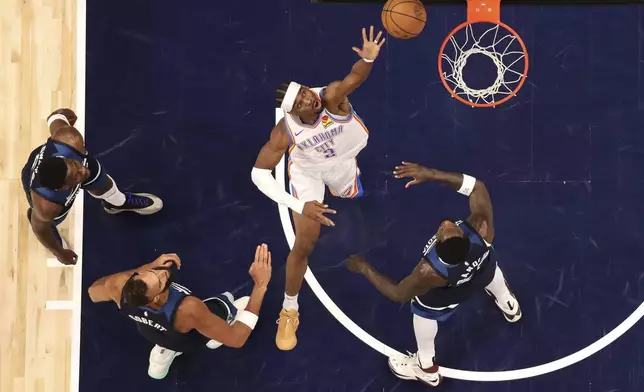
Oklahoma City Thunder guard Shai Gilgeous-Alexander, middle, shoots the ball against the Minnesota Timberwolves during the first half of Game 3 of the Western Conference finals of the NBA basketball playoffs Saturday, May 24, 2025, in Minneapolis. (AP Photo/Matt Krohn)
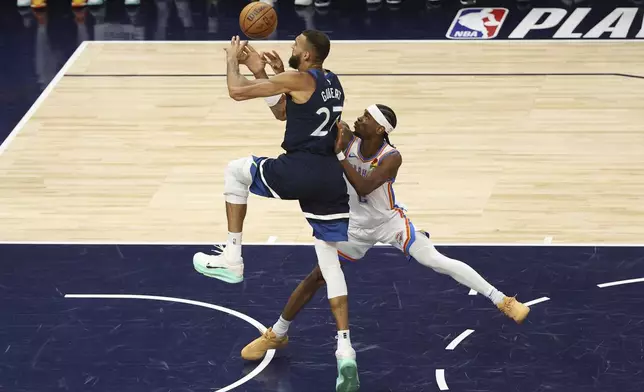
Oklahoma City Thunder guard Shai Gilgeous-Alexander (2) defends against Minnesota Timberwolves center Rudy Gobert (27) during the first half of Game 3 of the Western Conference finals of the NBA basketball playoffs, Saturday, May 24, 2025, in Minneapolis. (AP Photo/Matt Krohn)
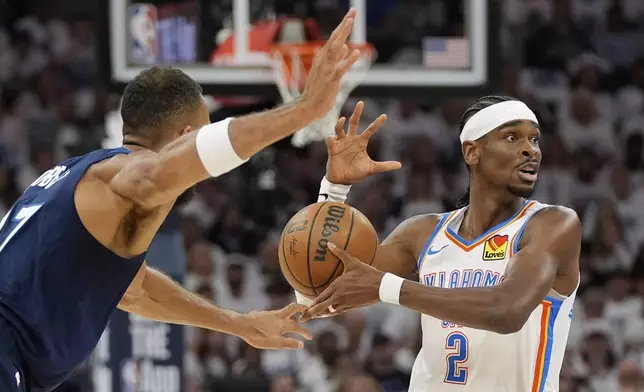
Oklahoma City Thunder guard Shai Gilgeous-Alexander (2) looses controls of the ball while defended by Minnesota Timberwolves center Rudy Gobert (27) during the first half of Game 3 of the Western Conference finals of the NBA basketball playoffs, Saturday, May 24, 2025, in Minneapolis. (AP Photo/Abbie Parr)
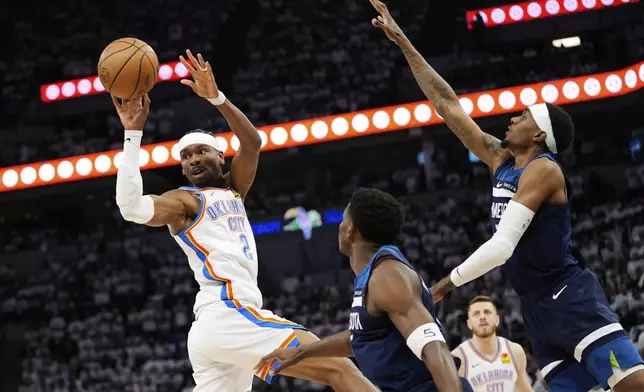
Oklahoma City Thunder guard Shai Gilgeous-Alexander (2) passes against Minnesota Timberwolves guard Anthony Edwards, center, and forward Jaden McDaniels, right, during the first half of Game 3 of the Western Conference finals of the NBA basketball playoffs, Saturday, May 24, 2025, in Minneapolis. (AP Photo/Abbie Parr)
With Rudy Gobert's long arm outstretched in front of him, Gilgeous-Alexander suddenly turned to his right in mid-air. But with nobody there to pass to, he landed back on the court while still holding the ball for the rare but obvious traveling call.
After the Thunder found all kinds of soft spots in their defense and consistently hit those open shots over two decisive wins to start the series, the Timberwolves tightened up their pressure with a back-to-basics approach on their home court that fueled a 143-101 victory in Game 3.
“Sometimes you've just got to throw your fastball,” coach Chris Finch said. “We were trying to do too much other junk out there at times.”
Inspired by the success Denver had with the look in its seven-game second-round series against Oklahoma City, Minnesota mixed in some zone defenses over the first two games but failed to gain any traction with it. Gilgeous-Alexander totaled 69 points, and the Thunder made exactly half of their shots from the floor.
With a palpable boost from the crowd at Target Center from the opening tip, the Wolves aggressively hounded the ball, employed effective switches and — the possession that ended with Gilgeous-Alexander's traveling violation notwithstanding — played far less drop coverage than in the first two games to keep the Thunder from finding a mid-range rhythm. Most importantly, they were disciplined enough to keep their fouls to a minimum.
Gilgeous-Alexander went more than 13 minutes of game time in the first half between baskets and finished with 14 points on 4-for-13 shooting with four turnovers and only four free throw attempts. In the first quarter, with the Wolves up 24-9, Gobert blitzed Gilgeous-Alexander for a double-team in the backcourt and swatted the ball out of his hand for a steal that started a fast break.
“What works for us is us playing hard man-to-man defense, playing in gaps, being in passing lanes and being physical,” point guard Mike Conley said. “We’ve got to continue to get better at some of the adjustments they’re going to do, but tonight I was happy with the way that we just kind of hit the reset button and locked in on our way of playing.”
The big question for Game 4 on Monday night is how quickly the Thunder can bounce back from such a drubbing.
“It’s been who we are generally,” coach Mark Daigneault said. “We know the ebbs and flows of a playoff series. We’ve been on the other end of games like this, and they haven’t been predictive of the next game either. We do have to look at it and address the things that went awry for us, but at the same time it’ll be a new game. It’ll be 0-0 when Game 4 starts.”
This was the largest margin of defeat in NBA history for a team with 65-plus regular-season wins and only the second time in these playoffs the Thunder lost by more than 10 points. Their margin of defeat only reached double digits five times out of 14 losses during the regular season.
“We have a group of guys who really care. At this point of the season and after a game like that, nobody’s thinking, ‘Just throw it away,’” said Chet Holmgren, who made only three shots to match his low for this postseason. “There’s lessons in there where we can all be better.”
This presents a new test for a young Thunder team so dominant throughout this season it hasn't had many.
“It happens. You’re never going to be perfect in life, in a long season. You get punched, it's about getting back up and responding,” Gilgeous-Alexander said. “That’s what the next challenge is. We got punched in the mouth, and next game we’re either going to get back up or not. We have a decision to make for sure.”
AP NBA: https://apnews.com/hub/NBA
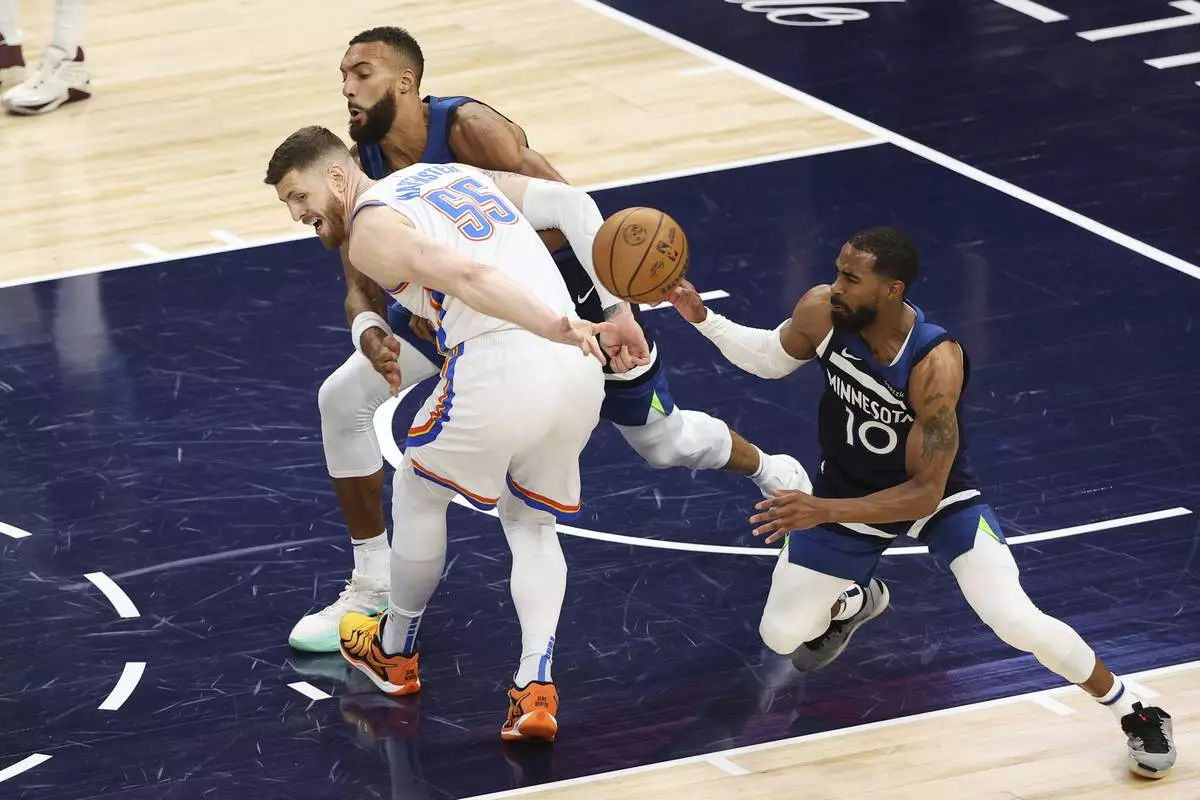
Oklahoma City Thunder center Isaiah Hartenstein (55), Minnesota Timberwolves center Rudy Gobert, and guard Mike Conley (10) reach for a loose ball during the first half of Game 3 of the Western Conference finals of the NBA basketball playoffs, Saturday, May 24, 2025, in Minneapolis. (AP Photo/Matt Krohn)
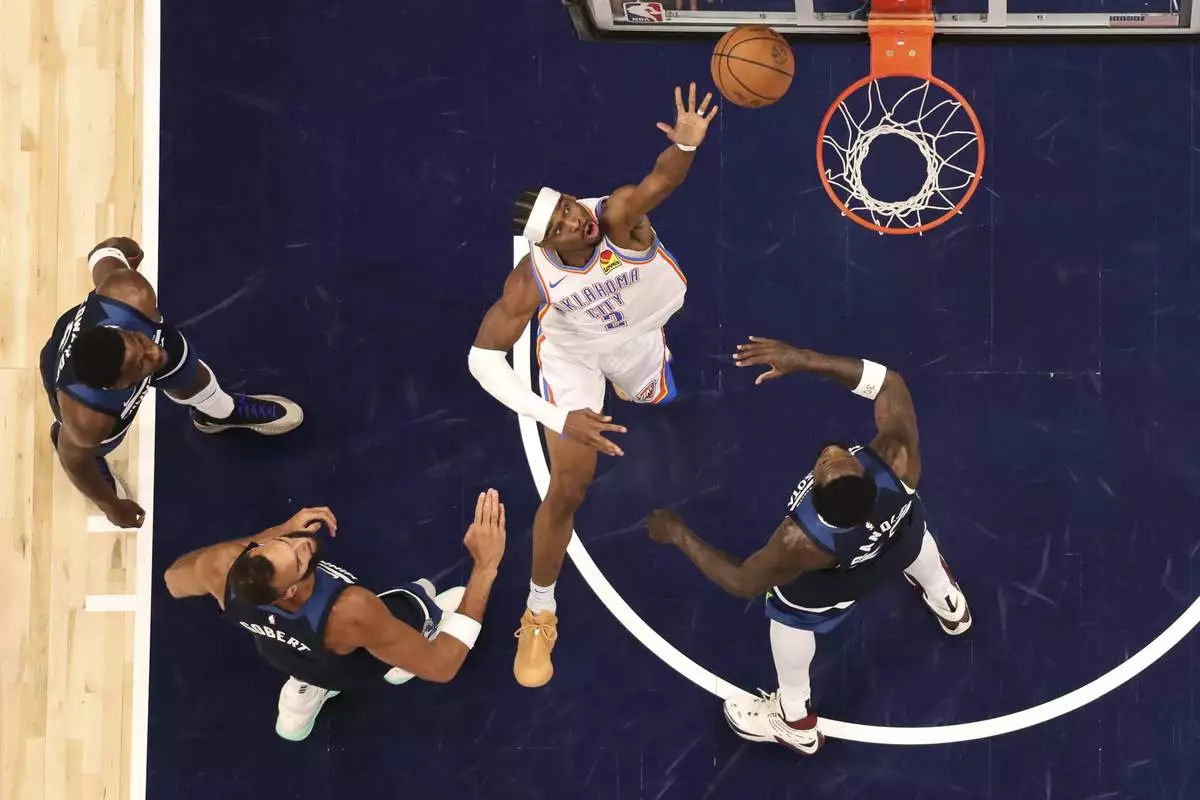
Oklahoma City Thunder guard Shai Gilgeous-Alexander, middle, shoots the ball against the Minnesota Timberwolves during the first half of Game 3 of the Western Conference finals of the NBA basketball playoffs Saturday, May 24, 2025, in Minneapolis. (AP Photo/Matt Krohn)
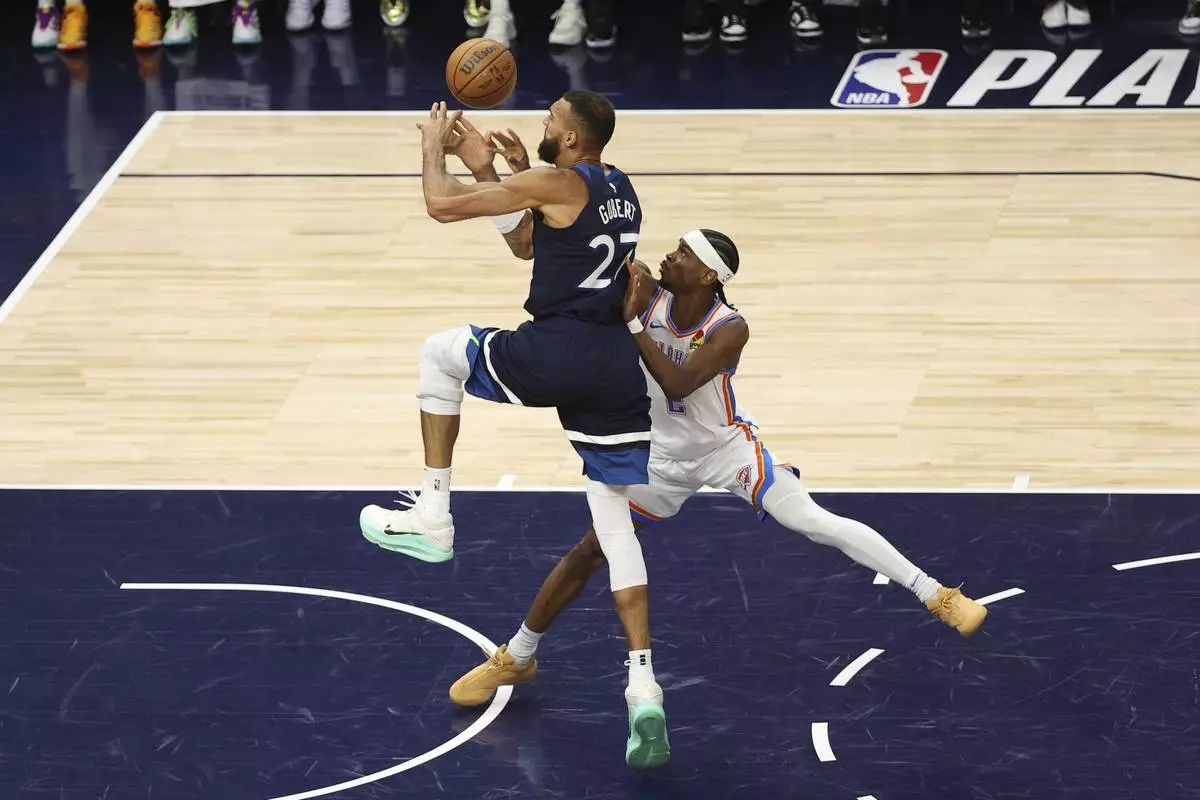
Oklahoma City Thunder guard Shai Gilgeous-Alexander (2) defends against Minnesota Timberwolves center Rudy Gobert (27) during the first half of Game 3 of the Western Conference finals of the NBA basketball playoffs, Saturday, May 24, 2025, in Minneapolis. (AP Photo/Matt Krohn)
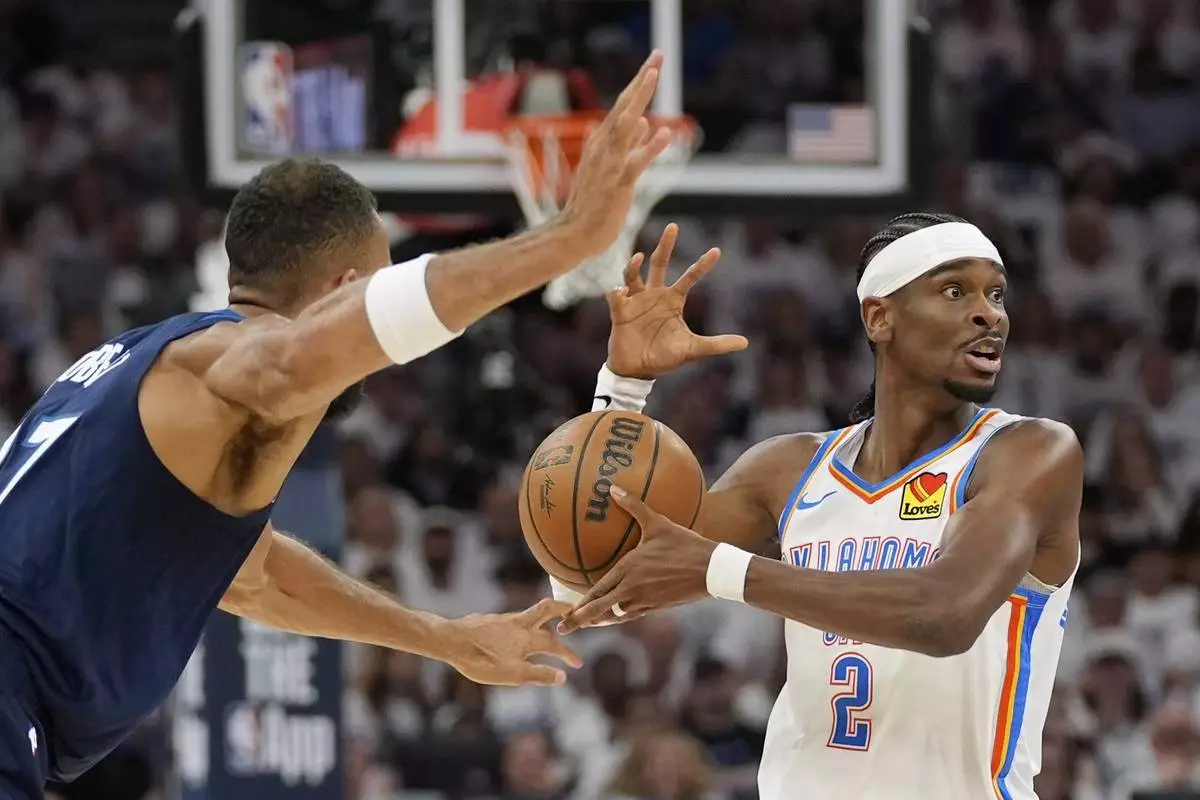
Oklahoma City Thunder guard Shai Gilgeous-Alexander (2) looses controls of the ball while defended by Minnesota Timberwolves center Rudy Gobert (27) during the first half of Game 3 of the Western Conference finals of the NBA basketball playoffs, Saturday, May 24, 2025, in Minneapolis. (AP Photo/Abbie Parr)
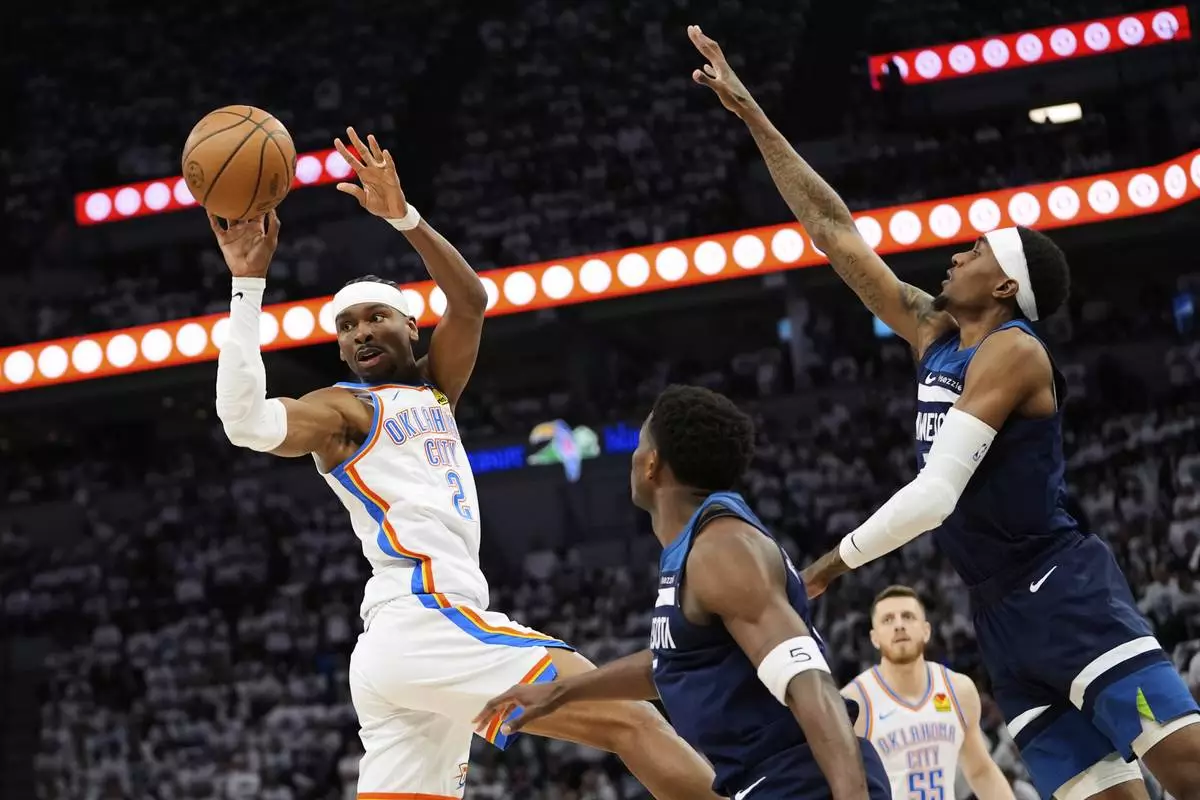
Oklahoma City Thunder guard Shai Gilgeous-Alexander (2) passes against Minnesota Timberwolves guard Anthony Edwards, center, and forward Jaden McDaniels, right, during the first half of Game 3 of the Western Conference finals of the NBA basketball playoffs, Saturday, May 24, 2025, in Minneapolis. (AP Photo/Abbie Parr)